Zinc Benefits Essential Mineral Foods for Immunity, Skin Health Boost
Zinc is a small but powerful mineral that plays an important role in supporting everyday health. From immune function and normal growth to skin health and tissue repair, this essential nutrient helps the body perform many vital processes. Adding zinc-rich foods to a balanced diet is a simple way to support overall wellness and create healthier eating habits.
Many people focus on vitamins when planning a nutritious diet, but minerals like zinc are equally important. Found in a variety of animal and plant-based foods, zinc can easily become part of meals through simple ingredients such as seafood, meat, eggs, legumes, nuts, seeds, and whole grains.
Key Takeaways
- Zinc supports immune health and the body’s natural defenses.
- Protein-rich foods like seafood, meat, and eggs provide naturally available zinc.
- Plant-based sources such as seeds, beans, nuts, and grains can also contribute to daily intake.
- Zinc plays a role in skin, hair, nails, growth, and tissue repair.
- A balanced diet helps maintain healthy mineral levels.
Why Zinc Is an Essential Mineral for Your Body
Zinc is a nutrient your body needs regularly because it contributes to many important functions. Unlike nutrients that the body can store in large amounts, zinc needs to be consistently supplied through food choices. A varied diet with zinc-rich ingredients can help provide the nutrition needed for normal body processes.
This mineral is especially recognized for its connection with immune support. The body relies on zinc to help maintain healthy immune responses and protect cells from everyday stress. It is also involved in normal growth, development, and the maintenance of healthy tissues.
Important: Zinc works best as part of an overall balanced nutrition pattern. Eating a variety of whole foods provides not only zinc but also other vitamins, minerals, fiber, and nutrients that support wellness.
Health Benefits of Zinc
Supports a Healthy Immune System
One of the most well-known benefits of zinc is its connection to immune health. The mineral helps support the body’s natural defense system and contributes to normal immune cell activity. Including zinc-containing foods in daily meals can be a helpful part of maintaining a nutrient-rich diet.
Helps Support Growth and Development
Zinc is important during periods of growth and development. Children, teenagers, and adults all need essential minerals to support healthy body functions. A nutritious eating pattern that includes zinc sources can help meet changing nutritional needs throughout life.
Contributes to Skin, Hair, and Nail Health
Healthy skin, hair, and nails depend on many factors, including proper nutrition. Zinc contributes to normal tissue maintenance and repair, making zinc-rich foods a valuable addition to a beauty-focused wellness routine.
Supports Normal Wound Healing
The body uses zinc during the process of maintaining and repairing tissues. A diet that provides enough zinc supports normal healing processes and helps keep the body functioning efficiently.
Zinc-Rich Foods to Add to Your Diet
Zinc can be found in both animal and plant foods. Choosing different sources throughout the week makes meals more interesting while helping create a balanced nutritional routine.
Animal-Based Zinc Sources
Animal foods often contain zinc in a form that is easier for the body to absorb. These foods can be convenient options for people who include animal products in their meals.
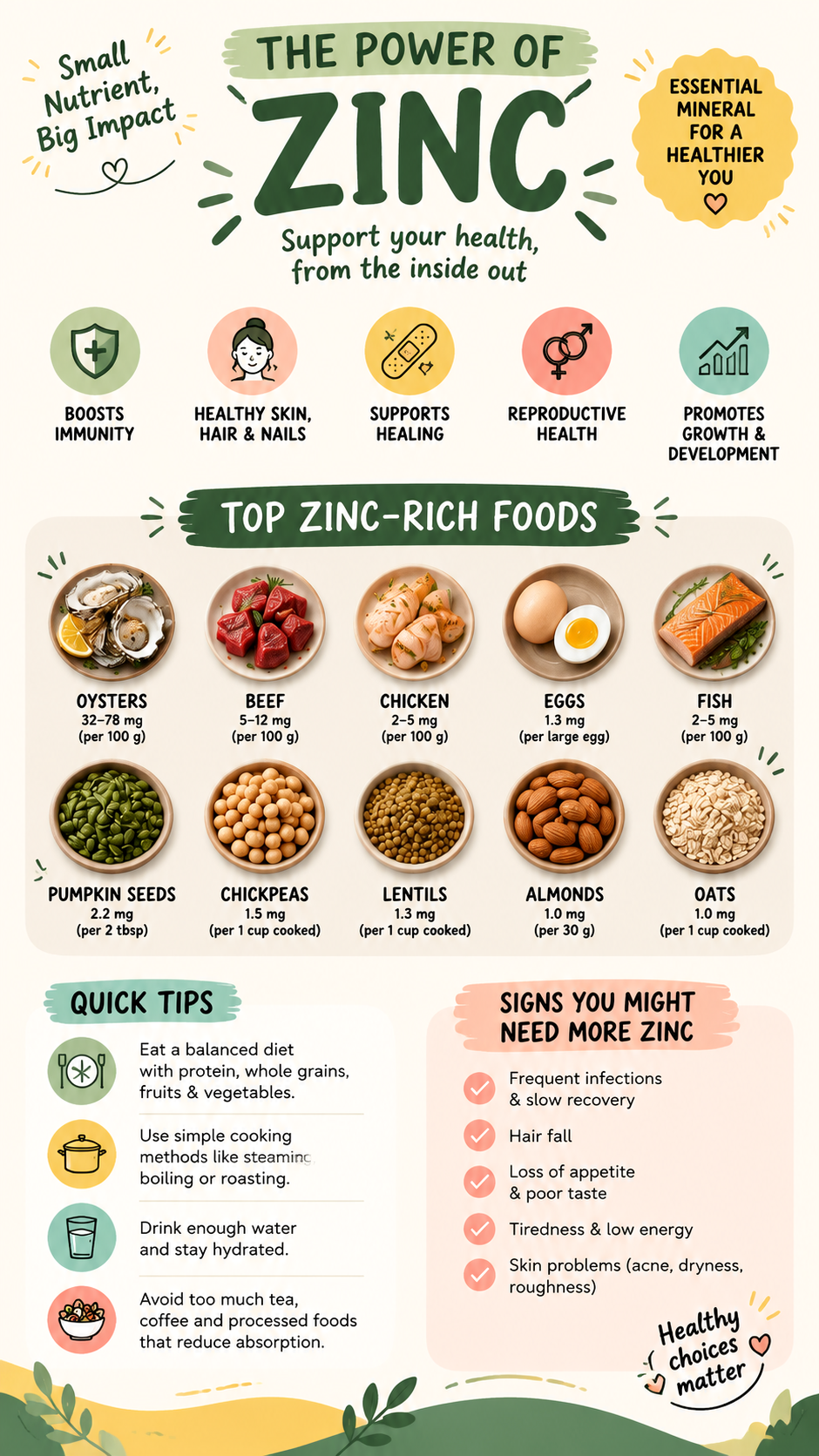
- Oysters: One of the richest natural sources of zinc.
- Beef: A protein-rich option that provides zinc.
- Chicken: A versatile source that works well in many meals.
- Eggs: An easy everyday food containing several important nutrients.
- Fish: Provides zinc along with other beneficial nutrients.
- Liver: A nutrient-dense food containing minerals and vitamins.
Plant-Based Zinc Sources
Plant foods can also provide zinc, especially when included as part of a varied diet. Seeds, legumes, nuts, and grains are practical choices for adding more minerals to meals.
- Pumpkin seeds: A simple topping for salads, oatmeal, and snacks.
- Chickpeas: A versatile ingredient for bowls, soups, and spreads.
- Lentils: A nutritious source of plant-based protein and minerals.
- Cashews and almonds: Convenient snacks with valuable nutrients.
- Whole grains: Helpful additions to balanced meals.
Signs That You May Need More Zinc
When the body does not receive enough zinc, some people may experience changes related to overall wellness. Nutrition needs vary from person to person, so persistent concerns should always be discussed with a healthcare professional.
- Frequent infections or slow recovery
- Changes in appetite or taste
- Slow wound healing
- Hair changes
- Skin concerns
- Low energy and weakness
Who May Benefit From Paying Attention to Zinc Intake?
Certain groups may need to be more mindful of getting enough zinc through their diet. Increased nutritional needs, dietary preferences, or limited food variety can affect zinc intake.
- People following vegetarian or vegan eating patterns
- Children and teenagers during growth periods
- Pregnant and breastfeeding individuals
- Older adults
- People with diets that lack variety
Expert Insight
- Focus on food first by building meals around nutrient-rich ingredients.
- Pair zinc sources with a variety of fruits, vegetables, and proteins.
- Consistency matters more than occasional high-zinc meals.
Simple Ways to Increase Zinc Intake
Improving zinc intake does not require complicated meal plans. Small changes in your everyday cooking can make a difference.
- Add pumpkin seeds or nuts to yogurt, oatmeal, or salads.
- Include beans or lentils in soups, wraps, and grain bowls.
- Choose protein sources such as seafood, poultry, eggs, or lean meats when suitable.
- Enjoy a colorful variety of whole foods to support overall nutrition.
Quick Points: Zinc Nutrition at a Glance
- Zinc is an essential mineral for daily health.
- It supports immune function and tissue maintenance.
- Seafood, meat, seeds, beans, and nuts are common zinc sources.
- A balanced diet helps provide important nutrients naturally.
Conclusion: Make Zinc-Rich Foods Part of a Healthy Lifestyle
Zinc may be a small mineral, but its role in supporting everyday wellness is significant. From immune support to healthy skin and normal body functions, this nutrient deserves a place in a balanced diet.
By including a variety of zinc-rich foods such as seafood, eggs, legumes, seeds, nuts, and whole grains, you can create meals that are both nourishing and enjoyable. Healthy eating is built through consistent choices, and adding essential minerals like zinc is one simple step toward better nutrition.
Tags
Zinc Benefits
Zinc Rich Foods
Healthy Nutrition
Mineral Rich Foods
Immune Support
Balanced Diet