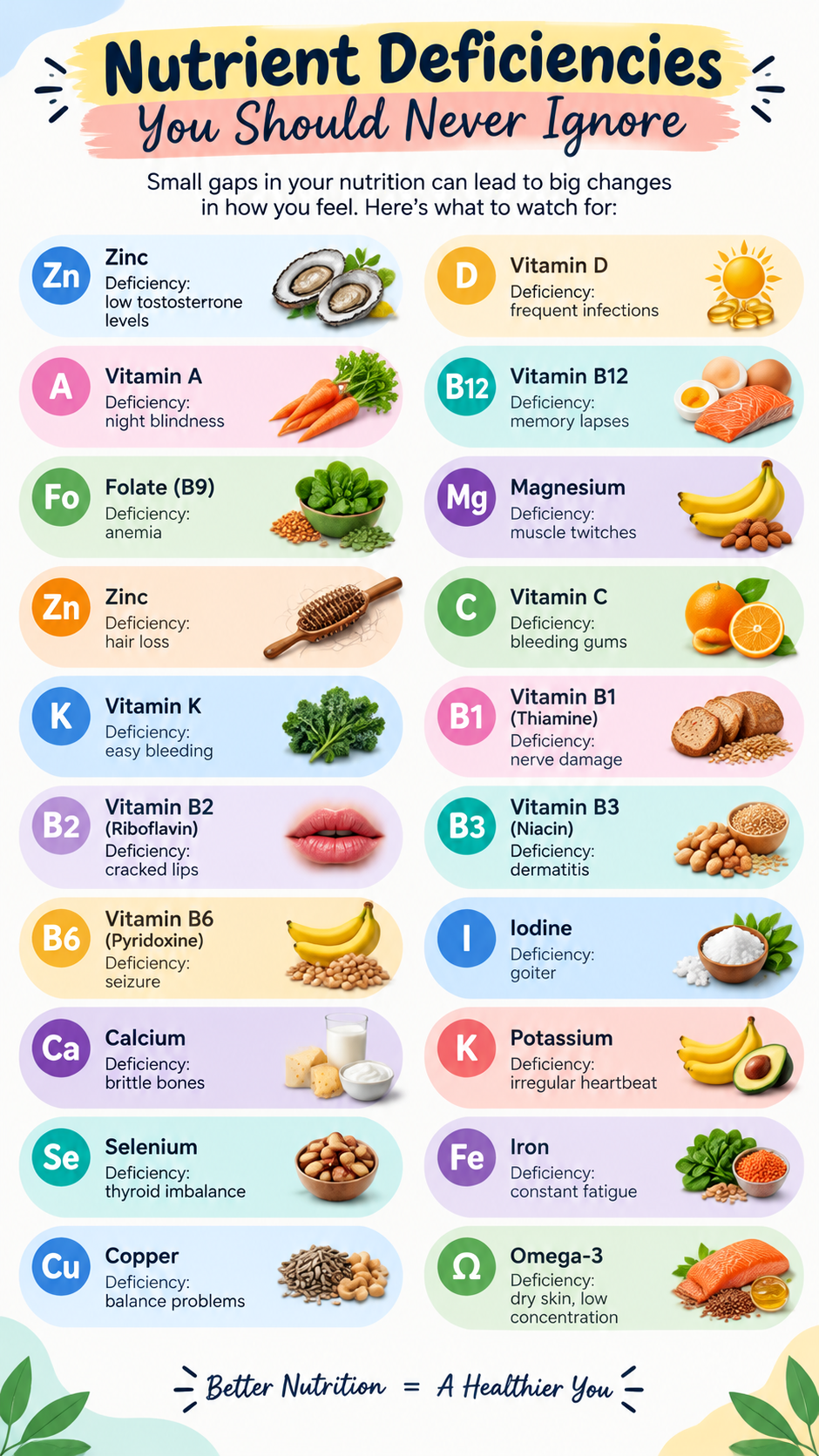
Essential Nutrient Deficiencies You Should Never Ignore Symptoms Guide
Feeling tired, noticing changes in your skin, dealing with frequent illnesses, or experiencing unusual body symptoms can sometimes be connected to nutrient deficiencies. The body depends on a wide range of vitamins and minerals to support energy production, immune function, healthy hair and skin, strong bones, and proper organ function. When certain nutrients are missing, the body may send warning signals that should not be overlooked.
This guide explores common nutrient deficiencies, the symptoms they may cause, and why paying attention to your body’s signals can help support better overall wellness. Understanding these signs can encourage healthier food choices and help you discuss concerns with a healthcare professional when needed.
Key Takeaways
- Nutrient deficiencies can affect energy, immunity, skin, hair, and overall health.
- Vitamins and minerals each play unique roles in keeping the body balanced.
- Common symptoms can include fatigue, hair loss, muscle issues, and changes in vision or mood.
- A balanced diet with nutrient-rich foods is essential for prevention.
- Persistent symptoms should be discussed with a qualified healthcare provider.
Understanding Nutrient Deficiencies and Their Warning Signs
Nutrients are essential substances that help the body perform everyday functions. Vitamins support processes such as immune defense, cell repair, and energy metabolism, while minerals contribute to healthy bones, muscles, nerves, and hormone regulation.
When the body does not receive enough of a specific nutrient, a deficiency can develop. Some deficiencies appear slowly and may be difficult to recognize at first. Others create noticeable changes that affect daily comfort and wellbeing.
Important: Symptoms alone cannot always confirm a nutrient deficiency because many health conditions can create similar signs. A balanced diet, awareness of common symptoms, and professional guidance are important parts of maintaining good health.
Common Vitamin Deficiencies and Their Effects
Vitamin D Deficiency and Immune Health
Vitamin D plays an important role in supporting bones, muscles, and immune function. A lack of vitamin D is often associated with increased susceptibility to common illnesses and may contribute to general weakness or low energy.
Sunlight exposure and foods such as fortified dairy products, eggs, and fatty fish can help support healthy vitamin D levels. Many people also choose to monitor their vitamin D status through regular health checks.
Vitamin A Deficiency and Vision Support
Vitamin A is important for normal vision, immune function, and maintaining healthy skin. One of the well-known concerns related to low vitamin A intake is difficulty seeing in low-light conditions.
Foods rich in vitamin A include colorful vegetables such as carrots and leafy greens, along with certain animal-based foods. Including a variety of foods in meals helps support adequate intake.
Vitamin B Group and Energy Production
B vitamins are involved in energy metabolism, nervous system function, and the formation of healthy cells. Different B vitamins have different roles, and low levels may lead to various symptoms.
- Vitamin B12: Supports nerve function and healthy blood cells. Low levels may be linked with memory concerns or tiredness.
- Folate (Vitamin B9): Important for cell growth and blood formation. Low intake may contribute to anemia.
- Vitamin B1: Helps the body convert food into energy and supports nerve health.
- Vitamin B2: Helps maintain healthy skin and supports energy processes.
- Vitamin B6: Involved in brain function and the production of certain neurotransmitters.
Important Mineral Deficiencies to Recognize
Iron Deficiency and Low Energy
Iron is a mineral needed for producing hemoglobin, a protein that helps carry oxygen throughout the body. When iron levels are low, some people experience constant tiredness, reduced energy, or difficulty concentrating.
Iron-rich foods include beans, lentils, leafy greens, and meat products. Pairing plant-based iron sources with foods containing vitamin C may help support iron absorption.
Magnesium and Muscle Function
Magnesium contributes to normal muscle and nerve function. Low magnesium intake may be associated with muscle discomfort, weakness, or occasional twitching.
Nuts, seeds, whole grains, and leafy green vegetables are common sources of magnesium. Including these foods regularly can help create a more nutrient-dense eating pattern.
Calcium, Potassium, and Bone Strength
Calcium is widely recognized for its role in maintaining strong bones and teeth. Potassium supports fluid balance, muscle activity, and normal heart function.
A diet that includes dairy products, vegetables, fruits, legumes, and whole foods can provide important minerals needed for everyday body functions.
How Nutrient Deficiencies Can Affect Hair, Skin, and Appearance
Many people first notice possible nutrient-related changes through their appearance. Hair thinning, dry skin, brittle nails, or changes in skin condition may sometimes be connected to inadequate nutrient intake.
Zinc, vitamin C, vitamin A, omega-3 fatty acids, and other nutrients contribute to maintaining healthy skin and hair. However, appearance-related changes can have many causes, including stress, genetics, lifestyle habits, and environmental factors.
Zinc and Immune Support
Zinc supports immune defenses, wound healing, and normal cell growth. Low zinc intake may affect immune function and can be associated with changes in hair health.
Foods such as seafood, meat, dairy products, nuts, and seeds can provide zinc as part of a balanced eating pattern.
Building a Nutrient-Rich Lifestyle
The best way to support healthy nutrient levels is usually through a varied diet. No single food provides every nutrient the body needs, so variety is one of the most important principles of healthy eating.
Simple Habits for Better Nutrition
- Include different colors of fruits and vegetables throughout the week.
- Choose whole grains instead of highly processed options when possible.
- Add protein sources such as eggs, beans, fish, poultry, or nuts.
- Drink enough water and maintain consistent healthy habits.
- Pay attention to ongoing symptoms and seek professional advice when needed.
Expert Insight
Nutrition works as a complete system. Supporting one nutrient is helpful, but long-term wellness comes from consistent habits, balanced meals, and understanding your body’s unique needs.
At a Glance: Nutrient Deficiency Prevention
- Eat a wide range of nutrient-rich foods.
- Recognize common signs your body may be showing.
- Support health with balanced vitamins and minerals.
- Combine healthy eating with regular wellness habits.
Conclusion: Listen to Your Body’s Nutrient Needs
Nutrient deficiencies can influence many areas of health, from energy levels and immunity to hair, skin, muscles, and overall wellbeing. Learning about common vitamin and mineral roles can help you make smarter food choices and recognize when your body may need extra attention.
A balanced approach to nutrition, including a variety of whole foods, is one of the most effective ways to support long-term health. Small daily choices can make a meaningful difference in helping your body get the nutrients it needs.
Tags
Nutrient Deficiencies
Vitamin Guide
Mineral Health
Healthy Eating
Wellness Tips
Nutrition Facts