
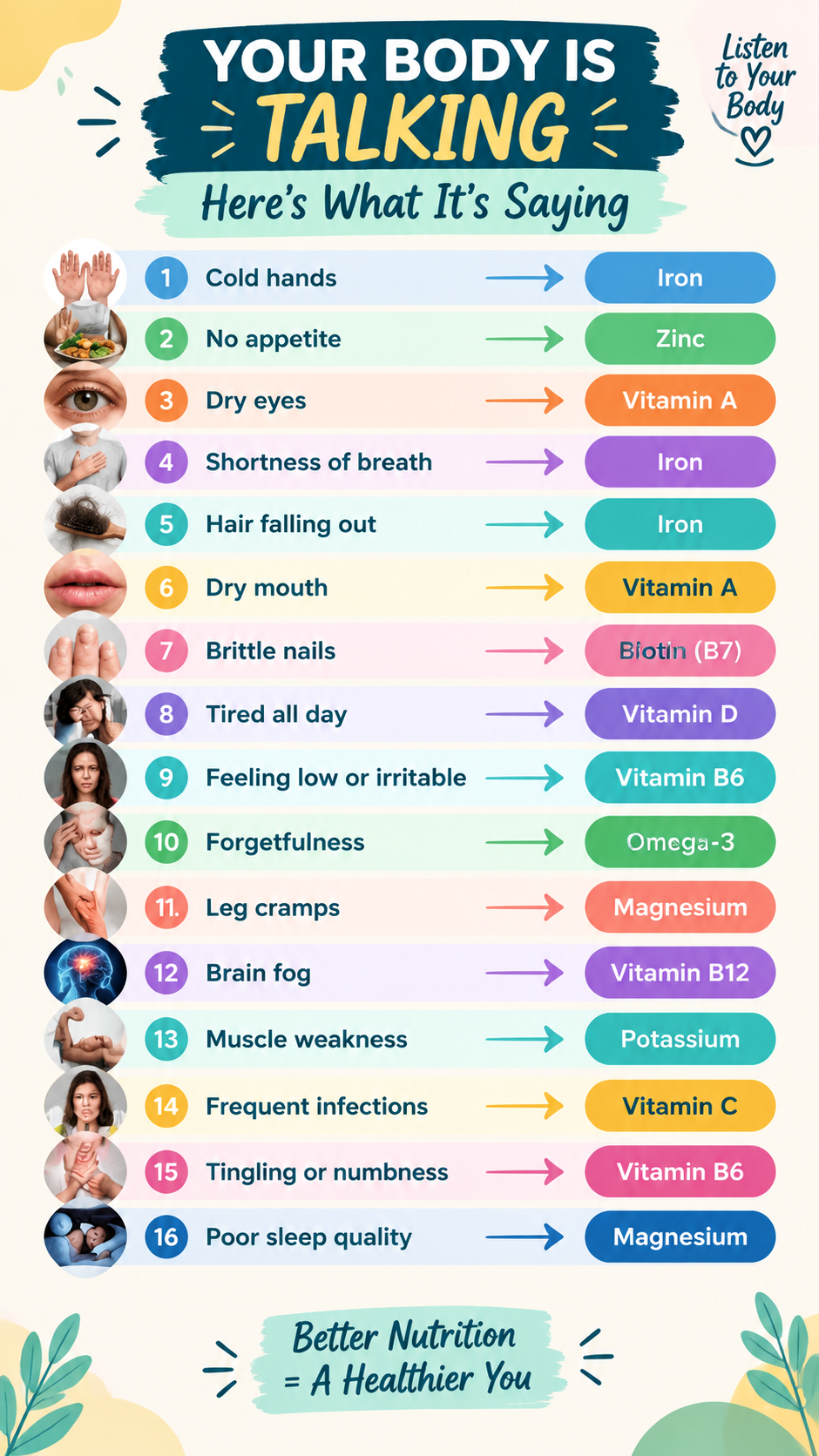
16 Body Signs That Reveal Possible Vitamin Deficiencies You Should Know
Have you ever wondered if your body is sending you signals that something is missing? Everyday changes like tiredness, dry eyes, brittle nails, muscle cramps, or difficulty concentrating may sometimes be linked to nutritional gaps. Understanding these common body signs can help you become more aware of your health and make smarter choices about your diet and wellness routine.
Vitamins and minerals play essential roles in keeping the body functioning properly. From supporting energy production to maintaining healthy skin, hair, nerves, and immunity, these nutrients work behind the scenes every day. While symptoms alone cannot diagnose a deficiency, recognizing possible connections can encourage better nutrition habits and meaningful conversations with healthcare professionals.
Key Takeaways
- Body changes can sometimes be linked to vitamin and mineral deficiencies.
- Iron, zinc, vitamins A, B, C, D, and minerals like magnesium play important roles in wellness.
- A balanced diet is one of the best ways to support nutrient needs.
- Symptoms should be considered alongside professional medical advice.
- Small nutrition improvements can support long-term health habits.
Understanding What Your Body Signs May Mean
The human body has many ways of communicating when something may need attention. Changes in appearance, energy levels, mood, or physical comfort can be influenced by many factors, including stress, sleep, lifestyle, and nutrition. One important area to consider is whether your body is receiving enough essential vitamins and minerals.
Nutrients are involved in thousands of biological processes. Iron helps transport oxygen throughout the body, vitamin D supports bone and immune health, magnesium contributes to muscle and nerve function, and B vitamins help convert food into energy. When intake is insufficient, some people may notice changes that encourage them to review their eating habits.
Important: A single symptom does not automatically mean you have a vitamin deficiency. Many health conditions can create similar signs, so nutrition concerns should be evaluated with a complete understanding of your overall health.
Common Body Signs Linked to Nutrient Needs
Cold Hands and Possible Iron Connection
Cold hands and feet can happen for many reasons, including circulation patterns and environmental factors. Iron is an important nutrient because it helps create hemoglobin, a protein responsible for carrying oxygen in the blood. When iron levels are low, some people may experience fatigue, weakness, or feeling unusually cold.
Foods containing iron include lean meats, beans, lentils, spinach, and fortified grains. Combining plant-based iron sources with vitamin C foods may help support iron absorption.
Changes in Appetite and Zinc
Zinc supports immune function, wound healing, and many processes involved in taste and smell. A reduced appetite can have several causes, but maintaining adequate zinc intake is important for overall wellness.
Common zinc sources include seafood, meat, dairy products, nuts, seeds, and legumes. A varied diet usually provides the zinc needed for everyday functions.
Dry Eyes and Vitamin A
Vitamin A is widely known for its role in eye health. It helps maintain normal vision and supports the protective surfaces of the eyes. Foods rich in vitamin A include carrots, sweet potatoes, leafy greens, eggs, and dairy products.
Dry eyes may also be caused by screen use, environmental conditions, allergies, or other health factors. Nutrition is only one piece of maintaining comfortable eye health.
Hair Changes and Iron Support
Hair health depends on several factors, including genetics, hormones, stress levels, and nutrition. Iron is one nutrient often discussed when looking at hair growth because it supports oxygen delivery to tissues.
Eating enough protein along with nutrient-rich foods can help support healthy hair. If sudden or significant hair changes occur, professional guidance can help identify possible causes.
Dry Mouth and Vitamin A Balance
Dry mouth can be influenced by hydration, medications, lifestyle habits, and many other factors. Since vitamin A supports healthy tissues, including those found in the mouth, maintaining balanced nutrition is beneficial.
Brittle Nails and Biotin
Strong nails require adequate nutrition, hydration, and care. Biotin, also called vitamin B7, is often associated with hair and nail health. Foods containing biotin include eggs, nuts, seeds, and certain vegetables.
Weak or brittle nails can also result from frequent exposure to water, harsh products, or other factors, so it is helpful to look at the complete picture.
Energy, Mood, and Brain Function Nutrients
Feeling Tired and Vitamin D
Low energy can be connected to many lifestyle factors, including sleep quality, stress, physical activity, and nutrition. Vitamin D is an important nutrient involved in bone health and immune system function. Spending time outdoors safely and eating vitamin D sources such as fortified foods and fatty fish can help support healthy levels.
Mood Changes and Vitamin B6
Vitamin B6 contributes to normal brain function and helps the body create important compounds involved in mood regulation. Foods containing vitamin B6 include poultry, fish, potatoes, bananas, and fortified cereals.
Forgetfulness and Omega-3 Fatty Acids
Omega-3 fatty acids are healthy fats commonly found in fish, walnuts, and flaxseeds. They are known for their important role in supporting brain and heart health as part of a balanced diet.
Muscles, Immunity, and Essential Minerals
Leg Cramps and Magnesium
Magnesium supports normal muscle and nerve function. Foods rich in magnesium include nuts, seeds, whole grains, beans, and leafy green vegetables. Staying hydrated and maintaining balanced nutrition can also support muscle comfort.
Muscle Weakness and Potassium
Potassium is an important mineral that helps regulate fluid balance and supports normal muscle function. Bananas, potatoes, beans, and many vegetables provide natural sources of potassium.
Frequent Infections and Vitamin C
Vitamin C plays a role in immune function and helps protect cells from oxidative stress. Citrus fruits, berries, peppers, and leafy greens are excellent sources of this important vitamin.
Why This Matters
- Your body relies on a wide range of nutrients for daily performance.
- Small dietary improvements can create meaningful wellness habits.
- Understanding body signals encourages proactive health choices.
How to Support Your Nutrition Naturally
The best approach to meeting vitamin and mineral needs is usually a balanced eating pattern. Instead of searching for one “perfect” food, focus on variety and consistency.
- Include colorful fruits and vegetables daily.
- Add protein sources such as eggs, fish, poultry, beans, or legumes.
- Choose whole grains for additional nutrients and fiber.
- Include healthy fats from nuts, seeds, and fish.
- Drink enough water and prioritize quality sleep.
Supplements may be useful for some people, but they are not a replacement for a nutritious diet. Before starting supplements, especially in high doses, it is best to discuss your individual needs with a qualified healthcare professional.
At a Glance: Body Signals and Nutrition Awareness
- Notice changes in energy, skin, hair, and nails.
- Focus on nutrient-rich foods before relying on supplements.
- Remember that symptoms can have many causes.
- Use nutrition awareness as part of overall wellness.
Conclusion: Listen to Your Body and Nourish It Well
Your body provides valuable clues about your overall well-being. While signs like tiredness, dry skin, brittle nails, muscle cramps, or mood changes do not always point to vitamin deficiencies, they can be reminders to review your nutrition, lifestyle, and health habits.
A balanced diet filled with essential vitamins and minerals helps support energy, immunity, brain function, and daily performance. By paying attention to your body and making thoughtful food choices, you can create a stronger foundation for long-term wellness.
Tags
Vitamin Deficiency
Healthy Nutrition
Wellness Tips
Vitamins and Minerals
Healthy Lifestyle
Natural Health


