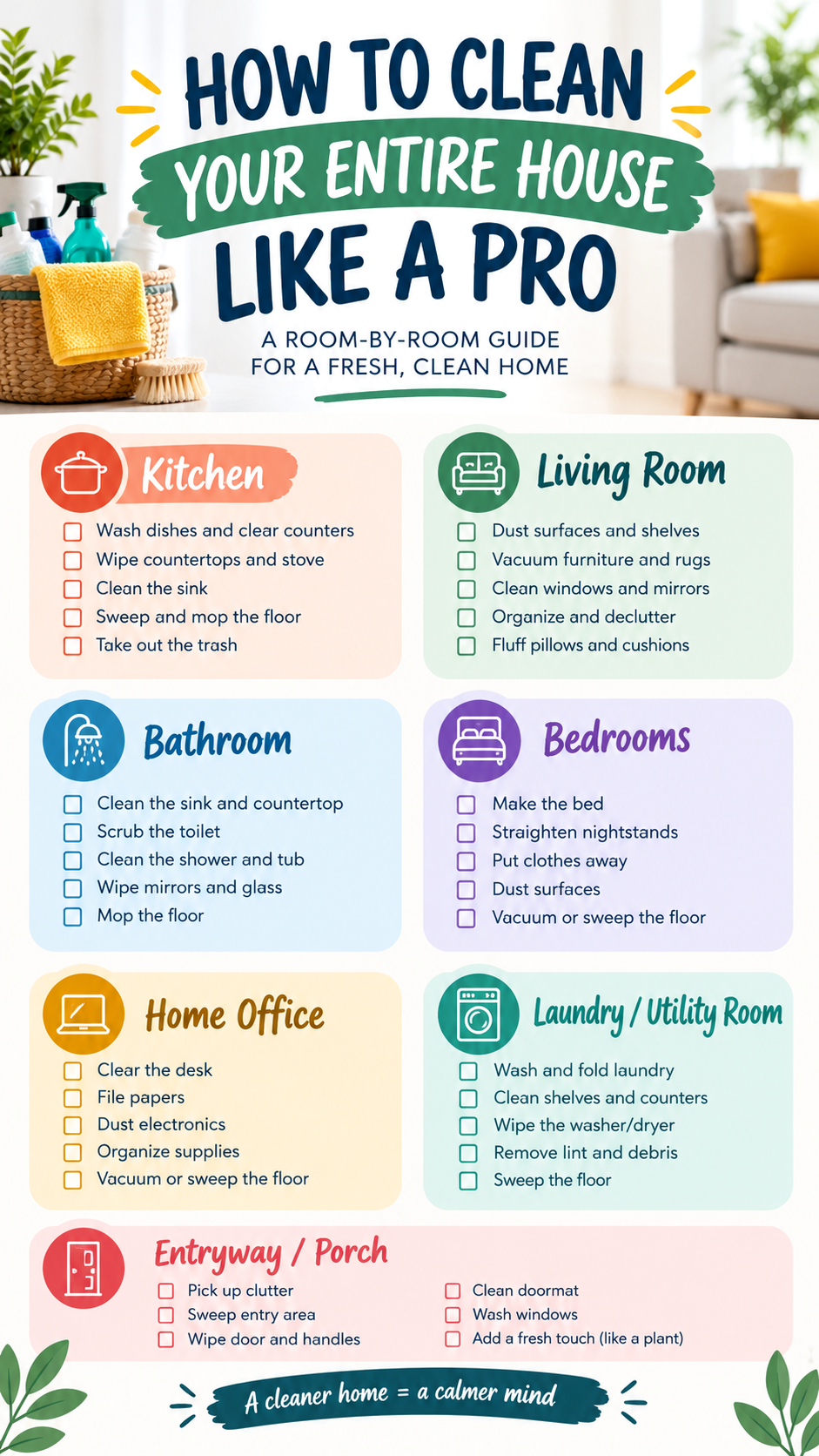
How to Clean Your Entire House Like a Pro Daily, Weekly Monthly Cleaning Checklist
Keeping your home clean doesn’t have to mean spending your entire weekend scrubbing, dusting, and organizing. With a simple daily, weekly, and monthly house cleaning schedule, you can maintain a fresh, comfortable living space without feeling overwhelmed by endless chores. The secret is to break cleaning into manageable tasks and give every room the attention it needs at the right time.
A whole-house cleaning checklist helps you stay organized, remember important details, and prevent dirt and clutter from building up. From washing dishes and wiping kitchen counters to vacuuming bedrooms and cleaning bathroom fixtures, a consistent routine makes household maintenance easier to manage. Whether you live in a small apartment or a busy family home, this practical guide will help you create a cleaning routine that fits your lifestyle.
Key Takeaways
- Complete small daily cleaning tasks to keep messes under control.
- Use a weekly house cleaning checklist for dusting, vacuuming, and deeper surface cleaning.
- Schedule monthly chores for windows, blinds, appliances, and overlooked areas.
- Follow a room-by-room cleaning schedule to make household tasks more manageable.
- Adjust your routine to match your household size, available time, and personal priorities.
- Keep essential cleaning supplies together to save time and avoid unnecessary trips between rooms.
How to Create a Whole-House Cleaning Schedule
The easiest way to keep your entire house clean is to divide chores into three categories: daily, weekly, and monthly. Each category has a different purpose, and combining them creates a balanced home cleaning routine.
Daily Cleaning Tasks
Daily cleaning focuses on the small messes that appear during normal household activities. These jobs usually take only a few minutes but can make a noticeable difference in how your home looks and feels.
Examples include washing dishes, wiping kitchen counters, making beds, putting clothes away, straightening pillows, and removing visible clutter. In the bathroom, a quick wipe of the sink and counter helps prevent toothpaste residue, water spots, and everyday grime from accumulating.
You do not need to deep-clean every room each day. Instead, concentrate on restoring order and cleaning frequently used surfaces. A short evening reset can make the following morning feel much calmer.
Weekly Cleaning Tasks
Weekly cleaning covers chores that do not require daily attention but benefit from regular maintenance. These tasks include dusting furniture, vacuuming floors and rugs, mopping hard surfaces, changing bed sheets, cleaning bathroom fixtures, and wiping frequently touched surfaces.
Weekly cleaning also provides an opportunity to address small problems before they become more difficult to manage. For example, removing dust from shelves regularly is easier than tackling several weeks of buildup at once.
Monthly Cleaning Tasks
Monthly cleaning focuses on areas that are often overlooked during everyday routines. Washing windows, dusting blinds, cleaning appliance interiors, vacuuming sofa cushions, wiping cupboard doors, and cleaning washing machine surfaces are useful examples.
Some jobs may need attention more frequently depending on cooking habits, pets, allergies, weather, and how many people live in your home. Treat the monthly schedule as a flexible guide rather than a strict rule.
Important: A cleaning schedule works best when it reflects your real life. Consistently completing a few essential tasks is more effective than creating an ambitious checklist that becomes difficult to maintain.
Kitchen Cleaning Checklist: Daily, Weekly, and Monthly
The kitchen is one of the busiest rooms in most homes. Food preparation, cooking, washing dishes, and frequent movement can quickly create crumbs, grease, spills, and clutter. A structured kitchen cleaning checklist keeps the space functional and pleasant without requiring a complete scrub every day.
Daily Kitchen Cleaning
- Wash dishes or load the dishwasher.
- Clear and wipe kitchen tables and counters.
- Wipe countertops and the stovetop after cooking.
- Clean the sink and remove visible food residue.
- Sweep the floor to collect crumbs and dirt.
- Wipe up spills and noticeable floor spots.
- Take out the trash when needed.
Try cleaning as you cook instead of leaving every task until the end of the day. Put ingredients away, rinse utensils, and wipe spills as soon as it is safe to do so. This habit reduces the amount of cleanup waiting for you after meals.
Weekly Kitchen Cleaning
- Wipe up spills inside the refrigerator.
- Discard expired or spoiled food.
- Clean the exterior of kitchen appliances.
- Scrub and polish the sink using a suitable cleaner.
- Shake out or vacuum kitchen rugs.
- Mop the floor thoroughly.
Weekly refrigerator checks are especially useful because they help you identify leftovers that need to be eaten and ingredients that are no longer suitable for use. Wiping spills promptly also helps prevent sticky residue and unpleasant odors.
Monthly Kitchen Cleaning
- Dust blinds and vacuum curtains where appropriate.
- Wash windows and wipe cupboard doors.
- Clean refrigerator shelves and drawers as needed.
- Clean the oven and oven hood according to manufacturer instructions.
- Wipe small appliances, including their handles and accessible exterior surfaces.
- Wash and dry the trash can if needed.
Pro Tip: Always follow appliance care instructions and use cleaning products suitable for the surface. Never mix bleach with ammonia, vinegar, or other cleaning products, as dangerous fumes can result.
Bathroom Cleaning Checklist for a Fresher Space
Bathrooms need regular attention because moisture, soap residue, toothpaste, and everyday use can quickly leave surfaces looking untidy. A simple bathroom cleaning routine helps maintain a comfortable space and reduces the accumulation of grime.
Daily Bathroom Cleaning
- Wipe the sink and counter.
- Clean visible toothpaste and water spots from the mirror.
- Give the toilet bowl a quick clean when needed.
- Wipe the toilet seat and rim using an appropriate product.
- Use a suitable shower cleaner or wipe down wet surfaces as appropriate.
Keep a microfiber cloth and suitable bathroom cleaner nearby so quick touch-ups are easy. Use separate cloths for the toilet and other bathroom surfaces to prevent cross-contamination.
Weekly Bathroom Cleaning
- Mop the bathroom floor.
- Clean the sink, countertop, and fixtures.
- Wipe door handles and cabinet knobs.
- Scrub the bathtub and shower surfaces.
- Clean the exterior of the toilet.
- Empty the trash bin.
- Shake out or vacuum suitable bathroom rugs.
Pay attention to corners, taps, grout lines, and the areas around the base of the toilet. These spots can be missed during quick daily wipe-downs.
Monthly Bathroom Cleaning
- Deep-clean showerheads and remove mineral buildup when appropriate.
- Wash bathroom windows.
- Wash bath mats and washable rugs.
- Clean and dry the trash can.
Good ventilation is also important. Use an exhaust fan or open a window when appropriate to help reduce excess moisture. Address persistent dampness or recurring mold promptly rather than relying on routine surface cleaning alone.
Bedroom Cleaning Checklist for a Calm, Organized Room
A clean bedroom can make it easier to relax at the end of the day. The goal is not to make the room look perfect all the time, but to maintain a tidy environment where clothes, bedding, and personal belongings have their place.
Daily Bedroom Cleaning
- Make the bed.
- Straighten the nightstand.
- Put dirty clothes in a laundry basket.
- Return loose belongings to their proper places.
These small habits prevent clothes, accessories, and miscellaneous items from collecting on the floor or furniture. A five-minute bedroom reset can make the entire room feel more organized.
Weekly Bedroom Cleaning
- Change bed sheets and pillowcases.
- Dust nightstands, dressers, and accessible surfaces.
- Vacuum carpets or clean hard floors as appropriate.
Dusting before vacuuming helps collect particles that fall onto the floor during cleaning. If you have allergies or pets, you may need to wash bedding or vacuum more frequently.
Monthly Bedroom Cleaning
- Straighten shoes and organize footwear.
- Declutter and organize dresser drawers.
- Dust blinds and vacuum curtains where appropriate.
- Wash windows and clean window tracks as needed.
- Vacuum around the edges of the room and beneath accessible furniture.
Monthly bedroom maintenance is a good opportunity to donate unused clothing, return misplaced items, and remove things that no longer belong in the room. Keeping surfaces relatively clear also makes regular dusting faster.
Living Room and Family Room Cleaning Checklist
Living rooms tend to collect everyday clutter because they serve many purposes. They may be used for relaxing, entertaining guests, watching television, playing games, or spending time with family. A consistent routine helps keep shared spaces welcoming.
Daily Living Room Cleaning
- Put away items that do not belong in the room.
- Straighten pillows and cushions.
- Organize coffee tables and end tables.
- Wipe visible spots from tabletops.
Use a basket to collect items that need to be returned to other rooms. Instead of repeatedly walking back and forth, gather everything first and put it away in one organized trip.
Weekly Living Room Cleaning
- Dust shelves, tables, and decorative objects.
- Vacuum carpets and rugs.
- Straighten books, magazines, DVDs, and other entertainment items.
When dusting electronics, use a method recommended by the manufacturer. Avoid spraying liquid directly onto screens or electronic equipment. A suitable dry or lightly dampened microfiber cloth is often a practical option for compatible surfaces.
Monthly Living Room Cleaning
- Clean mirrors and dust picture frames.
- Wipe electronics using appropriate cleaning methods.
- Dust blinds and vacuum curtains as suitable.
- Wash windows and clean accessible window tracks.
- Vacuum upholstered furniture and removable cushions where permitted.
- Vacuum along the edges of the room and beneath accessible furniture.
Check upholstery care labels before using water or cleaning solutions. Some fabrics require specific cleaning methods, and testing an inconspicuous area first can help prevent damage or discoloration.
Home Office Cleaning Checklist
A tidy home office makes it easier to find documents, focus on work, and keep essential supplies within reach. Even a small desk can become cluttered with mail, papers, stationery, cables, and everyday items.
Daily Home Office Cleaning
- Clear unnecessary clutter from the desk.
- Sort incoming mail and papers.
- Return office supplies to their designated locations.
Before finishing work, spend a few minutes preparing the desk for the next day. Put away loose papers, remove empty cups, and identify any documents that require action.
Weekly Home Office Cleaning
- File important papers and documents.
- Dust the desk, shelves, and accessible furniture.
- Vacuum the floor or clean it according to the surface type.
Monthly Home Office Cleaning
- Dust picture frames and mirrors.
- Dust blinds and vacuum curtains where appropriate.
- Wash windows.
- Vacuum along room edges and under accessible furniture.
Monthly office maintenance is also a good time to review stored paperwork. Shred or recycle documents that you no longer need, following appropriate privacy and disposal practices.
Laundry and Utility Room Cleaning Checklist
The laundry room is easy to overlook because much of its work happens behind closed doors. However, lint, detergent residue, dust, and moisture can accumulate around laundry appliances and utility surfaces. Regular maintenance helps keep this functional space organized.
Daily Laundry Room Cleaning
- Place dirty clothes in the laundry basket.
- Keep the floor clear and sweep up visible dirt when needed.
Sort laundry into manageable loads rather than allowing clothing to pile up in multiple locations. A designated basket for each household member or laundry category can make this task easier.
Weekly Laundry Room Cleaning
- Dust shelves and accessible surfaces.
- Wipe the washer and dryer exteriors.
- Clean the sink and countertops.
- Wash bedding and towels according to their care instructions.
- Remove lint from the dryer lint screen after each load and check other accessible lint areas according to the appliance instructions.
Monthly Laundry Room Cleaning
- Clean the inside of the washer and dryer according to manufacturer guidance.
- Wash windows and wipe window tracks as needed.
- Check heating and air-conditioning filters according to the recommended replacement schedule.
- Mop the floor and clean behind accessible appliances when safe.
Never ignore dryer lint maintenance. Clean the lint screen after every load and inspect the vent system according to manufacturer recommendations. A blocked dryer vent can increase drying time and create a fire hazard.
Entryway and Porch Cleaning Checklist
The entryway is the first area people see when entering your home, and it often collects dirt from shoes, outdoor debris, bags, and everyday belongings. Keeping this space organized makes leaving and returning home more convenient.
Daily Entryway Cleaning
- Pick up clutter and return misplaced items to their proper locations.
Use a shoe rack, hooks, or a small basket to create a home for frequently used items. This simple organization system can prevent shoes, keys, bags, and coats from spreading throughout the house.
Weekly Entryway Cleaning
- Sweep the entryway, porch, and steps where applicable.
- Shake out entry mats and clean them according to their care instructions.
Monthly Entryway Cleaning
- Wash windows and clean visible fingerprints.
- Wash suitable handrails, doors, and frequently touched surfaces.
During wet or dusty weather, the entryway may need more frequent attention. Keeping a sturdy doormat outside and another inside can help reduce the amount of dirt brought indoors.
Why This Matters
A room-by-room cleaning checklist removes the guesswork from household chores. Instead of trying to remember everything at once, you can focus on the tasks that matter most for each space.
- Daily tasks prevent common messes from accumulating.
- Weekly routines maintain surfaces, floors, and frequently used fixtures.
- Monthly jobs address hidden dust, appliance maintenance, and neglected corners.
How to Clean Your Entire House Efficiently
Knowing what to clean is only half the challenge. The order in which you work can also make a major difference. With a few practical cleaning strategies, you can move through your home more efficiently and avoid repeating tasks.
1. Start with a Quick Decluttering Session
Before dusting or vacuuming, remove items that do not belong in the room. Put dishes in the kitchen, clothes in the laundry basket, and miscellaneous belongings in a collection basket. Clear surfaces make cleaning faster and easier.
2. Work from Top to Bottom
Clean higher surfaces before lower ones. Dust shelves, picture frames, and furniture first, then vacuum or sweep the floor. This prevents dust and debris from settling on areas you have already cleaned.
3. Follow a Consistent Route
Move through the house in a predictable order. For example, begin upstairs if your home has multiple floors, then work toward the main living areas and finish with the entryway. A consistent route reduces unnecessary movement and helps you remember each room.
4. Gather Cleaning Supplies Before You Begin
Keep a practical cleaning kit stocked with microfiber cloths, suitable surface cleaners, a scrub brush, gloves, a mop, and vacuum accessories. You may need separate products for glass, bathroom fixtures, floors, and kitchen surfaces.
Always read product labels, ventilate rooms when recommended, and store cleaning chemicals safely away from children and pets. Use products only on surfaces for which they are intended.
5. Use Timers to Stay Focused
If cleaning feels overwhelming, set a timer for 10 or 15 minutes and focus on one small area. You might spend one session clearing a kitchen counter and another organizing a bedroom nightstand. Short, focused sessions make it easier to build a routine without sacrificing an entire day.
6. Assign Tasks to Household Members
Cleaning does not have to fall on one person’s shoulders. Adults and children who are old enough can take responsibility for age-appropriate chores, such as putting away belongings, making beds, sorting laundry, or wiping suitable surfaces.
Divide tasks according to ability and availability rather than expecting everyone to do exactly the same amount. A shared routine makes household maintenance more manageable and encourages everyone to take responsibility for common spaces.
How to Build a Cleaning Routine That Actually Lasts
The best house cleaning schedule is one you can follow consistently. A complicated routine may look impressive on paper, but a simpler plan is often more practical for busy households.
Choose Your Most Important Daily Tasks
Start with the chores that make the biggest difference to your comfort. For many households, these include washing dishes, wiping kitchen counters, tidying the living room, making beds, and handling visible bathroom messes.
Once these habits become automatic, add other tasks gradually. You do not need to introduce an elaborate schedule overnight.
Assign Weekly Chores to Specific Days
Some people prefer cleaning the whole house on one day, while others find it easier to spread tasks across the week. Both approaches can work, so choose the one that suits your schedule.
- Monday: Dust bedrooms and change bed sheets.
- Tuesday: Clean bathroom fixtures and mop the floor.
- Wednesday: Dust and vacuum living areas.
- Thursday: Clean the kitchen more thoroughly.
- Friday: Organize the home office and laundry area.
- Saturday: Tidy the entryway and catch up on unfinished chores.
- Sunday: Rest, plan the coming week, or complete only essential tasks.
This is simply a sample schedule. Swap days, combine chores, or reduce the workload whenever necessary. The aim is to make cleaning predictable, not to create another source of stress.
Review Your Monthly Cleaning Tasks
Monthly cleaning is easier when you spread less frequent chores throughout the month. Rather than washing every window and cleaning every appliance on the same weekend, select a few tasks each week.
For example, you might clean refrigerator shelves during the first week, wash windows during the second, organize bedroom drawers during the third, and clean laundry appliances during the fourth. This approach distributes the workload and makes neglected areas easier to remember.
Remember: Your home does not need to be spotless every day to be clean and comfortable. Prioritize hygiene, safety, and the areas your household uses most. If you miss a task, simply return to your routine rather than trying to catch up on everything at once.
Common House Cleaning Mistakes to Avoid
Even with a checklist, a few common habits can make cleaning less effective or more time-consuming. Paying attention to these details helps you get better results from your routine.
Trying to Clean Everything at Once
Attempting to deep-clean the entire house in one session can lead to exhaustion and unfinished chores. Break larger jobs into smaller sections and prioritize the rooms that need attention most.
Forgetting Frequently Touched Surfaces
Door handles, cabinet knobs, light switches, and other frequently touched surfaces can be overlooked during routine cleaning. Add them to an appropriate weekly cleaning session, or clean them more often when needed.
Using the Wrong Cleaning Products
Not every cleaner is suitable for every surface. Some products can damage natural stone, wood finishes, delicate fabrics, or electronic screens. Check care instructions before cleaning unfamiliar materials, and never combine cleaning chemicals unless the product instructions explicitly permit it.
Ignoring Hidden and Hard-to-Reach Areas
Dust and debris can accumulate behind furniture, along baseboards, under beds, and around appliances. Include these areas in your monthly cleaning checklist, moving furniture only when it is safe and practical.
Making the Schedule Too Complicated
A checklist should simplify your life. If it includes too many tasks or takes longer than you can realistically manage, reduce it to the essentials and build from there. You can always add more detailed tasks later.
Whole-House Cleaning Checklist at a Glance
Quick Points
- Daily: Wash dishes, wipe counters, tidy rooms, make beds, and manage visible messes.
- Weekly: Dust furniture, vacuum floors, mop hard surfaces, clean bathroom fixtures, and change bedding.
- Monthly: Wash windows, dust blinds, clean appliance interiors, organize drawers, and vacuum overlooked areas.
- For efficiency: Declutter first, work from top to bottom, and gather supplies before beginning.
- For consistency: Customize the schedule, share household responsibilities, and focus on progress rather than perfection.
Conclusion: Keep Your Home Clean with a Simple Routine
Maintaining a clean home becomes much easier when you stop treating every chore as a major project. A practical daily, weekly, and monthly house cleaning checklist gives you a clear plan for every room, from the kitchen and bathroom to bedrooms, living areas, the home office, laundry room, and entryway.
Start with a few daily habits, schedule regular weekly maintenance, and reserve monthly sessions for deeper cleaning and overlooked spaces. Use the room-by-room lists as a guide, adjust the tasks to your household’s needs, and remember that some chores may require more frequent attention depending on your lifestyle.
The biggest benefit of a consistent cleaning routine is that it helps prevent small messes from becoming overwhelming projects. With a little planning and a manageable schedule, you can spend less time wondering what needs to be cleaned and more time enjoying your home.
Save this whole-house cleaning checklist, keep it somewhere easy to access, and use it to create a routine that works for you. One small task at a time can make a noticeable difference in how fresh, organized, and comfortable your home feels.
Tags
Whole House Cleaning Checklist
Daily Cleaning Routine
Weekly Cleaning Schedule
Monthly Cleaning Checklist
Home Organization
Kitchen Cleaning Tips
Bathroom Cleaning Tips
Cleaning Routine for Busy Homes