How to Clean a Tea Kettle With Vinegar Easy Mineral Buildup Removal Hack
A cloudy, stained tea kettle can make your daily cup of tea feel a little less inviting, but you don’t need expensive cleaners or complicated scrubbing to refresh it. One of the simplest kitchen cleaning tricks is using white vinegar to help loosen mineral buildup, remove tea stains, and restore a cleaner appearance. With just a few household supplies, you can tackle the chalky residue and discoloration that often develop inside a frequently used kettle.
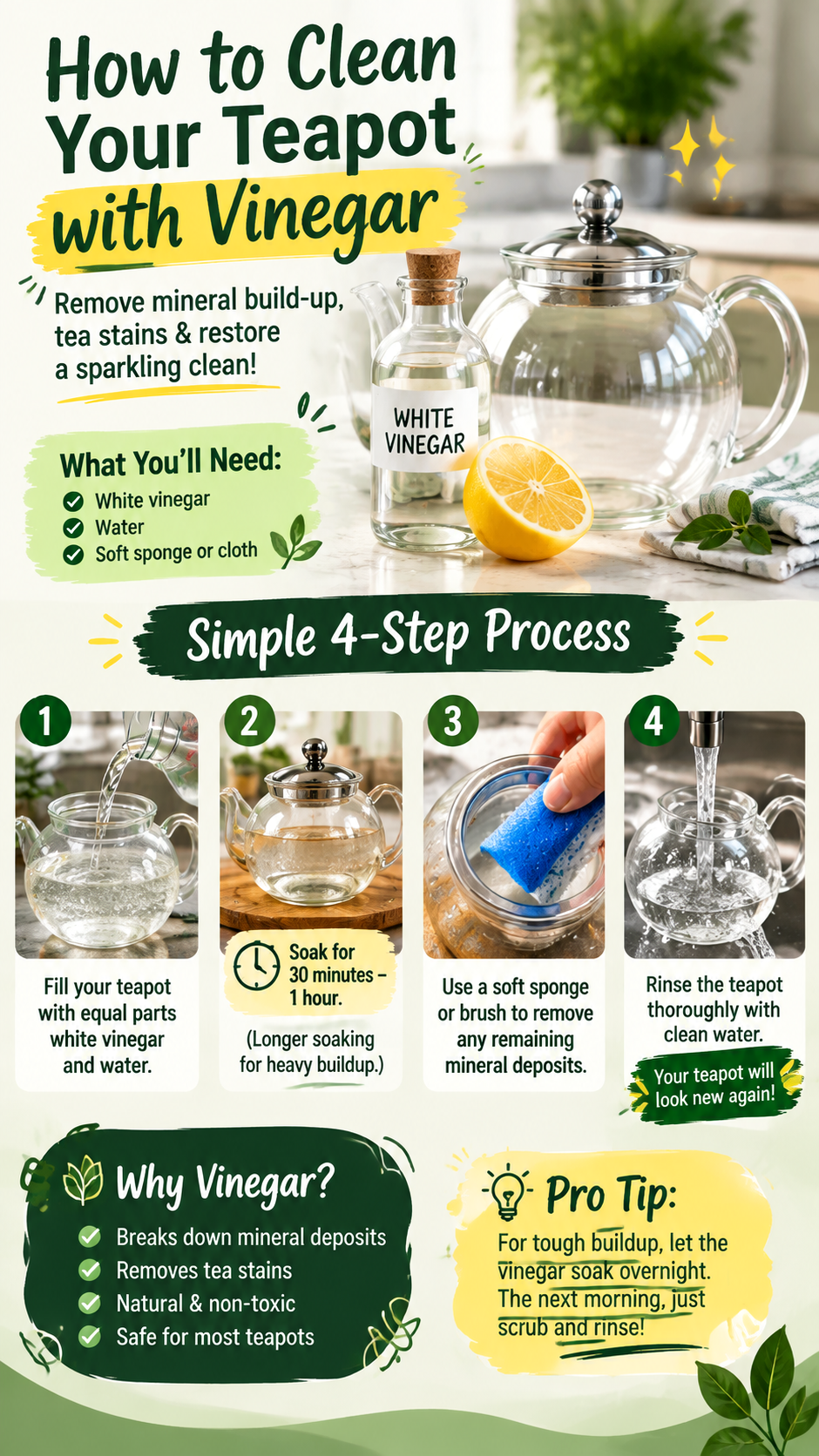
Whether you use a glass teapot, a stainless steel kettle, or a traditional stovetop teapot, understanding how to clean a tea kettle with vinegar can make routine kitchen maintenance easier. The process is straightforward: combine equal parts white vinegar and water, allow the solution to soak, gently scrub any remaining deposits, and rinse thoroughly. The key is choosing a cleaning method that suits your kettle’s material and following the manufacturer’s care instructions.
Key Takeaways
- White vinegar helps dissolve mineral deposits caused by hard water.
- A mixture of equal parts white vinegar and water is a useful starting point for cleaning many compatible kettles.
- Allow the solution to soak for 30 minutes to one hour for ordinary buildup.
- Use a soft sponge or cloth to remove loosened residue without scratching the surface.
- Rinse the kettle thoroughly with clean water to remove vinegar residue and odor.
- Always check the manufacturer’s instructions before using vinegar, especially on specialty finishes or delicate materials.
Why Does Your Tea Kettle Develop Mineral Buildup?
If you’ve noticed white flakes, chalky patches, brown stains, or a cloudy film inside your tea kettle, you’re not alone. These marks commonly develop through regular use, particularly in areas where tap water contains high levels of dissolved minerals.
Hard water contains minerals such as calcium and magnesium. When water is heated and evaporates, some of these minerals can remain behind, gradually forming deposits on the kettle’s interior. This residue is commonly called limescale or mineral buildup.
Glass teapots make these deposits especially noticeable because their transparent surfaces reveal every cloudy patch. Stainless steel kettles can also develop white or gray residue, while other kettle materials may show discoloration or water spots.
Common Signs Your Kettle Needs Cleaning
- White, chalky deposits: These are often associated with minerals left behind by hard water.
- Cloudy glass: A layer of residue can make a once-clear glass teapot look dull.
- Brown or tan stains: Tea residue, mineral deposits, or a combination of both can contribute to discoloration.
- Visible flakes: Loose mineral deposits may detach from the interior during regular use.
- Persistent water spots: Dried droplets can leave marks on glass and polished surfaces.
Regular cleaning helps keep your kettle looking better and makes it easier to remove deposits before they become stubborn. It also helps you identify other problems, such as damaged coatings or worn seals, that may require a different approach.
Why Use White Vinegar to Clean a Tea Kettle?
White vinegar is a popular household cleaning ingredient because it contains acetic acid, which can react with and help dissolve many calcium-based mineral deposits. This makes it useful for loosening the chalky residue that accumulates when water is repeatedly heated.
Unlike abrasive scouring powders, diluted white vinegar works primarily through a chemical reaction rather than vigorous scrubbing. Once the deposits begin to loosen, a soft sponge or cloth can help remove the remaining residue.
Benefits of Vinegar Cleaning
- Helps remove limescale: The acidity of vinegar can break down many common mineral deposits.
- Reduces visible staining: It may help lift some discoloration associated with mineral residue and tea buildup.
- Uses simple household supplies: White vinegar, water, and a soft cleaning tool are often all you need.
- Limits the need for abrasive scrubbing: Soaking gives the solution time to loosen deposits.
- Supports routine maintenance: Periodic cleaning can help prevent mineral residue from accumulating excessively.
Important: Vinegar is useful for mineral deposits, but it is not suitable for every kettle. Check the manufacturer’s cleaning instructions before using it on aluminum, specialty coatings, delicate finishes, or appliances with specific descaling requirements. Never immerse an electric kettle’s base, electrical connector, or power cord in water.
White vinegar is also not a universal stain remover. Heavy tea discoloration, corrosion, damaged finishes, or stains caused by other substances may require a different treatment. For routine limescale, however, a diluted vinegar soak is a practical place to start when the kettle’s care instructions permit it.
What You’ll Need to Clean Your Tea Kettle
Before getting started, gather your supplies. Having everything ready makes the process simple and helps you avoid using tools that could damage the kettle’s surface.
- White vinegar: Standard household white vinegar is a convenient choice for this cleaning method.
- Clean water: Use water to dilute the vinegar and rinse the kettle afterward.
- Soft sponge or microfiber cloth: Choose a nonabrasive option that is suitable for your kettle’s material.
- Small bowl: This is optional but useful if you want to measure or mix the solution separately.
- Clean drying cloth: A soft towel can help dry the outside after cleaning.
Skip steel wool, rough scouring pads, and harsh abrasive cleaners unless the manufacturer specifically approves them. These tools can scratch glass, dull polished metal, or damage protective coatings.
Choosing the Right Vinegar
For this method, use ordinary white household vinegar rather than a flavored or colored variety. Colored vinegar may leave unwanted marks, while specialty cleaning products can have different concentrations and usage instructions.
There is no need to add dish soap, bleach, baking soda, or other cleaning chemicals to the vinegar solution. Keeping the mixture simple makes the process easier to manage.
How to Clean a Tea Kettle With Vinegar in 4 Easy Steps
The cleaning process follows four simple stages: fill, soak, scrub if necessary, and rinse. This method is suitable for many vinegar-compatible kettles and teapots, including some glass and stainless steel models.
Step 1: Fill the Kettle With Equal Parts Vinegar and Water
Start with a cool, empty kettle. Measure equal parts white vinegar and water, then pour the mixture into the kettle until the affected areas are covered.
For example, you can combine one cup of white vinegar with one cup of water if that amount is appropriate for the size of your kettle. Adjust the quantity as needed, making sure not to exceed the manufacturer’s recommended fill level.
If mineral deposits appear only near the bottom, make sure the solution reaches that area. For deposits around the sides, gently adjust the kettle’s position if doing so is safe and practical.
Do not turn on an electric kettle unless its manufacturer specifically instructs you to use a heating cycle for descaling. Some models require a cold soak, while others have a designated descaling procedure.
Step 2: Let the Vinegar Solution Soak
Allow the diluted vinegar solution to sit for approximately 30 minutes to one hour. This gives the acidity time to loosen the mineral deposits, making them easier to remove.
For light buildup, a shorter soak may be sufficient. More persistent deposits might require additional time or a second cleaning session, depending on the kettle’s material and the manufacturer’s guidance.
Check the kettle occasionally to see whether the chalky residue is beginning to loosen. Avoid assuming that a longer soak is always better, particularly when the kettle has a specialty coating, metal components that may be sensitive to acids, or manufacturer-specific cleaning restrictions.
Pro Tip: Start with a 30-minute soak rather than immediately leaving the vinegar solution overnight. If deposits remain, rinse the kettle, inspect the surface, and repeat a suitable short treatment if the manufacturer permits it. Overnight soaking is not necessary for most routine cleaning and may be unsuitable for certain materials.
Step 3: Gently Scrub Any Remaining Deposits
After soaking, carefully pour out the vinegar solution and inspect the inside of the kettle. Some mineral deposits may have dissolved, while others may remain attached to the surface.
Use a soft sponge or cloth to wipe away loosened residue. For a narrow opening, choose a cleaning brush specifically designed for kettles or teapots, provided the manufacturer approves it.
Work gently around the bottom, corners, and other areas where mineral deposits tend to collect. Avoid applying excessive pressure, particularly on glass surfaces or nonstick coatings.
If stubborn deposits remain, repeat the soak rather than resorting to aggressive scrubbing. Several gentle cleaning sessions are often preferable to scratching or damaging the kettle.
How to Handle Stubborn Tea Stains
Tea stains and mineral deposits are not always the same thing. Mineral buildup often looks chalky or crusty, while tea residue may appear brown or tan. Vinegar may help with some discoloration, but it might not remove every tea stain completely.
Begin with the diluted vinegar soak and gentle wiping. If staining remains, consult the kettle’s care instructions for an approved cleaning method. Avoid combining different cleaners in an attempt to produce a stronger solution.
Step 4: Rinse the Kettle Thoroughly With Clean Water
Rinsing is an essential part of cleaning a tea kettle with vinegar. Empty the kettle and rinse its interior several times with fresh water to remove loosened deposits and lingering vinegar residue.
For an electric kettle, follow the manufacturer’s instructions for rinsing. Keep electrical components and the base dry, and never submerge the appliance unless it is explicitly designed for that purpose.
After rinsing, inspect the kettle. If you can still smell a strong vinegar odor, rinse it again. You can also wipe the outside with a damp cloth if needed, taking care around handles, lids, electrical fittings, and decorative finishes.
Let the kettle dry according to its care instructions before storing it. If the kettle is intended for boiling water, follow the manufacturer’s recommended procedure for returning it to use.
Once the cleaning process is complete, the kettle should look clearer, with less visible mineral residue and a fresher appearance.
How to Clean Different Types of Tea Kettles
Although the basic vinegar method is simple, the safest approach depends on the kettle’s construction. Glass, stainless steel, aluminum, and coated kettles may respond differently to acidic cleaners.
Glass Teapots and Kettles
Glass makes mineral buildup easy to spot, which is helpful when checking whether a cleaning treatment has worked. For a vinegar-compatible glass teapot, use the diluted solution and allow it to soak before wiping gently with a soft sponge.
Avoid sudden temperature changes that could stress the glass. Do not pour boiling liquid into a cold glass teapot or expose a hot vessel to cold water unless it is specifically designed to handle that change.
Pay attention to the lid, handle attachments, metal infusers, and seals. These components may have different cleaning requirements from the glass body.
Stainless Steel Kettles
Many stainless steel kettles can be descaled with diluted white vinegar, but the manufacturer’s instructions should always come first. A soft cloth is generally a sensible choice for removing loosened deposits without leaving scratches.
After cleaning, rinse thoroughly and dry the exterior to reduce water spots. Do not use abrasive pads unless the manufacturer confirms they are appropriate for the particular finish.
Electric Tea Kettles
Electric kettles require extra care because water and cleaning solutions must stay away from electrical connections. Some models have removable filters, special descaling settings, or instructions specifying which products can be used.
Unplug the kettle when required by its instructions, let it cool, and follow the approved descaling procedure. Do not immerse the base, cord, plug, or electrical connector in water. Avoid operating the kettle with vinegar inside unless the manufacturer explicitly permits that method.
Aluminum and Specialty-Coated Kettles
Acidic cleaners can affect certain metals, finishes, and coatings. If your kettle is made from aluminum or has a nonstick or decorative interior, do not assume that vinegar is safe to use.
Check the owner’s manual for approved descaling products and contact the manufacturer if the instructions are unclear. Using the correct method protects the kettle and reduces the risk of discoloration or surface damage.
Why This Matters
The best cleaning routine removes buildup without damaging the kettle. Identify the material first, use a compatible cleaning solution, and choose gentle tools. A little extra care can prevent scratches, protect coatings, and help your teapot remain attractive for longer.
Common Mistakes to Avoid When Cleaning a Tea Kettle
Even a simple household cleaning method can cause problems if used incorrectly. Keep these common mistakes in mind when removing mineral buildup.
Using Undiluted Vinegar Without Checking Instructions
Stronger is not always better. Undiluted vinegar may be unnecessary for ordinary buildup and can be unsuitable for some materials. Begin with a diluted solution if the manufacturer allows vinegar cleaning, and follow any specified concentration limits.
Scrubbing Too Hard
Hard scrubbing can scratch glass, damage coatings, and dull polished metal. Give the cleaning solution time to loosen deposits before wiping gently. If the residue does not come away easily, repeat an approved soak instead of increasing pressure.
Forgetting to Rinse Thoroughly
Leftover vinegar can affect the smell and taste of water. Rinse the kettle several times with clean water, following the manufacturer’s instructions, and repeat the rinse if a strong vinegar odor remains.
Mixing Vinegar With Other Cleaning Chemicals
Never mix vinegar with bleach or bleach-containing products. This combination can release dangerous chlorine gas. Avoid combining vinegar with other cleaning chemicals, too, unless the product labels explicitly confirm that doing so is safe.
There is no need to mix vinegar with baking soda for this cleaning method. They react with each other, producing fizzing that may look impressive but reduces the vinegar’s acidity and does not necessarily improve mineral removal.
Leaving the Solution to Soak for Too Long
Long soaking times are not automatically more effective. Excessive exposure to an acidic solution can be unsuitable for some materials and components. Start with a reasonable soaking period, inspect the result, and follow the kettle’s cleaning instructions.
How Often Should You Descale Your Tea Kettle?
How frequently you need to clean your tea kettle depends on how often you use it, the mineral content of your water, and the type of kettle you own.
If you live in a hard-water area, you may notice limescale developing relatively quickly. If your water contains fewer minerals, deposits may form more slowly. Frequent use can also make regular inspection worthwhile.
Rather than following a rigid schedule, check the kettle periodically for chalky residue, visible flakes, cloudy glass, or deposits around the bottom and spout. Clean it when buildup becomes noticeable, following the manufacturer’s recommended maintenance intervals.
Simple Habits That Help Prevent Buildup
- Empty leftover water when practical instead of allowing it to sit for extended periods.
- Rinse the kettle after use when appropriate for its design.
- Wipe the exterior with a soft cloth to remove water spots.
- Inspect the interior regularly so deposits can be addressed early.
- Use filtered water if appropriate and convenient for your household.
- Follow the manufacturer’s maintenance guidance for filters and removable components.
These small habits will not eliminate mineral deposits entirely, especially if your tap water is hard. However, they can help you spot buildup earlier and make cleaning more manageable.
Frequently Asked Questions About Vinegar Kettle Cleaning
Can I Use White Vinegar to Remove Limescale From a Tea Kettle?
Yes, diluted white vinegar can help dissolve many calcium-based mineral deposits in kettles that are compatible with acidic cleaners. Check the manufacturer’s instructions first, especially for aluminum, coated, and specialty kettles.
How Long Should Vinegar Sit in a Tea Kettle?
For ordinary mineral buildup, start with a soak of approximately 30 minutes to one hour if permitted by the manufacturer. Heavy deposits may require a repeated treatment, but avoid prolonged soaking unless the kettle’s care instructions specifically allow it.
Should I Boil the Vinegar and Water Mixture?
Not necessarily. Some kettles have manufacturer-approved descaling procedures that involve heating a solution, while others should be treated with a cold soak. Follow the instructions for your particular model instead of assuming that boiling is required.
Will Vinegar Remove Brown Tea Stains?
Vinegar may help with some discoloration, especially when stains are associated with mineral residue. However, tea stains can be different from limescale, so results vary. If brown marks remain after a gentle cleaning, consult the manufacturer’s approved cleaning recommendations.
How Do I Get Rid of the Vinegar Smell?
Empty the solution and rinse the kettle several times with clean water. If the odor remains, repeat the rinsing process. Follow any additional cleaning or first-use instructions supplied by the manufacturer before preparing a drink.
Can I Leave Vinegar in My Kettle Overnight?
It is generally better to begin with a shorter soak. Overnight soaking may be inappropriate for certain metals, finishes, seals, and electrical appliances. Check the manufacturer’s instructions and repeat a shorter treatment if needed and permitted.
Is Vinegar Safe for Every Type of Teapot?
No. Glass and stainless steel models may tolerate diluted vinegar when their manufacturers approve it, but other materials and coatings can be sensitive to acids. Always confirm that the cleaning method is appropriate for your particular kettle.
Quick Points: Cleaning Your Tea Kettle at a Glance
- Cleaning solution: Equal parts white vinegar and water, if approved for your kettle.
- Soaking time: Approximately 30 minutes to one hour for routine mineral deposits.
- Cleaning tool: A soft sponge, nonabrasive cloth, or approved cleaning brush.
- Final step: Rinse thoroughly with clean water and remove all visible residue.
- Best maintenance habit: Inspect your kettle regularly and clean deposits before they become difficult to remove.
Final Thoughts: Restore Your Tea Kettle With a Simple Cleaning Routine
Learning how to clean a tea kettle with vinegar is a practical way to tackle the mineral buildup that can make your favorite teapot look cloudy, stained, or neglected. When the kettle’s manufacturer permits vinegar cleaning, a simple mixture of white vinegar and water can help loosen limescale without requiring harsh scrubbing.
Remember the four basic steps: fill the kettle with the diluted solution, let it soak, gently remove remaining deposits, and rinse thoroughly. Start with a reasonable soaking time, use nonabrasive cleaning tools, and never overlook the importance of choosing a method that suits your kettle’s material.
Regular maintenance makes a difference, too. Empty leftover water when practical, inspect the interior for chalky residue, and clean the kettle when deposits begin to appear. These small habits can help keep your kitchen essentials looking their best.
With a little attention and a few simple supplies, you can make kettle cleaning part of your regular kitchen routine. Save this easy vinegar cleaning hack for the next time your teapot needs a refresh, and enjoy a cleaner-looking kettle for your daily tea ritual.
Tags
Tea Kettle Cleaning
White Vinegar Cleaning
Mineral Buildup Removal
Limescale Cleaning
Kitchen Cleaning Tips
Natural Cleaning Hacks
Glass Teapot Care
Home Cleaning