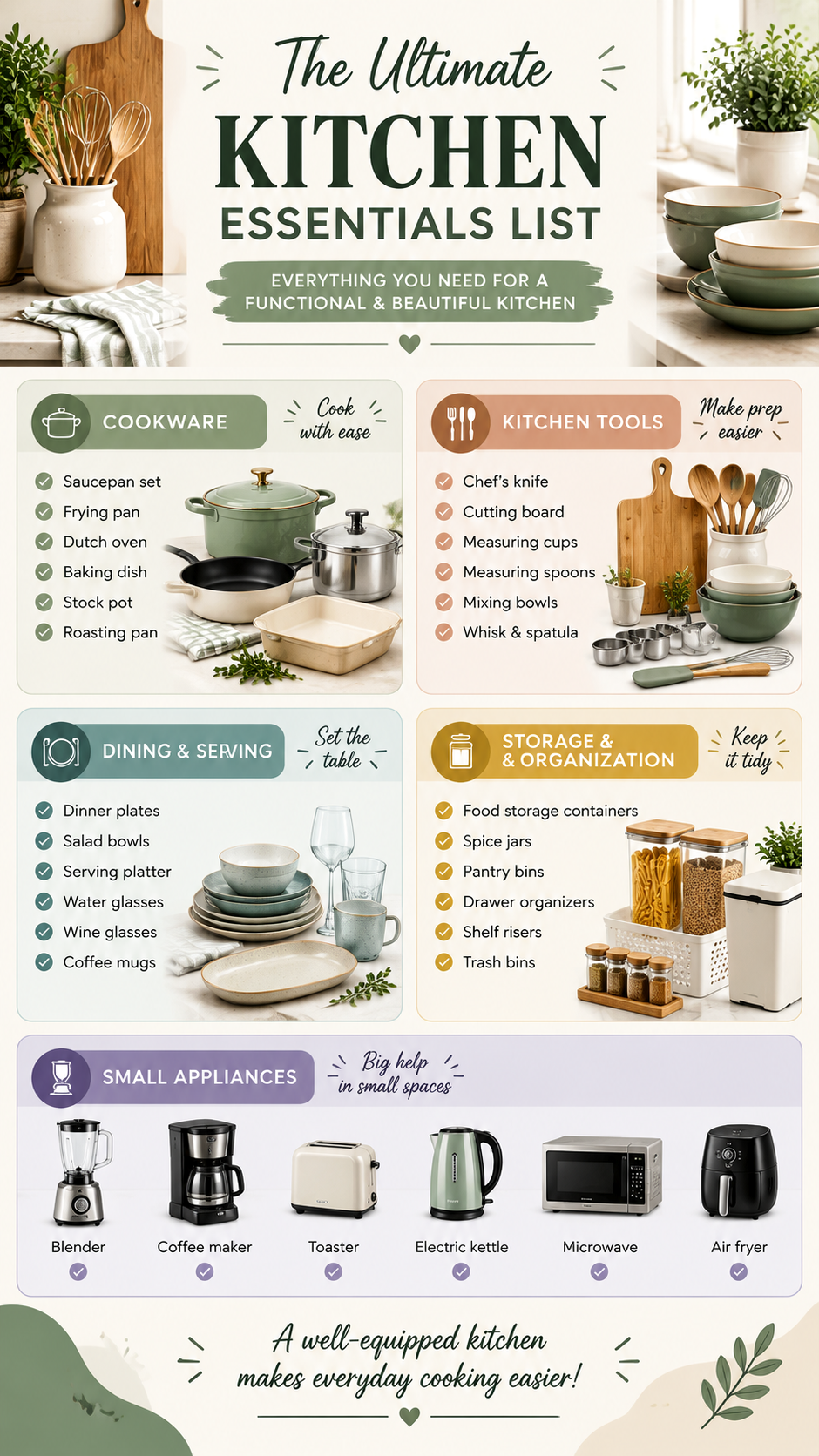
Brides Kitchen Checklist Essential Kitchen Items Every Newlywed Couple Needs
Setting up your first kitchen as a newlywed is an exciting step toward building a happy home together. From preparing your favorite meals to hosting family dinners and enjoying quiet mornings with coffee, the right kitchen essentials can make everyday life easier and more enjoyable. A well-planned bride’s kitchen checklist helps you organize everything you need, avoid unnecessary purchases, and create a functional kitchen that suits your lifestyle.
Whether you are preparing a wedding registry, furnishing your first apartment, or creating a practical shopping list before moving into your new home, this ultimate kitchen essentials checklist covers the basics. You will find cookware, everyday kitchen tools, dinnerware, beverage essentials, storage solutions, cleaning supplies, and useful electrical appliances to consider as you build your dream kitchen.
Key Takeaways
- Start with versatile cookware, reliable utensils, and basic food preparation tools.
- Choose dinnerware, glasses, and serving pieces based on your household size and entertaining habits.
- Organize dry goods, leftovers, and pantry staples with practical storage containers.
- Keep dishwashing, drying, and kitchen cleaning supplies within easy reach.
- Purchase electrical appliances according to your cooking routine, available space, and budget.
- Use this bride’s kitchen checklist to plan your wedding registry and avoid buying duplicates.
1. Essential Cookware for Your Newlywed Kitchen
Cookware is one of the most important categories on any kitchen essentials checklist. Having the right pots and pans makes it easier to prepare breakfast, cook weeknight dinners, simmer sauces, and experiment with new recipes.
You do not need an oversized cookware collection to get started. Focus on versatile pieces that work with the meals you prepare most often. A few dependable pots and pans will usually serve you better than a cupboard filled with rarely used items.
Cookware Checklist
- Cookware set: A selection of everyday pots and pans provides a foundation for preparing different meals.
- Frying pans: Choose one or two useful sizes for eggs, vegetables, pancakes, and quick dinners.
- Pressure cooker: A practical option for beans, stews, grains, and meals that benefit from faster cooking.
- Baking trays: Useful for roasted vegetables, baked chicken, cookies, and sheet-pan dinners.
- Pizza tray: Handy for homemade pizza and other oven-baked favorites.
- Cake pan or mold: Ideal for birthdays, celebrations, and weekend baking.
- Milk pot or small saucepan: Suitable for warming milk, preparing sauces, and heating small portions.
- Water pitcher: Keeps drinking water convenient for everyday meals and guests.
- Colander: Helps drain pasta, wash produce, and rinse beans.
- Pasta strainer: Useful if pasta is a regular part of your meal rotation.
- Tea strainer: A simple addition for loose-leaf tea and other strained beverages.
Important: Before buying a complete cookware set, check which pieces you will genuinely use. A medium saucepan, a large pot, a frying pan, and an oven-safe baking dish can cover many everyday cooking needs without taking up too much storage space.
How to Choose the Right Cookware
Consider your cooktop, preferred cooking methods, and cleaning habits when comparing cookware. Stainless steel is versatile and durable, while nonstick pans can make delicate foods easier to prepare and clean up after. Cast iron can be useful for certain cooking techniques but requires different care.
Always check that your cookware is compatible with your stove. If you have an induction cooktop, look specifically for induction-compatible pots and pans. Matching cookware finishes can create a coordinated look, but performance and practicality should come first.
2. Daily Kitchen Tools Every Bride Should Have
Cooking becomes much easier when your essential utensils are easy to find. Everyday kitchen tools help with chopping, mixing, stirring, opening packages, and serving food. They are often inexpensive individually, making them useful additions to a wedding registry or starter kitchen shopping list.
Everyday Utensil Checklist
- Cutlery set: Include everyday spoons and other eating utensils appropriate for your household.
- Forks and table knives: Make sure you have enough for daily meals and occasional guests.
- Kitchen knives: A chef’s knife and a smaller paring knife are a useful starting combination.
- Wooden spoons: Great for stirring soups, sauces, and other dishes.
- Silicone spoon or spatula: Useful for mixing and scraping bowls while helping protect suitable nonstick cookware.
- Hand whisk: Ideal for mixing dressings, beating eggs, and preparing simple batters.
- Can opener: A basic tool for opening canned ingredients.
- Bottle opener: Helpful for bottles with removable caps.
- Vegetable peeler: Speeds up preparing carrots, potatoes, cucumbers, and other produce.
- Grater: Useful for cheese, vegetables, citrus zest, and other ingredients.
- Pizza cutter: Convenient for slicing homemade or purchased pizza.
- Kitchen tongs: Help turn, lift, and serve food.
- Kitchen scissors: Useful for food packaging and appropriate kitchen tasks.
- Cutting board: Protects countertops and provides a dedicated surface for food preparation.
When choosing kitchen tools, look for comfortable handles, sturdy construction, and materials that are easy to clean. A utensil holder near the cooking area can keep frequently used tools accessible without crowding your countertop.
A Few Extra Tools Worth Considering
Depending on your cooking habits, you may also want measuring cups, measuring spoons, a heat-resistant spatula, a ladle, a slotted spoon, a potato masher, and a kitchen thermometer. These additions are especially helpful if you bake frequently or follow detailed recipes.
Keep sharp knives in a knife block, protective sheath, or suitable drawer organizer. Store cutting boards upright when possible so they can dry thoroughly after washing.
3. Dining and Serving Essentials for Your First Home
A newlywed kitchen should be ready for everyday meals as well as special occasions. Dinnerware and serving pieces help make breakfast, family dinners, and celebrations feel organized and welcoming. You can choose classic neutral dishes, subtle patterns, or earthy colors that coordinate with your kitchen decor.
Dinnerware and Tableware Checklist
- Dinner plates: Choose enough for your household, with a few extras for visitors.
- Soup bowls: Useful for soups, stews, cereal, and other everyday dishes.
- Dessert plates: Convenient for cake, fruit, snacks, and small servings.
- Serving platters: Make it easier to present main dishes, appetizers, and side dishes.
- Water glasses: Everyday drinking glasses are among the most frequently used kitchen items.
- Juice glasses: Useful for breakfast and cold beverages.
- Tea cups and saucers: A lovely option for tea with family or guests.
- Coffee cups and saucers: Ideal for serving coffee in a coordinated way.
- Mugs: Everyday favorites for coffee, tea, hot chocolate, and other warm drinks.
- Serving spoons: Help transfer vegetables, rice, salads, and side dishes to plates.
- Serving tray: Useful for carrying drinks, arranging snacks, or serving breakfast.
For a practical starter collection, consider dinner plates, bowls, glasses, mugs, and a small number of serving pieces. Expand your collection when you discover how often you host guests or prepare larger meals.
Create a Coordinated Dining Style
Neutral plates and simple glassware are easy to combine with different table linens and seasonal decorations. Cream, white, olive green, and warm metallic accents can create a timeless look without requiring every item to match perfectly.
If you enjoy entertaining, consider a separate set of serving bowls or platters. If storage space is limited, choose stackable dishes and nesting bowls that fit neatly inside cupboards.
4. Set Up a Practical Beverage Corner
A small beverage station can make your kitchen feel more organized and inviting. Whether you prefer morning coffee, afternoon tea, or refreshing drinks throughout the day, keeping your beverage essentials together saves time and creates a convenient routine.
Beverage Station Checklist
- Electric kettle: Convenient for boiling water for tea, instant drinks, and other recipes.
- Coffee pot: Choose a brewing method that suits your preferences.
- Turkish coffee pot or cezve: Useful for preparing traditional Turkish-style coffee.
- Teapot: Perfect for brewing and serving tea.
- Tea strainer: Helps filter loose tea leaves.
- Coffee and tea jars: Keep frequently used beverages organized and accessible.
- Sugar container: Provides a dedicated place for sugar or another preferred sweetener.
You do not need every brewing accessory at once. Start with the kettle or coffee maker you will use regularly, then add specialty equipment if you enjoy preparing particular drinks.
A tray, a few mugs, and clearly labeled containers can make a beverage corner look polished. Position electrical appliances near appropriate outlets, away from water splashes, and leave enough room to use them safely.
5. Food Storage and Kitchen Organization Essentials
An organized kitchen makes cooking, meal planning, and grocery shopping easier. Food storage containers help preserve leftovers, separate ingredients, and keep pantry shelves tidy. They can also make it easier to see which ingredients you already have before buying more.
Storage Checklist
- Food storage containers: Use suitable containers for leftovers, prepared ingredients, and packed lunches.
- Spice jars: Keep frequently used seasonings organized.
- Pasta and rice containers: Store dry staples in clean, airtight containers.
- Flour and sugar containers: Help protect baking ingredients from moisture and pests.
- Oil bottles: Provide convenient access to cooking oils.
- Refrigerator storage boxes: Group compatible items together and make shelves easier to manage.
- Food storage bags: Useful for portions, snacks, and suitable short-term storage needs.
- Aluminum foil: Handy for covering food and certain cooking tasks.
- Plastic wrap: Useful for covering suitable bowls and dishes.
- Freezer bags: Help organize foods intended for freezer storage.
Simple Ways to Organize Your Pantry
Group similar ingredients together, placing baking supplies in one area, grains and pasta in another, and everyday spices near the cooking zone. Use labels when containers are not transparent or when ingredients look similar.
Choose storage containers based on the dimensions of your shelves and drawers. Before purchasing a large matching set, measure your available space and consider the quantities of food you typically keep at home.
Why This Matters
A beautifully organized kitchen is not about owning dozens of matching containers. It is about making everyday tasks easier. Store frequently used ingredients where you can reach them, keep heavier items on lower shelves, and label containers when necessary. Simple systems are easier to maintain during busy weeks.
6. Cleaning Essentials for a Fresh, Functional Kitchen
Cleaning supplies are easy to overlook when preparing a wedding registry, but they are essential for keeping your new kitchen comfortable and hygienic. Having the right tools ready from the beginning makes it easier to clean as you cook instead of leaving everything until the end of the day.
Kitchen Cleaning Checklist
- Dish sponges: Keep separate sponges or cleaning tools for appropriate kitchen tasks.
- Dish brush: Helpful for cleaning bottles, jars, and dishes with hard-to-reach areas.
- Rubber gloves: Protect your hands during dishwashing and household cleaning.
- Kitchen towels: Useful for wiping surfaces and handling everyday kitchen tasks.
- Drying towels: Keep clean towels available for drying dishes when needed.
- Trash bin: Choose a size that suits your kitchen and household waste habits.
- Garbage bags: Stock the correct size for your bin.
- Under-sink organizer: Keeps cleaning supplies arranged and easy to find.
- Bottle brush: Helps clean reusable bottles and narrow containers.
Choose washable towels that can be cleaned regularly and replace worn sponges or brushes as needed. A dish rack or drying mat can also be useful if you wash dishes by hand or have limited counter space.
Store cleaning products securely and separately from food, dishes, and food preparation areas. Keep products in their original labeled containers and follow their usage instructions, especially when using them around kitchen surfaces.
7. Electrical Kitchen Appliances Worth Considering
Small kitchen appliances can save time and make everyday cooking more convenient. However, they are also among the items most likely to become unnecessary purchases if you buy them before understanding your routine.
Think about what you cook, how often you prepare meals at home, and how much counter and cupboard space you have. Your appliance checklist should reflect your actual needs rather than every gadget available.
Essential and Optional Appliances
- Blender: Useful for smoothies, soups, sauces, and blended drinks.
- Food processor or chopper: Speeds up chopping and preparing ingredients.
- Hand mixer: A practical option for whipping, mixing batters, and preparing simple desserts.
- Electric kettle: Convenient for quickly heating water for beverages and cooking tasks.
- Microwave: Useful for reheating meals, defrosting suitable foods, and preparing quick dishes.
- Air fryer: Offers a convenient way to prepare certain crispy foods with less added oil than some traditional frying methods.
- Coffee machine: Worth considering if you regularly drink freshly brewed coffee.
- Toaster: Handy for toast, breakfast, and quick snacks.
Other appliances, such as a stand mixer, rice cooker, slow cooker, or electric pressure cooker, may be worthwhile depending on your cooking preferences. They are optional additions rather than universal requirements for every newlywed kitchen.
Pro Tip: Buy frequently used appliances first and wait before purchasing specialty gadgets. Measure your counter space, check the appliance dimensions, and compare cleaning requirements, capacity, and energy use. A smaller collection of useful appliances is often easier to maintain than a crowded countertop.
8. How to Build a Wedding Registry Kitchen Checklist
A wedding registry is an opportunity to gather the kitchen items you need to begin married life comfortably. The key is to make the list personal, practical, and easy for friends and family to understand.
Start with Your Everyday Routine
Consider your usual meals. If you cook dinner most evenings, prioritize cookware, cutting boards, knives, utensils, and food storage containers. If breakfast and coffee are important parts of your day, include a kettle, mugs, and your preferred coffee-making equipment.
If you enjoy baking, add measuring tools, baking trays, cake pans, mixing bowls, and a hand mixer. Couples who regularly host guests may prefer extra plates, glasses, serving platters, and a practical serving tray.
Divide Your List into Three Priorities
- Must-haves: Items you need immediately, such as a saucepan, frying pan, cooking utensils, plates, glasses, dish soap, and a trash bin.
- Useful additions: Items that improve convenience, such as a food processor, extra storage containers, a hand mixer, or additional serving dishes.
- Future upgrades: Specialty appliances, decorative pieces, and extra cookware that can wait until you understand your needs.
This simple approach helps you allocate your budget wisely. It also makes it easier to identify which items could be suitable wedding gifts and which you can purchase later.
Avoid Duplicate Purchases
Before adding an item to your registry, check what you already own and discuss which pieces you can share. A single good-quality kitchen knife may be more useful than several inexpensive ones, while a practical set of food storage containers may offer more everyday value than decorative accessories.
Where possible, include different price points so guests can select gifts that fit their budgets. For expensive appliances, consider whether you genuinely need the item and whether it will fit comfortably in your kitchen.
9. Smart Budgeting Tips for Newlywed Kitchen Essentials
Furnishing a kitchen can become expensive when you buy everything at once. Fortunately, you can create a well-equipped space gradually by focusing on the items that deliver the most value in everyday life.
Spend More Carefully on Frequently Used Items
Prioritize durability and comfort for items you use almost every day, such as frying pans, knives, cutting boards, and cookware. Less frequently used accessories can often be simpler, provided they are safe and suitable for their intended purpose.
Compare Sets with Individual Pieces
Kitchen bundles can offer convenience, but they may contain items you do not need. Compare the total price with the cost of buying the most useful pieces individually. Look at the materials, warranty, care instructions, and available storage space before deciding.
Leave Room for Future Needs
You do not need to complete your kitchen in a single shopping trip. Start with the essentials, prepare meals in your new home, and notice which tasks would benefit from additional tools. This approach reduces clutter and helps ensure your next purchases are genuinely useful.
10. Quick Kitchen Essentials Checklist at a Glance
Your Newlywed Kitchen Recap
- Cookware: Pots, frying pans, a saucepan, baking trays, and a colander.
- Kitchen tools: Knives, cutting board, spatula, wooden spoon, whisk, peeler, and can opener.
- Dining: Dinner plates, bowls, glasses, mugs, cutlery, and serving utensils.
- Beverages: Kettle, teapot or coffee equipment, cups, and storage jars.
- Organization: Food containers, spice jars, pantry containers, foil, and freezer bags.
- Cleaning: Sponges, dish brush, gloves, towels, trash bin, and garbage bags.
- Appliances: Choose a blender, microwave, air fryer, mixer, or coffee machine according to your needs.
Conclusion: Create a Kitchen That Feels Like Home
Your bride’s kitchen checklist is more than a list of pots, pans, utensils, and appliances. It is a starting point for creating a comfortable space where you and your partner can cook together, share meals, welcome guests, and build everyday routines.
Begin with essential cookware, reliable kitchen tools, practical dinnerware, food storage containers, and cleaning supplies. Add a beverage corner and useful electrical appliances according to your preferences. As your cooking habits develop, you can gradually expand your collection with items that make your home more functional.
Remember that the best kitchen is not necessarily the one with the most equipment. It is the one that suits your space, supports your lifestyle, and makes preparing meals feel enjoyable rather than complicated. Use this ultimate kitchen essentials checklist to plan your wedding registry, organize your shopping, and create a kitchen you will love using every day.
Save this checklist, share it with your partner, and revisit it as you prepare for married life. With a little planning and a focus on everyday essentials, building your dream kitchen can be a simple and rewarding part of starting your new chapter together.
Tags
Bride’s Kitchen Checklist
Kitchen Essentials
Newlywed Kitchen
Wedding Registry
Kitchen Organization
Cookware Checklist
First Home Essentials
Kitchen Must-Haves