
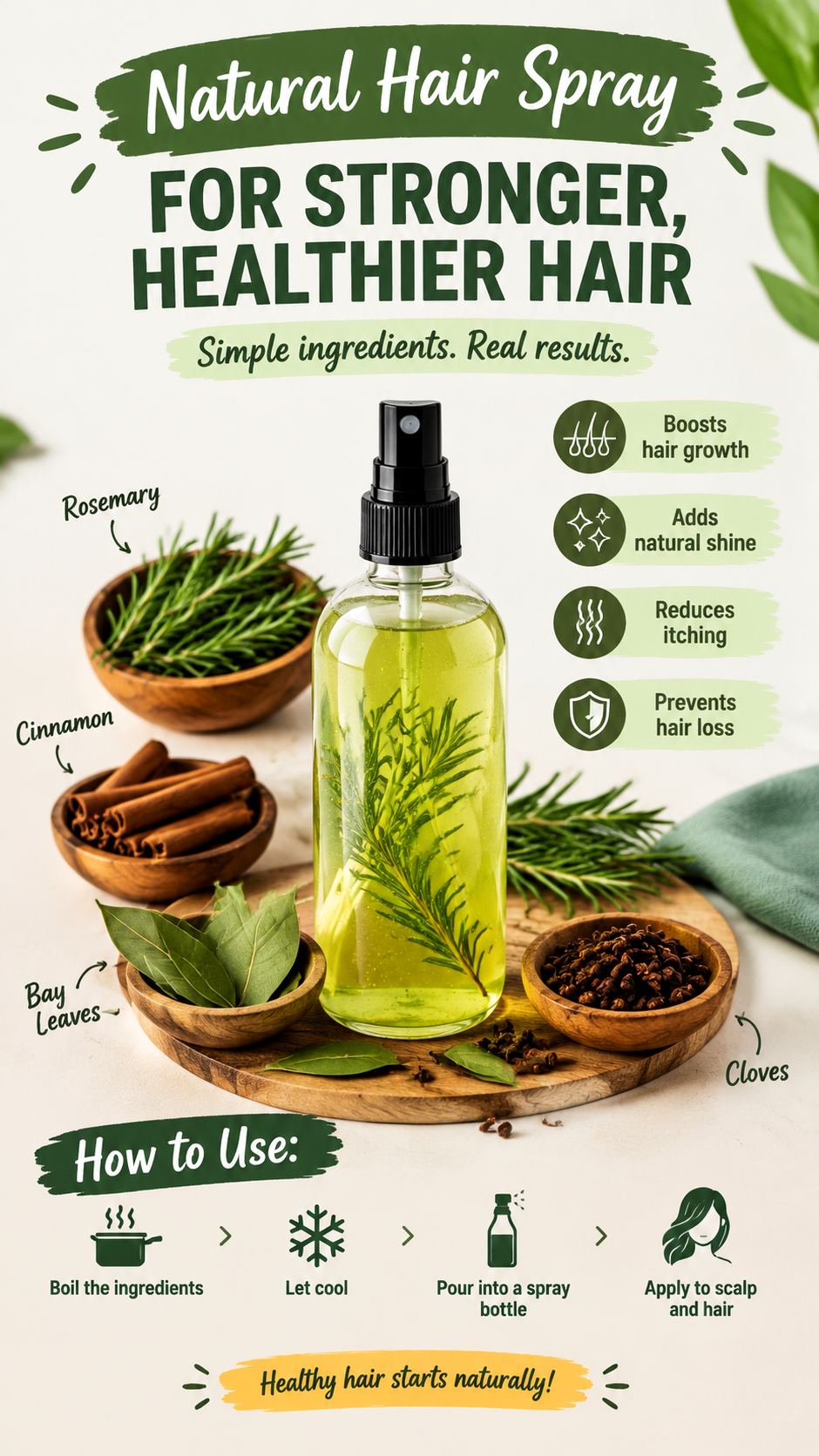
DIY Rosemary, Clove Cinnamon Hair Growth Spray for Stronger, Shinier Hair
Looking for a simple way to refresh your hair care routine with natural ingredients? A homemade rosemary, clove, and cinnamon hair growth tonic is an easy DIY option to explore. Made with familiar kitchen herbs, bay leaves, and water, this herbal scalp spray can become a refreshing addition to your regular hair care routine without requiring expensive products or complicated steps.
The idea is simple: simmer selected herbs and spices in water, allow the mixture to cool, strain it, and transfer it into a spray bottle. The result is a lightly colored herbal infusion that can be applied to the scalp and hair as part of a consistent self-care routine.
However, it is important to separate popular hair care claims from proven results. Although rosemary has some preliminary research related to hair growth, there is not enough strong clinical evidence to establish that a homemade mixture of rosemary, cloves, cinnamon, and bay leaves will prevent hair loss or make hair grow faster. The best approach is to enjoy this recipe as an optional hair care ritual while prioritizing scalp health, gentle styling, and evidence-based treatment when needed.
Key Takeaways
- Rosemary, cloves, cinnamon, bay leaves, and water form the basis of this homemade herbal hair spray.
- The recipe is simple to prepare and can be used as an occasional addition to a hair care routine if your scalp tolerates it.
- Rosemary has limited research suggesting potential benefits for certain types of hair loss, but this homemade water-based recipe has not been clinically tested.
- Patch testing and careful storage are essential when using homemade herbal preparations.
- Healthy hair also depends on gentle handling, adequate nutrition, and addressing underlying causes of hair loss.
- Persistent shedding, bald patches, or scalp irritation deserve professional assessment rather than relying on DIY remedies alone.
What Is a Rosemary, Clove, and Cinnamon Hair Growth Tonic?
A rosemary, clove, and cinnamon hair tonic is a homemade herbal infusion prepared by simmering plant ingredients in water. Once cooled and strained, the liquid can be transferred into a clean spray bottle for convenient application to the scalp and hair.
This particular combination brings together five main ingredients: cloves, rosemary sprigs, cinnamon sticks, bay leaves, and water. Each ingredient has a distinct aroma and a history of use in traditional home remedies and personal care practices.
Rosemary provides a fresh herbal fragrance, while cloves and cinnamon contribute warm, spicy notes. Bay leaves add another aromatic element. Together, these ingredients create a botanical infusion that appeals to people interested in simple, affordable DIY hair care.
The recipe is especially attractive because it uses accessible ingredients rather than requiring a long list of specialized products. Preparing a small batch can also make it easier to understand what you are applying to your hair.
Important: A natural ingredient is not automatically safe for every scalp, and an herbal infusion is not the same as a clinically tested hair growth treatment. This recipe should be viewed as an optional cosmetic practice, not a guaranteed solution for thinning hair, dandruff, or hair loss.
Ingredients for Homemade Herbal Hair Spray
To prepare a small batch inspired by this recipe, gather the following ingredients. The quantities below follow the proportions shown in the recipe concept.
- 10 whole cloves: Provide a distinctive warm, spicy aroma.
- 3 bay leaves: Add an earthy, herbal fragrance to the infusion.
- 1 cinnamon stick: Contributes a warm scent and traditional botanical appeal.
- 2 rosemary sprigs: Supply the fresh herbal character that makes this tonic popular in DIY hair care.
- 250 ml water: Serves as the liquid base for extracting some water-soluble plant compounds.
1. Rosemary: The Star Ingredient
Rosemary is an aromatic herb commonly associated with cooking, fragrance, and traditional personal care. Its leaves contain naturally occurring compounds that have attracted scientific interest, including research exploring rosemary preparations and certain types of hair loss.
One small clinical study compared rosemary oil with a commonly used hair loss medication over six months in people with androgenetic alopecia. The study reported improvements in hair counts in both groups at the six-month assessment. However, the findings cannot be directly applied to rosemary water or this homemade five-ingredient tonic.
That distinction matters because rosemary essential oil, standardized topical preparations, and boiled rosemary water differ in composition and concentration. The amount of any particular compound extracted into water can also vary depending on the plant material and preparation method.
2. Cloves: A Fragrant Botanical Ingredient
Cloves are dried flower buds with a strong, recognizable aroma. They contain eugenol, a naturally occurring compound studied for several biological properties, including antimicrobial activity under laboratory conditions.
These findings do not establish that a clove infusion can treat scalp infections, eliminate dandruff, or stimulate hair follicles. Concentrated clove preparations may also irritate the skin, especially when used improperly.
For that reason, cloves should be treated as an optional aromatic ingredient rather than a proven hair growth enhancer. Anyone with sensitive skin should consider leaving them out entirely.
3. Cinnamon: Warmth and Aroma
Cinnamon is widely used in cooking and traditional botanical preparations. Its pleasant, warm scent makes it a popular ingredient in homemade beauty recipes, but that does not mean it is suitable for every scalp.
Cinnamon contains aromatic compounds that may cause irritation or allergic contact dermatitis in some people. A preparation that feels harmless on one person’s skin may produce burning, redness, itching, or swelling on another person’s scalp.
Because the potential cosmetic benefits of cinnamon in a hair growth tonic remain unproven, omitting it is a sensible option if your skin is sensitive or you have reacted to fragranced products before.
4. Bay Leaves: An Aromatic Addition
Bay leaves are best known as a culinary herb. In homemade hair care recipes, they are often included for their fragrance and traditional herbal appeal.
There is insufficient clinical evidence to conclude that bay leaf water promotes hair growth, prevents shedding, or removes dandruff. Still, bay leaves can be part of the recipe for those who enjoy experimenting with simple botanical preparations and tolerate the ingredients well.
5. Water: The Base of the Infusion
Water extracts some components from herbs and spices during heating. However, it does not extract every compound in the same way that oil, alcohol, or specialized cosmetic solvents might.
A water-based infusion is also different from a preserved commercial scalp serum. Without an appropriate preservative system and controlled manufacturing conditions, it can support microbial growth during storage.
How to Make Rosemary, Clove, and Cinnamon Hair Spray
Preparing this herbal hair spray is straightforward. The key is to use clean equipment, avoid excessive concentration, and allow the mixture to cool completely before applying it.
Step 1: Prepare Your Ingredients
Measure 250 ml of water. Gather the rosemary sprigs, cloves, bay leaves, and cinnamon stick. Rinse fresh rosemary and bay leaves under clean running water to remove visible dirt.
Use a clean saucepan and a clean, heat-resistant container. Wash your hands before handling the ingredients, and avoid using plant material that appears moldy, damaged, or contaminated.
Step 2: Simmer the Herbal Ingredients
Add the water, cloves, bay leaves, cinnamon stick, and rosemary to the saucepan. Bring the mixture to a gentle boil, then reduce the heat and allow it to simmer briefly.
A short simmer is sufficient for preparing a simple aromatic infusion. Avoid prolonged boiling that reduces the liquid significantly, because this can change its concentration and make the final preparation more difficult to reproduce consistently.
There is no need to add essential oils or other concentrated ingredients. They can introduce additional irritation risks and may not disperse evenly in water.
Step 3: Let the Mixture Cool
Turn off the heat and allow the infusion to cool fully. Do not pour hot liquid into a plastic spray bottle, as heat can damage the container and create a burn risk.
Cooling also makes the preparation easier to handle and reduces the risk of accidentally irritating your scalp with hot liquid.
Step 4: Strain the Liquid
Pour the cooled infusion through a clean, fine-mesh strainer to remove the cloves, rosemary leaves, bay leaves, and cinnamon fragments. Small pieces of plant material can clog a spray nozzle or remain trapped in the hair.
If necessary, strain it again using a clean filter. Avoid touching the liquid with your fingers or returning used ingredients to the container.
Step 5: Transfer to a Clean Spray Bottle
Pour the strained liquid into a thoroughly cleaned spray bottle. A bottle that has been washed and rinsed well is preferable to one that previously held an unknown product.
Label the bottle with the ingredients and preparation date. Store it in the refrigerator immediately, and make only a small quantity for short-term use. Because this homemade infusion contains no validated preservative system, refrigeration does not guarantee safety.
Safety Tip: Prepare fresh batches frequently and discard the infusion promptly, preferably within 24 to 48 hours as a cautious home-use limit. Throw it away sooner if the smell, color, or appearance changes, or if you notice cloudiness, mold, or other signs of contamination. Never rely on smell alone to determine whether a water-based product is safe.
How to Apply the Herbal Hair Tonic
Once the infusion has cooled, been strained, and passed a skin tolerance test, you can decide whether it fits your hair care routine. A cautious approach is particularly important because the mixture contains aromatic spices that can irritate the skin.
- Start with a clean scalp: Apply the spray to a scalp that is free from visible dirt and heavy product buildup. You do not necessarily need to wash your hair immediately before every application.
- Use a small amount: Part your hair into sections and apply a light mist to a small area first. Avoid soaking the scalp.
- Keep it away from sensitive areas: Do not spray near your eyes, inside your nose, or onto broken or inflamed skin.
- Monitor your skin: Watch for redness, burning, itching, or swelling. Rinse the area thoroughly and discontinue use if a reaction develops.
- Adjust your routine: There is no clinically established application frequency for this particular recipe. If you choose to use it, begin cautiously rather than applying it several times a day.
The original concept presents the tonic as a leave-in spray. However, leaving a homemade botanical mixture on the scalp is not necessarily better than rinsing it off. If you experience discomfort, wash it out rather than trying to tolerate the sensation.
Should You Apply It to Wet or Dry Hair?
You can experiment with applying a small amount to damp or dry hair, depending on what feels comfortable. Damp hair may help distribute the liquid, while dry hair can make it easier to observe whether the preparation changes the texture or appearance of your strands.
There is no strong evidence that either method improves hair growth. Focus on scalp tolerance, cleanliness, and ease of use rather than expecting a particular application technique to produce faster results.
Potential Benefits of This DIY Hair Spray
Homemade herbal hair sprays are popular because they are inexpensive, easy to customize, and simple to incorporate into a self-care routine. Understanding their realistic benefits can help you decide whether this recipe is worth trying.
A Refreshing Addition to Your Routine
The infusion has an herbal, spicy aroma that some people may enjoy. Applying a light mist can also create a refreshing feeling, although fragrance and freshness do not necessarily indicate that the product is improving scalp health.
If you enjoy preparing homemade beauty products, making this tonic can provide a simple opportunity to establish a consistent hair care ritual.
A Possible Role for Rosemary in Hair Research
Rosemary is the ingredient in this recipe with some relevant human research related to hair loss. Nevertheless, existing evidence is limited, and research involving rosemary oil cannot establish the effectiveness of a water-based infusion containing multiple herbs and spices.
Hair growth is influenced by many factors, including genetics, hormones, nutritional status, medical conditions, medication effects, and scalp health. A topical herbal spray cannot be expected to address all of these causes.
An Opportunity to Simplify Hair Care
Creating a simple homemade preparation can encourage you to pay closer attention to your scalp and hair. You may find it helpful to keep a routine diary, note any reactions, and track changes in shedding or hair texture over time.
Just remember that changes in appearance may result from styling, lighting, humidity, or normal hair cycles. A few days of use are not enough to establish that a product has changed hair growth.
Why This Matters
Hair growth and scalp comfort are different outcomes. A spray may smell pleasant or leave the hair feeling refreshed without stimulating new growth. When evaluating a DIY remedy, consider whether it is safe, comfortable, and appropriate for your scalp rather than relying on dramatic promises about preventing hair loss or eliminating dandruff.
Can Rosemary and Clove Water Really Make Hair Grow Faster?
This is one of the most important questions to consider before making any homemade hair growth tonic part of your routine.
Hair grows from follicles beneath the skin. The growth cycle includes periods of active growth, transition, and rest. The speed of growth and the density of hair depend on factors that vary from person to person.
Although certain ingredients are being studied for their potential effects on hair and scalp health, there is no reliable clinical evidence showing that this exact combination of rosemary, cloves, cinnamon, bay leaves, and water causes continuous hair growth.
It is also important to distinguish hair growth from reduced breakage. Hair that breaks less may retain more length, making it appear longer and fuller over time. That improvement does not necessarily mean the follicles are producing hair faster.
What About Hair Loss and Thinning?
Hair loss can have several causes. Androgenetic alopecia, temporary shedding after illness or stress, nutritional deficiencies, certain medications, thyroid disorders, and inflammatory scalp conditions may all affect hair density.
Because these conditions require different approaches, using the same herbal spray for every type of hair loss is unlikely to be effective. Identifying the cause is often more useful than repeatedly switching between home remedies.
If you notice sudden shedding, clearly defined bald patches, scalp pain, persistent itching, scaling, or progressive thinning, consult a qualified healthcare professional or dermatologist. Treatments with evidence for specific forms of hair loss may be available, depending on the diagnosis and your individual circumstances.
Important Safety Tips Before Using Herbal Scalp Sprays
Natural hair care can be enjoyable, but botanical ingredients contain active compounds that may irritate or sensitize the skin. A homemade recipe also lacks the quality controls used in properly formulated commercial products.
Perform a Patch Test
Before applying the tonic to your scalp, test a small amount on a limited area of intact skin. Avoid using it if you have known allergies to any of the ingredients. Even if the first application causes no reaction, irritation or allergy can develop after repeated exposure.
A patch test cannot guarantee that a product will be safe for every part of your scalp, particularly when the mixture contains potentially irritating spices.
Avoid Essential Oil Substitutions
Do not assume that adding rosemary, clove, or cinnamon essential oil will make the infusion more effective. Essential oils are concentrated substances, and several can cause irritation or allergic reactions when applied incorrectly.
Essential oils also do not mix evenly with plain water. Adding them directly to this recipe can leave concentrated droplets in contact with the skin, increasing the possibility of irritation.
Do Not Apply to an Irritated Scalp
Avoid using the tonic on scratched, inflamed, sunburned, or otherwise damaged skin. If you have eczema, psoriasis, seborrheic dermatitis, or another scalp condition, ask a healthcare professional whether a botanical preparation is appropriate.
Do not use a homemade spray as a substitute for treating a diagnosed scalp disorder. If burning, swelling, a rash, or persistent discomfort develops, stop using the preparation and rinse the area thoroughly. Seek medical advice if symptoms are severe or do not resolve.
Store It Carefully
Water-based homemade preparations can become contaminated even when the ingredients initially appear clean. Refrigeration slows some forms of microbial growth but does not sterilize the mixture or guarantee its safety.
Use a freshly cleaned container, avoid sharing the spray bottle, and discard leftovers promptly. Never top up an old batch with fresh infusion, and do not keep the mixture for weeks as you might a properly preserved commercial product.
Better Habits to Support Healthy Hair Growth
Whether or not you decide to try this herbal spray, daily hair care habits can help preserve the length and condition of your hair. A balanced approach focuses on reducing preventable damage while addressing potential medical causes of thinning.
Choose Gentle Washing and Conditioning
Use a shampoo suited to your scalp and hair type. Cleanse regularly enough to manage oil and buildup without causing excessive dryness or irritation. Apply conditioner to the lengths and ends when appropriate to reduce friction and improve manageability.
If you have persistent flakes or an itchy scalp, consider a suitable evidence-based dandruff shampoo rather than relying on herbal water alone. Different causes of flaking may require different treatments.
Reduce Breakage from Styling
Frequent high-heat styling, aggressive brushing, tight hairstyles, and chemical processing can damage the hair shaft. Use heat tools sparingly, choose gentle detangling methods, and avoid hairstyles that repeatedly pull on the roots.
These habits may help you retain more of your existing hair length, even though they do not necessarily accelerate follicle growth.
Eat a Balanced Diet
Hair follicles require adequate energy, protein, and essential nutrients. Include a varied diet with protein-rich foods, vegetables, fruit, whole grains, and sources of healthy fats.
Iron, zinc, and other nutrient deficiencies can contribute to hair problems in some people. However, taking supplements without a demonstrated need is not a guaranteed way to improve growth and may cause harm at excessive doses. If you suspect a deficiency, discuss appropriate testing with a healthcare professional.
Track Changes Realistically
Hair grows gradually, and normal shedding can fluctuate. If you want to monitor your routine, take occasional photographs under similar lighting and from similar angles. Keep notes about changes in styling, products, shedding, and scalp symptoms.
Consistent observations can help you recognize patterns more reliably than checking your hair repeatedly in the mirror. If thinning continues or becomes more noticeable, seek professional guidance rather than waiting for a DIY remedy to work.
Frequently Asked Questions About Herbal Hair Growth Tonic
Can I Use Rosemary and Clove Water Every Day?
There is no established daily-use schedule for this homemade mixture. Daily application may increase exposure to irritating ingredients, especially cinnamon and cloves. If you choose to try it, start cautiously, monitor your scalp, and discontinue use if irritation occurs.
How Long Does It Take to See Hair Growth Results?
No reliable timeline exists for this particular tonic because its effectiveness has not been established in clinical trials. Hair growth changes slowly, and results depend on the underlying cause of any thinning. Be cautious of claims promising dramatic results in a few days or weeks.
Can This Spray Eliminate Dandruff?
There is insufficient evidence that this homemade herbal infusion treats dandruff. Dandruff may be associated with several factors, including scalp oil, sensitivity, and yeast-related processes. If flakes persist, an appropriate dandruff shampoo or professional assessment may be more helpful.
Will the Tonic Prevent Hair Loss?
It has not been established that this recipe prevents hair loss. Some causes of shedding are temporary, while others require targeted treatment. A healthcare professional can help determine which approach is appropriate for your situation.
Can I Leave the Spray in My Hair Overnight?
Overnight use has not been studied for this recipe, and longer contact does not necessarily improve its effects. Because the infusion contains potentially irritating ingredients and has no validated preservative system, it is safer to avoid prolonged exposure. Rinse it off if discomfort develops, and do not sleep with a product that causes itching or burning.
Is This Recipe Suitable for All Hair Types?
Hair texture alone does not determine whether a scalp will tolerate the infusion. People with straight, wavy, curly, or coily hair may all react differently to botanical ingredients. Scalp sensitivity, allergies, and existing skin conditions are more important considerations than hair type.
At a Glance: Your DIY Herbal Hair Spray
- Ingredients: Rosemary, cloves, cinnamon, bay leaves, and 250 ml water.
- Preparation: Simmer gently, cool completely, strain carefully, and transfer to a clean spray bottle.
- Application: Use a small amount only if your scalp tolerates the preparation.
- Storage: Refrigerate immediately and discard promptly because the infusion is unpreserved.
- Realistic expectations: Enjoy it as an optional hair care ritual, not a proven hair loss treatment.
Conclusion: Build a Hair Care Routine That Works for You
A rosemary, clove, cinnamon, and bay leaf hair tonic is an appealing DIY recipe for anyone who enjoys experimenting with botanical ingredients and simple self-care routines. With just a few familiar herbs and spices, you can prepare an aromatic water-based spray without purchasing an extensive collection of hair products.
The most important step is to keep expectations realistic. Although rosemary has attracted scientific interest for certain forms of hair loss, the complete homemade infusion has not been proven to stimulate continuous hair growth, prevent shedding, eliminate dandruff, or treat scalp conditions. A natural recipe can be an enjoyable addition to personal care without being a medical treatment.
Prioritize scalp comfort, careful preparation, proper storage, gentle styling, and balanced nutrition. Patch test before use, avoid applying the tonic to irritated skin, and stop immediately if you experience a reaction. If your hair is thinning, shedding excessively, or developing bald patches, a professional assessment can help identify the cause and guide you toward treatments supported by better evidence.
Healthy hair care is not about finding one miracle ingredient. It is about choosing safe, consistent habits that support your hair’s condition while recognizing when a concern needs more than a homemade remedy. If you enjoy herbal beauty recipes, save this guide for reference and use it as a starting point for a thoughtful, scalp-friendly routine.
Tags
Rosemary Hair Spray
DIY Hair Care
Herbal Hair Rinse
Natural Scalp Care
Clove Hair Tonic
Cinnamon Hair Care
Healthy Hair Routine
Homemade Hair Treatments


