12 Best Foods That Help Reduce Period Cramps Naturally for Quick Relief
Period cramps can turn ordinary days into uncomfortable ones, making it harder to concentrate, sleep well, exercise, or enjoy your usual routine. While menstrual cramps are common, there are several ways to support your body during your period, including choosing nourishing foods, staying hydrated, getting enough rest, and using gentle movement. Certain foods contain nutrients that may help support normal muscle function, manage inflammation, and promote overall menstrual health.
From fresh spinach and bananas to ginger, berries, almonds, and dark chocolate, simple ingredients can become valuable additions to your period self-care routine. Although no single food can guarantee relief from menstrual cramps, a balanced diet may help you feel better throughout your cycle. The following guide explores 12 foods that may help reduce period cramps naturally and explains practical ways to enjoy them.
Key Takeaways
- Foods containing magnesium, potassium, calcium, antioxidants, and healthy fats can support overall health during menstruation.
- Ginger may help ease menstrual pain for some people, although research is still developing.
- Spinach, almonds, chia seeds, bananas, and sweet potatoes provide useful nutrients for a balanced period-friendly diet.
- Green tea and water can contribute to hydration, while reducing caffeine may help people who notice that it worsens their symptoms.
- Regular meals, adequate sleep, gentle movement, and heat therapy can complement healthy eating.
- Severe, worsening, or disruptive period pain deserves medical evaluation rather than relying on food alone.
How Can Food Help Reduce Period Cramps?
Menstrual cramps, also known as dysmenorrhea, often occur when the uterus contracts to help shed its lining. These contractions are influenced by hormone-like substances called prostaglandins. Higher prostaglandin activity is associated with stronger uterine contractions and more intense cramps in some people.
Diet cannot directly eliminate every cause of menstrual pain, but it can support the body’s normal functions. Nutrients such as magnesium and potassium contribute to muscle and nerve function, while calcium plays a role in muscle contraction. Antioxidants and healthy fats are also important components of a balanced eating pattern.
Some foods, particularly ginger, have been investigated for their potential to ease menstrual discomfort. However, the strength of the evidence varies, and many nutrition recommendations are based on general health benefits rather than direct proof that a particular food relieves period cramps.
Important: Think of period-friendly foods as one part of a broader self-care plan. Eating spinach or drinking ginger tea may support your well-being, but neither should be expected to replace appropriate treatment when cramps are severe.
12 Foods That May Help Reduce Period Cramps Naturally
1. Green Tea
Green tea is a refreshing drink that provides hydration and contains plant compounds called catechins. These compounds have antioxidant properties, making green tea a useful addition to an overall balanced diet.
Enjoying a warm cup of green tea may also provide a comforting moment during your period. The warmth can feel soothing when you are experiencing abdominal discomfort, although there is limited direct evidence that green tea itself reduces menstrual cramps.
How to enjoy green tea
- Drink a freshly brewed cup in the morning or early afternoon.
- Choose unsweetened green tea to limit added sugar.
- Try a caffeine-free herbal tea if caffeine makes you feel anxious or affects your sleep.
Green tea contains caffeine, although generally less than coffee. If you notice that caffeine worsens your cramps, breast tenderness, anxiety, or sleep, consider reducing your intake and observing whether your symptoms improve.
2. Dates
Dates are naturally sweet fruits that provide carbohydrates, fiber, potassium, and small amounts of other minerals. They make a convenient snack when your energy feels low during menstruation.
Potassium supports normal muscle and nerve function, while carbohydrates provide energy for everyday activities. Dates can also help satisfy a sweet craving without requiring highly processed snacks.
Easy ways to eat dates
- Enjoy two or three dates with a handful of almonds.
- Chop dates into oatmeal or plain yogurt.
- Blend dates into a smoothie with banana and milk or a fortified plant-based alternative.
Dates are nutritious, but they do not have a proven direct effect on menstrual cramps. Because they contain natural sugars and calories, choose portions that fit your individual dietary needs.
3. Sweet Potatoes
Sweet potatoes are a versatile source of complex carbohydrates, fiber, potassium, and beta-carotene, which the body can convert into vitamin A. Their naturally sweet flavor makes them an easy addition to comforting meals.
Eating regular, balanced meals during your period can help you maintain energy levels and avoid going long periods without food. Sweet potatoes provide carbohydrates that pair well with protein and vegetables for a satisfying meal.
Simple serving ideas
- Roast sweet potato wedges with olive oil and mild spices.
- Serve baked sweet potato with beans, lentils, or grilled chicken.
- Add mashed sweet potato to a warm lunch bowl with spinach and chickpeas.
Sweet potatoes support general nutrition, but there is no strong evidence that they independently relieve menstrual pain. Their value comes from helping create a varied and nourishing diet.
4. Spinach
Spinach is a nutrient-rich leafy green that contains magnesium, folate, iron, vitamin K, and other beneficial nutrients. It is particularly useful in a period-friendly diet because iron is necessary for producing healthy red blood cells.
Menstruation involves blood loss, and people with heavy periods may be at greater risk of iron deficiency. Eating iron-containing foods can help support iron intake, especially when combined with other sources throughout the day.
Spinach also provides magnesium, which contributes to normal muscle and nerve function. Although magnesium is sometimes discussed as a nutrient that may help with menstrual discomfort, evidence that eating spinach directly reduces cramps remains limited.
Ways to add spinach to your meals
- Mix fresh spinach into omelets or scrambled eggs.
- Add a handful to soups, stews, and pasta dishes.
- Combine spinach with beans, lentils, or chickpeas for a nutrient-rich meal.
- Serve spinach with a vitamin C source, such as tomatoes or bell peppers, to improve absorption of its non-heme iron.
If you experience unusually heavy periods, persistent fatigue, dizziness, or shortness of breath, speak with a healthcare professional about possible iron deficiency. Food alone may not correct significant iron deficiency anemia.
5. Avocado
Avocados contain monounsaturated fats, fiber, potassium, and folate. Their creamy texture makes them an easy way to add healthy fats to everyday meals.
Healthy fats are an important part of a balanced eating pattern, helping the body absorb fat-soluble vitamins and supporting normal cellular function. Avocados also provide potassium, a mineral involved in maintaining normal fluid balance and muscle function.
Although avocados are nutritious, research has not established that eating them directly reduces menstrual cramps. They are best viewed as a helpful component of an overall varied diet.
Try these avocado ideas
- Spread mashed avocado on whole-grain toast.
- Add avocado slices to a spinach and egg salad.
- Blend a small amount into a smoothie for a creamy texture.
Pairing avocado with protein and fiber-rich foods can make meals more satisfying and help you maintain a regular eating routine during your period.
6. Berries
Strawberries, blueberries, raspberries, and other berries provide vitamin C, fiber, and a variety of antioxidant plant compounds. They add natural sweetness and freshness to meals without requiring much preparation.
Antioxidants help protect cells from oxidative damage, and berries can contribute to a healthy dietary pattern that includes a wide range of fruits and vegetables. Vitamin C also supports immune function and helps the body absorb non-heme iron from plant foods.
There is not enough evidence to say that berries alone reduce period cramps. However, they can make it easier to eat fruit regularly and add variety to meals and snacks.
Delicious ways to enjoy berries
- Add strawberries and blueberries to plain yogurt.
- Top oatmeal with raspberries and chopped almonds.
- Blend frozen berries with banana and milk for a quick smoothie.
- Keep washed berries ready for an easy snack.
Fresh and frozen berries can both be nutritious choices. Choose products without added sugar when possible, especially if you are buying packaged fruit mixtures.
7. Dark Chocolate
Dark chocolate is a popular choice during menstruation because it offers a rich flavor that can satisfy chocolate cravings. Depending on its cocoa content, it also provides magnesium, iron, and plant compounds called flavanols.
Magnesium supports normal muscle function, and cocoa contains more of this mineral than many other sweet treats. However, the amount varies by product, and eating dark chocolate has not been conclusively shown to relieve menstrual cramps.
How to choose dark chocolate
- Look for a cocoa percentage that suits your taste, such as 70% or higher.
- Enjoy a small portion alongside fruit or nuts.
- Check the label for added sugar and serving size.
Pro Tip: You do not need to eliminate sweet foods during your period. A small portion of dark chocolate can fit into a balanced diet, and enjoying food without guilt is part of a healthy relationship with eating.
8. Almonds
Almonds are rich in vitamin E, magnesium, fiber, and unsaturated fats. They are convenient to carry, easy to add to meals, and useful when you want a filling snack between meals.
Magnesium is involved in muscle and nerve function, while vitamin E acts as an antioxidant. Some studies have investigated vitamin E supplementation for menstrual pain, but evidence about supplements cannot automatically be applied to eating almonds. Research on dietary almonds specifically for period cramps is limited.
Easy ways to eat almonds
- Enjoy a small handful of unsalted almonds as a snack.
- Sprinkle chopped almonds over yogurt or oatmeal.
- Combine almonds with dates for a convenient snack.
- Add sliced almonds to salads for extra crunch.
Choose unsalted almonds most often if you are trying to limit sodium. If you have a tree nut allergy, avoid almonds and choose a safe alternative that meets your nutritional needs.
9. Chia Seeds
Chia seeds are small but provide fiber, plant-based omega-3 fatty acid alpha-linolenic acid (ALA), and minerals including magnesium and calcium. They can absorb liquid and form a gel-like texture, making them especially useful for breakfast and snacks.
Omega-3 fatty acids are important for general health, and researchers have studied omega-3 intake for menstrual discomfort. However, findings from studies of supplements do not establish that a spoonful of chia seeds will reduce cramps. More direct evidence is needed.
How to add chia seeds to your diet
- Stir chia seeds into yogurt or oatmeal.
- Make chia pudding by soaking them in milk or a fortified plant-based drink.
- Add a small amount to a berry smoothie.
Because chia seeds are high in fiber, increase your intake gradually and drink enough fluids. Always soak them or mix them thoroughly into moist food rather than swallowing large spoonfuls of dry seeds, which can expand after absorbing liquid.
10. Yogurt
Yogurt can provide calcium, protein, and, depending on the product, live bacterial cultures. Calcium is essential for normal muscle contraction, nerve signaling, and bone health.
Yogurt also makes it easier to build a balanced snack by combining protein with fruit, seeds, or nuts. Some varieties contain added sugar, so plain or lightly sweetened options can be useful if you prefer to control the sweetness yourself.
Although calcium is important for normal body function, there is limited direct evidence that a serving of yogurt will relieve menstrual cramps immediately. Its main benefit is helping you meet your daily nutritional needs.
Simple yogurt combinations
- Mix plain yogurt with strawberries and blueberries.
- Top yogurt with chia seeds and chopped almonds.
- Use plain yogurt as a base for a savory dip with herbs.
- Choose lactose-free yogurt if lactose causes digestive symptoms.
If you do not consume dairy, fortified plant-based alternatives can provide calcium and other nutrients. Check product labels because nutritional content varies considerably between brands.
11. Ginger
Ginger is one of the most promising foods on this list for menstrual discomfort. It contains bioactive compounds, including gingerols, that have been investigated for their anti-inflammatory effects. Some clinical studies suggest that ginger preparations may help reduce the severity of primary menstrual cramps.
However, studies often examine ginger powder or supplements taken in specific amounts. These findings do not mean that every ginger drink or meal will produce the same result. Research is encouraging, but study quality, dosage, and individual responses vary.
How to enjoy ginger
- Slice fresh ginger and steep it in hot water for a warming tea.
- Add grated ginger to soups, stir-fries, or vegetable dishes.
- Combine ginger with lemon for a flavorful hot drink.
- Use fresh ginger in a smoothie with banana and berries.
Ginger may cause heartburn or stomach irritation in some people. Concentrated supplements can also interact with medications, including some medicines that affect blood clotting. Ask a healthcare professional before using ginger supplements regularly if you take medication or have a relevant medical condition.
12. Bananas
Bananas provide carbohydrates, potassium, vitamin B6, and fiber. They are inexpensive, easy to carry, and require almost no preparation, making them a convenient food during a low-energy day.
Potassium helps maintain normal muscle and nerve function, while carbohydrates provide energy. Bananas can also be useful before light exercise or as part of a snack when your appetite is lower than usual.
There is no strong evidence that bananas directly relieve menstrual cramps, but they are an easy way to add fruit and important nutrients to your routine.
Ways to enjoy bananas
- Eat a banana with a handful of almonds.
- Slice one over oatmeal or plain yogurt.
- Blend banana with berries, milk, and a little ginger.
- Freeze ripe banana slices for a cool snack.
For a more filling snack, pair a banana with protein or healthy fats, such as yogurt or nut butter. This combination can help you stay satisfied longer than eating fruit alone.
What Nutrients Matter Most for Menstrual Health?
Instead of relying on one so-called miracle food, focus on getting a variety of nutrients from different food groups. Each nutrient has a distinct role, and the combination is more important than any single ingredient.
Magnesium
Magnesium supports normal muscle and nerve function. Foods that provide magnesium include almonds, spinach, chia seeds, legumes, whole grains, and some dark chocolate. Research into magnesium supplements for menstrual pain has produced mixed findings, so it is best to prioritize a varied diet and discuss supplementation with a clinician when appropriate.
Calcium
Calcium contributes to muscle contraction and nerve signaling. Yogurt, milk, calcium-fortified plant beverages, and certain leafy greens can help you meet your needs. Adequate intake supports general health, although it does not guarantee relief from cramps.
Iron
Iron is essential for hemoglobin, the protein that carries oxygen in red blood cells. People with heavy menstrual bleeding may need particular attention to iron intake. Sources include meat, seafood, beans, lentils, and fortified cereals, as well as leafy greens such as spinach. Plant-based iron is absorbed less efficiently than heme iron from animal foods, but vitamin C can improve its absorption.
Omega-3 Fatty Acids
Omega-3 fats support normal health and are found in chia seeds, flaxseeds, walnuts, and oily fish such as salmon and sardines. Some research has explored omega-3 supplements for menstrual pain, but the evidence is not definitive. Include omega-3 sources as part of a balanced eating pattern rather than expecting a specific food to act as a painkiller.
Why This Matters
Nutritional adequacy matters more than eating a specific list of foods perfectly. A balanced pattern that includes vegetables, fruits, whole grains, protein foods, and healthy fats can support general health throughout the menstrual cycle. Food choices should complement, not replace, effective pain management and medical care when needed.
A Simple One-Day Period-Friendly Meal Plan
You do not need expensive ingredients or complicated recipes to eat well during your period. The following sample day combines several foods from this list into easy meals and snacks. Adjust the portions and ingredients to suit your appetite, dietary preferences, allergies, and nutritional needs.
Breakfast
Prepare a bowl of oatmeal topped with banana slices, chia seeds, and almonds. Serve it with water or a cup of green tea if caffeine agrees with you.
This breakfast combines carbohydrates, fiber, healthy fats, and several minerals. It is also easy to prepare ahead of time when you want a low-effort morning.
Lunch
Make a bowl with roasted sweet potato, spinach, chickpeas, and avocado. Add olive oil, lemon juice, and your favorite mild herbs for flavor.
The combination provides fiber, carbohydrates, healthy fats, and plant-based protein. Lemon juice also supplies vitamin C, which can help your body absorb iron from plant foods.
Afternoon Snack
Enjoy plain yogurt topped with berries and a small amount of chopped dark chocolate. If you avoid dairy, use a fortified plant-based yogurt that provides suitable protein and calcium.
This snack balances fruit with protein and provides a satisfying alternative to skipping meals when your energy dips.
Dinner
Prepare a vegetable and lentil soup with spinach, sweet potato, and freshly grated ginger. Serve it with whole-grain bread or another grain of your choice.
A warm meal can feel comforting during menstruation, and lentils contribute protein, fiber, and iron. Use ginger according to your taste and tolerance.
Evening
If you feel hungry, choose a small snack such as dates with almonds or a banana with yogurt. Drink water regularly throughout the day and consider a warm caffeine-free drink before bed.
Remember that this is a flexible example, not a restrictive diet. You can substitute foods based on what is available, affordable, and enjoyable for you.
Other Natural Ways to Ease Period Cramps
Food can be a helpful part of menstrual self-care, but combining several evidence-informed strategies may provide more meaningful relief than focusing on diet alone.
Use a Heating Pad
Applying gentle heat to the lower abdomen or back is a widely used approach for menstrual cramp relief. A heating pad or warm water bottle may help relax muscles and reduce discomfort. Keep a protective layer between your skin and the heat source, avoid excessive temperatures, and do not fall asleep with an electric heating pad unless the product is specifically designed for that use.
Try Gentle Movement
Walking, gentle stretching, yoga, and other comfortable forms of movement may help some people manage menstrual discomfort. You do not need to complete an intense workout. Choose an activity that matches your energy level and stop if movement worsens your pain, causes dizziness, or makes you feel unwell.
Stay Hydrated
Drinking enough fluids supports normal bodily functions and may help you feel better if dehydration contributes to headaches or fatigue. Water, soups, and other drinks can all contribute to fluid intake. There is no need to force excessive amounts of water; drink regularly and follow any fluid guidance provided by your healthcare professional.
Prioritize Sleep and Rest
Pain can interfere with sleep, while poor sleep can make it harder to cope with discomfort. Aim for a consistent sleep schedule when possible, create a comfortable sleeping environment, and allow yourself to rest when symptoms are especially bothersome.
Consider Appropriate Pain Relief
Nonsteroidal anti-inflammatory drugs, such as ibuprofen or naproxen, are commonly used to treat menstrual cramps because they reduce prostaglandin production. They are not suitable for everyone, including some people with stomach ulcers, kidney disease, certain cardiovascular conditions, or specific medication interactions. Ask a pharmacist or healthcare professional which option is appropriate for you, and follow the product directions.
Hormonal contraceptives and other treatments may also help when cramps are persistent or severe. A healthcare professional can discuss the benefits, risks, and alternatives based on your symptoms and medical history.
Foods and Habits to Reconsider During Your Period
You do not need to follow strict food rules during menstruation. However, noticing how your body responds to particular foods and habits may help you build a routine that feels more comfortable.
- Excessive caffeine: Coffee, energy drinks, and strong tea may worsen sleep, anxiety, or other symptoms for some people. Consider reducing caffeine if you notice a connection.
- High-sodium packaged foods: Very salty foods may contribute to temporary water retention or bloating in some people. Balance them with minimally processed foods when practical.
- Skipping meals: Going long periods without eating may leave you feeling tired, hungry, or less able to manage daily activities. Regular meals and snacks can help you meet your energy needs.
- Excessive alcohol: Alcohol can affect sleep and hydration and may interact with medications. Limiting or avoiding it is a sensible choice when you are feeling unwell.
- Unnecessary supplements: More is not always better. High doses of certain vitamins and minerals can cause side effects or interact with medication. Discuss supplements with a healthcare professional, particularly if you have heavy bleeding or suspect a deficiency.
There is no universal list of forbidden period foods. Chocolate, dairy, coffee, and spicy foods do not affect everyone in the same way. Pay attention to your own symptoms instead of unnecessarily restricting your diet.
When Should You Seek Medical Advice for Period Cramps?
Mild to moderate cramps can be a common part of menstruation, but severe pain should not automatically be dismissed as normal. Conditions such as endometriosis, adenomyosis, fibroids, and pelvic infections can cause significant pelvic pain and may require treatment.
Arrange a medical appointment if your cramps regularly interfere with work, school, sleep, or everyday activities, or if they are becoming more severe over time. It is also important to seek advice if you develop new pain after years of relatively comfortable periods, experience pain during sex, or notice persistent pain outside menstruation.
Heavy bleeding, unusual discharge, fever, or symptoms suggesting anemia also deserve medical assessment. Seek urgent care for sudden or severe pelvic pain, fainting, or pain accompanied by a possible pregnancy, especially if there is bleeding or dizziness.
Remember: You do not have to tolerate debilitating menstrual pain. Nutrition can support your general well-being, but persistent or severe cramps deserve proper assessment and a treatment plan that addresses the underlying cause.
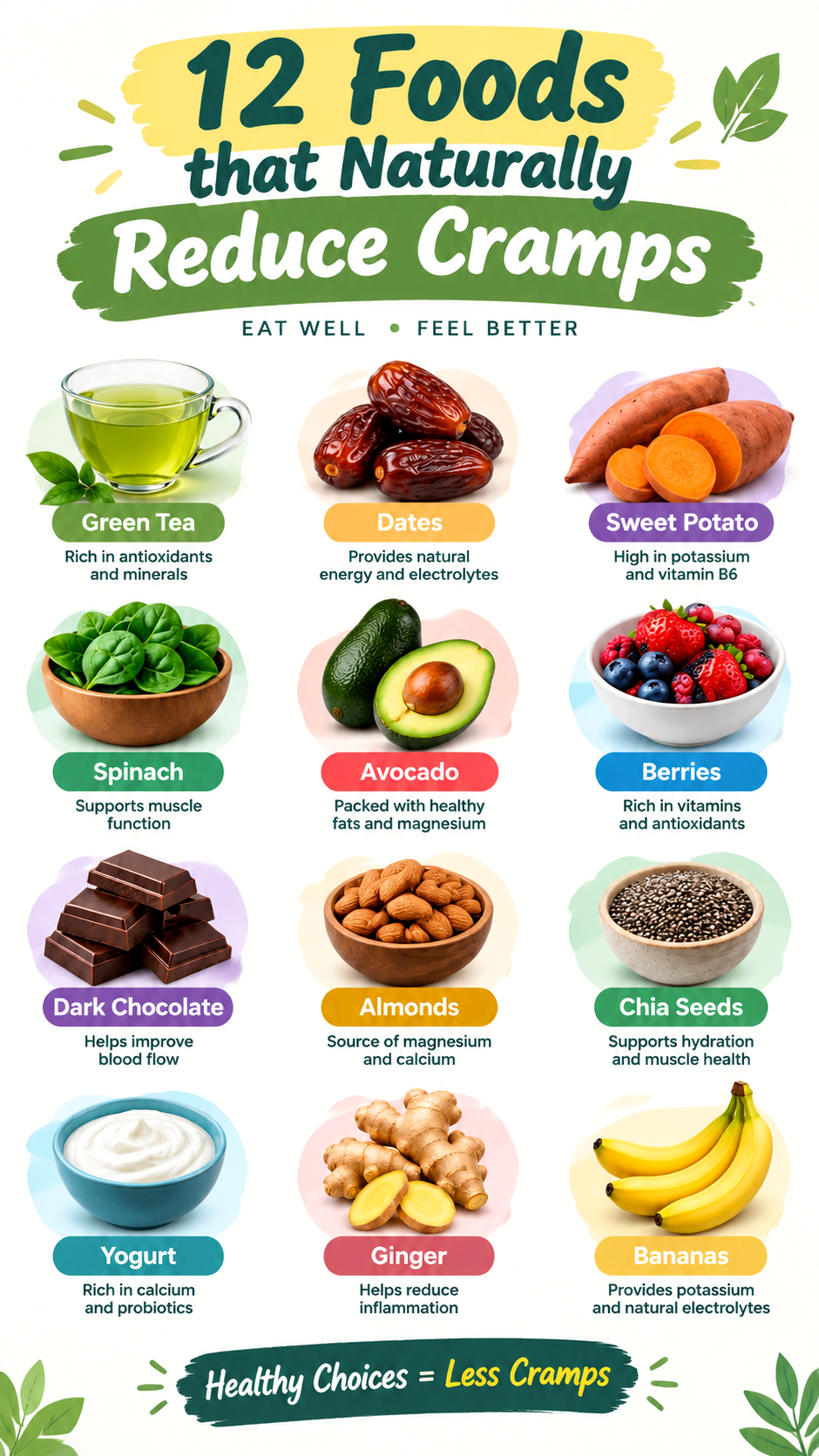
At a Glance: 12 Foods for Period Wellness
- Green tea: A hydrating drink with antioxidant plant compounds.
- Dates: A convenient source of carbohydrates, fiber, and potassium.
- Sweet potatoes: Provide fiber, carbohydrates, and beta-carotene.
- Spinach: Supplies folate, iron, and magnesium.
- Avocado: Offers fiber, potassium, and unsaturated fats.
- Berries: Provide vitamin C, fiber, and antioxidants.
- Dark chocolate: Contains cocoa compounds and some magnesium.
- Almonds: Supply magnesium, vitamin E, and healthy fats.
- Chia seeds: Provide fiber, calcium, and plant-based omega-3 fats.
- Yogurt: Can supply calcium and protein.
- Ginger: Has some clinical evidence suggesting potential benefits for menstrual pain.
- Bananas: Offer carbohydrates, potassium, and vitamin B6.
Conclusion: Build a Nourishing Routine for Period Comfort
Finding ways to reduce period cramps naturally often starts with small, sustainable habits. Foods such as spinach, bananas, almonds, berries, sweet potatoes, yogurt, and chia seeds provide valuable nutrients that support general health. Ginger is particularly worth exploring because some research suggests it may help ease menstrual pain, although more high-quality evidence is needed.
The goal is not to eat every food on this list or expect an immediate cure. Instead, build balanced meals, drink enough fluids, get adequate rest, and choose snacks that leave you feeling satisfied. Pair these habits with practical comfort measures, such as gentle heat and movement, when they feel helpful.
Most importantly, pay attention to your own body. Track your symptoms if it helps you recognize patterns, and seek medical advice when pain is severe, persistent, or disruptive. With a flexible approach to nutrition and the right support, you can create a period self-care routine that fits your needs and helps you feel more prepared each month.
Tags
Period Cramps
Natural Period Relief
Menstrual Health
Period-Friendly Foods
PMS Self-Care
Healthy Eating
Women’s Wellness
Menstrual Pain Management