ADHD Planner That Actually Works A Gentle System for Focus Mental Clarity
Many people with ADHD have tried planners, notebooks, and productivity systems hoping they will finally create order in their daily lives. Yet, traditional planning methods often leave them feeling overwhelmed, frustrated, or discouraged. The problem is not a lack of motivation. In many cases, the system itself does not match the way an ADHD brain processes information, priorities, and energy.
The key to creating a successful ADHD-friendly planning routine is not adding more structure, more lists, or more pressure. It is creating mental space first, then building a simple system that feels realistic and supportive. A gentle approach that starts with clearing thoughts, reducing overwhelm, and taking small steps can transform planning from a stressful task into a helpful daily habit.
Key Takeaways
- Traditional planners often fail because they focus on tasks before mental clarity.
- An ADHD-friendly planner begins with a brain dump to organize thoughts.
- Small, realistic steps create more sustainable routines than strict schedules.
- Planning should reduce stress instead of creating guilt or pressure.
- A flexible system can support focus, organization, and daily confidence.
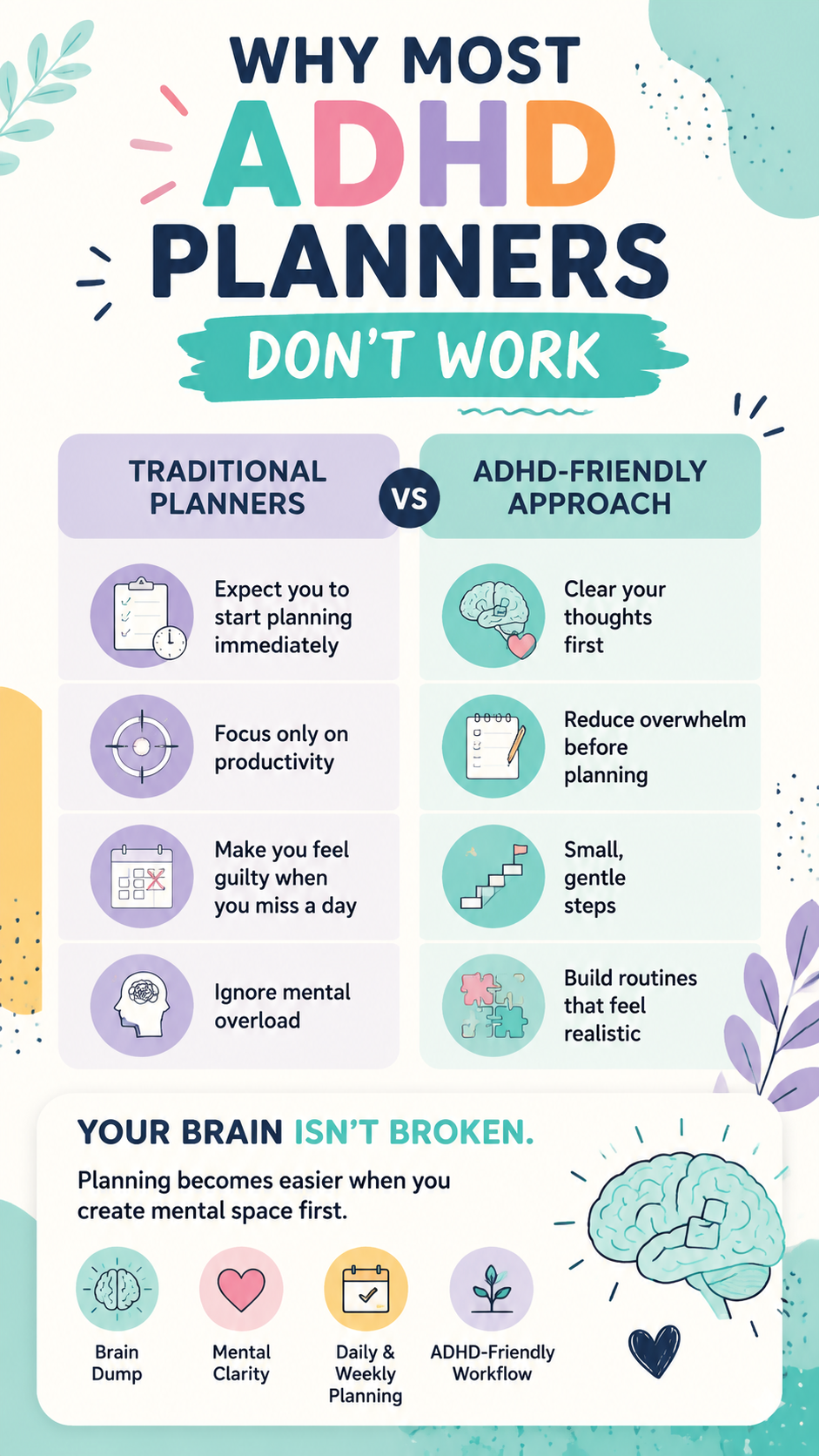
Why Most ADHD Planners Do Not Work
Many traditional planners are designed around a productivity-first mindset. They often expect users to immediately organize their day, prioritize tasks, and follow a strict schedule. For someone experiencing ADHD-related challenges like mental clutter, task switching difficulties, or executive function struggles, this approach can feel impossible before the day even begins.
A planner may have beautiful layouts and detailed sections, but if it does not address the thoughts, emotions, and distractions happening before planning begins, it can quickly become another unfinished project.
The Problem With Starting Immediately
One common mistake is expecting yourself to open a planner and instantly know what needs to happen. For an ADHD brain, there may already be dozens of thoughts competing for attention. Unfinished tasks, reminders, ideas, worries, and responsibilities can create a mental traffic jam.
When all of those thoughts stay in your head, planning becomes harder because your brain is trying to organize information while also remembering everything at once.
The Pressure of Productivity-Based Planning
Many planners focus heavily on checking boxes, completing schedules, and maximizing productivity. While these tools can be useful for some people, they may create unnecessary pressure for those who already struggle with feeling behind.
Missing a day in a traditional planner can sometimes create a cycle of guilt. Instead of returning to the system, people may abandon it completely because the planner becomes associated with failure rather than support.
Important: A helpful ADHD planning system should make your day feel lighter, not make you feel like you are constantly catching up. The goal is not perfect organization. The goal is creating enough clarity to take the next step.
The ADHD-Friendly Approach: Clear Your Mind First
A more supportive planning method begins before the actual planner. Instead of immediately creating a schedule, start by emptying your thoughts. This simple process is often called a brain dump, and it helps remove the mental clutter that makes planning feel overwhelming.
Step 1: Use a Brain Dump to Capture Everything
A brain dump is a simple practice where you write down everything occupying your mind. There is no need to organize the thoughts immediately. The purpose is to create space by moving information from your brain onto paper.
Your brain dump may include:
- Tasks you need to complete
- Ideas you do not want to forget
- Appointments or reminders
- Things causing stress or distraction
- Personal goals and priorities
Once your thoughts are visible, it becomes easier to decide what actually needs attention.
Step 2: Reduce Overwhelm Before Planning
After completing a brain dump, the next step is not creating a huge task list. Instead, focus on reducing overwhelm. Ask yourself what matters most right now and what can wait.
A realistic ADHD planning system allows flexibility. It recognizes that energy levels change and that some days require simpler goals than others.
Building Small Steps Instead of Strict Systems
Many people assume productivity requires a detailed schedule, but ADHD-friendly planning often works better when routines are simple and adaptable. Small steps create momentum without overwhelming your brain.
Create Gentle Daily Goals
Instead of planning every minute of your day, focus on a few important areas:
- One priority task that moves something forward
- One maintenance task for your environment
- One activity that supports your wellbeing
This approach creates structure while leaving room for unexpected changes.
Build Routines That Feel Realistic
A routine should fit your actual life, not an ideal version of your life. If a system requires too much effort to maintain, it becomes difficult to continue.
Successful ADHD routines often include visual reminders, simple checklists, flexible timing, and clear steps. The purpose is to make important actions easier to remember and complete.
Why This Matters
Planning works better when it supports your brain instead of fighting against it.
- Clarity comes before organization.
- Flexible routines are easier to maintain.
- Small wins build confidence and consistency.
How to Create Your Own ADHD-Friendly Planning Routine
You do not need a complicated system to create better organization. Start with a process that feels calming and practical.
- Clear your thoughts: Spend a few minutes writing down everything on your mind.
- Choose your priorities: Identify the tasks that matter most today.
- Break tasks into smaller actions: Make the first step easy to begin.
- Plan with flexibility: Leave room for changes and unexpected situations.
- Review without judgment: Adjust your routine based on what works.
Focus on Progress, Not Perfection
The most effective planning systems are not the ones that look perfect. They are the ones you can actually use. A planner should be a supportive tool that helps you understand your priorities, not another responsibility that creates stress.
Important: Your ability to plan is not measured by how full your calendar looks. Real progress comes from creating a system that helps you take meaningful action in a way that feels manageable.
At a Glance: A Simpler Way to Plan With ADHD
Quick Points
- Start with mental clarity before scheduling.
- Use brain dumps to organize scattered thoughts.
- Create small routines that feel achievable.
- Choose flexibility over unrealistic perfection.
Conclusion: A Better Planning System Starts With Understanding Your Brain
Traditional planners often fail because they ask for organization before creating clarity. For many people with ADHD, the missing step is not more discipline. It is creating a system that respects how thoughts, energy, and attention work.
A gentle ADHD-friendly planning approach begins with a brain dump, reduces overwhelm, and focuses on realistic daily steps. When planning becomes a tool for support rather than pressure, it becomes easier to build routines that last.
The goal is not to become a perfect planner. The goal is to create a calmer way to move through your day with more confidence, focus, and self-understanding.
Tags
ADHD Planner
ADHD Organization
Brain Dump
Mental Clarity
Productivity Tips
Executive Function