Belly Fat Reduction Workout Diet Plan for Women Easy Home Fat Loss Routine 45-60 Min
Achieving a leaner waistline is a goal that inspires many people to adopt healthier habits. While there is no magic exercise that melts fat from one specific area, combining a structured workout routine with balanced nutrition can help reduce overall body fat while strengthening the abdominal muscles. A consistent approach that blends regular movement, wholesome meals, hydration, quality sleep, and patience often produces the best long-term results.
The workout and meal routine presented here focuses on simple bodyweight exercises that can be performed at home without expensive equipment. Combined with practical food choices and sustainable lifestyle habits, it creates an easy-to-follow framework for improving fitness, building core strength, and supporting healthy fat loss.
Key Takeaways
- Consistency matters more than perfection.
- Combine exercise with a balanced eating plan for better results.
- Focus on strengthening your entire core, not just your abs.
- Stay hydrated and prioritize quality sleep.
- Progress comes from healthy daily habits rather than quick fixes.
Understanding Belly Fat and Why It Matters
Belly fat is often discussed because it affects both appearance and overall health. Excess body fat around the waist may increase the risk of several health concerns, making healthy lifestyle changes beneficial beyond aesthetics. Rather than chasing rapid transformations, focusing on gradual improvements creates habits that are easier to maintain.
Fat loss occurs when your body consistently uses more energy than it consumes over time. Exercise helps increase calorie expenditure while improving muscle tone, cardiovascular fitness, posture, and daily energy levels. Nutrition provides the fuel needed to support workouts and recovery.
Important: Spot reduction is a common misconception. Performing hundreds of abdominal exercises alone will not specifically burn belly fat. A combination of full-body movement, strength training, nutritious eating, and a sustainable calorie balance supports overall fat loss while abdominal exercises strengthen the core muscles underneath.
Benefits of a Structured Home Workout Routine
One of the biggest advantages of home workouts is convenience. You can exercise according to your own schedule without traveling to a gym or purchasing expensive equipment.
- Suitable for beginners and intermediate fitness levels.
- Minimal equipment required.
- Easy to modify based on your fitness level.
- Encourages consistent daily movement.
- Supports stronger core muscles and improved posture.
Breaking Down the Core Workout
1. Crunches
Crunches target the upper abdominal muscles and help improve core endurance. Focus on controlled movement rather than speed. Avoid pulling on your neck and keep your lower back supported throughout each repetition.
2. Bicycle Crunches
This exercise challenges multiple abdominal muscles while adding rotational movement. Keep your core engaged and move slowly to maximize muscle activation instead of rushing through repetitions.
3. Leg Raises
Leg raises primarily engage the lower abdominal region and hip flexors. Lower your legs with control to avoid unnecessary strain on your lower back.
4. Plank
The plank is one of the most effective bodyweight exercises for building total core stability. It strengthens the abdominals, shoulders, back, and glutes while promoting better posture.
5. Russian Twists
Russian twists develop rotational strength while engaging the obliques. Keep your movements smooth and maintain an upright chest throughout the exercise.
6. Mountain Climbers
Mountain climbers combine cardio with core training, making them an excellent calorie-burning exercise. Maintain a strong plank position while driving each knee toward your chest.
Expert Insight
Quality always beats quantity. Slow, controlled repetitions with proper form activate muscles more effectively than rushing through large numbers of repetitions. Focus on consistency and gradual progression every week.
7. Side Plank
The side plank strengthens the obliques while improving balance and stability. Beginners can modify this movement by placing one knee on the floor.
8. Heel Touches
This movement emphasizes the oblique muscles and encourages controlled side-to-side movement. Avoid lifting your shoulders excessively off the floor.
9. Reverse Crunches
Reverse crunches activate the lower abdominal muscles while reducing neck strain compared to traditional crunches. Lift your hips gently instead of swinging your legs.
Pro Tip: Performing these exercises three to five times each week while gradually increasing repetitions or hold times can help improve strength and endurance without overwhelming your body.
Never Skip Your Warm-Up
Preparing your muscles before exercise helps improve mobility and reduces the likelihood of injury. A simple five-minute warm-up can include jumping jacks, high knees, arm circles, butt kicks, and gentle side stretches.
These movements gradually increase your heart rate while preparing your joints and muscles for more demanding exercises.
The Importance of Cooling Down
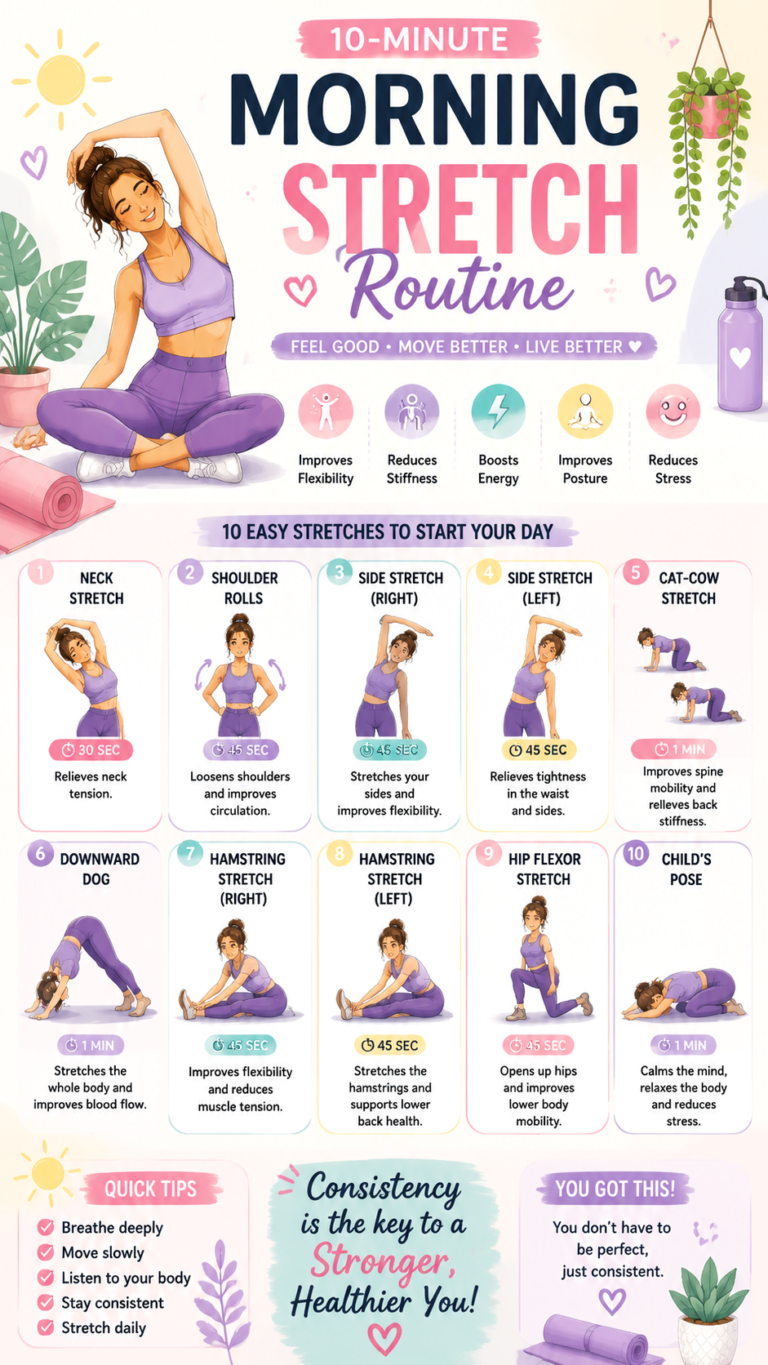
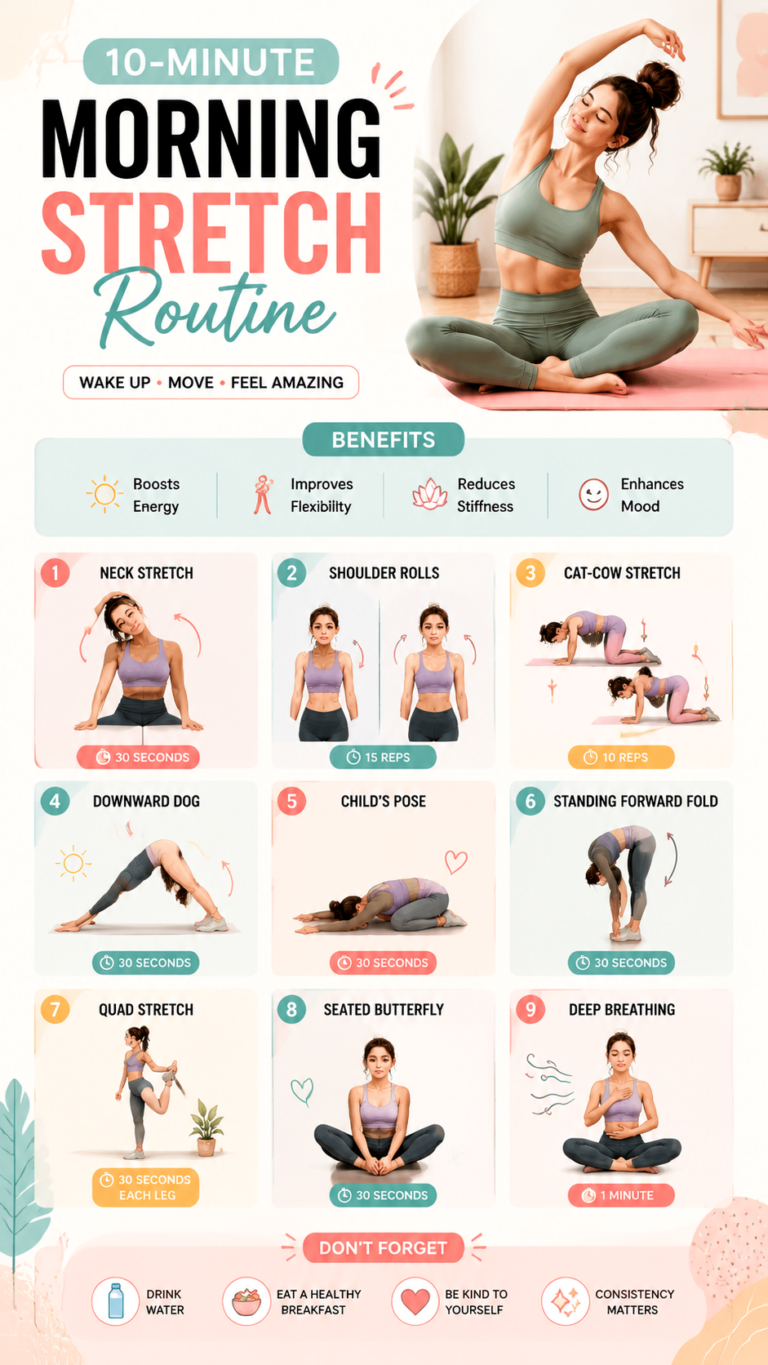
After completing your workout, allow your body to recover with a brief cool-down routine. Slow walking, deep breathing, and full-body stretching help reduce muscle tightness and encourage flexibility.
Cooling down also allows your heart rate to return to normal more gradually, making recovery more comfortable.
Building a Balanced Daily Meal Routine
Exercise alone cannot compensate for poor eating habits. A balanced nutrition plan supplies protein, fiber, healthy fats, complex carbohydrates, vitamins, and minerals needed for energy and recovery.
Start Your Morning Well
Beginning the day with water, followed by a balanced breakfast containing oats, fruit, or other fiber-rich foods, helps provide lasting energy while supporting healthy eating habits.
Healthy Mid-Morning Snacks
Fresh fruit, yogurt, or other nutritious snacks help maintain steady energy levels between meals while reducing unnecessary cravings.
Balanced Lunch and Dinner
Meals that include lean protein, vegetables, whole grains, legumes, and healthy fats provide lasting satisfaction and valuable nutrients. Colorful vegetables also contribute fiber that supports fullness.
Important: Healthy eating does not require eliminating entire food groups. Building meals around nutrient-dense ingredients while practicing portion awareness is often more sustainable than restrictive dieting.
Foods to Enjoy More Often
- Leafy green vegetables
- Lean protein sources
- Eggs
- Beans and legumes
- Whole grains
- Fresh fruit
- Nuts and seeds
- Healthy fats such as avocado and olive oil
- Water and unsweetened tea
Foods to Limit
- Sugary desserts
- Highly processed snacks
- Fried foods
- Sugary beverages
- Refined carbohydrates
- Excessively salty packaged foods
Healthy Habits That Support Fat Loss
Drink Enough Water
Proper hydration supports exercise performance, digestion, and overall health. Drinking water throughout the day may also help reduce unnecessary snacking caused by confusing thirst with hunger.
Prioritize Sleep
Consistently getting seven to eight hours of quality sleep supports recovery, energy levels, and healthy decision making throughout the day.
Manage Stress
Long-term stress can make maintaining healthy habits more challenging. Gentle walks, meditation, stretching, hobbies, and breathing exercises can all contribute to better stress management.
Track Progress
Instead of relying solely on the scale, monitor improvements such as increased strength, improved endurance, better posture, clothing fit, and higher energy levels.
Creating a Weekly Fitness Routine
A balanced schedule may include core-focused workouts several days each week, light walking on recovery days, flexibility exercises, and adequate rest. Recovery is just as valuable as training because muscles become stronger during the recovery process.
At a Glance
- Exercise consistently three to five days each week.
- Eat balanced meals rich in protein and vegetables.
- Stay hydrated every day.
- Prioritize sleep and recovery.
- Focus on long-term healthy habits.
Conclusion
Reducing belly fat is not about finding one perfect exercise or following a short-term diet. Sustainable progress comes from combining regular workouts, nutritious meals, hydration, quality sleep, and patience. The bodyweight exercises outlined in this routine strengthen your core while supporting overall fitness, and healthy food choices provide the foundation for lasting results.
Remember that every workout completed and every balanced meal prepared is another step toward your fitness goals. Stay consistent, celebrate small improvements, and trust the process. Healthy habits built over time create meaningful results that last far beyond any temporary challenge.
Tags
Belly Fat Workout Home Workout Core Exercises Healthy Diet Women’s Fitness Weight Loss Tips Meal Planning Healthy Lifestyle