Best Cleaning Tips Hacks for a Fresh, Sparkling Clean Home
A clean, fresh home does not have to mean spending your entire weekend scrubbing, dusting, and organizing. With a few practical cleaning tips and hacks, a simple daily routine, and an easy weekly schedule, you can keep your living space comfortable and tidy without feeling overwhelmed. The secret is to build small habits that prevent messes from piling up and make everyday cleaning easier to manage.
From natural cleaning solutions and kitchen cleaning checklists to bathroom cleaning routines and seasonal decluttering, a little planning can make a noticeable difference. Whether you want to refresh your home in ten minutes a day or finally create a cleaning schedule you can stick to, these ideas will help you work smarter, stay organized, and enjoy a cleaner living environment.
Key Takeaways
- Use short daily cleaning sessions to prevent clutter and dirt from accumulating.
- Try suitable natural cleaning ingredients, such as baking soda and diluted white vinegar, for specific household tasks.
- Follow a room-by-room cleaning checklist to make chores more manageable.
- Assign a different cleaning focus to each day of the week.
- Clean frequently touched surfaces, including door handles, light switches, and trash bin lids, regularly.
- Keep essential cleaning supplies together so you can get started without wasting time.
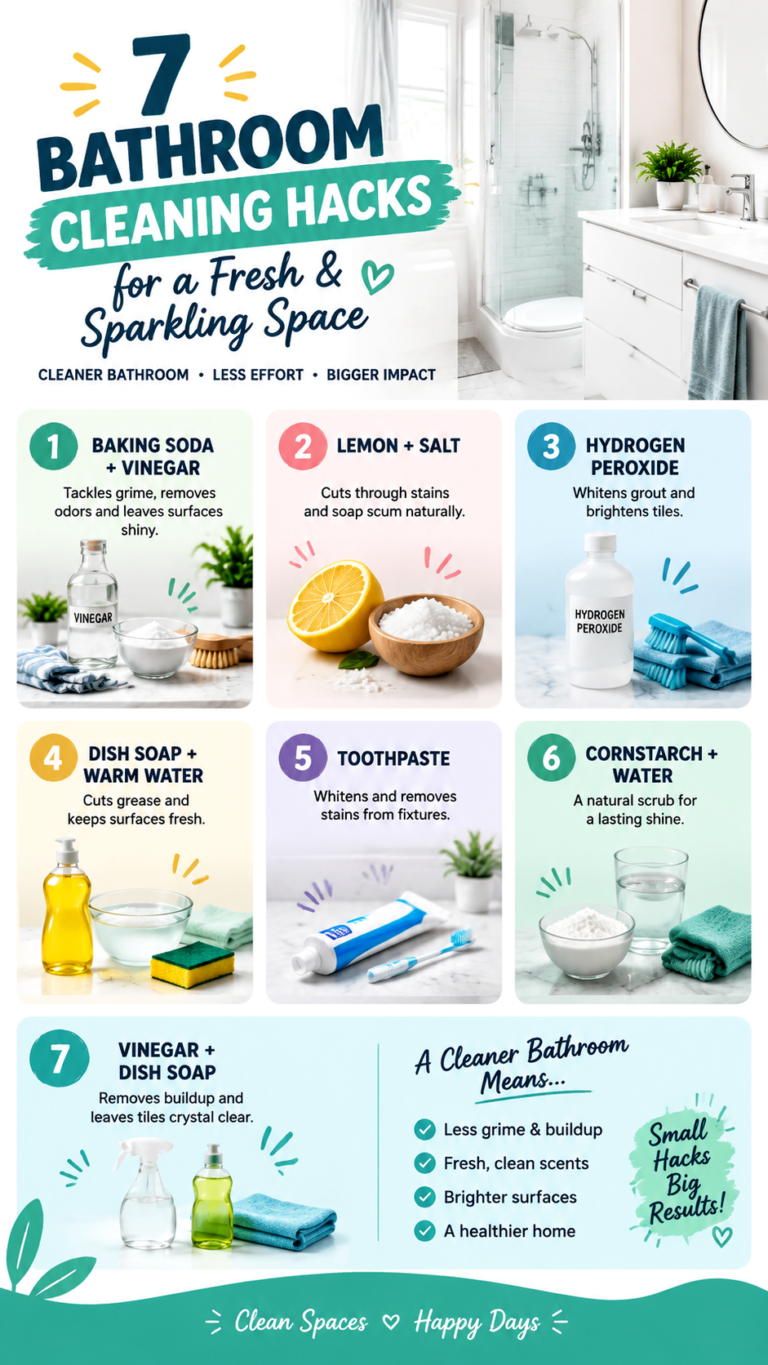
1. Five Natural Cleaning Hacks for a Fresher Home
You do not need a cupboard full of specialized products to handle many everyday cleaning tasks. A few common household ingredients can help remove certain stains, absorb odors, and loosen grime when used appropriately. The important thing is knowing which ingredient works for each job and when a dedicated cleaning product is the better choice.
1. Lemon and Salt for Suitable Stains
Lemon juice contains citric acid, while salt provides mild physical abrasion. Together, they can help tackle some stains on suitable, durable surfaces. For example, a little lemon juice and salt may help freshen certain washable kitchen items or remove residue from an appropriate cutting board.
Apply the mixture gently, test it on a small hidden area first, and rinse the surface thoroughly afterward. Avoid using acidic lemon juice on natural stone, marble, limestone, and other acid-sensitive materials. Salt can also scratch delicate finishes, so use a soft cloth and minimal pressure.
2. Baking Soda to Freshen and Scrub
Baking soda is a versatile household cleaning ingredient. Its mild abrasive texture can help remove some everyday grime from suitable surfaces, and it can absorb certain odors. Sprinkle a small amount onto a damp sponge to gently clean an appropriate sink or use it to help freshen a washable, odor-prone area.
For carpets, check the manufacturer’s care instructions before applying baking soda. Some vacuum cleaners and carpet materials may not be suitable for powder treatments. Always remove residue thoroughly and test delicate surfaces before cleaning.
3. White Vinegar for Glass and Certain Surfaces
White vinegar diluted with water can help remove mineral deposits and everyday residue from suitable glass surfaces. It may also be useful for cleaning some washable household items when the manufacturer’s instructions permit it.
For mirrors and glass, apply a small amount with a microfiber cloth and wipe until the surface is clear. Avoid vinegar on marble, granite, limestone, and other natural stone surfaces, as well as materials that may be damaged by acids. It should not be treated as a universal disinfectant.
4. Lemon Peels for a Fresh Scent
Fresh lemon peels can leave a pleasant citrus aroma in some household applications. Place a few peels in a small bowl near the kitchen sink while preparing food, or use them for a simple decorative touch in your cleaning area.
For microwave cleaning, a microwave-safe bowl containing water and lemon slices can help loosen splashes when heated according to your appliance’s instructions. Let the bowl cool before handling it carefully, then wipe the interior with a cloth.
Never leave a microwave running unattended, heat an empty appliance, or handle hot liquid without care. Lemon-scented water helps loosen food residue but does not replace proper cleaning or sanitizing when needed.
5. Keep Baking Soda and Vinegar for Separate Tasks
Baking soda and vinegar are often presented as a powerful homemade drain cleaner because they bubble when combined. However, the fizzing reaction does not automatically make the mixture more effective than using the ingredients separately. Combining them largely neutralizes their acidic and alkaline properties.
For routine drain care, remove visible debris, clean accessible drain covers, and follow the plumbing fixture manufacturer’s recommendations. For a blocked drain, use an appropriate mechanical method or a suitable drain product according to its label.
Important cleaning safety tip: Never mix white vinegar with chlorine bleach, and never combine cleaning products unless their labels explicitly permit it. Dangerous gases or harmful reactions can occur. Store all products safely, ventilate the room, and keep cleaners away from children and pets.
2. The Simple 10-Minute Daily Cleaning Routine
One of the easiest ways to maintain a tidy home is to stop waiting for a large block of free time. A short daily cleaning routine can control small messes before they become time-consuming chores. Ten minutes is a useful starting point, although some homes and tasks will naturally require more time.
Morning: Start with the Essentials
A few small actions in the morning can make the rest of the day feel more organized.
- Make the bed: Straighten the bedding to give the bedroom an instantly tidier appearance.
- Wipe kitchen counters: Remove crumbs, food splashes, and other everyday residue using a suitable cleaner.
- Load the dishwasher: Put used dishes away or load them into the dishwasher rather than leaving them in the sink.
- Return misplaced items: Spend a moment putting frequently used objects back where they belong.
You do not have to complete every task before leaving home. Choose the actions that make the biggest difference to your household and repeat them consistently.
Afternoon: Reset the Living Areas
The afternoon is a convenient time for a quick reset, especially after cooking, working, or spending time with family.
- Put books, toys, clothing, and other items back in their designated places.
- Vacuum visible crumbs or high-traffic areas when needed.
- Clear coffee tables, desks, and kitchen surfaces.
- Collect cups, dishes, and rubbish before they accumulate.
A small basket can make tidying faster. Gather items that belong in another room, then return them together instead of making several separate trips.
Night: Prepare for Tomorrow
An evening reset helps you wake up to a calmer space. Focus on the kitchen, bathroom, and any area that becomes messy during the day.
- Wipe the bathroom or kitchen sink when needed.
- Empty small trash bins if they are full or contain food waste.
- Return cleaning supplies to their storage area.
- Set out anything you need for the next morning.
- Spend two minutes clearing one cluttered surface.
Pro Tip: Attach a new cleaning habit to something you already do. Wipe the counter after preparing breakfast, tidy the living room before relaxing, or clean the sink after brushing your teeth. Connecting chores to existing routines makes them easier to remember.
3. A Deep Cleaning Checklist for Every Room
Daily maintenance keeps mess under control, but certain areas need more thorough attention. A room-by-room deep cleaning checklist helps you divide larger jobs into smaller, achievable tasks.
Kitchen Cleaning Checklist
The kitchen often needs frequent attention because food preparation creates crumbs, grease, splashes, and waste. Work from higher surfaces toward the floor so dust and debris do not settle on areas you have already cleaned.
- Wipe counters and backsplashes with a suitable cleaner.
- Clean the stovetop after it has cooled.
- Wipe the exterior and handles of kitchen appliances.
- Remove expired food and organize pantry shelves.
- Check refrigerator shelves and clean spills promptly.
- Wash the sink and clean the drain cover.
- Empty the rubbish bin and wipe its exterior when needed.
- Sweep or vacuum crumbs, then mop the floor.
Refrigerator shelves and food storage containers deserve special attention. Follow appliance instructions, use food-safe cleaning methods, and avoid placing food back on shelves until surfaces are clean and dry.
Bathroom Cleaning Checklist
Bathrooms benefit from regular cleaning because moisture, soap residue, and frequent use can make surfaces dirty quickly. Start with less contaminated surfaces and finish with the toilet and floor.
- Apply a suitable cleaner to the sink and faucet.
- Clean mirrors with a glass-safe product.
- Scrub the shower or bathtub to remove soap residue.
- Clean the toilet bowl and exterior using appropriate products.
- Wipe frequently touched handles and switches with a suitable disinfectant when needed.
- Replace used towels and empty the bathroom bin.
- Mop the floor and allow it to dry.
Use separate cloths for toilets and other bathroom surfaces. Never reuse a cloth that has touched a toilet on a sink, countertop, or mirror.
Bedroom Cleaning Checklist
A clean bedroom can feel more comfortable and inviting. Regularly refreshing the bedding, removing dust, and keeping surfaces clear can make the room easier to maintain.
- Change sheets and pillowcases according to your household needs.
- Dust bedside tables, shelves, and furniture.
- Put away clothing and organize laundry.
- Vacuum carpets or clean hard floors.
- Clear unnecessary items from nightstands and dressers.
- Wipe door handles and light switches when needed.
Living Room Cleaning Checklist
The living room is often a shared space, so clutter can build up throughout the day. A quick reset keeps it ready for relaxing or welcoming guests.
- Dust shelves, tables, and decorative objects.
- Fluff cushions and straighten throws.
- Remove cups, plates, and rubbish.
- Vacuum rugs and upholstered furniture when appropriate.
- Clean fingerprints from suitable glass surfaces.
- Return remote controls, books, and accessories to their usual places.
4. Create a Weekly Cleaning Schedule You Can Maintain
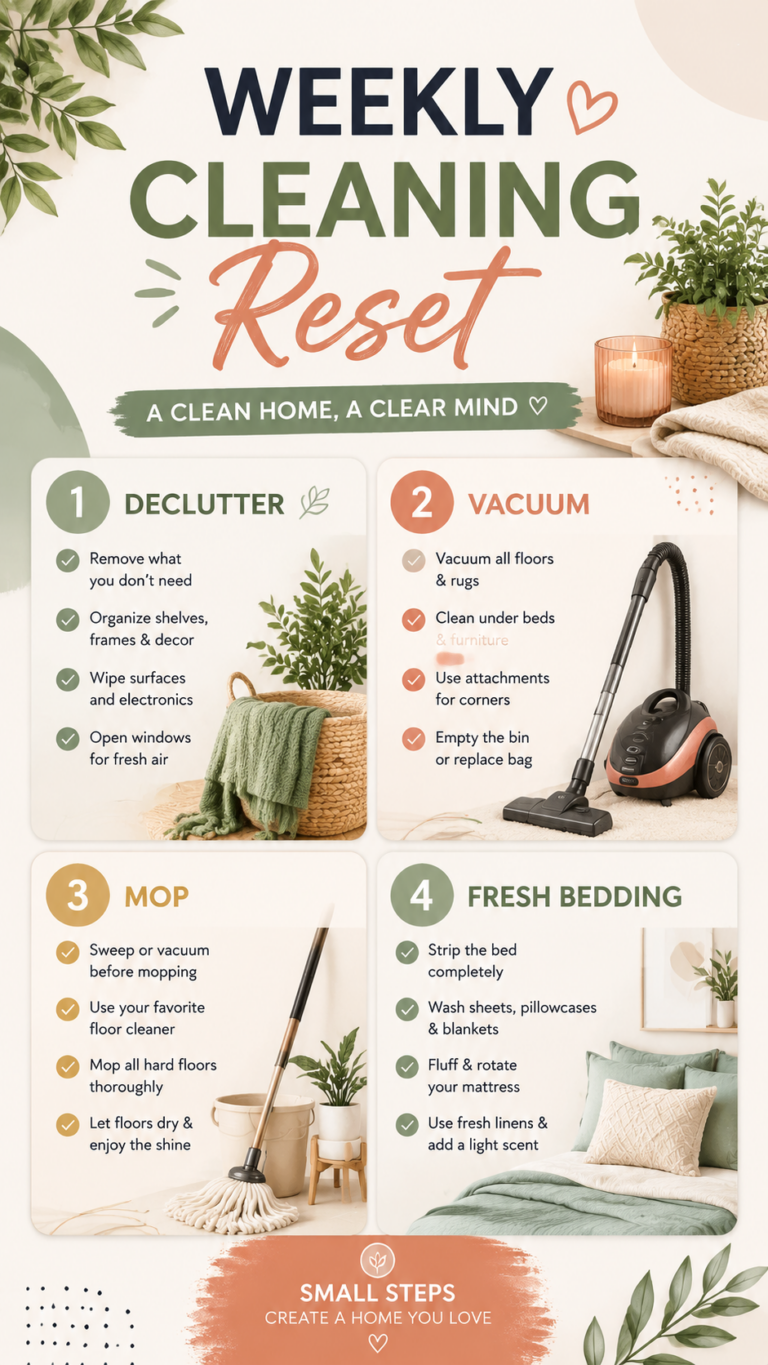
Trying to deep clean the entire home in one day can be exhausting. A weekly cleaning schedule spreads the workload across several days, giving each room its own focus while leaving room for everyday maintenance.
Monday: Refresh the Kitchen
Wipe counters, clean the stovetop, check the refrigerator for spills, and organize food storage. Finish by sweeping the floor and emptying the bin if necessary.
Tuesday: Focus on the Bathroom
Clean the toilet, sink, mirror, shower, and floor. Replace towels and restock basic supplies so the bathroom is ready for the rest of the week.
Wednesday: Tidy the Bedroom
Refresh bedding if needed, dust furniture, put away laundry, and clear clutter from bedside tables. Take a moment to organize one drawer or shelf if time allows.
Thursday: Catch Up on Laundry
Wash suitable clothing, towels, and household linens according to their care labels. Fold clean items promptly and return them to their storage spaces to avoid creating another pile of clutter.
Friday: Reset the Living Room
Dust furniture, vacuum the main seating area, organize entertainment accessories, and return stray items to their proper rooms. This quick refresh helps create a welcoming space for the weekend.
Saturday: Choose One Deep Cleaning Task
Use Saturday for a larger job that does not fit easily into your daily routine. You might clean windows, wash curtains according to their care labels, dust difficult-to-reach shelves, or organize a cupboard.
You do not need to complete every deep cleaning task each Saturday. Rotate your priorities so the schedule stays manageable.
Sunday: Rest and Reset
Keep Sunday light. Put away remaining clutter, prepare your cleaning supplies for the coming week, and identify the rooms that need extra attention. If possible, leave time to relax rather than filling the entire day with chores.
Why This Matters
A cleaning schedule is most effective when it fits your real life. Start with the rooms that get dirty fastest, choose tasks you can realistically complete, and adjust the schedule when your week becomes busy. Consistency matters more than following a perfect timetable.
5. Five Things to Clean Every Week
Some household items are easy to overlook because they do not appear visibly dirty. However, frequently touched objects and regularly used surfaces can benefit from a consistent cleaning routine.
1. Pillowcases and Bedding
Change pillowcases and sheets regularly, with frequency depending on personal needs, perspiration, allergies, and household circumstances. Wash them according to their fabric care instructions and allow them to dry thoroughly before making the bed.
2. Refrigerator Shelves
Inspect refrigerator shelves for spills, crumbs, and expired items. Clean small messes promptly and give removable shelves a more thorough wash when needed. Use cleaning methods recommended for your appliance and keep food at safe temperatures during cleaning.
3. Door Handles
Door handles are touched frequently throughout the day. Wipe them with a suitable cleaner and follow the product label if disinfection is necessary, especially during periods of illness.
4. Light Switches
Light switches can collect fingerprints and everyday grime. Use a lightly dampened cloth or an appropriate product, taking care not to allow moisture to enter electrical fittings. Never spray liquid directly onto a switch or outlet.
5. Trash Bins
Empty bins before they overflow, tie up rubbish securely, and clean the bin interior when necessary. Follow the manufacturer’s care instructions and let the bin dry fully before adding a fresh liner. Wash your hands after handling rubbish.
6. Essential Cleaning Supplies to Keep at Home
Having a few reliable cleaning tools within easy reach makes it easier to follow your cleaning routine. You do not need dozens of products. Start with versatile essentials and add specialized cleaners only when your surfaces or appliances require them.
- Microfiber cloths: Useful for dusting and wiping many surfaces without excessive lint.
- All-purpose cleaner: Choose a product suitable for the surfaces you clean most often.
- Baking soda: Helpful for selected mild scrubbing tasks and some odor-control applications.
- White vinegar: Useful for certain acid-safe cleaning jobs, especially some mineral deposits.
- Dish soap: Suitable for many routine dishwashing and light cleaning tasks when used as directed.
- Scrub brush: Helps loosen grime from durable surfaces and grout where appropriate.
- Cleaning sponge: Useful for wiping washable surfaces, provided it is kept clean and replaced when worn.
- Rubber gloves: Can protect your hands from cleaning products and dirty water.
- Spray bottle: Convenient for compatible homemade solutions or products specifically approved for transfer.
- Vacuum and mop: Essential tools for removing dust, crumbs, and everyday floor dirt.
Keep your supplies in a designated storage area so you can collect everything before starting. If you use several rooms, a small cleaning caddy can help you transport the essentials safely.
Safety reminder: Always read product labels, check surface compatibility, and follow recommended contact times for disinfectants. Keep cleaning products in their original containers whenever possible. Never store chemicals in drink bottles or mix products to create a stronger cleaner.
7. Before and After: How Small Cleaning Habits Transform a Space
A cluttered counter, dusty shelf, or stained sink can make an entire room feel untidy. Fortunately, the solution often begins with a few straightforward steps rather than a complete home makeover.
Start by Removing Clutter
Before wiping a surface, remove items that do not belong there. Sort them into three simple groups: things to keep in the room, things to move elsewhere, and items to recycle, donate, or discard when appropriate.
A clear surface is easier to clean because you can reach the entire area without repeatedly moving objects around.
Dust Before Wiping
Remove loose dust and debris before using a damp cloth. Work from higher surfaces toward lower ones, then clean the floor last. This simple order reduces the chance of dust falling onto areas you have already finished.
Finish with the Details
After cleaning the main surfaces, look for small details that make the room feel complete. Straighten towels, align cushions, put away cleaning tools, and return frequently used items to their designated places.
These finishing touches take little time but help maintain the fresh, organized appearance you have worked to create.
8. A Simple Spring Cleaning Guide for a More Organized Home
Spring cleaning is an opportunity to refresh your space, remove accumulated dust, and reconsider what you actually need. You can follow the same approach during any seasonal change or whenever your home starts to feel overcrowded.
Declutter One Small Area at a Time
Choose one drawer, cupboard, shelf, or countertop rather than emptying an entire room at once. Remove everything, wipe the empty space, and return only the items you use or genuinely want to keep.
For items in good condition that you no longer need, consider donating or passing them on. Dispose of unwanted materials responsibly, following local recycling and waste guidelines.
Dust Shelves, Furniture, and Hidden Corners
Move lightweight objects carefully and dust the surfaces beneath them. Pay attention to shelf edges, the tops of furniture, and corners where dust may collect. Use appropriate tools and avoid climbing on unstable furniture to reach high places.
Refresh Curtains and Windows
Clean windows with a suitable glass cleaner and a lint-free cloth. Wash curtains only when their care instructions allow it, since some fabrics require gentle washing or professional cleaning. Open windows for ventilation when weather, outdoor air quality, and safety permit.
Organize Closets and Storage Areas
Group similar items together so clothing, household supplies, and accessories are easier to find. Store frequently used objects within easy reach and place seasonal items in clearly labeled containers where practical.
Resist the urge to organize every cupboard in a single day. A few focused sessions are often easier to finish and maintain than one exhausting project.
9. How to Stay Consistent Without Feeling Overwhelmed
The most useful cleaning routine is one you can repeat even when life gets busy. Rather than aiming for a spotless home every day, focus on maintaining the areas that matter most and accepting that some tasks can wait.
Use a Visible Checklist
Keep a short list on your refrigerator, inside a cupboard, or in a household planner. Checking off completed tasks gives you a clear view of what needs attention without relying on memory.
Set a Realistic Time Limit
Try a five- or ten-minute timer for quick cleaning sessions. When the timer ends, stop if the task is not urgent. A short session that fits your schedule is more useful than a complicated plan you repeatedly postpone.
Make Cleaning Easier for Everyone
If you share your home, agree on simple responsibilities that suit each person’s schedule and abilities. Give everyday objects a designated place, keep commonly used supplies accessible, and encourage everyone to tidy up after themselves.
Remember that a lived-in home will never look perfectly clean all the time. The goal is to create a comfortable, functional environment that is easier to care for, not to spend every spare moment cleaning.
Quick Points: Your Fresh Home Checklist
- Make the bed and clear kitchen counters each morning.
- Spend a few minutes returning misplaced items every day.
- Choose one main room or task for each weekday.
- Clean high-touch surfaces and frequently used household items regularly.
- Keep essential supplies organized and follow product safety instructions.
Conclusion: Build a Cleaner Home One Small Habit at a Time
Creating a fresh, organized home does not require an elaborate cleaning system or an entire day of hard work. Natural cleaning tips, simple daily habits, room-by-room checklists, and a practical weekly schedule can help you manage household chores with less stress.
Start with the areas that need the most attention. Wipe the kitchen counter after preparing meals, reset the living room before bed, and choose one larger task for your weekly cleaning session. Keep suitable supplies within reach, use products safely, and adjust your routine to match your home and lifestyle.
Most importantly, remember that small efforts add up. You do not have to finish every task today to make meaningful progress. Choose one cleaning hack, try a short daily reset, and build from there. With a little consistency, you can create a cleaner, calmer, and more welcoming space that feels good to come home to.
Clean Home, Happy Life!
Save your favorite cleaning tips, choose a checklist, and take one small step toward a fresher home today.
Tags
Cleaning Tips
Cleaning Hacks
Home Cleaning
Natural Cleaning
Daily Cleaning Routine
Weekly Cleaning Schedule
Decluttering Tips
Spring Cleaning