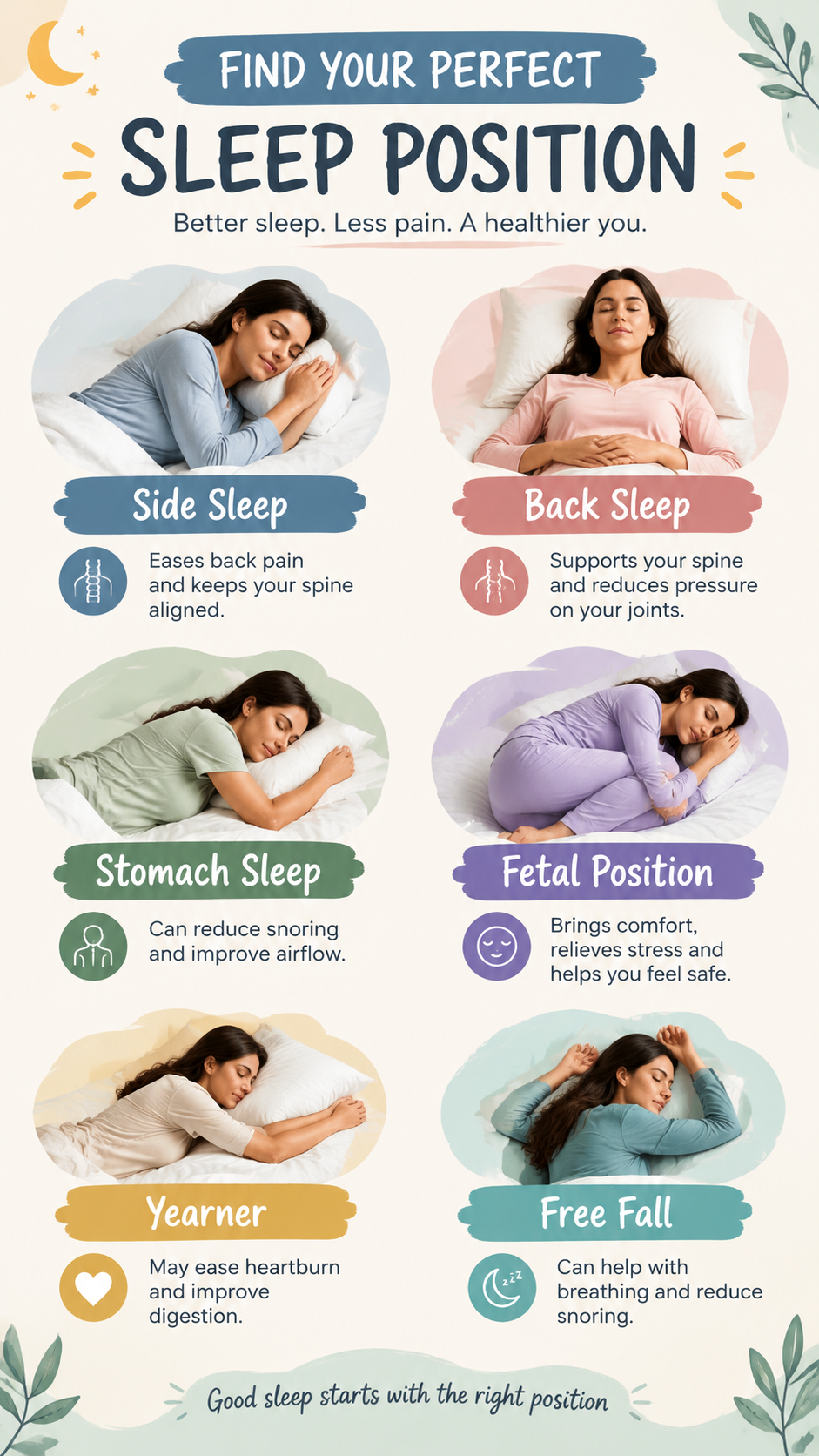
Best Sleeping Positions for Shoulder, Back, Neck Pain Sciatica Relief
Waking up with a sore neck, aching shoulders, or lower back discomfort can make it difficult to enjoy a restful night. Sometimes, the way you position your body while sleeping can influence how much pressure your muscles and joints experience. The good news is that a few simple adjustments, such as placing a pillow beneath your knees, hugging a pillow while sleeping on your side, or improving neck support, may help you feel more comfortable throughout the night.
Choosing the best sleeping position for pain relief does not have to be complicated. The goal is to support your body’s natural alignment, reduce unnecessary twisting, and find a posture that allows your muscles to relax. Whether you experience shoulder pain, neck stiffness, headaches, sciatica, knee discomfort, or sinus congestion, understanding how pillows and sleeping positions work together can help you create a more comfortable bedtime routine.
Key Takeaways
- Side sleeping with a pillow between the knees may help support comfortable hip and spinal alignment.
- Back sleeping with a pillow beneath the knees can reduce strain on the lower back for some people.
- A supportive pillow should keep your neck aligned with the rest of your spine.
- Shoulder discomfort may improve when you avoid lying directly on the painful shoulder.
- Elevating your upper body may help relieve nighttime sinus congestion for some people.
- The best sleeping position depends on your symptoms, comfort, and individual health needs.
Why Your Sleeping Position Matters
Sleep gives your body an opportunity to rest and recover, but spending several hours in an uncomfortable position can leave you feeling stiff when morning arrives. Poor pillow placement, excessive twisting, or prolonged pressure on sensitive areas may contribute to discomfort for some sleepers.
Your sleeping posture influences how your head, neck, shoulders, hips, knees, and spine are positioned. Ideally, your body should feel relaxed rather than forced into an awkward angle. Pillows can provide extra support where it is needed, helping you maintain a more comfortable position without constantly adjusting throughout the night.
However, sleeping posture is only one part of the picture. Mattress firmness, daily activities, muscle strength, existing medical conditions, and the cause of your pain can also influence how you feel in the morning.
Important: A sleeping position that feels comfortable for one person may not work for another. Use these suggestions as starting points, make gradual adjustments, and choose a posture that does not increase your pain. Sleeping positions may improve comfort, but they do not diagnose or treat every underlying condition.
1. Best Sleeping Position for Shoulder Pain
Shoulder pain can make it difficult to settle into a comfortable sleeping position, especially if you naturally sleep on your side. Pressure from your body weight, an unsupported arm, or a pillow that places your neck at an awkward angle may make nighttime discomfort more noticeable.
Sleep on the Pain-Free Side and Hug a Pillow
If one shoulder hurts, try lying on the opposite side, provided that position feels comfortable. Keep your painful shoulder away from the mattress and place a supportive pillow in front of your chest. Gently hug the pillow so your upper arm has somewhere comfortable to rest.
This arrangement may prevent your upper arm from hanging forward and reduce unnecessary twisting through your upper body. Choose a pillow thick enough to support your arm without forcing your shoulder upward.
Helpful Shoulder Sleep Tips
- Avoid putting direct body weight on the painful shoulder if that increases discomfort.
- Rest your upper arm on a pillow to keep it supported.
- Keep your head and neck aligned instead of allowing your head to tilt sharply.
- Consider back sleeping if it feels more comfortable than either side.
Some people with shoulder pain find back sleeping helpful because it reduces direct pressure on the shoulder. A small pillow supporting the affected arm may also improve comfort. If the pain is severe, follows an injury, or regularly interrupts your sleep, seek medical advice to identify the cause.
2. Best Sleeping Position for Upper Back Pain
Upper back discomfort can develop around the shoulder blades, between the shoulders, or along the muscles that support your upper spine. Prolonged desk work, repetitive activities, muscle tension, and other conditions can contribute to these symptoms.
Try Back Sleeping With Gentle Upper Back Support
Sleeping on your back may help distribute your body weight more evenly. If your upper back feels uncomfortable, experiment with a thin pillow or a small, folded towel placed beneath the upper back area, provided that it feels supportive rather than restrictive.
Avoid using a thick support that pushes your chest upward or creates excessive arching. Your head and neck should remain comfortable, and you should be able to breathe normally without feeling strained.
When Side Sleeping Feels Better
If lying on your back aggravates your upper back, try sleeping on your side with a pillow that keeps your head level with your spine. Hugging a pillow may help support your upper arm and prevent your shoulders from rolling too far forward.
Persistent upper back pain, especially when accompanied by chest discomfort, difficulty breathing, fever, or sudden severe symptoms, requires prompt medical assessment rather than simply changing your sleep position.
3. Best Sleeping Position for Headaches
Waking up with a headache can affect your energy, concentration, and mood for the entire day. In some cases, neck tension, an uncomfortable pillow, teeth grinding, or poor sleep quality may contribute to morning headaches. Other headaches have causes that are unrelated to sleeping posture.
Back Sleeping With a Pillow Under Your Knees
One option to try is lying on your back with a comfortable pillow beneath your knees. This can help relax the lower back and make it easier to maintain a supported position. Choose a head pillow that keeps your neck in a neutral alignment rather than pushing your chin toward your chest.
The knee pillow is primarily intended to support the lower back and hips. It is not a proven treatment for headaches, but a more comfortable overall posture may be useful if muscle tension contributes to your symptoms.
Pay Attention to Your Morning Symptoms
Consider whether your headaches appear after nights of poor sleep, whether your neck feels stiff, and whether you snore or wake frequently. Keeping a simple sleep and headache diary can help you identify patterns to discuss with a healthcare professional.
Seek urgent medical attention for a sudden, extremely severe headache or a headache accompanied by weakness, confusion, fainting, new vision problems, or other concerning neurological symptoms.
4. Best Sleeping Position for Neck Pain
Your neck supports the weight of your head throughout the day, so comfortable positioning at night matters. A pillow that is too high, too low, or too soft to maintain support may leave your neck bent for hours.
Choose Back or Side Sleeping With Neck Support
Back sleeping and side sleeping are often reasonable starting points for people with neck discomfort. The important detail is keeping your head aligned with your spine.
When lying on your back, choose a pillow that supports the natural curve of your neck without lifting your head too far forward. When lying on your side, use a pillow tall enough to fill the space between your shoulder and head while keeping your nose approximately aligned with the center of your chest.
How to Check Your Pillow Height
- Lie in your usual sleeping position.
- Relax your shoulders and allow your head to settle naturally.
- Notice whether your head tilts toward the mattress or rises too high.
- Adjust the pillow until your neck feels supported without forced bending.
- Reassess your comfort after several nights rather than judging the pillow after a few minutes.
Stomach sleeping may be less comfortable for people with neck pain because the head usually needs to remain turned to one side. If you have persistent neck pain, numbness, tingling, or weakness in an arm, seek professional assessment.
5. Best Sleeping Position for Lower Back Pain
Lower back pain is one of the most common reasons people experiment with different sleeping positions. The lower back naturally curves inward, and some positions may place more strain on this area than others.
Back Sleeping With a Pillow Under Your Knees
Lie on your back and place a pillow beneath both knees. This slight bend may reduce the feeling of tension in your lower back and make the position more comfortable.
Use a pillow that provides gentle support rather than lifting your knees excessively. Your hips should feel relaxed, and you should not experience increased pain while settling into the position.
Side Sleeping With Bent Knees
If you prefer side sleeping, bend your knees slightly and place a pillow between them. This can help prevent the upper leg from pulling the pelvis forward and twisting the lower back.
Avoid curling into an extremely tight fetal position if it makes you feel cramped. A relaxed posture with comfortable breathing is usually easier to maintain throughout the night.
Pro Tip: When getting out of bed with a sensitive lower back, try rolling onto your side first, moving your legs toward the edge, and pushing yourself up with your arms. Moving gradually may feel easier than sitting straight up from a flat position.
6. Best Sleeping Position for Sciatica and Hip Discomfort
Sciatica describes pain associated with irritation or compression of the sciatic nerve or its nerve roots. Symptoms can travel from the lower back or buttock down the leg and may include tingling, numbness, or weakness. Hip discomfort can have several different causes, so it is important not to assume every painful sensation comes from sciatica.
Side Sleeping With a Pillow Between Your Knees
For some people, side sleeping with a pillow between the knees provides a comfortable way to support the pelvis. The pillow helps keep the upper leg from dropping too far forward or inward, which may reduce uncomfortable twisting around the hips and lower back.
Try sleeping on whichever side feels most comfortable. If one hip is painful, avoid placing direct pressure on it when possible. A mattress that cushions the hip without allowing the body to sink excessively may also help.
Alternative: Back Sleeping With Knee Support
If side sleeping increases symptoms, lie on your back with a pillow beneath your knees. This position may help some people relax their lower back and hips.
Experiment with small changes rather than forcing your body into a position that causes pain. Sciatica does not have one universally effective sleeping posture, and the most comfortable choice depends on the underlying cause of your symptoms.
When Sciatica Needs Medical Attention
Arrange a medical assessment if leg pain persists, repeatedly interrupts sleep, or affects your ability to walk and carry out everyday activities. New or worsening leg weakness, numbness around the groin or saddle area, or difficulty controlling your bladder or bowels requires emergency medical evaluation.
7. Best Sleeping Position for Knee Pain
Knee discomfort can make it challenging to find a position that feels relaxing. Pressure from the mattress, prolonged bending, or keeping the legs completely straight may be uncomfortable depending on the cause of the pain.
Back Sleeping With Gentle Knee Support
Try lying on your back with a small pillow beneath your knees if this feels comfortable. The slight bend can reduce tension for some people and provide a relaxed resting position.
Keep the support modest and avoid placing a thick pillow beneath the knee for prolonged periods if doing so increases discomfort or stiffness. The best arrangement depends on the cause of the knee problem and any instructions provided by your healthcare professional.
Side Sleeping With a Pillow Between the Knees
If you sleep on your side, a pillow between your knees may help prevent them from pressing directly against each other. It can also support a more comfortable hip position.
Choose a pillow that does not force your legs too far apart. If your knee becomes swollen, red, unusually warm, or severely painful, seek medical advice. Sudden swelling or an inability to bear weight deserves prompt assessment.
8. Best Sleeping Position for Sinus Congestion
A blocked nose can make falling asleep and staying asleep difficult. When you lie completely flat, sinus pressure or nasal congestion may feel more noticeable. Elevating your upper body can be a useful comfort measure for some people.
Sleep With Your Upper Body Elevated
Use a suitable wedge pillow or an adjustable bed to raise your head and upper torso gently. This can be more comfortable than stacking several ordinary pillows, which may bend the neck sharply and create additional stiffness.
Keep your neck supported and avoid an angle that makes breathing feel more difficult. If elevation causes discomfort in your lower back or neck, adjust the incline or try another comfortable arrangement.
Additional Ways to Support Comfortable Breathing
- Drink enough fluids throughout the day.
- Consider a saline nasal spray or rinse used according to product instructions.
- Keep bedroom air comfortable and avoid known irritants.
- Discuss persistent congestion, recurring sinus symptoms, or suspected allergies with a healthcare professional.
Elevated sleeping may improve comfort, but it does not treat every cause of sinus congestion. Seek medical advice for severe facial pain, persistent symptoms, high fever, or symptoms that worsen after initially improving.
9. How to Choose the Right Pillow for Better Sleep
Pillows play an important role in comfortable sleeping posture. The right pillow should support your body without creating extra pressure, pushing your joints into awkward angles, or forcing your spine into an unnatural position.
Head and Neck Pillows
Your preferred sleeping position can help determine the pillow height you need. Side sleepers often need a higher pillow than back sleepers because the shoulder creates additional space between the head and mattress. Back sleepers generally benefit from support that preserves the natural neck curve without pushing the head forward.
Stomach sleepers often find that a low pillow reduces neck rotation, although changing to side or back sleeping may be worth trying if neck discomfort persists.
Body Pillows and Knee Pillows
A body pillow can be useful for people who prefer side sleeping. It provides something to hug while also supporting the upper arm and, depending on its length, the legs. A smaller pillow may be sufficient for placement between the knees or beneath them.
You do not need to buy several specialized pillows immediately. Start with pillows you already own and test one change at a time. Pay attention to whether you fall asleep more comfortably and feel better when you wake up.
Consider Your Mattress, Too
A pillow cannot fully compensate for a mattress that feels uncomfortable or provides unsuitable support. Some people prefer a firmer surface, while others feel better on a mattress with more cushioning. There is no single firmness level that works for everyone with back pain.
If you are considering replacing your mattress, focus on comfort, support, and whether your body feels relaxed in your usual sleeping position. Whenever possible, choose an option with a trial period so you can evaluate it at home.
Why This Matters
Small adjustments can make a meaningful difference to comfort, but they should not become rigid rules. A pillow under the knees may suit one person with lower back pain, while another may feel better sleeping on their side. The most useful position is one that supports comfortable alignment without worsening symptoms or disrupting sleep.
10. Build a Better Bedtime Routine for Pain-Free Comfort
Finding a comfortable sleeping position is easier when you combine it with a consistent bedtime routine. Your goal is to reduce unnecessary tension, give yourself time to relax, and make your bedroom a comfortable place to rest.
Make Small Changes Before Bed
- Move gently: Try light movement during the day and avoid prolonged periods in one position when possible.
- Relax your muscles: Gentle stretching may help if it feels comfortable and does not worsen your symptoms.
- Prepare your pillows: Place your knee, body, or neck pillow where you can reach it easily.
- Maintain a regular schedule: Going to bed and waking up at consistent times can support healthy sleep habits.
- Create a comfortable environment: Keep your bedroom quiet, dark, and at a temperature that suits you.
- Notice patterns: Record your sleeping position and morning symptoms to identify changes that seem helpful.
Give Your Body Time to Adjust
Changing your usual sleeping posture may feel unfamiliar at first. Try making one adjustment at a time, such as adding a pillow between your knees or lowering your head pillow slightly. This makes it easier to identify which changes improve your comfort.
You do not have to remain in one position throughout the night. Most people naturally move while sleeping. Instead of trying to control every movement, focus on starting in a comfortable position and keeping supportive pillows within reach.
If a new position increases your pain, causes tingling, or leaves you feeling worse the next morning, stop using that arrangement and consider a different option. Persistent or recurring pain deserves attention, particularly when it affects daily activities or sleep quality.
Quick Points: Sleeping Positions at a Glance
- Shoulder pain: Try sleeping on the pain-free side while hugging a supportive pillow.
- Upper back pain: Experiment with comfortable back sleeping and gentle support.
- Headaches and lower back discomfort: Consider back sleeping with a pillow beneath your knees, while remembering that this is not a headache treatment.
- Neck pain: Choose a pillow that keeps your head aligned with your spine.
- Sciatica or hip discomfort: Try side sleeping with a pillow between your knees or back sleeping with knee support.
- Knee pain: Test gentle support beneath the knees or a pillow between them, depending on your preferred position.
- Sinus congestion: Try gently elevating your upper body with a wedge pillow or adjustable bed.
When to Seek Professional Help for Nighttime Pain
Although adjusting your sleeping position may improve comfort, it is important to recognize when pain requires medical attention. Persistent discomfort can have many causes, and changing pillows alone may not address the underlying problem.
Consider consulting a healthcare professional if your pain repeatedly wakes you up, continues despite reasonable adjustments, becomes progressively worse, or interferes with normal movement and daily activities.
Seek urgent medical attention for symptoms such as new or progressive weakness, loss of bladder or bowel control, numbness around the groin, severe pain after an injury, or sudden neurological changes. Chest pain or difficulty breathing also requires immediate assessment.
People with existing medical conditions, recent surgery, significant injuries, or specific positioning instructions should follow individualized guidance from their healthcare team. Pregnant people and those with breathing-related sleep disorders may also need tailored sleeping-position advice.
Conclusion: Find the Sleeping Position That Works for You
Better sleep can begin with a few simple changes. Supporting your knees with a pillow, hugging a pillow while sleeping on your side, adjusting your neck support, or elevating your upper body may help you find a more comfortable position at bedtime.
The best sleeping position for shoulder pain, neck pain, lower back discomfort, sciatica, knee pain, or sinus congestion depends on your individual symptoms and preferences. There is no universal posture that guarantees pain relief, so use these suggestions as practical starting points rather than strict rules.
Start with the area that bothers you most, make one small adjustment, and pay attention to how your body responds. Choose a position that feels natural, supports your body comfortably, and allows you to rest without increasing your symptoms.
With thoughtful pillow placement, consistent sleep habits, and appropriate medical guidance when needed, you can work toward a more comfortable bedtime routine and more refreshing mornings. Save these sleeping-position tips so you can revisit them whenever you need a little extra support at night.
Tags
Best Sleeping Positions
Sleep Tips
Back Pain Relief
Neck Pain Relief
Sciatica Sleep Tips
Pillow Support
Shoulder Pain
Healthy Sleep Habits