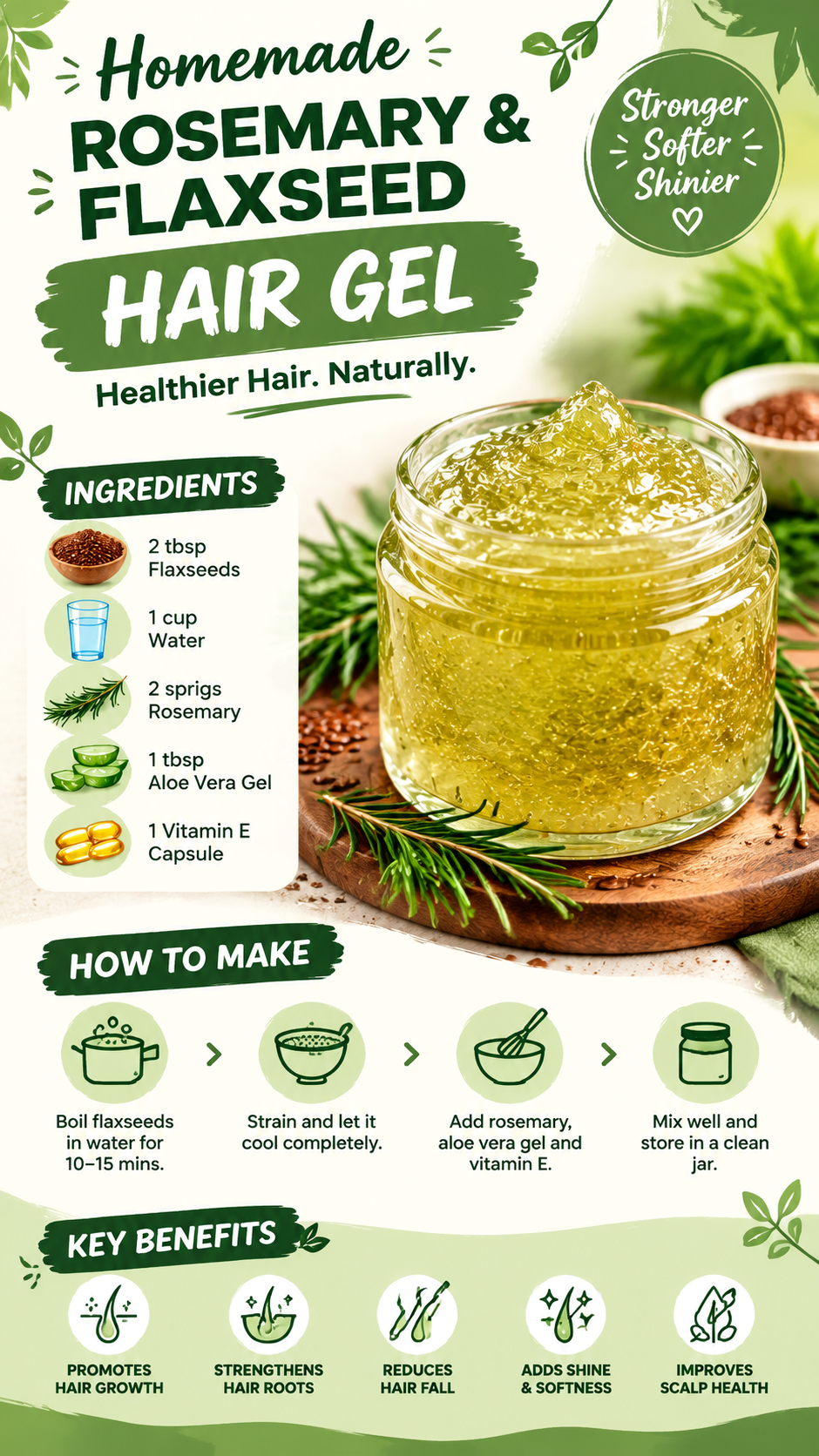
DIY Rosemary and Flaxseed Hair Growth Gel for Stronger, Longer, Shinier Hair
Looking for a simple way to add natural ingredients to your hair care routine? Homemade rosemary and flaxseed hair growth gel is a popular DIY option for anyone who loves plant-based beauty recipes. Made with flaxseeds, fresh rosemary, water, aloe vera gel, and vitamin E, this homemade hair gel creates a lightweight, slippery texture that can help condition the hair, improve manageability, and leave strands feeling softer and smoother.
Flaxseed gel is especially popular in natural hair care because it forms a flexible coating around hair strands, helping define curls and reduce friction during styling. Rosemary is another well-known ingredient in homemade hair care routines, often used in scalp massage and botanical hair products. When combined, these ingredients create a versatile gel that can be incorporated into a gentle, consistent hair care routine.
Key Takeaways
- Simple ingredients: Make a homemade gel using flaxseeds, rosemary, water, aloe vera gel, and vitamin E.
- Moisture and manageability: Flaxseed gel can help hair feel smoother and improve curl definition.
- Scalp care: Gentle scalp massage can complement a healthy hair care routine.
- Easy preparation: Boil the flaxseeds, add rosemary, strain the mixture, and allow it to cool before adding the remaining ingredients.
- Freshness matters: Homemade water-based gels spoil easily and should be refrigerated promptly.
- Realistic expectations: This DIY recipe is a conditioning treatment, not a proven cure for hair loss or a guaranteed hair growth solution.
What Is Rosemary and Flaxseed Hair Growth Gel?
Rosemary and flaxseed hair gel is a homemade botanical styling and conditioning product prepared by extracting the natural gel-like substance found in flaxseeds and combining it with rosemary-infused water. Aloe vera gel and vitamin E may be added to customize the texture and conditioning properties.
When flaxseeds simmer in water, they release mucilage, a naturally occurring substance that thickens the liquid into a slippery gel. Once strained and cooled, the mixture can be applied to damp hair to help smooth the strands, enhance natural texture, and make styling easier.
Rosemary contributes an herbal element to the recipe. Its leaves are commonly used in hair care preparations, including infused oils, rinses, and scalp products. However, rosemary-infused water should not be confused with concentrated rosemary essential oil, which has a different composition and requires additional precautions.
Important: Although rosemary is widely discussed in connection with hair growth, evidence for a homemade rosemary and flaxseed gel is limited. Its most dependable benefit is as a styling and conditioning product. Persistent shedding, bald patches, or a widening part deserve evaluation by a qualified healthcare professional.
Benefits of Rosemary and Flaxseed Gel for Hair
1. Helps Hair Feel Softer and Smoother
Flaxseed gel provides a slippery texture that can reduce friction between strands during styling. This is useful when detangling curls, shaping waves, or smoothing flyaways. Hair that is easier to handle may also experience less mechanical damage from aggressive brushing and pulling.
For the best experience, apply a small amount to damp hair and distribute it evenly with your fingers or a wide-tooth comb. Concentrate on the lengths and ends if they tend to feel dry or rough.
2. Supports Curl Definition and Natural Styling
One of the most useful features of flaxseed gel is its ability to form a light film as it dries. This can help curls and waves maintain their shape without necessarily feeling as heavy as some commercial styling products.
People with curly, coily, and wavy hair may appreciate the definition this gel provides. Results depend on hair texture, porosity, humidity, and the amount applied. Fine hair may need only a small quantity, while thicker hair may tolerate a more generous application.
3. Adds Slip for Easier Detangling
Knots and tangles can make wash day frustrating, particularly for long, curly, or tightly coiled hair. A slippery gel can help fingers or a wide-tooth comb move through strands more comfortably when used with a suitable conditioner.
Work in small sections and begin detangling at the ends before gradually moving toward the roots. Avoid pulling forcefully through stubborn knots, as repeated tension can contribute to breakage.
4. Complements a Gentle Scalp Care Routine
Rosemary is a familiar botanical ingredient in scalp care. Gently massaging the scalp while applying a suitable hair product can help distribute it evenly and make a hair care routine feel more relaxing.
However, a homemade rosemary infusion is not equivalent to a clinically studied hair loss treatment. The evidence available for particular rosemary oil preparations cannot automatically be applied to rosemary boiled in water or to this combined gel recipe.
Keep your scalp comfortable by avoiding vigorous rubbing and discontinuing use if you experience itching, redness, burning, or increased irritation.
5. Makes a Customizable DIY Hair Product
Homemade flaxseed gel allows you to experiment with consistency and styling performance without purchasing several different products. You can adjust the amount of water or flaxseeds to create a thinner gel for light definition or a thicker gel for stronger styling support.
Because the recipe is customizable, it may suit people who enjoy simple DIY beauty routines. Still, natural ingredients can cause reactions, and homemade products do not receive the same preservation and stability testing as professionally formulated cosmetics.
Ingredients for Homemade Rosemary and Flaxseed Gel
The recipe uses five ingredients. Gather everything before you begin so that you can prepare the gel smoothly and handle the hot mixture safely.
- 2 tablespoons flaxseeds: Brown or golden flaxseeds can produce the gel-like consistency needed for this recipe.
- 1 cup water: Provides the liquid used to extract the flaxseed mucilage and infuse the rosemary.
- 2 sprigs fresh rosemary: Adds a botanical element to the preparation.
- 1 tablespoon aloe vera gel: An optional conditioning ingredient that can alter the texture and feel of the finished gel.
- 1 vitamin E capsule: May add a small amount of vitamin E oil to the formula, depending on the capsule contents.
Understanding the Main Ingredients
Flaxseeds
Flaxseeds are the foundation of this recipe. When heated in water, they release mucilage that thickens the liquid and creates a naturally slippery texture. This texture is responsible for much of the gel’s styling and conditioning appeal.
Flaxseed gel is not a complete substitute for a rinse-out conditioner or leave-in conditioner. Hair that is particularly dry or damaged may benefit from a dedicated conditioning product before the gel is applied.
Rosemary
Fresh rosemary leaves release some of their water-soluble compounds during simmering. The resulting infusion gives the preparation its herbal character, but its composition differs from rosemary essential oil and commercially formulated rosemary extracts.
Fresh herbs should be clean before use. Remove damaged leaves, rinse the sprigs under running water, and avoid introducing unnecessary debris into the finished product.
Aloe Vera Gel
Aloe vera gel is frequently included in personal care products because of its lightweight texture. In this recipe, it can make the finished mixture feel different from plain flaxseed gel. Its suitability depends on the specific product used and the sensitivity of your skin.
Choose a cosmetic-grade aloe vera gel intended for topical use. Avoid using a product with fragrance or other ingredients that you know irritate your scalp.
Vitamin E
Vitamin E is an antioxidant commonly found in skin and hair care products. Adding the contents of a capsule may change the texture of homemade gel, but it does not preserve the water-based mixture against bacteria, yeast, or mold.
Pro Tip: Vitamin E is not a broad-spectrum preservative. Do not rely on it to prevent spoilage. For a beginner-friendly version, prepare a small batch of flaxseed and rosemary gel, use clean equipment, refrigerate it promptly, and discard any leftovers after a short period.
How to Make Rosemary and Flaxseed Hair Gel at Home
This recipe follows the method shown in the ingredient and preparation guide. Allow enough time for heating, straining, and cooling before adding the remaining ingredients.
Step 1: Prepare Your Ingredients and Equipment
Measure the flaxseeds and water. Rinse the rosemary sprigs, then gather a small saucepan, a heat-safe bowl, a fine-mesh strainer, a clean spoon, and a clean storage container.
Wash your hands and clean the equipment thoroughly before preparing the gel. Because this recipe contains water and no validated preservative system, cleanliness is especially important.
Step 2: Boil the Flaxseeds
Place two tablespoons of flaxseeds and one cup of water in a saucepan. Bring the mixture to a boil, then reduce the heat to maintain a gentle simmer for approximately 10 to 15 minutes.
Stir occasionally to prevent the seeds from sticking to the bottom of the pan. As the mixture heats, the water should become thicker and more slippery. The exact time required depends on the seeds, saucepan, and temperature.
If the gel becomes extremely thick before the cooking time is complete, reduce the heat and monitor it closely. Avoid allowing the mixture to boil dry.
Step 3: Add the Rosemary
Add the two rosemary sprigs to the simmering flaxseed mixture and cook for another five minutes. This gives the rosemary time to infuse into the hot liquid.
Keep the heat gentle and avoid prolonged boiling. The purpose is to produce a usable gel with a manageable consistency, not to concentrate the infusion excessively.
Step 4: Strain the Mixture
Remove the saucepan from the heat. While the mixture is still warm and fluid, carefully strain it into a clean, heat-safe bowl to separate the seeds and rosemary leaves from the gel.
The mixture may be hot and sticky, so handle it carefully to avoid burns. A fine-mesh strainer works well, although a clean heat-resistant straining tool may make the process easier.
Straining while the gel is warm is generally easier than waiting until it has cooled completely and thickened further.
Step 5: Cool the Gel Completely
Let the strained mixture cool before adding the aloe vera gel or vitamin E. Adding ingredients to a hot mixture may affect their texture and can make the finished preparation more difficult to handle.
Do not leave the mixture sitting at room temperature for an extended period. Once it has cooled sufficiently, move directly to the next step.
Step 6: Mix in Aloe Vera and Vitamin E
Add one tablespoon of cosmetic-grade aloe vera gel and the contents of one vitamin E capsule, if you choose to use them. Stir thoroughly until the mixture appears reasonably uniform.
Oil from a vitamin E capsule may not blend evenly into a water-based gel. If the mixture separates, stir it again before use and do not assume that the separation is harmless if other signs of spoilage appear.
For a simpler formula, you can leave out these optional additions and use the strained flaxseed and rosemary gel on its own. Fewer ingredients can also make it easier to identify the cause of a reaction if your scalp becomes irritated.
Step 7: Transfer to a Clean Container
Transfer the finished gel into a clean, dry container with a secure lid. Label it with the preparation date and refrigerate it promptly.
Homemade gel does not have a professionally established shelf life. A conservative approach is to make only enough for one or two applications and discard any remaining product within a few days. Discard it sooner if its smell, color, texture, or appearance changes. Do not taste the product or try to rescue spoiled gel by reheating it.
How to Use Rosemary and Flaxseed Gel for Hair
Once the gel has cooled and been stored appropriately, it can be used as a styling product or a short pre-wash treatment. Start with a small amount to see how your hair and scalp respond.
Step 1: Start with Clean or Damp Hair
You can apply the gel after washing and conditioning your hair or lightly dampen your strands before styling. Damp hair generally makes it easier to spread a water-based gel evenly.
If your hair is prone to dryness, use your regular conditioner or leave-in conditioner as needed. The homemade gel can then be applied as a finishing styling product.
Step 2: Apply a Small Amount
Rub a little gel between your palms and distribute it through the hair in sections. Focus on the lengths and ends when your primary goal is curl definition or smoother styling.
If you want to apply it to your scalp, use only a small quantity and avoid covering the scalp with a heavy layer of product. Stop using it if you notice discomfort, itching, or redness.
Step 3: Massage Gently
If you apply the gel to your scalp, massage gently with your fingertips for a short time. Avoid scratching with your nails or pulling at the roots.
Scalp massage can make application more comfortable and help distribute the product, but it should not be presented as a guaranteed way to stimulate new hair growth.
Step 4: Choose Your Treatment Time
The illustrated routine suggests leaving the gel on for one to two hours or overnight. However, an overnight treatment is not necessary for a styling gel, and prolonged contact may increase the chance of irritation in sensitive individuals.
For your first application, try a short period and rinse the gel out if your scalp feels uncomfortable. If you use it as a styling product, you can generally leave a small amount on the hair until your next wash, provided the formula is fresh and your skin tolerates it.
Step 5: Rinse or Wash as Needed
When using the gel as a pre-wash treatment, rinse it out and shampoo as needed. If you use it for styling, wash your hair according to your usual routine and whenever buildup develops.
Flaxseed gel can leave a coating on some hair types, especially when too much is applied. If your hair feels stiff or sticky, use less product the next time and consider applying it to wetter hair.
How Often Should You Use Homemade Hair Gel?
The pictured recipe recommends using the gel two to three times per week. That frequency is a suggested routine, not a medically established schedule for hair growth.
For styling, you can use the gel whenever it suits your hair, provided the product remains fresh and does not irritate your scalp. You do not need to apply it daily or leave it on overnight to achieve better results.
Consider your hair’s response over several uses. If your strands feel soft and defined, the quantity and frequency may be suitable. If you notice flakes, residue, dryness, or scalp irritation, reduce use or stop applying the product.
Why This Matters
Healthy-looking hair depends on more than a single ingredient or treatment. Gentle detangling, suitable conditioning, reduced heat damage, balanced nutrition, and attention to scalp problems all contribute to a more effective hair care routine. A DIY gel can support styling and manageability, but it should not replace treatment for a medical cause of hair loss.
Does Rosemary and Flaxseed Gel Really Promote Hair Growth?
The promise of longer, thicker hair makes natural hair remedies appealing, but it is important to separate cosmetic benefits from evidence of actual hair growth.
Flaxseed gel can help strands feel smoother and improve the appearance of curls. By reducing friction during styling, it may help you manage your hair with less pulling and breakage. Retaining more of the length you already have can make hair appear to grow longer over time, even though the gel has not increased the rate at which follicles produce hair.
Rosemary has received attention in hair care research, particularly in relation to rosemary oil. However, evidence from a specific oil preparation cannot be directly applied to a homemade rosemary water infusion. The concentration, formulation, method of use, and research conditions are different.
There is also no strong clinical evidence establishing that this exact combination of flaxseeds, rosemary, aloe vera, and vitamin E stimulates hair follicles or prevents hair loss.
What Helps Hair Grow Healthily?
- Eat a balanced diet: Adequate calories, protein, and essential nutrients support normal hair growth. Avoid taking supplements without a demonstrated need or professional guidance.
- Handle hair gently: Reduce excessive heat styling, tight hairstyles, aggressive brushing, and repeated chemical processing.
- Care for your scalp: Cleanse regularly with products suited to your scalp and address persistent itching, scaling, or inflammation.
- Allow time for growth: Hair grows gradually, and visible changes usually require consistent care over time.
- Investigate persistent shedding: Hair loss can have many causes, including illness, hormonal changes, nutritional deficiencies, medication effects, and inherited conditions.
If you experience sudden or patchy hair loss, significant scalp discomfort, or ongoing thinning, consult a dermatologist or another qualified healthcare professional. Identifying the cause is more useful than relying on an unproven homemade treatment.
Is Rosemary and Flaxseed Gel Suitable for All Hair Types?
The recipe may work for a range of hair textures, but the best application method depends on your individual needs. No single homemade product works equally well for everyone.
Curly and Coily Hair
Curly and coily hair often benefits from products that improve slip and help curls maintain their shape. Flaxseed gel can be useful for defining curl patterns, reducing the appearance of flyaways, and supporting wash-and-go styling.
Apply it in sections to damp hair and smooth it over your usual leave-in conditioner if needed. Avoid using excessive quantities if the gel leaves a stiff or flaky finish.
Straight and Wavy Hair
Straight and wavy hair may benefit from a small amount of gel for flyaway control or light texture. Fine hair can become weighed down if too much product is applied, so begin with a pea-sized amount and increase only if necessary.
Apply primarily to the mid-lengths and ends if your roots tend to become oily quickly.
Dry or Chemically Treated Hair
Hair that has been bleached, colored, relaxed, or frequently heat-styled may be more vulnerable to breakage. A slippery gel can make styling easier, but it does not repair every form of structural damage.
Continue using a suitable conditioner and take extra care when detangling. If the homemade mixture makes your hair feel rough or brittle, stop using it and return to products that your hair tolerates well.
Sensitive Scalps
If you have a sensitive scalp, eczema, dermatitis, or a history of reactions to botanical products, be especially cautious. Rosemary and aloe vera can cause irritation or allergic reactions in some people.
Test a small amount on a limited area of skin before using the product more broadly. A small test does not guarantee that a reaction will never occur. Avoid applying the gel to broken or inflamed skin, and stop immediately if irritation develops.
Common Mistakes to Avoid When Making Flaxseed Hair Gel
Boiling the Mixture for Too Long
Overcooking the flaxseeds can make the gel extremely thick and difficult to strain. Begin checking the consistency after about 10 minutes and remove the pan from the heat when the mixture is suitably slippery.
Waiting Too Long Before Straining
As the gel cools, it can become more difficult to separate from the seeds. Strain the mixture while it is still warm, using suitable heat-resistant equipment and careful handling.
Adding Ingredients Before Cooling
Mixing aloe vera and vitamin E into a hot preparation can change the consistency and make the formula less predictable. Allow the base to cool first, then mix in any optional ingredients.
Making a Large Batch
It may be tempting to prepare enough gel for several weeks, but a homemade water-based formula without a validated preservative can support microbial growth. Small batches are easier to handle safely and help reduce waste.
Using Too Much Product
A thick coating of gel can make hair sticky, stiff, or difficult to rinse. Start with a small amount and apply more only when necessary. Fine hair often needs less than dense or tightly curled hair.
How to Store Homemade Rosemary and Flaxseed Gel Safely
Storage is one of the most important parts of making homemade hair products. This recipe contains water and fresh plant material, and it does not include a tested preservative system. Refrigeration slows the growth of many microorganisms, but it does not make the gel sterile or guarantee that it will remain safe.
- Use clean hands and thoroughly cleaned equipment when preparing the gel.
- Transfer the finished mixture into a clean container with a secure lid.
- Refrigerate the gel promptly rather than leaving it on the counter.
- Make a small quantity and use it within a few days at most.
- Do not dip dirty fingers into the container repeatedly. Use a clean utensil to remove the amount needed.
- Discard the entire batch if you notice an unusual odor, visible mold, unexpected discoloration, or a significant change in texture.
Do not assume that a normal smell or appearance proves the gel is free of harmful microorganisms. If you need a product with a longer shelf life, choose a commercially formulated hair gel or follow a properly tested cosmetic formulation that includes an appropriate preservative system.
Frequently Asked Questions
Can I Use Rosemary and Flaxseed Gel Every Day?
You may be able to use a small amount of fresh gel as a styling product whenever your hair needs it, provided your scalp tolerates the formula. Daily application is not necessary for hair growth, and frequent use may cause buildup in some hair types. Always use a freshly prepared product within its short storage period.
Can I Leave the Gel on Overnight?
Overnight use is not essential. Because this homemade formula is not preserved or tested for extended skin contact, a shorter application is a more cautious starting point. Rinse it out if your scalp becomes uncomfortable, and avoid overnight application if you have a sensitive or irritated scalp.
Can This Gel Stop Hair Fall?
No reliable evidence shows that this specific recipe stops hair loss. Its conditioning properties may make hair easier to handle, potentially reducing some breakage caused by rough styling. Hair shedding from medical, hormonal, nutritional, or inherited causes requires a different approach.
Can I Make the Gel Without Aloe Vera?
Yes. Aloe vera is optional, and you can prepare a basic gel using flaxseeds, water, and rosemary. Leaving out optional ingredients also simplifies the formula if you want to see how your hair responds to the basic preparation.
Can I Use Rosemary Essential Oil Instead of Fresh Rosemary?
Rosemary essential oil is concentrated and is not interchangeable with fresh rosemary sprigs. Essential oils can irritate the skin if used improperly, and they do not mix evenly into water without an appropriate formulation. For this simple recipe, fresh rosemary is the more direct choice. If you want to use an essential oil, follow reliable topical-use guidance and avoid adding it casually to a water-based homemade gel.
Will the Gel Work on All Hair Types?
It can be useful for many textures, but results vary. Curly hair may benefit from curl definition, while straight or fine hair may need only a tiny amount to avoid heaviness. Adjust the quantity to your hair’s needs and discontinue use if the product causes irritation or excessive buildup.
Quick Points: At a Glance
- Ingredients: Flaxseeds, water, rosemary, and optional aloe vera and vitamin E.
- Preparation: Simmer the flaxseeds, add rosemary, strain while warm, and cool before mixing in optional ingredients.
- Application: Use a small amount on damp hair for styling or short-term conditioning.
- Storage: Refrigerate promptly, prepare small batches, and discard leftovers within a few days at most.
- Expected results: Improved manageability and curl definition are more realistic than guaranteed hair growth.
Conclusion: Add This Simple DIY Gel to Your Hair Care Routine
Rosemary and flaxseed hair gel is an easy homemade recipe for anyone who enjoys experimenting with botanical hair care. With a handful of simple ingredients and a few preparation steps, you can create a slippery gel that may help improve curl definition, smooth flyaways, and make everyday styling more manageable.
The key is to focus on what this preparation can realistically offer. Flaxseed gel is useful as a styling and conditioning aid, while rosemary adds a familiar herbal touch. Neither the recipe nor its individual ingredients should be treated as a guaranteed solution for hair loss or a proven way to accelerate hair growth.
Prepare small batches, keep your equipment clean, refrigerate the gel promptly, and pay attention to how your hair and scalp respond. Combine gentle styling habits with appropriate conditioning, balanced nutrition, and professional advice when persistent shedding occurs.
With realistic expectations and a careful approach to freshness, this homemade rosemary and flaxseed gel can be a practical addition to a simple natural hair care routine.
Tags
Rosemary Hair Care
Flaxseed Hair Gel
DIY Hair Care
Natural Hair Styling
Homemade Hair Gel
Healthy Hair Routine
Flaxseed Gel for Curls
Botanical Hair Care