Foods That Harm Your Skin vs. Foods That Boost Clear, Glowing Skin
Healthy, glowing skin is influenced by many factors, including genetics, hormones, sleep, stress, skincare habits, and the foods you eat. While no single food can guarantee a clear complexion, building a balanced diet with plenty of fruits, vegetables, whole grains, nuts, seeds, and other nutrient-rich ingredients can help support your skin from within. At the same time, frequently consuming sugary drinks, highly processed snacks, and meals high in sodium may make it harder to maintain healthy eating habits that benefit your overall well-being.
The good news is that improving your diet does not have to mean giving up every favorite treat or following a complicated meal plan. Small, consistent changes can make healthy eating easier and more enjoyable. By understanding which foods provide valuable skin-supporting nutrients and which dietary habits may be worth limiting, you can make informed choices that complement your skincare routine.
Key Takeaways
- Fruits and leafy greens provide vitamins, minerals, and antioxidants that support normal skin function.
- Nuts, seeds, oats, lentils, and edamame contribute important nutrients to a balanced diet.
- Frequent consumption of high-glycemic foods may worsen acne in some people, although responses vary.
- Excess sodium can contribute to temporary fluid retention, including facial puffiness, rather than directly damaging skin.
- Sweet potatoes provide beta-carotene, which the body can convert into vitamin A.
- Consistent nutrition, hydration, sleep, sun protection, and appropriate skincare work together to support healthier-looking skin.
How Food Affects Your Skin
Your skin is the body’s largest organ, and it relies on a steady supply of nutrients to maintain its structure, support normal cell renewal, and protect against environmental stressors. Protein, essential fats, vitamins, minerals, and water all contribute to normal skin function.
However, the relationship between diet and skin health is more complex than simply labeling foods as good or bad. Some dietary patterns may influence inflammation, blood sugar levels, and acne in susceptible individuals. Other foods provide nutrients that help the body maintain its natural protective barrier and repair everyday cellular damage.
For example, diets rich in fruits and vegetables supply vitamin C and other antioxidants. Healthy sources of fats provide essential fatty acids, while protein-rich foods contribute amino acids needed to maintain and repair body tissues.
Important: No food can instantly clear acne, erase wrinkles, or replace an effective skincare routine. Think of nutrition as one part of a broader approach to skin health, not a quick fix or a substitute for medical treatment when needed.
Foods That May Contribute to Skin Concerns
Some foods and drinks are worth reviewing if you experience recurring breakouts, facial puffiness, or other skin concerns. The goal is not to eliminate entire food groups without a reason. Instead, pay attention to your overall dietary pattern and notice whether particular habits appear to affect your skin.
1. Excess Salt
Salt enhances the flavor of food, but consuming too much sodium regularly can contribute to high blood pressure and other health problems. It may also cause temporary water retention, which can make the face or area around the eyes appear puffier in some people.
Many convenient foods contain considerable amounts of sodium, including packaged snacks, instant noodles, processed meats, canned meals, and restaurant dishes. The amount can add up quickly when several of these foods appear in the same day’s meals.
How to Reduce Excess Sodium
- Compare nutrition labels when buying packaged foods.
- Choose unsalted nuts and seeds more often.
- Flavor meals with garlic, lemon, herbs, and spices.
- Prepare more meals at home so you can control the amount of salt.
- Rinse canned beans and lentils when appropriate to reduce some of their sodium.
Reducing excess sodium supports general health, but salt is not automatically a direct cause of acne or skin damage. The amount you consume and your individual circumstances matter.
2. Sweets and Sugary Foods
Candy, sweetened desserts, pastries, and other sugary foods can be part of an enjoyable diet. However, regularly eating large amounts of foods that rapidly raise blood sugar may be associated with acne in some people.
High-glycemic foods are digested relatively quickly and can cause a faster rise in blood glucose. Researchers have investigated how the resulting hormonal and metabolic changes might influence oil production and inflammation associated with acne. Some studies suggest that a lower-glycemic dietary pattern may improve acne, although evidence is not conclusive for everyone.
This does not mean that eating one piece of candy will cause a breakout. Acne has many potential triggers, including hormonal changes, genetics, certain medications, and skincare products.
Smarter Ways to Enjoy Sweet Foods
- Enjoy sweets in moderate portions rather than making them an everyday staple.
- Pair carbohydrate-rich meals with protein, fiber, and healthy fats.
- Choose whole fruit when you want a naturally sweet snack.
- Build balanced meals instead of skipping meals and relying on sugary snacks later.
A balanced approach is usually more sustainable than strict food rules. If you suspect a relationship between sugar and acne, track your symptoms and eating habits over several weeks rather than drawing conclusions from a single breakout.
3. Fried Snacks
Fried snacks, including chips, fried pastries, and battered foods, can be high in calories and may contain considerable amounts of sodium and saturated fat, depending on the ingredients and cooking method. Frequently relying on these foods instead of a varied diet can make it harder to obtain enough fiber, vitamins, and minerals.
It is important to distinguish between a food’s overall nutritional profile and its direct effect on acne. Greasy foods do not automatically make your skin oily. Skin oil production is influenced primarily by factors such as hormones, genetics, and the activity of sebaceous glands.
If fried snacks are a regular part of your routine, consider replacing some servings with roasted chickpeas, fresh fruit, plain yogurt, or a small handful of unsalted nuts. These alternatives can offer a satisfying combination of flavor, texture, and useful nutrients.
4. Sugary Drinks
Soft drinks, sweetened iced teas, energy drinks, and heavily sweetened coffee beverages can contribute significant amounts of added sugar without providing much fiber or many essential nutrients.
Because liquids are often less filling than solid foods, it can also be easy to consume more added sugar than intended. A diet that frequently includes sugary beverages may contribute to broader metabolic health concerns and could be relevant to acne for some individuals.
Water is a practical everyday choice. Unsweetened tea, sparkling water, and water infused with lemon, mint, or cucumber can also add variety without requiring large amounts of added sugar.
Drinking enough fluids helps prevent dehydration, which can make skin appear dry or less comfortable. However, drinking excessive amounts of water will not automatically remove acne or create flawless skin.
5. Instant Noodles
Instant noodles are convenient, inexpensive, and easy to prepare, making them a common choice for quick meals. Depending on the brand and seasoning packet, they can contain substantial sodium and may be relatively low in fiber and protein when eaten on their own.
There is no strong reason to assume that instant noodles directly cause acne in everyone. The more useful consideration is how they fit into your overall eating pattern.
Make Instant Noodles More Balanced
- Add leafy greens, mushrooms, carrots, or broccoli.
- Include an egg, tofu, edamame, or another protein source.
- Use only part of the seasoning packet if it contains a lot of sodium.
- Add fresh herbs, garlic, ginger, or other seasonings for extra flavor.
These simple additions can turn an occasional convenience meal into a more balanced dish without requiring a complete change to your routine.
6. Oily and Highly Processed Foods
Foods such as fries, packaged savory snacks, and heavily processed fast-food meals can be convenient, but eating them frequently may crowd out more nutrient-dense choices. Some meals also contain considerable sodium, refined carbohydrates, and saturated fat.
The word “oily” can be misleading when discussing skin. Eating oil does not simply transfer that oil to your face, and dietary fat is not inherently harmful. Your body needs fat to absorb fat-soluble vitamins, build cell membranes, and support several normal biological processes.
Instead of avoiding all fats, focus on quality and variety. Include sources such as nuts, seeds, olive oil, and other unsaturated fats while keeping highly processed foods in proportion to the rest of your diet.
Why This Matters
Food choices should be evaluated in context. Excess sodium is more directly associated with fluid retention, while high-glycemic dietary patterns may affect acne in some people. Fried or oily foods are not universal acne triggers. A varied diet is more useful than labeling individual foods as skin-damaging.
Foods That Support Healthy, Glowing Skin
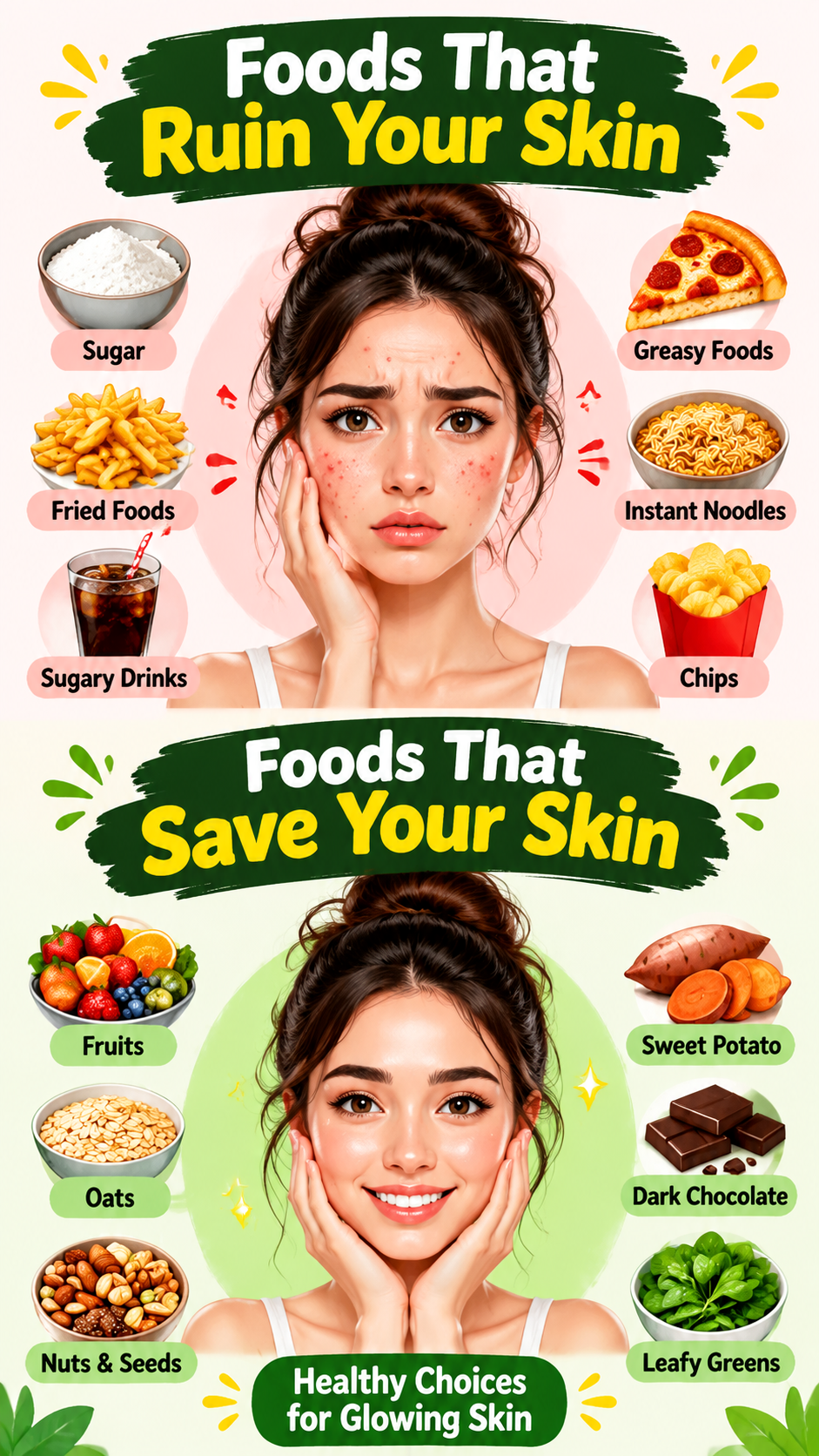
The lower half of the food guide highlights fruits, oats, nuts and seeds, leafy greens, edamame, lentils, sweet potatoes, and dark chocolate. These foods offer a variety of nutrients that can support general health and normal skin function.
No particular food guarantees a smooth complexion, but regularly including a wide range of nutrient-rich ingredients is a practical way to nourish your body and build sustainable healthy eating habits.
1. Fresh Fruits
Fruits such as oranges, berries, apples, grapes, and bananas provide vitamins, minerals, fiber, and various plant compounds. Different fruits offer different nutritional benefits, so eating a variety is more useful than relying on just one.
Citrus fruits, strawberries, and other vitamin C-rich options are particularly valuable because vitamin C is needed for normal collagen formation. Collagen is a structural protein that helps support the skin and other connective tissues.
Many fruits also contain antioxidants, which help protect cells from oxidative stress. Eating whole fruit provides fiber that is often missing from fruit juice.
Easy Ways to Eat More Fruit
- Add berries or sliced bananas to breakfast oats.
- Keep apples, oranges, or seasonal fruit available for snacks.
- Combine several fruits in a colorful fruit bowl.
- Pair fruit with yogurt or nuts for a more filling snack.
Fresh, frozen, and unsweetened canned fruits can all contribute to a healthy diet. Choose whichever options are accessible, affordable, and convenient for you.
2. Oats
Oats are a source of complex carbohydrates, fiber, and several important minerals. They contain beta-glucan, a type of soluble fiber that can help support healthy cholesterol levels as part of an appropriate diet.
Although oats are not a direct treatment for acne, they can be a useful foundation for balanced breakfasts. Their fiber content helps make meals more satisfying, and pairing oats with fruit, seeds, or yogurt increases the variety of nutrients in your bowl.
For a simple breakfast, cook rolled oats with milk or a fortified alternative, then add berries, sliced fruit, and a sprinkle of chia seeds. Choose plain oats more often than highly sweetened instant varieties if you want to reduce added sugar.
3. Nuts and Seeds
Nuts and seeds provide healthy unsaturated fats, protein, fiber, vitamin E, and minerals in varying amounts. Almonds, walnuts, sunflower seeds, pumpkin seeds, chia seeds, and flaxseeds are all useful options for adding nutritional variety to everyday meals.
Vitamin E acts as an antioxidant and contributes to protecting cells from oxidative damage. Essential fatty acids also play important roles in maintaining cell membranes and supporting normal body functions.
While these nutrients are important, eating large quantities of nuts or taking high-dose supplements will not necessarily improve your skin. A moderate serving as part of a balanced diet is generally sufficient for most people.
Simple Ideas for Everyday Meals
- Sprinkle chopped walnuts over oatmeal.
- Add pumpkin or sunflower seeds to salads.
- Blend chia seeds into a smoothie.
- Enjoy a small handful of unsalted nuts between meals.
If you have a nut or seed allergy, avoid the relevant ingredient and choose suitable alternatives. You can still build a nutrient-rich diet using legumes, whole grains, fruits, and vegetables.
4. Leafy Greens
Leafy greens such as spinach, kale, lettuce, and other dark green vegetables provide folate, vitamin K, carotenoids, and other nutrients, depending on the variety.
Some greens also supply beta-carotene, which the body can convert into vitamin A as needed. Vitamin A is essential for normal cell growth and the maintenance of healthy tissues, including skin.
Leafy greens are also a useful source of fiber and can add color, texture, and volume to meals. You do not have to eat them in plain salads to enjoy their benefits.
- Mix spinach into omelets or scrambled eggs.
- Add kale or other greens to soups and stews.
- Blend a handful of greens into a fruit smoothie.
- Serve cooked greens alongside beans, lentils, fish, or tofu.
For a balanced plate, combine leafy greens with a protein source, a carbohydrate-rich food, and some healthy fat rather than relying on vegetables alone.
5. Edamame
Edamame consists of young soybeans that are often served steamed or added to salads, rice bowls, and stir-fries. They provide plant-based protein, fiber, folate, iron, and other nutrients.
Protein supplies amino acids that the body uses to build and maintain tissues. Eating adequate protein as part of a varied diet supports normal growth and repair, including the maintenance of skin and other body structures.
Edamame is especially useful for people who want to add more plant-based foods to their meals. It can be served warm with a little lemon, mixed into grain bowls, or combined with leafy greens and vegetables.
Choose lightly salted or unsalted edamame when possible if you are trying to reduce sodium intake. People with soy allergies should select another protein source.
6. Lentils
Lentils are an affordable and versatile source of plant protein, fiber, folate, iron, and other minerals. They can help create filling meals that support a balanced dietary pattern.
Because lentils contain fiber and protein, they are useful for meals built around slower-digesting carbohydrates. Their nutritional profile makes them a valuable addition to many eating styles, including vegetarian and vegan diets.
Try adding lentils to soups, stews, salads, or tomato-based sauces. Red lentils cook quickly and soften into a creamy texture, while green and brown lentils often retain more of their shape.
Lentils do not directly cure acne, but they can help provide nutrients that the body needs for normal function. Their affordability and versatility also make them an easy food to include regularly.
7. Sweet Potatoes
Sweet potatoes are rich in beta-carotene, the orange plant pigment that the body can convert into vitamin A. They also provide carbohydrates, fiber, and potassium.
Vitamin A plays a role in normal skin maintenance, cell growth, and immune function. Getting it through a variety of foods helps support the body’s nutritional needs without relying on high-dose supplements.
Sweet potatoes are easy to prepare and work well in many meals. Bake them until tender, roast them with herbs, or mash them as a side dish. Pair them with beans, lentils, eggs, fish, or another protein source to create a balanced meal.
Pro Tip: Food sources of beta-carotene are a practical way to support vitamin A intake. Avoid taking high-dose vitamin A supplements for skin concerns without medical guidance, because excessive preformed vitamin A can be harmful.
8. Dark Chocolate
Dark chocolate contains cocoa compounds called flavanols, which have been studied for their antioxidant and cardiovascular effects. The amount of these compounds varies considerably depending on the cocoa content and how the chocolate is processed.
Dark chocolate can fit into a balanced diet as an enjoyable treat. Choosing a variety with a higher cocoa content may reduce the amount of sugar compared with some milk chocolate products, although this depends on the specific product.
It is important to keep expectations realistic. Research on cocoa and skin does not establish that eating dark chocolate will reliably improve acne, prevent wrinkles, or make skin glow. Chocolate can also contain added sugar and calories, so portion size matters.
If you enjoy dark chocolate, savor a small portion alongside an otherwise varied diet rather than treating it as a skincare supplement.
How to Build a Skin-Friendly Daily Meal Plan
You do not need expensive ingredients, complicated recipes, or restrictive food rules to eat in a way that supports healthy skin. Start with familiar foods and build meals that combine vegetables, fruits, whole grains, protein, and sources of healthy fats.
Breakfast
Begin your day with oatmeal topped with berries, banana slices, and a small serving of nuts or seeds. If you prefer a savory breakfast, try eggs with whole-grain toast and spinach.
These combinations provide a mixture of carbohydrates, fiber, protein, and other nutrients to help you start the day with a satisfying meal.
Lunch
Build a colorful bowl with lentils or edamame, leafy greens, whole grains, chopped vegetables, and a dressing made with olive oil and lemon. You can adjust the ingredients to match your preferences and what is available locally.
If you enjoy rice, bread, or potatoes, there is no need to remove them. Combine them with protein and vegetables to make a more balanced meal.
Dinner
Try roasted sweet potatoes with beans, grilled fish, tofu, or chicken and a generous serving of vegetables. Another option is a lentil stew containing tomatoes, carrots, onions, and leafy greens.
Season meals with herbs, spices, garlic, and citrus to create flavor without relying heavily on salt.
Snacks and Drinks
Choose snacks based on your hunger, schedule, and preferences. Fruit, plain yogurt, nuts, hummus with vegetables, or roasted chickpeas can all be convenient choices.
Drink water regularly throughout the day, adjusting your intake for activity, temperature, and individual needs. You can still enjoy desserts and other favorite foods in moderation without compromising the overall quality of your diet.
Other Habits That Help Maintain Healthy Skin
Nutrition matters, but it is only one part of an effective skin health routine. Several everyday habits can help protect your skin and complement a balanced diet.
Follow a Consistent Skincare Routine
Cleanse gently, use a moisturizer suited to your skin type, and apply broad-spectrum sunscreen with SPF 30 or higher during the day. Avoid harsh scrubbing, which can irritate the skin and worsen some skin concerns.
If you experience persistent acne, appropriate treatments may be more effective than dietary changes alone. A dermatologist can help identify suitable options for your skin type and symptoms.
Prioritize Sleep and Stress Management
Insufficient sleep and ongoing stress can affect general health and may aggravate skin concerns in some people. Aim for a consistent sleep schedule and make time for activities that help you unwind.
Walking, gentle exercise, stretching, reading, and spending time outdoors can support overall well-being. These habits are not guaranteed acne treatments, but they can help create a healthier foundation for your daily routine.
Be Patient With Dietary Changes
Skin does not change overnight. If a dietary adjustment helps, you may need several weeks to notice a difference, and results can vary depending on the cause of your skin concern.
Make one or two realistic changes at a time. For example, replace sugary drinks with water more often, add fruit to breakfast, or include vegetables in your main meals. Tracking your symptoms and habits can help you notice patterns without becoming overly restrictive.
Common Myths About Food and Skin
Myth 1: One Food Can Clear Your Skin
No single fruit, vegetable, or supplement guarantees clear skin. Healthy skin depends on a combination of genetics, hormones, environmental factors, skincare, and general health. Nutrient-rich foods are beneficial, but they are not miracle cures.
Myth 2: All Fatty Foods Cause Acne
Dietary fat is essential for normal body function. The fat you eat does not simply become the oil on your face. Focus on the types of fat you consume and the overall quality of your diet rather than eliminating fat entirely.
Myth 3: Drinking More Water Removes Pimples
Hydration is important for health, and dehydration can affect skin comfort and appearance. However, drinking excessive water will not flush away acne or replace treatments designed to address clogged pores, inflammation, or hormonal causes.
Myth 4: You Must Avoid Every Sweet
Healthy eating does not require eliminating every dessert. A balanced diet can include occasional treats. If you suspect that high-glycemic foods affect your acne, focus on your overall eating pattern and discuss persistent symptoms with a healthcare professional.
Quick Points: Your Skin-Friendly Food Guide
At a Glance
- Eat more variety: Include fruits, leafy greens, whole grains, nuts, seeds, and legumes.
- Watch added sugar: Reduce frequent sugary drinks and highly sweetened snacks.
- Limit excess sodium: Compare labels and moderate salty packaged foods.
- Choose balanced meals: Combine protein, fiber-rich carbohydrates, vegetables, and healthy fats.
- Keep expectations realistic: Nutrition supports skin health but does not replace appropriate skincare or medical care.
Conclusion: Nourish Your Skin From Within
Healthy, glowing skin begins with consistent care, and a balanced diet is an important part of that bigger picture. Foods such as fruits, oats, leafy greens, nuts, seeds, edamame, lentils, sweet potatoes, and dark chocolate can add valuable nutrients and variety to your meals.
At the same time, being mindful of excess salt, frequent sugary drinks, and highly processed snacks can support better overall eating habits. Some people may also notice that high-glycemic dietary patterns influence their acne, although individual responses vary and no single food explains every breakout.
The most effective approach is not to fear food or chase instant results. Instead, make small, sustainable changes, stay hydrated, get enough sleep, protect your skin from the sun, and choose skincare products suited to your needs. If acne or another skin condition persists, seek advice from a qualified healthcare professional.
Start with one simple step today, whether it is adding berries to your breakfast, preparing a colorful vegetable bowl, or choosing water instead of a sugary drink. Over time, these everyday choices can help you build a nourishing routine that supports your overall well-being and healthy-looking skin.
Tags
Foods for Healthy Skin
Glowing Skin Tips
Acne-Friendly Diet
Healthy Eating
Skin Nutrition
Antioxidant Foods
Natural Skincare
Balanced Diet Ideas