How to Manage Anxiety on Tough Days 8 Gentle Self-Care Tips for a Calm Mind
Some days feel heavier than others. Your thoughts may race, small tasks can seem overwhelming, and even finding a moment of peace can feel difficult. When anxiety shows up, it is easy to put pressure on yourself to feel better immediately. However, managing anxiety on tough days does not have to mean fixing everything at once. Sometimes, the most helpful approach is to slow down, acknowledge what you are feeling, and take one small step toward feeling more grounded.
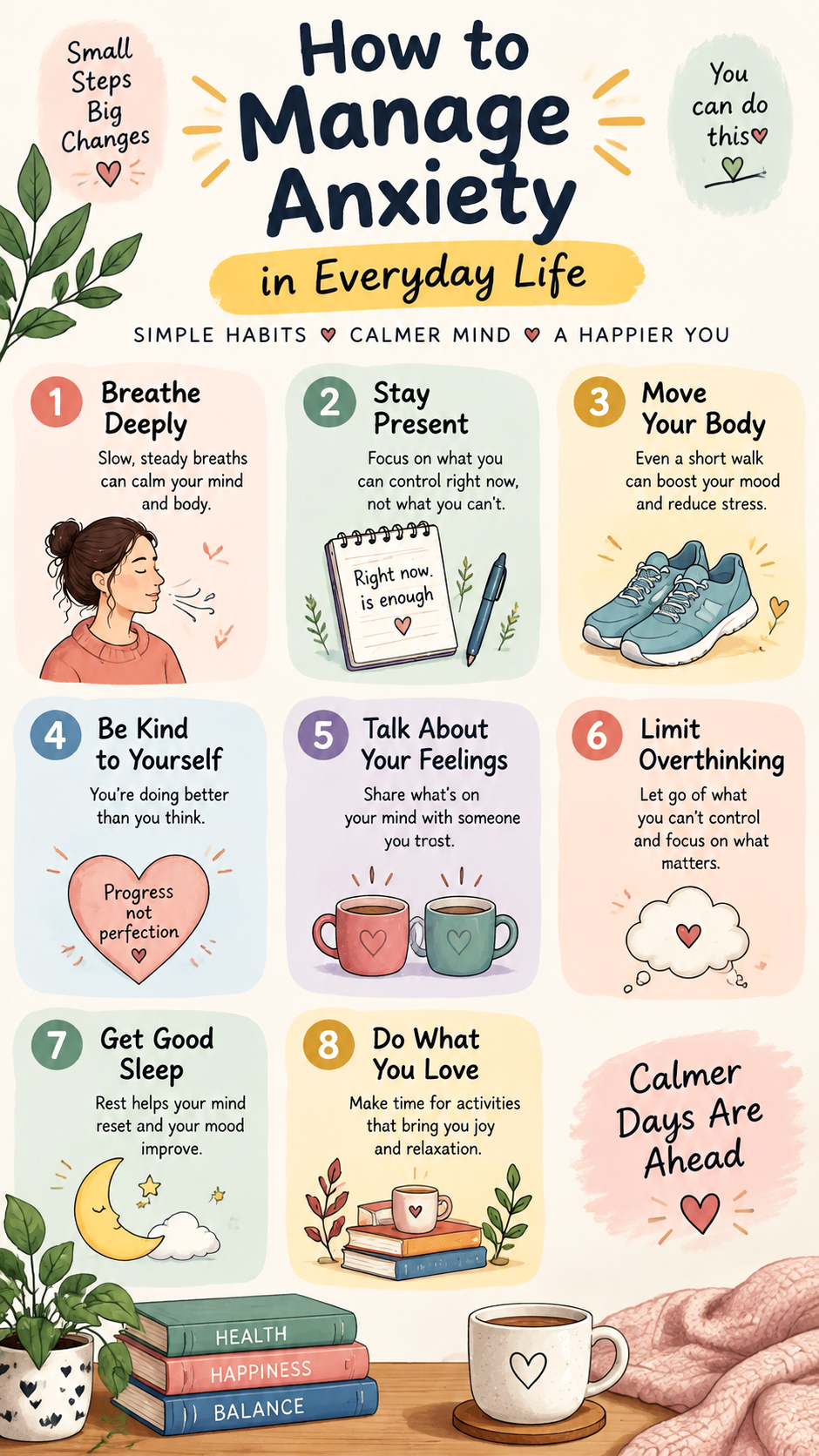
Learning how to manage anxiety on tough days starts with simple, realistic self-care habits. From practicing mindful breathing and grounding techniques to taking guilt-free breaks and talking with someone you trust, small actions can help you navigate stressful moments with greater awareness and compassion. You do not need a perfect routine or an entirely stress-free day to care for yourself.
Key Takeaways
- Recognize and name your emotions instead of judging yourself for having them.
- Use gentle breathing exercises to create a moment of calm when stress rises.
- Practice the 5-4-3-2-1 grounding technique to reconnect with the present moment.
- Give yourself permission to rest without feeling guilty about slowing down.
- Focus on what you can control and release pressure to solve everything immediately.
- Build a calming self-care routine that supports your emotional well-being.
1. Name What You Are Feeling
When anxiety begins to build, your thoughts can become tangled. You might feel worried about the future, frustrated by a difficult situation, or overwhelmed by several responsibilities at once. Sometimes, you may simply notice that something feels wrong without understanding exactly why.
One helpful first step is to pause and put a name to the emotion you are experiencing. Instead of saying, “Everything is terrible,” try identifying the specific feeling beneath that thought. You might be anxious, disappointed, exhausted, uncertain, lonely, or overstimulated.
How to Practice Emotional Awareness
- Take a quiet moment to notice what is happening inside you.
- Ask yourself, “What am I feeling right now?”
- Consider whether a particular situation, thought, or responsibility may be contributing to the emotion.
- Write down your feelings without trying to make them sound reasonable or positive.
- Remind yourself that experiencing an emotion does not mean you have failed.
Journaling can make this process easier. Keep a notebook nearby and write a few honest sentences about your current mood. You do not need to write a complete diary entry. Even a short sentence such as “I feel overwhelmed because I have too much to do today” can help you recognize what needs attention.
Important: Naming an emotion is not the same as letting it control your day. It is a way to acknowledge your experience and respond more thoughtfully instead of reacting automatically. You can feel anxious and still choose one manageable next step.
2. Focus on Your Breath
When anxiety rises, you may notice that your breathing becomes faster, shallower, or more noticeable. Your shoulders might tense, your jaw may tighten, and your body may feel as though it is preparing for something difficult. Paying gentle attention to your breathing can provide a simple way to pause and reconnect with your body.
You do not need special equipment, a meditation app, or a perfectly quiet room to practice mindful breathing. You can try it while sitting at your desk, resting on the sofa, or taking a short break from your responsibilities.
Try a Gentle Breathing Exercise
- Get comfortable. Sit with your feet supported or settle into a relaxed position.
- Relax your shoulders. Let your hands rest comfortably and release any unnecessary tension.
- Breathe in slowly. Allow the breath to enter naturally without forcing it.
- Breathe out gently. Let the exhale be comfortable and unhurried.
- Repeat for a few rounds. Keep your attention on the natural rhythm of breathing.
The visual guide suggests a 4-4-4 breathing pattern: inhale for four counts, hold for four counts, and exhale for four counts. You can try this if it feels comfortable, but remember that it is only one option. Some people find breath-holding uncomfortable, especially when anxiety is intense. If that happens, skip the hold and breathe normally or make your exhale slightly longer than your inhale.
There is no need to force deep breaths or follow a rhythm that makes you feel worse. The goal is to find a comfortable pace that helps you pay attention to the present moment.
When Mindful Breathing May Help
- Before beginning a task that feels overwhelming.
- After a stressful conversation or unexpected change.
- When you notice yourself rushing through the day.
- Before going to bed when worries make it difficult to settle down.
Think of mindful breathing as a small pause rather than a requirement to make every anxious feeling disappear. Even a few comfortable breaths can create an opportunity to slow down and decide what you need next.
3. Ground Yourself in the Present Moment
Anxiety often pulls your attention toward things that might happen. You may replay a conversation, imagine a difficult outcome, or worry about several future responsibilities at the same time. Grounding techniques can help redirect your attention toward your immediate surroundings.
One popular method is the 5-4-3-2-1 grounding technique. It uses your five senses to encourage awareness of what is happening around you right now.
How to Use the 5-4-3-2-1 Technique
- 5 things you can see: Notice a window, a plant, a book, the colors in the room, or the light on a nearby surface.
- 4 things you can feel: Pay attention to your feet on the floor, your clothing, the chair beneath you, or a comfortable object in your hand.
- 3 things you can hear: Listen for a fan, birds outside, distant conversation, or the quiet sounds of your surroundings.
- 2 things you can smell: Notice the scent of soap, fresh air, tea, or another familiar smell.
- 1 thing you can taste: Pay attention to the taste in your mouth or take a sip of water and notice its sensation.
You can practice this technique almost anywhere. If you are at work, focus on objects around your desk. If you are at home, notice familiar textures, sounds, and colors. When you are outdoors, observe the sky, nearby plants, and the feeling of the ground beneath your feet.
If one of your senses is difficult to access or focusing on a particular sensation feels uncomfortable, adapt the exercise. You can spend more time noticing the things you see, feel, or hear. The purpose is to support awareness, not to complete a perfect checklist.
Make Grounding Part of Your Daily Routine
Try practicing grounding when you are relatively comfortable, not only when anxiety feels intense. A brief moment of noticing your surroundings during lunch, a walk, or a quiet break can help you become more familiar with the technique.
Over time, you may find it easier to remember this simple exercise when you notice your thoughts racing. It will not solve every problem, but it can help you shift your attention away from a spiral of worries and toward what is happening in the present.
Why This Matters
Grounding, breathing, and emotional awareness are skills you can practice in small moments. You do not need to wait until you feel completely overwhelmed. A few intentional minutes can help you notice your needs, interrupt automatic reactions, and choose a more supportive response to a stressful situation.
4. Take a Break Without Feeling Guilty
When your to-do list seems endless, taking a break can feel like another thing you cannot afford to do. You might worry that resting means falling behind, disappointing someone, or failing to use your time productively.
However, constantly pushing yourself when you are exhausted can make everyday responsibilities feel even more difficult. Rest is a normal part of taking care of yourself, not a reward that you must earn by completing everything first.
Simple Ways to Take a Restorative Break
- Step away from your screen for a few minutes.
- Make a warm drink and enjoy it without multitasking.
- Stretch gently or take a short walk.
- Listen to calming music or sit somewhere comfortable.
- Read a few pages of a book or spend time with a hobby you enjoy.
- Eat a nourishing snack if you are hungry.
- Give yourself permission to leave a nonurgent task for later.
A break does not need to last an hour to be worthwhile. Sometimes, five quiet minutes can provide enough space to notice that you are tired, hungry, tense, or mentally overloaded.
Let Go of the Need to Be Productive Every Minute
Productivity is not a reliable measure of your worth. You can be responsible, ambitious, and committed to your goals while recognizing that you have limits. A slower day does not erase your progress, and a difficult afternoon does not define your abilities.
Pro Tip: When you feel guilty about resting, try asking yourself, “What would help me continue in a healthier way?” The answer might be a short break, a smaller to-do list, a glass of water, or asking someone for help. Treat rest as a practical part of your routine rather than evidence that you are falling behind.
5. Release What You Cannot Control
One of the most exhausting parts of anxiety is trying to find certainty in situations that are uncertain. You might replay something you said, worry about how someone interpreted your message, or imagine every possible outcome of a decision.
Although planning can be helpful, repeatedly trying to control things outside your influence can leave you feeling powerless. A more supportive approach is to distinguish between what you can change, what you can influence, and what you need to allow to unfold.
Separate What You Can Control From What You Cannot
Imagine that you are worried about an upcoming conversation. You cannot completely control how the other person will respond, what they will think, or whether they will agree with you. However, you can prepare what you want to say, choose a respectful approach, and decide how you will care for yourself afterward.
This distinction helps direct your energy toward useful actions instead of endless speculation.
- You can control: Your preparation, choices, boundaries, and the next step you take.
- You may influence: How a conversation unfolds, how a project progresses, or how you communicate your needs.
- You cannot fully control: Other people’s reactions, unexpected events, or every possible future outcome.
A Simple Letting-Go Exercise
- Write down the worry that keeps returning to your mind.
- Ask whether there is a practical action you can take today.
- If there is, identify one small, realistic step.
- If there is not, acknowledge the uncertainty without trying to solve it immediately.
- Redirect your attention toward something you can do in the present moment.
Letting go does not mean pretending that a problem is unimportant. It means recognizing that you cannot personally manage every variable in your life. You can care about an outcome without carrying the entire weight of it every minute of the day.
6. Talk to Someone You Trust
Anxiety can make you feel as though you have to handle everything on your own. You may worry that other people will not understand, that your concerns are too small to mention, or that asking for support will make you seem incapable.
You do not have to wait until you reach a breaking point to talk to someone. A trusted friend, family member, partner, or another supportive person may help you feel less alone with what you are experiencing.
How to Ask for Emotional Support
If explaining your feelings seems difficult, keep your words simple. You do not need to have all the answers before starting a conversation.
- “I’ve been feeling overwhelmed lately, and I could use someone to talk to.”
- “I’m having a difficult day. Would you have a few minutes to listen?”
- “I don’t need you to fix anything right now. I just need some support.”
- “Could we spend some time together? I think it would help me feel less alone.”
Sometimes, sharing your experience can help you organize your thoughts. Other times, the most helpful part is simply knowing that someone is willing to listen without judgment.
What If You Do Not Feel Comfortable Opening Up?
Start with a person who has shown that they can listen respectfully. You might prefer a text message, a phone call, or a quiet conversation during a walk. Choose the format that feels most manageable.
If anxiety is persistent, significantly interferes with daily activities, or feels increasingly difficult to manage, consider speaking with a qualified mental health professional. Therapy can offer practical strategies for understanding anxious thoughts, managing stress, and responding to difficult emotions. Seeking professional support is a constructive step, not a sign of weakness.
7. Practice Being Kind to Yourself
When you are anxious, your inner voice may become especially critical. You might tell yourself that you should be handling things better, that you are overreacting, or that everyone else seems more capable than you.
These thoughts can add shame to an already difficult experience. Self-compassion offers another approach: treating yourself with the same patience and understanding you would offer someone you care about.
Replace Harsh Self-Talk With Supportive Reminders
- Instead of “I should be able to handle everything,” try “I am allowed to have limits.”
- Instead of “I’m falling behind,” try “I can focus on one priority at a time.”
- Instead of “Why am I feeling this way?” try “Something feels difficult right now, and I can respond with care.”
- Instead of “I need to fix everything today,” try “I can take one useful step and reassess later.”
- Instead of “I am not doing enough,” try “I am doing what I can with the resources I have today.”
Self-compassion does not mean avoiding responsibility or ignoring challenges. It means acknowledging difficulties without attacking yourself for experiencing them.
Create a Personal List of Calming Affirmations
Write a few supportive reminders in a notebook or save them on your phone. Choose phrases that feel believable rather than forcing yourself to repeat statements that do not match your experience.
- I can take things one step at a time.
- I do not have to feel okay every moment.
- My feelings deserve attention, not judgment.
- I am allowed to ask for help.
- Rest is part of caring for myself.
- Progress matters more than perfection.
Read your reminders when you need encouragement. You can also place one on your desk, near your bed, or inside a journal as a small visual reminder to approach yourself with kindness.
8. Create a Calming Self-Care Routine
When life becomes stressful, routines can provide a little structure and predictability. A calming self-care routine does not need to be elaborate or expensive. It can consist of a few small habits that help you feel more supported throughout the day.
The best routine is one that fits your actual life. If you have limited time, choose actions that take only a few minutes. If a particular activity feels like another obligation, simplify it or try something different.
Build a Gentle Morning Routine
You do not need to wake up unusually early or complete a long list of habits before beginning your day. Start with a few supportive actions that help you transition into the morning.
- Drink a glass of water after waking up.
- Open the curtains and allow natural light into your space when possible.
- Take a few comfortable breaths before checking messages.
- Choose one or two realistic priorities for the day.
- Eat breakfast if it suits your schedule and needs.
These habits are not guaranteed to prevent anxiety, but they can help make the beginning of your day feel more intentional and manageable.
Add Small Moments of Calm During the Day
Rather than waiting until the evening to relax, look for opportunities to pause throughout your day.
- Step outside briefly for fresh air.
- Stretch between tasks or after sitting for a long time.
- Listen to a favorite song during a break.
- Take a short walk without checking your phone.
- Write down worries that you want to revisit later.
- Spend a few minutes with a creative hobby or a comforting book.
Make Your Evening Feel More Peaceful
An evening routine can help you shift away from the demands of the day. Try dimming bright lights, preparing comfortable clothes for tomorrow, reading something enjoyable, or writing a few thoughts in a journal.
If worries tend to appear when you get into bed, consider setting aside a short period earlier in the evening to write down what is bothering you. Identify any practical next steps you can take tomorrow, then give yourself permission to stop working on the problem for the night.
Protecting your sleep schedule when possible, reducing late-night stimulation, and keeping your bedtime routine reasonably consistent may also support your overall well-being. If sleep difficulties persist, consider discussing them with a healthcare professional.
Keep Your Routine Flexible
Some days, you may have the time and energy to journal, prepare a nourishing meal, and take a walk. On other days, your version of self-care may simply be eating something, taking a shower, or sending a message to a supportive friend.
Both versions count. A routine should support you, not become another standard you feel pressured to meet.
How to Use These Anxiety Tips on an Especially Difficult Day
Knowing several anxiety management techniques is useful, but choosing what to do when you already feel overwhelmed can be challenging. Instead of trying every strategy at once, create a short plan that you can follow when your thoughts feel difficult to manage.
Your Five-Minute Reset
- Minute 1: Pause. Stop what you are doing if it is safe to do so. Relax your shoulders and notice how you feel.
- Minute 2: Breathe. Take a few comfortable breaths without forcing a particular rhythm.
- Minute 3: Ground yourself. Name a few things you can see, hear, or feel around you.
- Minute 4: Identify one need. Ask yourself whether you need rest, food, water, support, movement, or a practical solution.
- Minute 5: Choose one small action. Do something manageable, such as sending a message, writing down a task, or taking a short break.
This exercise is a flexible starting point, not a strict rule. You can spend more time on any step or skip an activity that makes you uncomfortable. If your anxiety remains intense, give yourself permission to seek additional support rather than expecting a brief exercise to resolve everything.
When Your Usual Coping Strategies Are Not Enough
Some difficult days involve more than ordinary stress. If anxiety repeatedly disrupts your sleep, relationships, work, studies, or ability to manage everyday responsibilities, professional support may be helpful. A qualified healthcare or mental health professional can help you explore what you are experiencing and identify appropriate treatment or coping strategies.
If a breathing or grounding exercise increases your discomfort, stop and try another approach. You might focus on a familiar object, move to a quieter environment, contact someone you trust, or seek professional guidance. You deserve support that fits your needs rather than pressure to make one particular technique work.
Quick Points: Managing Anxiety on Tough Days
- Name your feelings: Understanding what you feel can help you decide what you need.
- Return to the present: Use comfortable breathing or a grounding exercise to redirect your attention.
- Allow yourself to rest: You do not need to finish everything before taking a break.
- Focus on your next step: Separate what you can influence from what you cannot control.
- Reach out when needed: Support from trusted people or a mental health professional can make a difference.
Conclusion: Progress Over Perfection
Learning how to manage anxiety on tough days is not about becoming calm all the time. It is about developing gentle, practical ways to support yourself when life feels uncertain, demanding, or emotionally overwhelming.
Start by naming what you feel. Take a few comfortable breaths, reconnect with your surroundings, and give yourself permission to rest. When worries become difficult to manage alone, reach out to someone you trust. Small actions may seem insignificant in the moment, but they can become valuable parts of a more supportive self-care routine.
Most importantly, remember that you do not have to earn kindness by being productive, positive, or perfectly composed. You are allowed to have difficult days. You are allowed to change your plans, ask for help, and take things slowly when you need to.
Choose one technique from this list and try it the next time you feel overwhelmed. You do not need to transform your entire routine today. Begin with what feels manageable, notice what helps, and adjust as you go.
Progress over perfection. One small step at a time.
Tags
Anxiety Management
Stress Relief
Self-Care Tips
Mindfulness
Grounding Techniques
Emotional Wellness
Positive Affirmations
Calming Routine