Magnesium Rich Foods 12 Healthy Sources to Boost Your Nutrition Naturally
Magnesium is one of the most important minerals for maintaining a balanced and healthy lifestyle, yet many people do not get enough of it through their everyday meals. The good news is that adding magnesium-rich foods to your diet can be simple, delicious, and enjoyable. From leafy greens and crunchy nuts to beans, grains, fruits, and dark chocolate, many natural foods provide this essential nutrient while also offering a wide range of other health benefits.
Magnesium plays a role in hundreds of processes throughout the body, including normal muscle function, nerve support, energy production, and maintaining healthy bones. Choosing whole foods naturally rich in magnesium is a practical way to create a nutrient-dense eating pattern that supports overall wellness.
Key Takeaways
- Magnesium-rich foods include spinach, pumpkin seeds, almonds, cashews, beans, and quinoa.
- Whole food sources provide magnesium along with fiber, vitamins, and other minerals.
- Adding a variety of magnesium foods can support a balanced nutrition routine.
- Simple swaps like adding seeds to meals or choosing whole grains can increase magnesium intake.
- A colorful plate with diverse foods is an easy way to enjoy more nutrients.
Why Magnesium-Rich Foods Matter
Magnesium is a mineral that supports many essential functions in the body. It helps with normal muscle movement, supports nerve communication, contributes to energy metabolism, and works alongside other nutrients to help maintain strong bones.
Many people associate nutrition with major vitamins like vitamin C or vitamin D, but minerals such as magnesium are equally important. A balanced diet that includes magnesium-rich foods can help provide the foundation for long-term wellness.
Important: The easiest way to increase magnesium intake is often through consistent food choices. Adding a handful of nuts, a serving of leafy greens, or a portion of beans to your meals can make a meaningful nutritional difference over time.
Top Magnesium-Rich Foods to Add to Your Diet
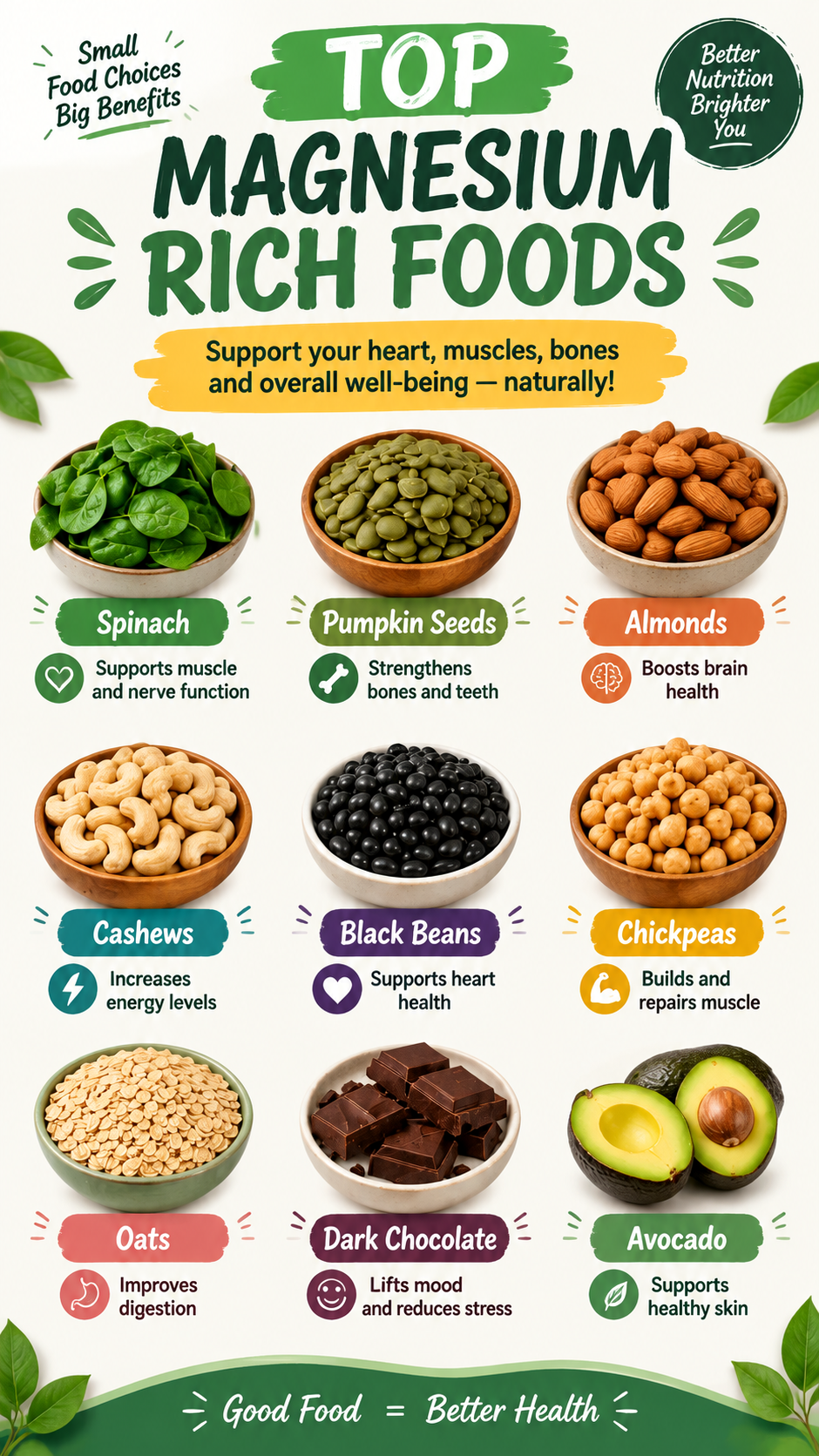
1. Spinach and Other Leafy Greens
Leafy green vegetables are well-known for their nutrient content, and spinach is a convenient magnesium-rich option. Whether enjoyed fresh in salads, blended into smoothies, or cooked into warm meals, spinach is an easy ingredient to include regularly.
Other dark leafy greens can also contribute valuable minerals and antioxidants to your eating pattern. Adding greens to soups, eggs, sandwiches, and grain bowls is a simple way to increase your vegetable intake.
2. Pumpkin Seeds
Pumpkin seeds are a small but nutrient-packed food that fits easily into many meals. Their crunchy texture makes them a great topping for yogurt, oatmeal, salads, and roasted vegetables.
Keeping a container of pumpkin seeds available for snacks can be an easy way to enjoy more minerals throughout the week. They are also a convenient plant-based choice for people looking to add more variety to their diet.
3. Almonds and Cashews
Nuts are popular additions to healthy eating plans because they provide a combination of nutrients, including magnesium. Almonds and cashews can be enjoyed on their own, mixed into homemade snack blends, or added to recipes for extra flavor and texture.
Choosing unsalted or lightly processed varieties can help keep snacks simple and closer to their natural form.
4. Black Beans and Chickpeas
Beans and legumes are versatile pantry staples that provide plant-based protein, fiber, and minerals. Black beans and chickpeas can be added to salads, wraps, soups, and bowls for a satisfying meal component.
Including legumes in regular meals is a practical way to create more balanced dishes while increasing your intake of important nutrients.
5. Tofu and Plant-Based Options
Tofu is a popular plant-based food that can be prepared in many different ways. It absorbs flavors easily, making it suitable for stir-fries, salads, soups, and protein-rich meals.
For those who enjoy plant-focused eating, tofu can be part of a diverse menu that includes several magnesium-containing foods.
6. Quinoa and Whole Grains
Whole grains such as quinoa can add important nutrients to everyday meals. Quinoa works well as a base for colorful bowls, side dishes, and meal-prep recipes.
Replacing some refined grain choices with whole grain options is one simple strategy for creating a more nutrient-rich diet.
More Everyday Foods That Provide Magnesium
Oats
Oats are a comforting breakfast choice that can provide minerals along with fiber. They can be enjoyed as oatmeal, overnight oats, or added to homemade energy bites.
Dark Chocolate
Dark chocolate with a high cocoa content can be an enjoyable source of magnesium. Choosing varieties with higher cocoa percentages and enjoying them in moderation allows you to include this treat as part of a balanced lifestyle.
Avocado
Avocados are valued for their creamy texture and nutrient profile. They can be added to toast, salads, smoothies, and many other meals for a satisfying boost of healthy fats and minerals.
Bananas
Bananas are a convenient fruit choice that can be enjoyed as a quick snack or added to breakfast recipes. Their natural sweetness makes them a simple addition to smoothies and oatmeal.
Easy Ways to Include More Magnesium in Your Meals
Increasing magnesium intake does not require a complete change in your eating habits. Small additions throughout the day can help create a more nutrient-focused routine.
- Add nuts or seeds to breakfast bowls and snacks.
- Include leafy greens in salads, wraps, and cooked meals.
- Use beans and quinoa as filling additions to lunch or dinner.
- Keep simple magnesium-rich snacks available for busy days.
- Choose a variety of colorful whole foods for better overall nutrition.
Meal variety is one of the most enjoyable ways to improve your diet. Different foods provide different combinations of nutrients, so building meals around a mix of vegetables, legumes, grains, fruits, and nuts can create a balanced approach.
Expert Insight
A nutrient-rich diet is built through everyday choices. Magnesium foods are not limited to one category, which makes it easier to create meals that match different tastes and lifestyles.
Creating a Magnesium-Friendly Eating Routine
A healthy eating routine does not need to be complicated. Start by identifying meals you already enjoy and look for small ways to add magnesium-rich ingredients.
For example, sprinkle seeds over breakfast, add spinach to your favorite recipes, choose beans for a protein boost, or replace some snacks with nuts and fruit. These simple changes can make nutritious eating feel natural and sustainable.
Important: Focus on consistency rather than perfection. A balanced diet comes from the combination of many healthy choices made over time.
At a Glance
- Choose spinach, seeds, nuts, and legumes regularly.
- Add whole grains like oats and quinoa to meals.
- Enjoy nutrient-rich foods in simple combinations.
- Create balanced meals with variety and color.
Final Thoughts on Magnesium-Rich Foods
Magnesium-rich foods are an easy and flavorful way to support a balanced approach to nutrition. The foods highlighted in this guide, including spinach, pumpkin seeds, almonds, cashews, beans, quinoa, oats, dark chocolate, avocado, and bananas, show that healthy choices can also be enjoyable.
By adding more whole foods to your daily meals and exploring new ingredient combinations, you can create a varied eating pattern filled with essential nutrients. Small changes, repeated consistently, can help you build a stronger foundation for overall wellness.
Tags
Magnesium Rich Foods
Healthy Eating
Nutrient Dense Foods
Mineral Rich Diet
Wellness Nutrition
Whole Foods