Schizoid vs. Schizotypal Personality Disorders Nursing Guide, Symptoms Treatment
Understanding the difference between schizoid and schizotypal personality disorders is an important part of psychiatric nursing and mental health education. Although both conditions belong to Cluster A personality disorders and may involve social difficulties, they differ in their characteristic symptoms, thought patterns, emotional expression, and approaches to care. Recognizing these distinctions helps nursing students, healthcare professionals, and caregivers develop a clearer understanding of each condition and provide compassionate, individualized support.
Schizoid personality disorder is primarily associated with detachment from social relationships and a limited desire for close interpersonal connections. Schizotypal personality disorder, in contrast, involves social discomfort, unusual beliefs or perceptions, eccentric behavior, and difficulties with interpersonal relationships. Learning how these disorders differ can improve assessment, support appropriate treatment planning, and reduce the stigma surrounding mental health conditions.
Key Takeaways
- Both schizoid and schizotypal personality disorders belong to Cluster A, which is characterized by unusual or eccentric patterns of thinking and behavior.
- Schizoid personality disorder primarily involves social detachment, limited interest in close relationships, and restricted emotional expression.
- Schizotypal personality disorder involves social anxiety, unusual beliefs, eccentric behavior, and perceptual or cognitive distortions.
- Accurate assessment requires a detailed history, evaluation of functioning, and consideration of other mental health conditions.
- Nursing priorities include safety, comprehensive assessment, therapeutic communication, patient education, and ongoing support.
- Individualized treatment may include psychotherapy, practical coping strategies, and medication for specific symptoms or co-occurring conditions when clinically appropriate.
What Are Schizoid and Schizotypal Personality Disorders?
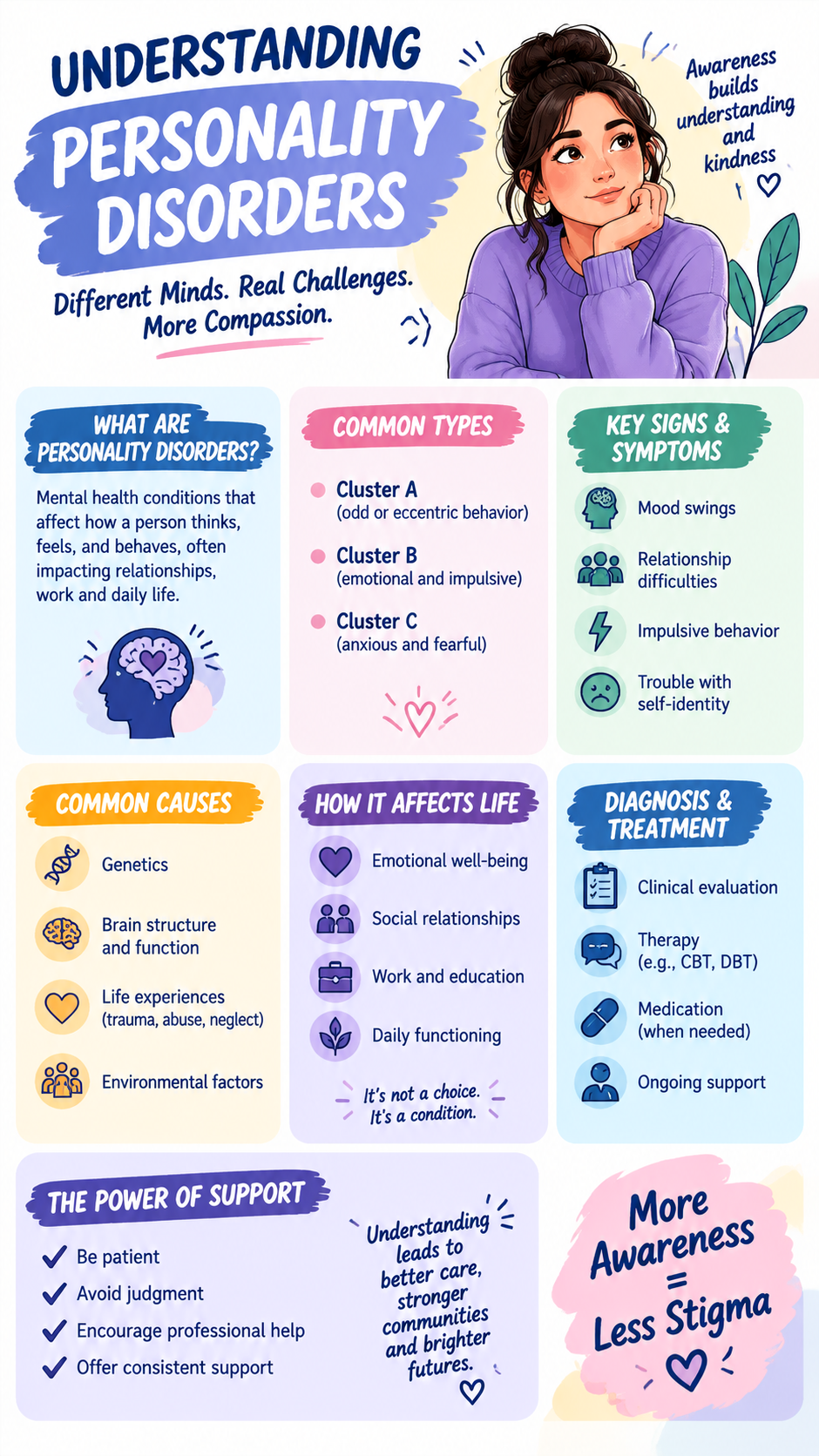
Personality disorders are enduring patterns of inner experience and behavior that differ significantly from cultural expectations and can cause distress or difficulties in important areas of life. These patterns may affect how people understand themselves, relate to others, regulate emotions, and interpret their surroundings.
Schizoid and schizotypal personality disorders are classified within Cluster A in the Diagnostic and Statistical Manual of Mental Disorders, Fifth Edition, Text Revision (DSM-5-TR). Cluster A includes schizoid, schizotypal, and paranoid personality disorders. These conditions share certain features, such as interpersonal difficulties, but each has a distinct clinical presentation.
Schizoid Personality Disorder Explained
Schizoid personality disorder is characterized by a persistent pattern of detachment from social relationships and a limited range of emotional expression in interpersonal settings. Individuals with this condition may prefer solitary activities and feel little interest in developing close relationships, including relationships with family members.
They may appear emotionally distant or indifferent to praise and criticism. Some people with schizoid personality disorder enjoy activities they can pursue independently, such as reading, creative projects, research, or other individual interests. However, preferences vary, and solitary interests alone do not indicate a personality disorder.
It is important to distinguish a person’s genuine preference for solitude from clinically significant patterns that affect relationships, functioning, or well-being. Introversion is a normal personality trait, whereas schizoid personality disorder involves a more pervasive pattern of detachment and restricted emotional expression.
Schizotypal Personality Disorder Explained
Schizotypal personality disorder involves persistent difficulties with close relationships, significant social anxiety, unusual beliefs, eccentric behavior, and atypical perceptual experiences. Individuals may interpret ordinary events as having special personal significance or hold unusual beliefs that influence how they understand the world.
Other features can include unusual speech patterns, suspiciousness, unconventional appearance or behavior, and difficulty interpreting social cues. Some individuals experience perceptual distortions, such as feeling that they have sensed a presence or noticing unusual bodily sensations.
These experiences do not automatically indicate psychosis. Assessment must consider their intensity, persistence, cultural context, effect on daily functioning, and relationship to other possible mental health conditions.
Schizoid vs. Schizotypal Personality Disorders: Key Differences
The most useful distinction is the underlying pattern of social difficulty. In schizoid personality disorder, detachment and limited interest in close relationships are central features. In schizotypal personality disorder, social relationships may be difficult because of anxiety, suspiciousness, unusual thinking, and problems interpreting interpersonal situations.
| Feature | Schizoid Personality Disorder | Schizotypal Personality Disorder |
|---|---|---|
| Social relationships | Limited desire for close relationships | Difficulty forming close relationships, often with substantial social anxiety |
| Emotional expression | Often restricted or appears detached | May appear constricted, eccentric, or socially mismatched |
| Thinking patterns | Unusual beliefs are not a defining feature | Unusual beliefs, ideas of reference, or cognitive distortions may occur |
| Perceptual experiences | Not a defining feature | Unusual perceptual experiences may occur |
| Behavior | Often solitary, with limited social engagement | May be eccentric in behavior, speech, or appearance |
| Common nursing focus | Respect for autonomy, functional assessment, and meaningful support | Trust-building, assessment of unusual experiences, and social coping skills |
Important clinical distinction: A person with schizoid personality disorder may prefer limited social contact without experiencing a strong desire for relationships. Someone with schizotypal personality disorder may want connection but find it difficult because of anxiety, suspiciousness, or unusual interpretations of social situations. These are general patterns, not rules that apply identically to every individual.
Signs and Symptoms of Schizoid Personality Disorder
Schizoid personality disorder is primarily associated with social detachment and restricted emotional expression. The pattern is generally longstanding and appears across different situations rather than being limited to a temporary period of stress or isolation.
Common Symptoms to Recognize
- Limited interest in close relationships: The person may not seek emotional closeness or conventional family relationships.
- Preference for solitary activities: Independent hobbies and activities may be more appealing than group experiences.
- Restricted emotional expression: Facial expressions, tone of voice, or emotional responses may appear limited.
- Limited interest in sexual experiences with another person: Some individuals report little interest in partnered sexual activity, although preferences vary.
- Few close friends or confidants: Social networks may be small, apart from immediate family members in some cases.
- Apparent indifference to praise or criticism: External approval or disapproval may seem less influential.
- Emotional distance: The person may appear detached in social or occupational settings.
For nurses, these characteristics should be understood without automatically assuming that the person feels lonely, unhappy, or incapable of caring about others. Emotional expression does not always reveal the full range of someone’s internal experience.
Nursing Considerations for Schizoid Personality Disorder
Establishing a respectful therapeutic relationship may require patience. Individuals who prefer limited interaction may respond better to brief, predictable conversations than to frequent social demands. Nurses should avoid pressuring patients to participate in group activities when these activities are not clinically necessary.
Assessment should focus on daily functioning, personal goals, self-care, occupational needs, support systems, and possible co-occurring conditions. A quiet or reserved presentation should not be interpreted as evidence of hostility, noncompliance, or lack of understanding.
Signs and Symptoms of Schizotypal Personality Disorder
Schizotypal personality disorder involves a broader range of unusual cognitive, perceptual, interpersonal, and behavioral characteristics. Social interaction may feel confusing or threatening, and individuals may interpret ordinary experiences in ways that differ significantly from those of people around them.
Common Symptoms to Recognize
- Social anxiety: Interactions may cause significant discomfort, particularly when unfamiliar people are involved.
- Unusual beliefs or magical thinking: The person may believe that thoughts, coincidences, or ordinary events have special powers or meanings.
- Ideas of reference: Neutral events may be interpreted as having a personal message or special relevance.
- Unusual perceptual experiences: The person may report atypical sensations or experiences that others do not share.
- Eccentric behavior or appearance: Clothing, mannerisms, or actions may seem unconventional.
- Unusual speech: Communication may be vague, circumstantial, overly elaborate, or difficult to follow.
- Suspiciousness: The person may have difficulty trusting others or may interpret situations as threatening.
- Restricted or mismatched affect: Emotional responses may appear limited or inconsistent with the social context.
- Difficulty developing close relationships: Anxiety and unusual interpretations can interfere with intimacy and social confidence.
Nursing Considerations for Schizotypal Personality Disorder
Nurses should communicate clearly, use concrete language, and allow patients time to express their concerns. If a patient describes an unusual belief, the nurse can acknowledge the person’s feelings without confirming an interpretation that has not been established as factual.
For example, if a patient says that strangers are sending secret messages through ordinary conversations, a supportive response might be, “That sounds unsettling. Can you tell me more about what you have been experiencing?” This approach encourages discussion while maintaining a neutral and respectful therapeutic stance.
Assessment should also explore whether unusual experiences are longstanding, whether they have recently intensified, and whether they interfere with sleep, self-care, relationships, or safety. New or rapidly worsening symptoms require careful evaluation for other possible causes.
Causes and Risk Factors of Both Disorders
There is no single cause that explains every case of schizoid or schizotypal personality disorder. Current understanding points toward a combination of biological vulnerabilities, developmental influences, temperament, and environmental experiences. These factors interact in complex ways, and their presence does not guarantee that a person will develop a personality disorder.
Genetic and Biological Factors
Research suggests that inherited vulnerabilities may contribute to personality development and patterns of social functioning. Family histories of certain psychiatric conditions may be relevant during assessment, particularly when schizotypal features or schizophrenia-spectrum conditions are present.
Neurobiological processes involving brain development, information processing, and emotional responses may also contribute. However, no single brain structure, neurotransmitter level, or genetic test can independently diagnose either personality disorder.
Temperament and Psychological Factors
Temperament influences how people respond to social experiences, stress, and unfamiliar situations. Longstanding social withdrawal, interpersonal sensitivity, or unusual patterns of thinking may become relevant when they are persistent and associated with clinically significant difficulties.
Psychological factors, including learned coping strategies and family experiences, may also shape how individuals respond to relationships. It is important not to assume that a particular parenting style or childhood event caused a personality disorder. Development is influenced by multiple factors, and individual histories differ.
Environmental and Social Factors
Experiences such as chronic stress, social rejection, unstable relationships, or adverse childhood circumstances may influence mental health and interpersonal development. These experiences are potential contextual factors, not universal causes.
Social isolation can also become a consequence of symptoms, creating a cycle in which limited interaction reduces opportunities to build confidence and practice communication skills. Nursing support can help identify practical barriers and strengthen the person’s access to appropriate care.
How These Personality Disorders Develop and Affect Functioning
Personality disorders generally involve enduring patterns that develop over time. Features may become more noticeable during adolescence or early adulthood, although a formal diagnosis requires careful consideration of developmental stage and the person’s broader history.
Biological and environmental vulnerabilities can interact with thought patterns, emotional responses, and social experiences. Over time, these patterns may affect how a person approaches relationships, interprets other people’s intentions, and manages everyday responsibilities.
Impact on Relationships and Daily Life
For individuals with schizoid personality disorder, limited interest in social relationships may affect family involvement, friendships, and workplace interactions. Some people function well in independent roles, while others need assistance with practical or emotional challenges.
For individuals with schizotypal personality disorder, social anxiety, suspiciousness, unusual beliefs, or communication difficulties may create barriers to maintaining relationships and navigating unfamiliar situations. Symptoms vary, and the degree of impairment differs from person to person.
Why This Matters in Nursing
A patient’s outward behavior does not always reveal their needs or level of distress. A person who speaks very little may still have significant concerns, while someone who describes unusual experiences may need support rather than confrontation.
- Assess the individual’s baseline behavior and recent changes.
- Explore how symptoms affect safety, self-care, work, and relationships.
- Use respectful, nonjudgmental communication that preserves dignity and trust.
Diagnostic Evaluation: What Nurses Should Know
Diagnosing schizoid or schizotypal personality disorder requires a comprehensive clinical assessment by a qualified mental health professional. A checklist can help organize observations, but it cannot replace a diagnostic interview or establish a diagnosis independently.
Clinical Interview and History
The assessment usually explores the person’s developmental history, social relationships, emotional expression, thought patterns, behavior, and level of functioning. Clinicians consider whether the patterns are longstanding, occur across different contexts, and cause clinically significant distress or impairment.
When appropriate and with suitable consent, information from family members or other sources may help clarify the history. The patient’s perspective should remain central, and confidentiality must be respected.
DSM-5-TR Diagnostic Criteria
The DSM-5-TR provides diagnostic criteria that clinicians use alongside clinical judgment. For schizoid personality disorder, the criteria focus on a pervasive pattern of detachment from social relationships and restricted emotional expression, with at least four of seven specified features.
For schizotypal personality disorder, the criteria focus on a pervasive pattern of interpersonal deficits accompanied by cognitive or perceptual distortions and eccentric behavior, with at least five of nine specified features.
Clinicians must also evaluate whether symptoms are better explained by another mental disorder, substance effects, a medical condition, or the person’s cultural context. A diagnosis should never be based on one unusual behavior or an isolated symptom.
Screening Tools and Differential Diagnosis
Structured interviews, personality assessment instruments, and symptom rating scales may support the evaluation. Tools such as the Structured Clinical Interview for DSM-5 Personality Disorders can help trained professionals organize diagnostic information. Screening tools identify areas that need further assessment; they do not independently confirm a diagnosis.
Differential diagnosis is especially important when a person experiences social withdrawal, unusual beliefs, or perceptual changes. Conditions that may need consideration include schizophrenia-spectrum disorders, depressive disorders, autism spectrum disorder, social anxiety disorder, substance-related conditions, and medical or neurological causes when indicated.
Schizotypal personality disorder can share features with schizophrenia-spectrum conditions, but it is not synonymous with schizophrenia. Persistent or worsening hallucinations, fixed delusions, substantial disorganization, or a marked decline in functioning require careful clinical evaluation.
Nursing Priorities: Safety, Assessment, Support, and Teaching
Effective psychiatric nursing care is individualized, consistent, and focused on the patient’s goals. Four practical priorities can help organize care: safety, assessment, support, and teaching. These priorities are useful for nursing students reviewing personality disorders and for clinicians planning patient-centered interactions.
1. Safety
Assess the patient’s immediate safety needs and ability to meet basic daily requirements. When clinically indicated, evaluate suicidal thoughts, self-harm, aggression risk, severe distress, substance use, and vulnerability to exploitation or neglect. Risk assessment should be based on the individual’s presentation rather than the diagnostic label alone.
Maintain a calm, predictable environment and follow established clinical procedures if an urgent safety concern arises. Escalate new or severe symptoms to the appropriate healthcare professional.
2. Assessment
Gather information about thought content, perception, emotional expression, social functioning, sleep, self-care, and coping strategies. Assess the patient’s strengths and preferences alongside their difficulties.
For schizoid personality disorder, explore whether social detachment interferes with the person’s own goals or daily responsibilities. For schizotypal personality disorder, assess unusual beliefs and perceptual experiences carefully, including their frequency, meaning, associated distress, and impact on behavior.
3. Support
Build rapport through consistency, clear boundaries, active listening, and respect for personal space. Avoid judgmental language, unnecessary pressure, and assumptions about what the patient should feel or want.
Support can include helping the patient identify realistic goals, strengthen coping strategies, and connect with appropriate services. Social skills training or structured group interventions may be useful for some individuals, particularly when interpersonal difficulties are a treatment target and participation is appropriate.
4. Teaching
Provide clear information about symptoms, treatment options, follow-up care, and coping strategies. Ask the patient what they already understand and invite questions without overwhelming them with information.
Medication education should cover the intended purpose, correct use, possible adverse effects, and the importance of discussing concerns with the prescriber before making changes. Reinforce that treatment decisions are individualized and that medication should not be started, stopped, or adjusted without appropriate clinical guidance.
Nursing tip: Therapeutic communication is not about forcing a patient to become more sociable or persuading them to abandon every unusual belief. It is about understanding their experience, assessing clinical needs, supporting functioning, and helping them make informed choices while maintaining safety and dignity.
Nursing Interventions for Better Patient Outcomes
Nursing interventions should reflect the patient’s symptoms, preferences, strengths, and treatment plan. A consistent and collaborative approach can help establish trust while supporting practical improvements in daily functioning.
Establish a Therapeutic Relationship
Introduce yourself clearly, explain your role, and outline what the patient can expect during interactions. Maintain appropriate professional boundaries and follow through on agreed plans. Allow time for responses and avoid interpreting a quiet manner as unwillingness to engage.
For patients who are suspicious or uncomfortable around others, predictable communication can reduce uncertainty. Explain procedures before beginning them, invite questions, and acknowledge concerns without making promises that cannot be kept.
Create a Structured and Supportive Environment
Provide clear expectations, consistent routines, and a manageable amount of information. If the patient becomes overwhelmed in busy or unfamiliar environments, discuss practical adjustments that may help them participate in care.
Encourage independence whenever possible. Support should not remove the patient’s opportunity to make choices or practice skills they can safely perform themselves.
Encourage Appropriate Social and Coping Skills
When social difficulties are a treatment goal, collaborate with the patient to identify specific situations they would like to manage more comfortably. Skills practice may include starting a conversation, interpreting social cues, setting boundaries, or responding to misunderstandings.
Offer group activities or social skills training when appropriate, but avoid assuming that every person needs the same level of social interaction. For patients who prefer solitude, meaningful outcomes may involve improved independence, reduced distress, or stronger practical support rather than a larger social circle.
Monitor Symptoms and Treatment Response
Document relevant changes in mood, behavior, sleep, thought content, self-care, and functioning. If medication is prescribed, monitor for expected effects and possible adverse reactions within the nurse’s professional scope and the care plan.
Communicate significant changes to the treatment team. New confusion, rapidly worsening perceptual disturbances, severe mood symptoms, or a substantial decline in daily functioning may require prompt evaluation.
Medical Management and Treatment Options
Treatment for schizoid and schizotypal personality disorders is individualized. The approach depends on the person’s symptoms, functional needs, preferences, co-occurring conditions, and treatment goals. Psychotherapy and practical support are important considerations, while medication may be used for selected symptoms or associated mental health conditions.
Psychotherapy
Psychotherapy can help patients understand recurring patterns, improve coping, and work toward personally meaningful goals. Cognitive behavioral therapy may help some individuals identify unhelpful interpretations, manage anxiety, and develop practical strategies for difficult situations.
Social skills training may support communication and confidence when interpersonal challenges interfere with daily life. Family education or involvement can also be helpful when the patient agrees and participation is appropriate.
Therapy should move at a pace the patient can tolerate. For individuals who are uncomfortable with emotional closeness, a collaborative and predictable approach may help establish a productive therapeutic relationship.
Medication Management
No medication is specifically approved to cure schizoid or schizotypal personality disorder. Clinicians may consider medication for particular symptoms or co-occurring conditions, based on a careful assessment of potential benefits and risks.
Depending on the clinical presentation, a prescriber may consider an antidepressant for a co-occurring depressive or anxiety disorder, or an antipsychotic for selected severe symptoms associated with schizotypal presentations. The choice of medication, if any, must be individualized and monitored by a qualified prescriber.
Nurses can support medication management by reinforcing instructions, assessing reported adverse effects, encouraging follow-up appointments, and helping patients communicate questions or concerns to the prescriber. Medication should never be presented as a universal solution for either disorder.
Long-Term Follow-Up and Support
Ongoing care may include periodic review of symptoms, therapy goals, medication needs, daily functioning, and available support systems. Treatment plans should be adjusted when circumstances or needs change.
Encourage healthy routines, including adequate sleep, regular physical activity, balanced nutrition, and avoidance of substances that may worsen mental health symptoms. These measures can support general well-being, although they do not replace professional treatment when it is needed.
Client Education and Family Support
Education helps patients understand their experiences, identify useful coping strategies, and participate actively in treatment decisions. Information should be clear, respectful, and tailored to the person’s needs and preferred learning style.
- Explain the condition: Discuss the general features of the diagnosis without defining the person by a label.
- Encourage treatment engagement: Explain available therapies, follow-up arrangements, and the importance of discussing barriers to care.
- Practice coping strategies: Explore ways to manage stress, social anxiety, misunderstandings, and overwhelming situations.
- Support healthy routines: Encourage regular sleep, physical activity, balanced meals, and constructive daily structure.
- Involve trusted supporters when appropriate: With the patient’s consent, family members or other trusted people may help reinforce practical strategies and recognize concerning changes.
- Reduce stigma: Emphasize that a mental health diagnosis does not determine a person’s character, abilities, or potential for meaningful progress.
Family members and caregivers may benefit from learning how to communicate calmly, respect personal boundaries, and offer assistance without unnecessary pressure. They should also understand when to seek professional guidance if symptoms become more severe or daily functioning deteriorates.
Quick Points: Schizoid vs. Schizotypal Personality Disorders
At a Glance
- Schizoid: Social detachment, limited desire for close relationships, and restricted emotional expression.
- Schizotypal: Social anxiety, unusual beliefs, cognitive or perceptual distortions, and eccentric behavior.
- Assessment: Use a comprehensive clinical history and consider alternative explanations for symptoms.
- Nursing care: Prioritize safety, therapeutic communication, individualized support, and patient education.
- Treatment: Psychotherapy, practical coping strategies, and selected medications for specific symptoms or co-occurring conditions may help.
Conclusion: Compassionate Nursing Care Makes a Difference
Understanding schizoid vs. schizotypal personality disorders helps nursing students and mental health professionals recognize why similar-looking social difficulties can have different underlying patterns. Schizoid personality disorder is primarily associated with detachment from close relationships and restricted emotional expression. Schizotypal personality disorder includes interpersonal difficulties alongside unusual beliefs, perceptual experiences, and eccentric behavior.
Accurate assessment, thoughtful differential diagnosis, and individualized treatment planning are essential. Nurses contribute by establishing therapeutic relationships, assessing safety and functioning, supporting practical coping strategies, and helping patients understand their care options.
Above all, effective psychiatric nursing combines clinical knowledge with patience, respect, and consistent support. A person’s diagnosis should never overshadow their individuality, preferences, strengths, or right to participate in decisions about their care. With appropriate treatment and meaningful support, individuals can work toward improved functioning and a better quality of life.
Tags
Schizoid Personality Disorder
Schizotypal Personality Disorder
Psychiatric Nursing
Mental Health Nursing
Cluster A Personality Disorders
Nursing Interventions
Psychiatric Assessment
Personality Disorder Treatment