Slippery Elm Bark Benefits for Digestion, Gut Health Natural Throat Relief
Slippery elm bark has earned a lasting reputation in the world of traditional herbal wellness. Derived from the inner bark of the slippery elm tree, known scientifically as Ulmus rubra, this natural ingredient has been valued for generations for its soothing texture and gentle support for digestive and throat comfort. Its unique mucilage content creates a smooth, gel-like consistency when mixed with water, making it one of the most recognizable herbs used in traditional wellness practices.
Today, interest in natural remedies continues to grow as people look for simple ways to support everyday wellness. Slippery elm bark remains a popular choice among herbal enthusiasts who appreciate plant-based approaches to digestive balance, throat comfort, and overall well-being. Understanding how this remarkable tree bark has been used throughout history can help you make informed decisions about incorporating it into a balanced wellness routine.
Key Takeaways
- Slippery elm bark comes from the inner bark of the Ulmus rubra tree.
- It is traditionally used to support digestive comfort and throat wellness.
- The bark contains mucilage, a naturally soothing plant compound.
- It has a long history of use in herbal wellness traditions.
- Many people value it as part of a natural self-care routine.
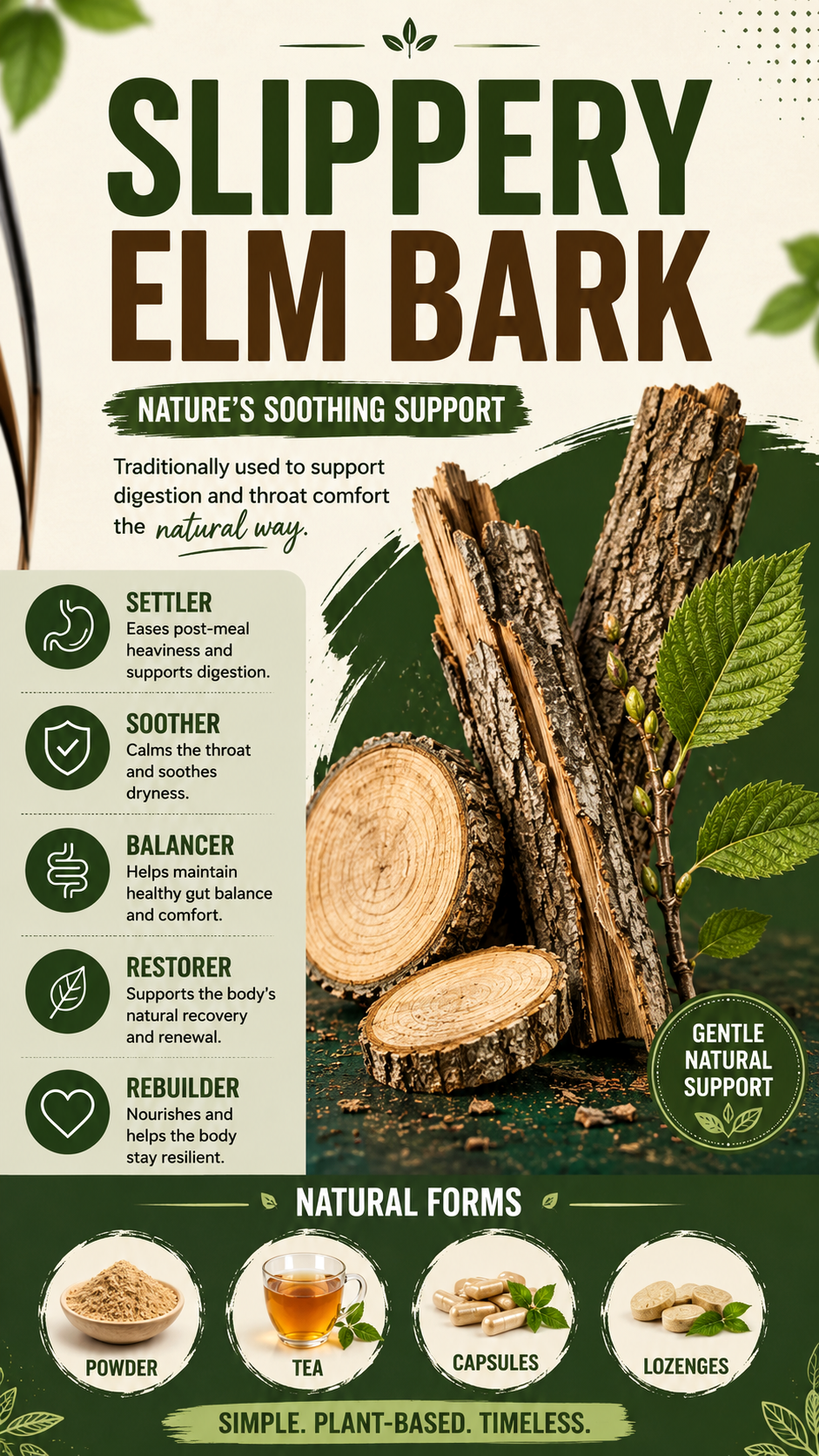
- It is commonly available in powders, capsules, teas, and lozenges.
What Is Slippery Elm Bark?
Slippery elm is a tree native to parts of North America. The inner bark is the portion most commonly used in traditional herbal preparations. When the bark is dried and ground into powder, it can be mixed with water to create a smooth, soothing mixture.
The name “slippery” comes from the bark’s distinctive texture. Once hydrated, it develops a slippery consistency that has made it especially popular in herbal formulations intended to provide gentle support for the digestive tract and throat.
For centuries, communities have appreciated slippery elm bark not only for its practical uses but also for its versatility. It can be prepared in several forms, making it easy to incorporate into different wellness routines.
The Traditional History of Slippery Elm
Historical records and herbal traditions show that slippery elm bark has been used for generations. Long before modern wellness products became available, people relied on plants and natural materials from their local environments to support comfort and recovery.
Traditional herbal practices often highlighted slippery elm as a versatile ingredient. Its soothing qualities made it a common choice for individuals seeking natural support for digestive ease and throat comfort.
Important: One reason slippery elm bark has remained popular for so many years is its gentle nature. Traditional herbal systems frequently valued ingredients that worked with the body’s natural processes rather than overwhelming them.
As interest in herbal wellness continues to expand, many people are revisiting traditional plant-based remedies and learning how they were used by earlier generations.
Understanding Mucilage and Why It Matters
The key characteristic that sets slippery elm bark apart is its mucilage content. Mucilage is a natural substance found in certain plants that becomes gel-like when combined with water.
This unique property contributes to the soothing sensation commonly associated with slippery elm preparations. The resulting texture can coat surfaces gently, which explains why the herb has traditionally been linked to digestive and throat comfort.
Key Characteristics of Mucilage
- Forms a soothing gel when hydrated.
- Provides a smooth texture.
- Commonly found in several traditional herbal plants.
- Often associated with digestive and throat wellness applications.
- Contributes to the unique feel of slippery elm preparations.
Because of these qualities, slippery elm continues to stand out among herbal ingredients used for everyday comfort.
Potential Benefits for Digestive Wellness
One of the most recognized traditional uses of slippery elm bark involves digestive support. Many herbal enthusiasts include it in wellness routines aimed at promoting digestive comfort and maintaining a sense of balance after meals.
People often appreciate slippery elm for its gentle nature. Rather than being associated with harsh approaches, it is traditionally viewed as a soothing botanical that complements healthy digestive habits.
Common Reasons People Explore Slippery Elm
- Supporting digestive comfort after meals.
- Maintaining a sense of digestive balance.
- Promoting overall gut wellness.
- Complementing mindful eating habits.
- Supporting daily comfort during occasional digestive challenges.
Why This Matters
Digestive wellness influences many aspects of daily life. When digestion feels balanced and comfortable, maintaining healthy routines, enjoying meals, and staying active often becomes easier and more enjoyable.
While no single herb can replace healthy lifestyle habits, many individuals value slippery elm as part of a broader approach that includes balanced nutrition, hydration, movement, and mindful eating.
Slippery Elm and Throat Comfort
Another well-known traditional application of slippery elm bark involves throat wellness. The smooth texture created by hydrated mucilage has made it a popular ingredient in herbal teas, lozenges, and soothing beverages.
People often turn to slippery elm during seasons when environmental factors, extensive talking, or dry indoor air can leave the throat feeling less comfortable.
The herb’s long-standing reputation for soothing support has helped it remain a favorite ingredient in many natural wellness products.
Pro Tip: Many herbal enthusiasts enjoy slippery elm as part of a warm beverage routine. Combining wellness rituals with adequate hydration can help create a comforting daily habit.
Popular Forms of Slippery Elm Bark
Modern consumers have access to slippery elm bark in several convenient forms. Choosing the right option often depends on personal preferences and lifestyle needs.
Powder
Powdered slippery elm is one of the most traditional preparations. It can be mixed with water to create a thick, soothing beverage.
Tea
Herbal tea preparations offer a warm and comforting way to enjoy slippery elm. Many people appreciate the calming ritual associated with tea consumption.
Capsules
Capsules provide convenience for those who prefer a simple, measured serving without preparing a drink.
Lozenges
Lozenges are commonly chosen by individuals seeking portable throat-support options that can be used throughout the day.
Incorporating Slippery Elm Into a Wellness Routine
Many people enjoy integrating slippery elm into broader wellness habits. Consistency and balance often matter more than relying on a single ingredient.
Healthy routines may include:
- Eating nutrient-rich foods.
- Staying hydrated throughout the day.
- Managing stress effectively.
- Prioritizing restful sleep.
- Engaging in regular physical activity.
- Using traditional herbal ingredients thoughtfully.
Slippery elm can complement these habits by providing an additional element of comfort and support within a balanced lifestyle.
Choosing Quality Slippery Elm Products
Quality can vary among herbal products, making informed selection important. Reading labels, researching brands, and understanding sourcing practices can help consumers make better choices.
What to Look For
- Clearly identified botanical name.
- Transparent ingredient lists.
- Reputable manufacturers.
- Appropriate storage recommendations.
- Products that match your preferred format.
Important: Sustainable sourcing is increasingly important when selecting herbal products. Responsible harvesting practices help preserve valuable plant resources for future generations.
The Growing Interest in Herbal Wellness
Natural wellness continues to attract attention as people seek holistic approaches to self-care. Herbs like slippery elm represent a bridge between traditional knowledge and modern wellness practices.
Part of the appeal lies in reconnecting with plant-based traditions that have been passed down through generations. While scientific understanding continues to evolve, many individuals appreciate learning about historical uses and practical applications of traditional herbs.
The growing popularity of herbal education, wellness communities, and natural living trends has brought renewed attention to ingredients like slippery elm bark.
At a Glance
- Slippery elm bark comes from the inner bark of Ulmus rubra.
- Known for its natural mucilage content.
- Traditionally associated with digestive and throat comfort.
- Available as powder, tea, capsules, and lozenges.
- Often included in holistic wellness routines.
Conclusion
Slippery elm bark remains one of the most respected herbs in traditional wellness circles. Its unique mucilage content, long history of use, and reputation for gentle support have helped it maintain relevance across generations. Whether used in teas, powders, capsules, or lozenges, it continues to attract individuals interested in natural approaches to digestive balance and throat comfort.
As with any wellness practice, the greatest benefits often come from combining thoughtful choices, healthy habits, and reliable information. By understanding the traditional role of slippery elm bark and how it fits into a broader lifestyle approach, you can better appreciate why this remarkable botanical continues to hold a valued place in herbal wellness today.
Tags
Slippery Elm Bark Ulmus Rubra Digestive Health Gut Wellness Herbal Remedies Natural Wellness Throat Comfort Holistic Living