Study Planner Ideas Aesthetic Daily Weekly Study Planner Setup
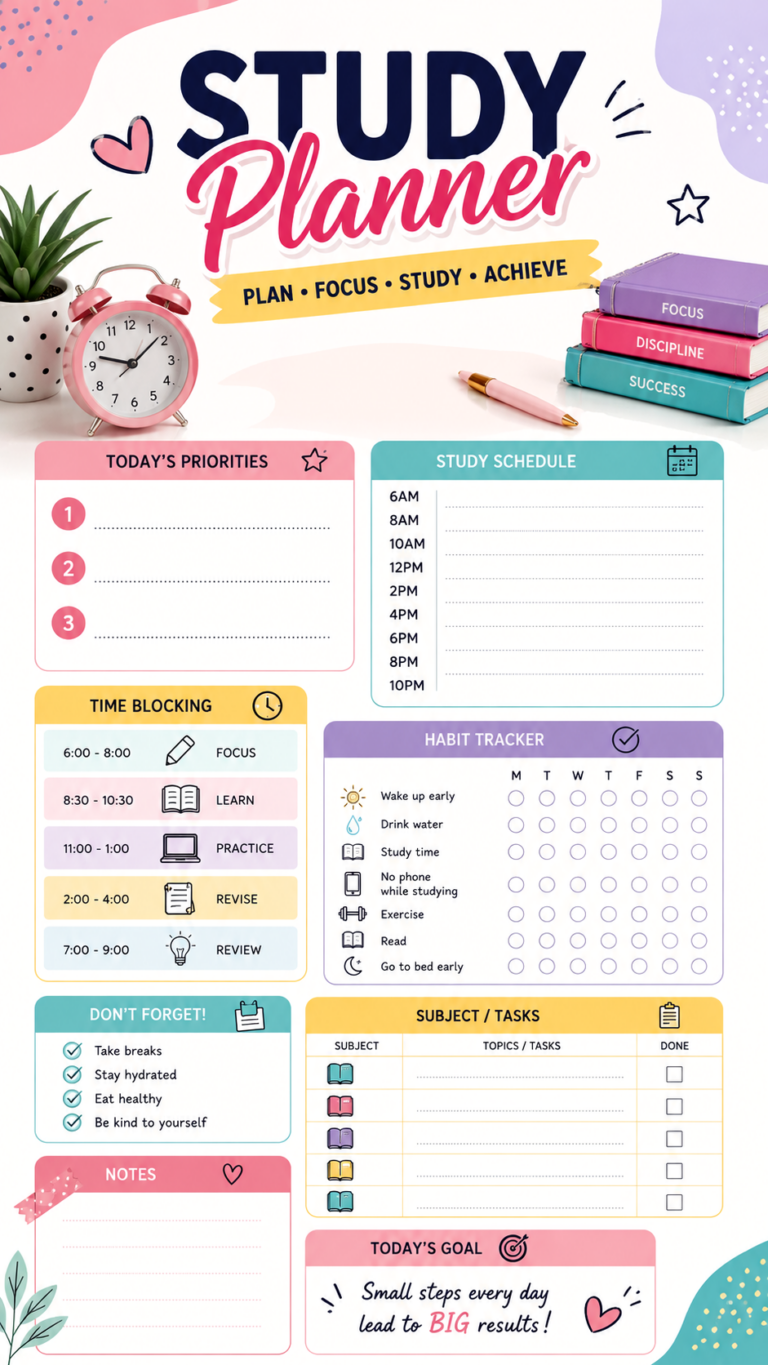
Creating an effective study routine starts with having a clear plan, and a well-designed study planner can transform the way you organize your academic life. A thoughtful planner setup helps you manage assignments, prepare for exams, track daily goals, and build consistent study habits without feeling overwhelmed.
The right study planner is not just about writing down tasks. It is a personal system that combines organization, motivation, and focus. From weekly study schedules to assignment trackers and daily goal lists, a planner creates a visual roadmap that makes your workload easier to understand and manage.
Key Takeaways
- A study planner helps create structure and reduce academic stress.
- Weekly planning makes it easier to balance classes, assignments, and personal time.
- Assignment trackers prevent missed deadlines and improve productivity.
- Daily goals encourage consistent progress through small actions.
- Aesthetic planner layouts can make studying more enjoyable and motivating.
Why a Study Planner Setup Can Improve Your Productivity
Many students struggle with staying organized because school responsibilities often come from different directions. Assignments, exams, projects, reading lists, and personal goals can quickly become difficult to manage when everything exists only in your memory.
A study planner setup creates a single place where you can see your priorities clearly. By organizing your week and breaking larger tasks into smaller steps, you can spend less time worrying about what needs to be done and more time actually completing your work.
Important: The most effective planner is one you will actually use. A simple system with clear sections for goals, deadlines, and study sessions is often more powerful than a complicated setup that feels difficult to maintain.
How to Create the Perfect Study Planner Layout
A successful study planner combines different sections that support your learning process. The goal is to create a balance between planning ahead and staying flexible when your schedule changes.
1. Start With a Weekly Study Plan
A weekly planner page gives you a complete view of your upcoming responsibilities. Instead of focusing only on today’s tasks, you can prepare for important deadlines and organize your study time more effectively.
When creating your weekly study schedule, consider adding:
- Important classes or study sessions
- Assignment deadlines
- Revision periods for upcoming exams
- Breaks and personal time
- Main goals for the week
A weekly overview helps you identify busy days and quieter periods. This makes it easier to distribute your workload instead of trying to complete everything at the last minute.
2. Add an Assignment Tracker
Keeping track of assignments is one of the most useful features in any student planner. A dedicated assignment tracker allows you to record tasks, due dates, and completion progress.
What to Include in an Assignment Tracker
- Assignment name or project title
- Due date
- Priority level
- Completion status
- Notes or additional requirements
This simple system prevents forgotten deadlines and helps you plan enough time for larger projects. Checking off completed tasks also creates a sense of progress and motivation.
3. Include an Exam Preparation Calendar
Exam planning becomes easier when important dates are visible in advance. An exam calendar allows students to prepare gradually instead of relying on stressful last-minute study sessions.
Use your exam calendar to mark:
- Test dates
- Subjects that need extra attention
- Revision milestones
- Practice sessions
Breaking exam preparation into smaller steps creates a more comfortable learning experience and improves confidence before important assessments.
Building a Daily Study Routine With Planner Goals
Daily planning turns long-term academic goals into manageable actions. Instead of writing a huge list of everything you need to complete, focus on a few meaningful priorities each day.
Choose Your Top Daily Priorities
A productive daily planner page can include:
- The three most important tasks of the day
- Study topics to review
- Short breaks between sessions
- Notes about progress or challenges
Daily goals should feel realistic. Completing a few important tasks consistently is more effective than creating an overwhelming schedule that is difficult to follow.
Why Aesthetic Study Planners Are Popular
Aesthetic study planners have become popular because they combine organization with creativity. A visually appealing planner can make planning feel like a relaxing routine instead of another responsibility.
Many students personalize their planners with:
- Soft color palettes
- Decorative stickers
- Simple icons
- Inspirational reminders
- Creative handwriting styles
The purpose of an aesthetic planner is not perfection. It is about creating a space that feels inviting and encourages you to return to your goals every day.
Why This Matters
A planner works best when it supports your lifestyle and learning style. Organization is not about filling every space on the page, but about creating clarity and reducing unnecessary stress.
Tips for Maintaining Your Study Planner
Creating a planner is only the beginning. Building a habit of using it regularly is what creates long-term benefits.
- Review your planner at the beginning of each week.
- Update tasks as assignments are completed or changed.
- Keep your daily goals simple and achievable.
- Reflect on what worked and adjust your routine.
- Celebrate small improvements in your study habits.
Important: Consistency matters more than having the perfect planner design. A basic planner used every day will always be more valuable than an elaborate setup that stays unused.
At a Glance
Quick Points
- Plan your week before it begins.
- Track assignments and deadlines clearly.
- Prepare for exams with smaller study steps.
- Set daily goals that feel achievable.
- Create a planner style that motivates you.
Conclusion: Create a Study Planner That Works for You
A study planner is more than a collection of pages. It is a tool that helps you organize your responsibilities, stay focused, and build better academic habits. Whether you prefer a detailed weekly schedule, a simple daily checklist, or an aesthetic planner setup, the best system is the one that makes your goals easier to achieve.
With thoughtful planning, clear priorities, and consistent use, your planner can become a powerful part of your study routine. Start small, personalize your setup, and create a system that helps you feel prepared for every learning challenge.
Tags
Study Planner Ideas
Study Planner Setup
Aesthetic Planner
Daily Study Routine
Weekly Study Schedule
Student Productivity
Exam Preparation