Top 5 Household Cleaners for a Clean, Fresh, and Healthy Home
A clean home feels more comfortable, inviting, and easier to enjoy every day. The secret to a manageable cleaning routine is not necessarily having a cabinet full of expensive products. Instead, choosing a few reliable household cleaners can help you tackle grease, stains, unpleasant odors, dusty surfaces, and everyday messes without making cleaning feel overwhelming. From versatile all-purpose cleaner to simple pantry staples like baking soda and white vinegar, the right cleaning essentials can make a noticeable difference in your home.
Whether you are refreshing your kitchen, washing dishes, cleaning bathroom surfaces, or keeping countertops spotless, understanding what each household cleaner does will help you work more efficiently. In this guide, you will discover five useful cleaning essentials, how to use them responsibly, which surfaces they suit, and practical tips for creating a cleaner, fresher living space.
Key Takeaways
- All-purpose cleaner is useful for many washable household surfaces when the product label permits it.
- Dish soap helps remove grease and food residue from dishes and other suitable surfaces.
- White vinegar can help dissolve mineral deposits and reduce certain odors, but it is not suitable for every surface.
- Baking soda offers gentle abrasive cleaning for appropriate materials.
- Hydrogen peroxide can serve as a stain treatment or disinfectant when used according to its label.
- Never mix cleaning products, and always follow label instructions for safe, effective results.
1. All-Purpose Cleaner: Your Everyday Cleaning Essential
When it comes to simplifying household chores, all-purpose cleaner is often one of the most practical products to keep within reach. It is designed for everyday cleaning on multiple washable surfaces, making it useful for busy kitchens, dining areas, and other frequently used spaces.
Instead of switching between several specialized products for every small mess, you can use an appropriate all-purpose cleaner for many routine tasks. The important part is checking the label to confirm which surfaces are compatible with the formula.
What Can You Clean With All-Purpose Cleaner?
Depending on the manufacturer’s directions, an all-purpose cleaner may be suitable for:
- Washable kitchen countertops
- Dining tables and suitable furniture surfaces
- Cabinet fronts and cupboard handles
- Light everyday marks on washable surfaces
- Selected bathroom surfaces and frequently touched areas
For the best results, remove loose crumbs and dust first. Apply the cleaner according to its instructions, allow any required contact time, and wipe with a clean cloth. Some products need rinsing, particularly when used on food-contact surfaces.
How to Get Better Results
Use a microfiber cloth for routine wiping because it can collect dust and everyday residue effectively. Work from cleaner areas toward dirtier ones, and change or wash cloths regularly to avoid spreading grime throughout your home.
Important: All-purpose cleaner does not automatically mean disinfectant. If you need to disinfect a surface, choose a product specifically labeled for that purpose and follow its directions, including the required wet contact time.
2. Dish Soap: A Simple Solution for Grease and Grime
Dish soap is another essential household cleaning product. Formulated to help lift food residue and grease, it is useful for washing dishes, cookware, utensils, and many other items that can safely be cleaned with a mild dishwashing solution.
Its versatility makes it especially helpful in the kitchen, where cooking oils, sauces, crumbs, and sticky spills can quickly accumulate.
Everyday Uses for Dish Soap
- Cleaning plates, glasses, cutlery, and cookware
- Removing grease from suitable kitchen tools
- Washing reusable containers and food preparation utensils
- Cleaning certain washable surfaces with a diluted solution when appropriate
- Helping lift small food spills from compatible materials
For handwashing dishes, use the amount recommended on the product label and warm water as appropriate for the item. Allow cookware to soak when food residue is stubborn, then scrub with a suitable sponge or brush and rinse thoroughly.
Choose the Right Tools
A soft sponge works well for ordinary dishwashing, while a dish brush can help reach corners and textured surfaces. Abrasive pads may scratch nonstick coatings, polished finishes, and delicate materials, so check the cookware manufacturer’s recommendations before scrubbing.
Dish soap can also help with small spills on compatible surfaces. Apply a small amount diluted in water, wipe gently, and remove any residue with a clean damp cloth. Avoid leaving soap on surfaces that require rinsing.
Keep Your Dishwashing Routine Hygienic
Sponges and dishcloths can collect food particles and moisture. Rinse them thoroughly after use, let them dry between tasks, and replace them when worn or persistently unpleasant-smelling. Wash reusable cloths regularly according to their care instructions.
A small amount of dish soap, the right cleaning tool, and a consistent routine can help keep your kitchen cleaner without unnecessary effort.
3. White Vinegar: Helpful for Mineral Deposits and Everyday Maintenance
White vinegar is a familiar household staple that can be useful for certain cleaning tasks. Its acidity helps dissolve some mineral deposits, including the chalky residue that may build up around compatible fixtures and other areas exposed to hard water.
It can also help reduce some everyday odors. However, vinegar is not a universal cleaner, and it should not be treated as a reliable disinfectant for every household situation.
Where Can White Vinegar Help?
When the material and manufacturer’s instructions allow it, white vinegar may be useful for:
- Removing certain hard-water deposits from compatible fixtures
- Cleaning some washable glass surfaces
- Helping loosen mineral residue on suitable items
- Reducing certain lingering household odors
For a small mineral deposit, dampen a cloth with an appropriate vinegar solution if the surface permits it. Apply it briefly, wipe the area, and rinse when recommended. Avoid prolonged exposure, especially when the material’s acid tolerance is uncertain.
Surfaces You Should Not Clean With Vinegar
Acidic cleaners can damage certain finishes and materials. Avoid using vinegar on natural stone such as marble, limestone, and travertine, as well as other acid-sensitive surfaces. It may also harm some grout, protective coatings, and metal finishes.
When in doubt, check the care instructions or use a cleaner specifically formulated for the surface. A small test in an inconspicuous location can help reveal compatibility problems, although it does not guarantee that long-term use will be safe.
Safety first: Never mix vinegar with chlorine bleach. The combination can release dangerous chlorine gas. Do not mix vinegar with other cleaning products unless their labels explicitly confirm that the combination is safe.
Is White Vinegar a Disinfectant?
Although vinegar has acidic properties, ordinary household vinegar should not replace a registered disinfectant when reliable pathogen control is needed. For areas that require disinfection, choose a product with appropriate claims and follow its directions carefully.
White vinegar is best viewed as a useful cleaning option for selected jobs, not as a solution for every stain, surface, or hygiene concern.
4. Baking Soda: A Gentle Abrasive for Suitable Surfaces
Baking soda, also known as sodium bicarbonate, is a versatile pantry staple that can assist with certain household cleaning tasks. Its mildly abrasive texture can help loosen some residue when used carefully, while it can also help with certain odor-control tasks.
Unlike a ready-to-use spray, baking soda is usually applied as a powder or mixed with water to form a paste. This makes it useful when you need a little extra cleaning action on a compatible surface.
Practical Uses for Baking Soda
- Helping remove residue from suitable sinks and washable surfaces
- Cleaning selected cookware when the finish tolerates gentle abrasion
- Freshening certain odor-prone areas
- Helping lift some marks from compatible materials
- Supporting occasional cleaning of suitable refrigerator interiors
For a basic cleaning paste, mix a small amount of baking soda with enough water to create a spreadable consistency. Apply it gently to a compatible surface, rub with a soft cloth or sponge, and rinse thoroughly. Avoid aggressive scrubbing, particularly on glossy or easily scratched finishes.
Can Baking Soda Freshen Carpets and Drains?
Baking soda is often used in household odor-control routines, but results depend on the source of the odor and the material being treated. Before applying it to a carpet or upholstered item, check the manufacturer’s care instructions and test an inconspicuous spot. Vacuuming may be necessary to remove the powder completely.
For drains, baking soda alone is not a substitute for proper maintenance or a suitable drain cleaner. If a drain is blocked, use an appropriate method for the plumbing system and follow the product instructions. Never combine baking soda with commercial drain cleaners or other chemicals unless the manufacturer specifically permits it.
Use Baking Soda Carefully
Although baking soda is relatively mild, it can still scratch delicate surfaces when rubbed too firmly. Avoid using it on materials with sensitive coatings, soft metals, or finishes that require nonabrasive care.
Its biggest advantage is flexibility. Used thoughtfully, baking soda can be a practical addition to a small household cleaning collection without requiring a complicated routine.
5. Hydrogen Peroxide: An Option for Selected Stains and Disinfection
Hydrogen peroxide is another household product that may be useful for specific cleaning tasks. Depending on its concentration, formulation, and label instructions, it can help treat certain stains or disinfect appropriate surfaces.
It is important to distinguish between general cleaning and disinfection. Cleaning removes dirt and residue, while disinfection uses a suitable product under specified conditions to inactivate certain microorganisms. A product’s effectiveness depends on its formulation, concentration, contact time, and intended use.
Where Hydrogen Peroxide May Be Useful
Depending on the product label, hydrogen peroxide may be suitable for:
- Treating certain washable stains
- Cleaning selected hard surfaces
- Disinfecting surfaces when the product is labeled for that purpose
- Helping address some discoloration on compatible materials
Always follow the manufacturer’s instructions. If using it for stain removal, treat the mark as soon as practical, where appropriate, and avoid rubbing a stain deeper into the material. Rinse or blot as directed by the product label.
Protect Fabrics and Finishes
Hydrogen peroxide can bleach or discolor certain fabrics, carpets, upholstery, painted surfaces, and other materials. Test a hidden area first when the label permits the intended use, and avoid applying it to delicate or color-sensitive items without confirming compatibility.
Keep the product in its original container, protect it from unsuitable storage conditions, and follow the label’s storage instructions. Do not transfer it into an unmarked bottle or use a food container for storage.
Remember: Hydrogen peroxide is not interchangeable with every disinfectant. Use a product specifically labeled for your intended task, observe the stated contact time, and never mix it with vinegar, bleach, or other cleaning chemicals.
How to Choose the Best Household Cleaner for Each Task
Having five useful cleaning essentials does not mean you should use them interchangeably. The best product depends on the surface, the type of mess, and whether you need ordinary cleaning or disinfection.
Match the Cleaner to the Mess
- Everyday dust and surface grime: Choose a suitable all-purpose cleaner or a damp microfiber cloth.
- Greasy dishes and cookware: Use dish soap and a cleaning tool appropriate for the material.
- Compatible hard-water deposits: Consider white vinegar only when the surface can tolerate acidic products.
- Some stubborn residue: Try baking soda gently on a surface that tolerates mild abrasion.
- Selected stains or disinfection tasks: Use hydrogen peroxide only when the product label and material instructions support that application.
The goal is to use the least aggressive suitable method. A soft cloth and a compatible cleaner may remove a mark without the scratching, discoloration, or surface damage that can result from harsh scrubbing or an unsuitable chemical.
Consider the Surface Before Cleaning
Kitchen counters, natural stone, glass, stainless steel, sealed wood, painted cabinets, and delicate fabrics all have different care requirements. A cleaner that works well in one location may damage another.
Read the manufacturer’s instructions for the surface and the cleaning product before starting. When the guidance is unclear, choose a cleaner designed specifically for that material and test it in a discreet area if appropriate.
Why This Matters
A cleaner home is not about using more products. It is about choosing the right product for the task, following its directions, and preventing avoidable damage or chemical exposure. A small, organized collection of compatible cleaning essentials can make routine chores simpler and more consistent.
Essential Household Cleaning Safety Tips
Good cleaning habits should protect your home and the people living in it. Even familiar household products can irritate the skin, eyes, or respiratory system when used incorrectly. A few simple precautions help make regular cleaning safer.
1. Read Every Product Label
Check the intended uses, dilution requirements, contact time, rinsing instructions, and warnings before using a cleaning product. Follow the directions rather than assuming that a familiar ingredient is suitable for every task.
2. Never Mix Cleaning Products
Mixing cleaners can cause dangerous chemical reactions. Never combine bleach with vinegar, ammonia, acids, or other cleaning products. Do not mix hydrogen peroxide with vinegar or other chemicals. Use one product at a time and follow label instructions for rinsing before switching products.
3. Ventilate Your Cleaning Area
Open windows or use appropriate ventilation when the product directions recommend it. Avoid breathing spray mist, and never use a product in a way that creates unnecessary airborne exposure. Wear gloves or other protective equipment when specified on the label.
4. Store Products Away From Children and Pets
Keep cleaning supplies in their original, clearly labeled containers and store them securely out of reach of children and pets. Do not leave open bottles, used cleaning cloths, or prepared solutions where curious hands or animals can reach them.
5. Keep Cleaning Tools Clean
Rinse brushes and reusable cloths as appropriate, allow them to dry, and wash them regularly. Use separate cloths for different areas when practical, especially for bathrooms and kitchen food-preparation surfaces. This helps limit the transfer of dirt and residue.
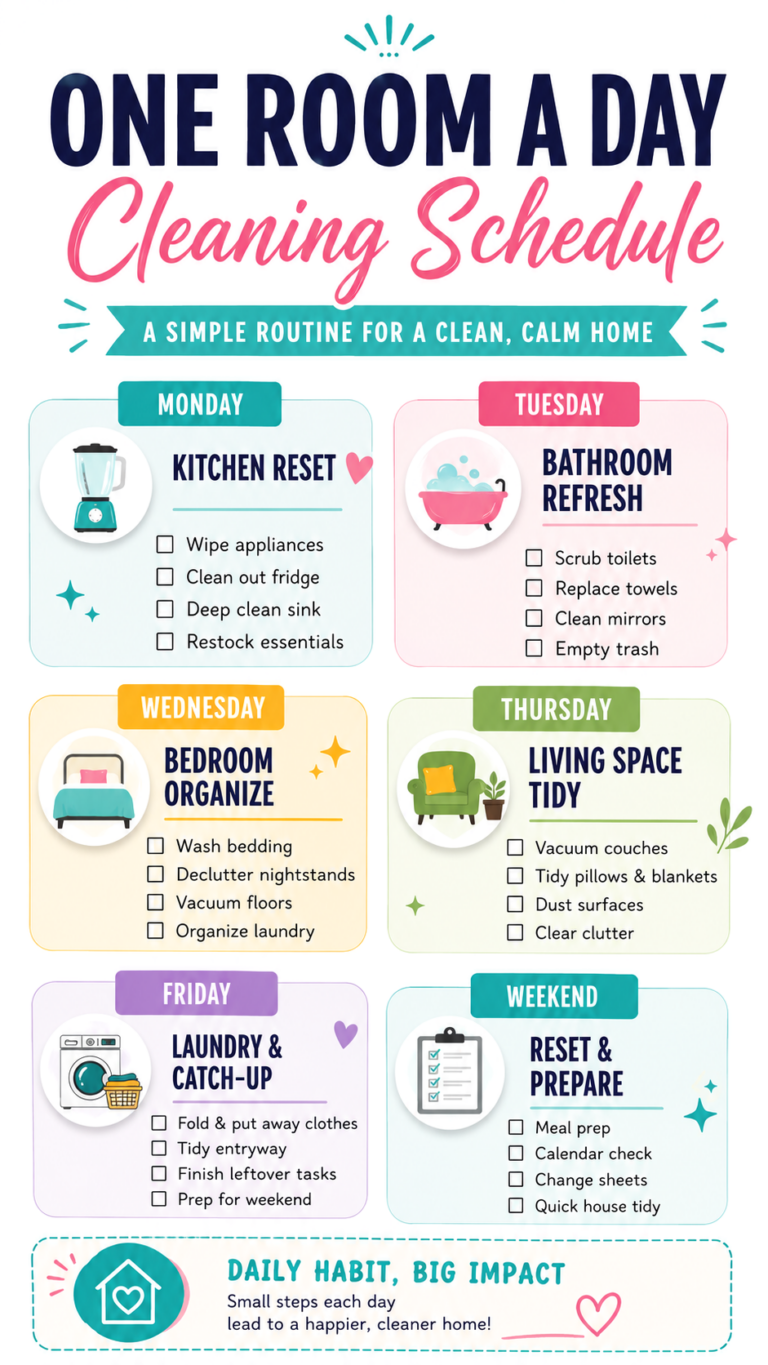
Create a Simple Weekly Cleaning Routine
Keeping a home fresh becomes easier when you divide chores into manageable steps. You do not need to clean every room from top to bottom every day. A short routine can help you stay ahead of common messes without spending your entire weekend on household tasks.
Daily Cleaning Tasks
- Wash dishes or load the dishwasher after meals.
- Wipe kitchen counters with a suitable cleaner.
- Clean up spills promptly using an appropriate method.
- Return cleaning supplies and household items to their proper places.
Weekly Cleaning Tasks
- Dust furniture, shelves, and accessible surfaces.
- Clean bathroom fixtures with products suitable for their materials.
- Wash reusable cleaning cloths and inspect sponges and brushes.
- Clean suitable appliance exteriors and frequently touched handles.
- Vacuum or sweep floors and clean them according to their care requirements.
Monthly Maintenance
Set aside time for areas that are easy to overlook, such as cabinet fronts, refrigerator shelves, window tracks, and the spaces behind small appliances. Check cleaning supplies before restocking so you can replace empty products without accumulating unnecessary extras.
A flexible schedule is more useful than a perfect one. Adjust the routine to your household size, available time, pets, and everyday activities.
How to Build a Practical Cleaning Kit
A well-organized cleaning kit saves time because the essentials are easy to find. Start with products you genuinely use and add specialized cleaners only when a particular surface or task requires them.
Your basic kit might include an appropriate all-purpose cleaner, dish soap, baking soda, white vinegar for compatible surfaces, and a labeled hydrogen peroxide product if you have a suitable need for it. Add microfiber cloths, a soft sponge, a scrub brush, protective gloves, and a small caddy for convenient storage.
Keep acidic products, oxidizing products, and other cleaners separate. Do not store homemade mixtures in unmarked containers or reuse drink bottles for cleaning solutions. Original packaging helps preserve important safety information and instructions.
Pro Tip: Before buying another cleaner, identify the problem you need to solve. You may already have a suitable product at home. Using what you have appropriately can reduce clutter, unnecessary spending, and the risk of storing products you do not need.
Quick Points: The Top 5 Household Cleaners at a Glance
- All-purpose cleaner: A convenient option for many routine cleaning tasks on compatible surfaces.
- Dish soap: Helps remove food residue and grease from dishes and suitable washable items.
- White vinegar: Useful for selected mineral deposits, but unsuitable for acid-sensitive surfaces.
- Baking soda: Provides gentle abrasive action and may help with certain odors.
- Hydrogen peroxide: Can assist with specific stains or disinfection when the product label supports the intended use.
Conclusion: Keep Your Home Fresh With the Right Cleaning Essentials
A clean and comfortable home starts with a few dependable household cleaning essentials and a routine you can maintain. All-purpose cleaner, dish soap, white vinegar, baking soda, and hydrogen peroxide each have different strengths, but none is suitable for every surface or situation.
By matching each cleaner to the task, checking product labels, protecting delicate materials, and avoiding dangerous chemical mixtures, you can make everyday cleaning more efficient and responsible. Keep your supplies organized, use the right tools, and focus on small tasks before dirt and residue become harder to remove.
You do not need an overflowing cleaning cabinet to maintain a welcoming home. Start with the essentials that fit your needs, build simple habits, and adjust your routine as you go. With a little planning and the right approach, keeping your living space fresh can feel much less like a chore and much more like a rewarding part of everyday life.
Tags
Household Cleaners
Home Cleaning Tips
All-Purpose Cleaner
Natural Cleaning
Cleaning Hacks
Kitchen Cleaning
Cleaning Safety
Healthy Home