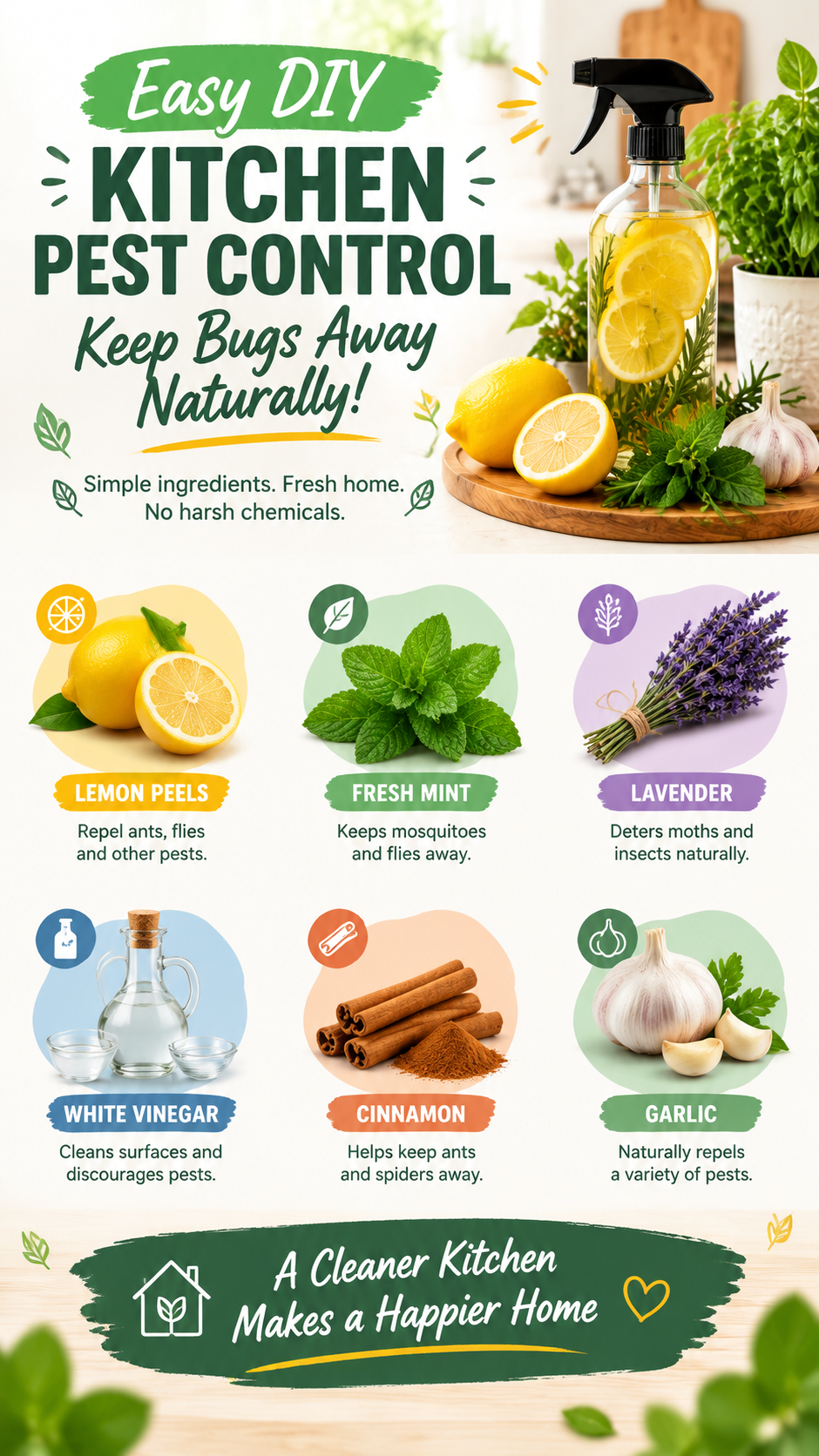
6 Natural DIY Kitchen Bug Repellents to Keep Your Kitchen Pest-Free
Keeping your kitchen clean and free from unwanted bugs does not always require expensive sprays or harsh chemical treatments. Sometimes, a few simple ingredients already sitting in your pantry can help you make your kitchen less attractive to common pests. From citrus peels and vinegar to bay leaves, fresh herbs, cucumber peels, and cloves, there are several natural options worth exploring as part of your everyday kitchen care routine.
If ants gather near your countertops, flies hover around fruit, or you occasionally spot insects near cabinets, these six DIY kitchen bug repellents offer easy ideas to try. They are inexpensive, beginner-friendly, and simple to prepare with ingredients commonly found at home. Although natural remedies have limitations, combining sensible prevention habits with carefully chosen homemade solutions can help you maintain a fresher, more comfortable cooking space.
Key Takeaways
- Use citrus peels and vinegar to prepare a simple cleaning spray that may help discourage some insects.
- Try bay leaves and aromatic herbs as low-effort additions to your kitchen pest prevention routine.
- Keep food sealed, wipe spills promptly, and remove rubbish regularly to reduce pest attractants.
- Experiment with cucumber peels or cloves and lemon, but understand that their effectiveness varies.
- Use baking soda and sugar mixtures cautiously, especially around children and pets, and never rely on homemade traps for a serious infestation.
- Combine natural approaches with sealing entry points and correcting moisture problems for better long-term results.
Why Try Natural DIY Kitchen Bug Repellents?
The kitchen is one of the most attractive places in a home for insects. Food crumbs, sugary spills, fruit, standing water, and accessible rubbish can provide everything many pests need to survive. Even a well-maintained kitchen can occasionally attract ants, fruit flies, cockroaches, or pantry moths.
Natural pest prevention appeals to homeowners because it often uses inexpensive household ingredients and simple preparation methods. Citrus peels, vinegar, herbs, and spices can also make practical use of ingredients that might otherwise be discarded.
However, natural does not automatically mean harmless or highly effective. Some ingredients have strong scents that may discourage certain insects, while others have little reliable evidence supporting their use as repellents. Homemade mixtures should be treated as supplementary measures rather than guaranteed pest control solutions.
Important: The most dependable way to reduce kitchen pests is to remove food and water sources, store ingredients securely, clean hidden crumbs, and seal gaps where insects enter. Homemade repellents may complement these habits, but they cannot replace proper sanitation or professional treatment when an infestation becomes established.
1. Citrus Peel and Vinegar Spray for Kitchen Pests
Citrus peel and vinegar make a popular homemade kitchen cleaning combination. Orange, lemon, and other citrus peels contain aromatic oils, while vinegar is useful for cleaning certain household surfaces. Together, they create a fragrant mixture that can help with routine cleaning and may discourage some insects from repeatedly visiting treated areas.
This DIY citrus peel bug spray is particularly appealing if you regularly eat oranges or lemons and want to reuse the leftover peels instead of throwing them away.
What You Will Need
- Peels from one or two oranges or lemons
- Enough plain white vinegar to cover the peels
- A clean glass jar with a lid
- A fine strainer
- A clean spray bottle
How to Prepare Citrus Peel Vinegar
- Wash the citrus fruit before peeling it.
- Place the peels inside a clean glass jar.
- Pour white vinegar over the peels until they are covered.
- Close the jar and leave it in a cool, dark place for several days, checking it regularly. The one-week infusion shown in the visual is one possible preparation period.
- Strain the liquid thoroughly and transfer it to a clearly labeled spray bottle.
- If desired, dilute the mixture with water for suitable cleaning applications, following the requirements of the surface being treated.
How to Use It
Use the mixture for appropriate, washable, vinegar-compatible surfaces where food crumbs or sticky residue may attract insects. Test a small, inconspicuous area first, and wipe the surface afterward if needed.
Avoid spraying it directly onto food, food preparation utensils, delicate stone countertops, marble, natural stone, or other acid-sensitive materials. Vinegar can damage certain finishes, and the mixture should not be considered a proven insecticide.
Best practice: Clean away crumbs and sugary residue before applying any homemade cleaning spray. Removing the food source is more important than leaving a citrus scent behind.
2. Bay Leaves for Pantry and Cabinet Pest Prevention
Bay leaves are commonly used to flavor soups, stews, sauces, and other dishes. Their distinctive aroma also makes them a familiar ingredient in traditional home pest prevention ideas.
Some people place dried bay leaves inside pantry cabinets or near food storage areas in the hope of discouraging cockroaches, moths, and other unwanted insects. However, reliable evidence that bay leaves alone control these pests is limited, so it is best to view them as an optional addition to a broader prevention routine.
How to Use Bay Leaves in the Kitchen
- Choose clean, completely dry bay leaves.
- Inspect the cabinet or pantry where you plan to place them.
- Remove crumbs, food residue, and any spilled dry ingredients.
- Store flour, cereal, rice, pasta, and other dry foods in tightly sealed containers.
- Place a few bay leaves on a small dish or in a breathable sachet away from direct contact with food.
- Replace the leaves when they become dusty, damaged, or lose their aroma.
Where Should You Place Bay Leaves?
Consider using them near cabinet corners, pantry shelves, or storage areas where they will not interfere with food preparation. Keep them away from burners, hot appliances, and damp spaces where they may deteriorate.
Bay leaves should never be used as a substitute for inspecting pantry goods. If you notice moth larvae, webbing, damaged packaging, or small beetles inside dry foods, inspect nearby products and discard infested items in a sealed bag. Clean the affected shelves thoroughly and store replacement ingredients in airtight containers.
Pro Tip: A clean, dry pantry with sealed food containers is far more dependable than relying on the scent of bay leaves. Use aromatic herbs for their pleasant fragrance, but investigate any continuing signs of insects.
3. Fresh Herb Jar Repellent for a Fragrant Kitchen
Fresh herbs such as mint, rosemary, and basil can bring greenery, color, and a refreshing aroma to your kitchen. Growing them in a small jar or pot is also a simple way to keep frequently used ingredients within reach while creating a pleasant indoor herb display.
Some aromatic herbs contain compounds that have demonstrated insect-repellent properties under particular conditions. However, growing a mint plant on a windowsill does not guarantee protection against ants, flies, or mosquitoes. A plant’s scent may be too weak or dispersed to provide meaningful pest control in a typical kitchen.
Which Herbs Can You Grow?
- Mint: A fragrant herb used in teas, salads, and refreshing drinks. It grows readily in containers and generally benefits from regular harvesting.
- Rosemary: An aromatic herb often used in roasted vegetables, soups, and savory dishes. It prefers bright light and well-drained growing conditions.
- Basil: A kitchen favorite for sauces, salads, and pasta. It generally thrives in a warm location with plenty of light.
How to Create a Small Kitchen Herb Garden
- Choose a suitable pot or planter with drainage holes.
- Fill it with an appropriate potting mix.
- Plant your chosen herb according to its growing requirements.
- Place it near a bright window that provides suitable light.
- Water according to the plant’s needs, allowing excess water to drain away.
- Remove dead leaves and check the soil regularly for signs of mold or pests.
A container without drainage can hold excess water and encourage root problems or fungus gnats. If you prefer the appearance of a decorative glass jar, use it as an outer cover for a smaller nursery pot with drainage rather than keeping the roots permanently waterlogged.
Where to Position Your Herb Plants
Choose a bright windowsill or another suitable location that does not obstruct food preparation. Keep plants away from standing water, dirty dishes, and uncovered food scraps. Remove decaying leaves promptly, and avoid overwatering.
The greatest benefits of a kitchen herb garden are its fragrance, decorative appeal, and convenience for cooking. Treat any insect-deterring effect as a possible bonus rather than the main reason to grow these plants.
4. Baking Soda and Sugar Mixture: What to Know Before Trying It
Baking soda and sugar frequently appear in homemade cockroach and ant control recipes. The idea is that sugar attracts insects while baking soda is intended to act as the active ingredient. Although this mixture is easy to prepare, its effectiveness as a reliable pest control treatment is not well established.
For that reason, it is important to understand the limitations before placing a homemade mixture around your kitchen.
Why People Use This Combination
Sugar is attractive to many insects, which explains why it appears in traditional homemade bait recipes. Baking soda is included with the intention of making the mixture harmful to the target pest. However, attracting an insect does not automatically mean the mixture will eliminate it, and a homemade preparation should not be assumed to work against every species.
Ants also differ in their feeding habits, and some colonies may ignore a particular bait. Cockroaches can survive on many different food sources, making simple household mixtures unreliable for an established infestation.
Safer Alternatives for Managing Kitchen Pests
- Wipe counters and floors to remove crumbs, grease, and sugary residue.
- Store dry food and pet food in sealed containers.
- Repair dripping taps and dry damp areas around sinks.
- Use commercially available ant or cockroach baits specifically labeled for the pest and location.
- Follow all product instructions and keep baits inaccessible to children and pets.
A homemade mixture should never be placed where children, pets, or food-contact surfaces can reach it. Even ordinary household ingredients can create risks if accidentally swallowed, scattered, or contaminated.
If you want to try a traditional baking soda and sugar mixture, remember that there is no dependable universal ratio that guarantees effective pest control. For persistent cockroach or ant problems, a properly labeled bait or a qualified pest management professional is a more reliable choice.
5. Cucumber Peels Near Windows and Doors
Cucumber peels are another familiar ingredient in natural kitchen bug repellent tips. The traditional idea is to place fresh peels near entry points or areas where ants and other insects appear, using the cucumber’s natural scent as a possible deterrent.
Although this approach is simple and inexpensive, scientific evidence supporting cucumber peels as a dependable household insect repellent is limited. Results are unpredictable, and fresh peels will not eliminate an insect nest or prevent every pest from entering your kitchen.
How to Try Cucumber Peels
- Wash a fresh cucumber before peeling it.
- Collect a small amount of peel and place it on a removable dish.
- Position the dish near a window or doorway where insects have been observed, without obstructing the opening.
- Keep the peels away from direct contact with food and food preparation surfaces.
- Remove and discard the peels promptly before they become slimy, moldy, or attract other pests.
What Works Better at Entry Points?
If ants repeatedly appear around windows, doors, or baseboards, inspect the area for gaps and cracks. Seal suitable openings with appropriate materials, repair damaged window screens, and check door sweeps for gaps.
Follow an ant trail to identify where the insects are entering, then clean the trail with a suitable household cleaner. Removing accessible food sources and using a labeled ant bait when necessary are more dependable strategies than leaving cucumber peels in place.
Fresh cucumber peels are best treated as a short-lived experiment, not a substitute for sealing entry points or managing an established pest problem.
6. Cloves and Lemon for a Fresh-Smelling Kitchen
Cloves and lemon create a fragrant combination that is often used in traditional home remedies for flies and mosquitoes. The image of a lemon half studded with whole cloves is also an attractive, easy-to-make kitchen decoration.
Cloves contain aromatic compounds, including eugenol, that have been investigated for insect-related applications. However, findings from concentrated oils or controlled studies do not establish that a lemon studded with whole cloves will reliably repel flying insects throughout an ordinary kitchen.
What You Will Need
- One fresh lemon
- A small handful of whole cloves
- A clean plate or shallow dish
How to Make a Clove and Lemon Display
- Wash and dry the lemon.
- Cut it in half if desired, using a clean cutting board and knife.
- Insert whole cloves into the exposed surface of each half or into the intact peel.
- Place the lemon on a small dish in a suitable location away from food preparation areas.
- Inspect it regularly and discard it when it dries out, develops mold, or begins to deteriorate.
How to Reduce Flies and Mosquitoes More Reliably
For fruit flies, remove overripe fruit, clean sticky bottles and jars, rinse recycling containers, and keep food scraps in a covered bin. If fruit flies persist, inspect drains and other damp areas where organic residue may collect.
To reduce mosquitoes, empty standing water from plant saucers, containers, and other objects where water can accumulate. Repair window screens and use a suitable, labeled repellent when personal protection is needed.
Clove and lemon can add a pleasant aroma to your kitchen, but they should not be relied upon as the sole method of keeping flies or mosquitoes away.
Expert Insight: Prevention Makes the Biggest Difference
Natural ingredients may offer fragrance, convenient cleaning options, or limited deterrent effects, but lasting kitchen pest prevention depends on making the environment less attractive to insects.
- Keep food, including pet food, in tightly closed containers.
- Clean under appliances and inside cupboards where crumbs accumulate.
- Fix leaks and dry wet surfaces to reduce available moisture.
- Seal gaps around pipes, windows, doors, and baseboards.
Everyday Habits That Help Keep Your Kitchen Pest-Free
Even the most carefully prepared homemade remedy will have limited value if insects can find food, water, and shelter throughout the kitchen. A few consistent cleaning and storage habits can make a substantial difference in how attractive the space is to common household pests.
Keep Countertops and Floors Clean
Wipe countertops after preparing meals, clean up spills as soon as they happen, and sweep or vacuum crumbs from floors. Pay special attention to the spaces beneath the toaster, microwave, refrigerator, and other appliances.
Sticky residues from juice, honey, syrups, and sweetened drinks can attract ants and other insects. Regular cleaning removes these food sources before pests have an opportunity to establish feeding routes.
Store Food Properly
Use tightly sealed containers for flour, grains, cereals, nuts, dried fruit, pasta, and other pantry staples. Check packages when bringing groceries home, especially if you have previously encountered pantry moths or beetles.
Refrigerate perishable food when appropriate, and avoid leaving uncovered fruit or leftovers on countertops for extended periods. If you keep fruit in a bowl, inspect it frequently and remove damaged or overripe pieces.
Manage Rubbish and Recycling
Choose a bin with a secure lid and empty it regularly. Rinse food containers before placing them in recycling, and clean the bin whenever residue accumulates.
Food waste left overnight can attract flies and other pests. If practical, keep particularly odorous food scraps in a sealed container until they can be disposed of properly.
Control Moisture Around the Sink
Many pests benefit from access to water. Repair leaking taps, dry wet countertops, clean around the sink, and avoid leaving standing water in bowls or containers.
Check the area beneath the sink for leaks, damp packaging, and stored items that prevent you from noticing moisture. Persistent dampness should be corrected rather than covered with fragrances or homemade sprays.
Seal Entry Points
Inspect window frames, door edges, pipe openings, and gaps where cabinets meet walls. Seal suitable cracks and install or repair screens where insects can enter from outdoors.
For persistent ants, follow their trails to locate possible entry points. For cockroaches, investigate dark, sheltered areas near appliances, plumbing, and stored cardboard. Correcting these conditions can be more effective than repeatedly applying surface remedies.
Safety Tips for Homemade Kitchen Bug Repellents
When preparing natural pest prevention remedies, remember that ingredients used in cooking are not automatically suitable for spraying, prolonged exposure, or unrestricted use around children and pets.
- Label every container: Clearly identify homemade mixtures and keep them separate from food and drinks.
- Avoid direct food contact: Do not spray homemade solutions onto fruit, vegetables, utensils, or food preparation surfaces unless the intended use is appropriate and the surface is thoroughly cleaned afterward.
- Never mix cleaning chemicals: In particular, never combine vinegar with chlorine bleach because the mixture can release dangerous chlorine gas.
- Use essential oils cautiously: Concentrated aromatic oils can irritate skin and airways and may be harmful to pets. Do not assume that a natural ingredient is safe for every animal.
- Keep traps and mixtures inaccessible: Place them away from children, pets, food, and kitchen utensils.
- Check surfaces first: Vinegar can damage marble, natural stone, and certain finishes. Test suitable cleaners in an inconspicuous area.
- Discard deteriorating ingredients: Fresh peels, cucumber, herbs, and lemon can spoil or grow mold if left out too long.
If a homemade solution does not produce noticeable results, avoid making it stronger by adding concentrated oils or extra ingredients. Instead, identify the pest, remove its food and water sources, and choose an appropriate control method.
When Should You Use Professional Pest Control?
Occasional insects do not always indicate a serious infestation. However, repeated sightings, visible nests, damaged food packaging, droppings, or insects appearing during the day can indicate a problem that requires closer attention.
Cockroaches may hide in narrow cracks and sheltered areas, while ant colonies can remain active behind walls or outside the building. Pantry moths and beetles may spread between stored food products. In these situations, a few bay leaves or citrus peels are unlikely to solve the underlying problem.
Start by identifying the pest and its likely source. Remove infested food, clean affected areas, seal entry points, and use a targeted product according to its label if appropriate. If the problem continues, consider contacting a qualified pest management professional.
Professional advice is particularly useful when pests keep returning despite consistent cleaning, when an infestation affects several rooms, or when you are unsure which treatment is safe for your household.
At a Glance: Six Natural Kitchen Pest Prevention Ideas
Quick Points
- Citrus peel and vinegar: A homemade mixture for suitable cleaning tasks, not a proven universal insecticide.
- Bay leaves: A fragrant pantry addition that should accompany proper food storage and regular inspections.
- Fresh herb jars: A decorative way to grow mint, rosemary, or basil, with no guarantee of pest control.
- Baking soda and sugar: A traditional homemade bait idea with limited evidence of reliable effectiveness.
- Cucumber peels: An inexpensive experiment that requires frequent replacement and should not be relied upon for control.
- Cloves and lemon: A fragrant kitchen display that may smell pleasant but is not a dependable substitute for insect management.
Frequently Asked Questions About Natural Kitchen Bug Repellents
What Is the Easiest Natural Way to Discourage Kitchen Bugs?
Start by removing food residue, storing ingredients in airtight containers, cleaning rubbish bins, drying wet surfaces, and sealing entry points. These measures address the conditions that attract insects and are generally more dependable than relying on a particular scent.
Does Citrus Peel and Vinegar Spray Kill Ants?
Citrus peel and vinegar mixtures are not reliable ant-killing treatments. They may help clean surfaces and remove some food residue, but lasting ant control usually requires locating entry points, removing attractants, and using a suitable bait when necessary.
Do Bay Leaves Keep Cockroaches Away?
Bay leaves are commonly suggested as a traditional cockroach deterrent, but there is insufficient evidence to rely on them for meaningful control. Keep cabinets clean, eliminate water sources, seal gaps, and use an appropriate cockroach bait if needed.
Can I Use These Remedies in a Home With Pets?
Extra caution is necessary in homes with pets. Keep all homemade mixtures and food scraps out of reach, and avoid exposing animals to concentrated essential oils or unfamiliar substances. Ask a veterinarian about ingredients that may be unsafe for your particular pet, and select pest control products specifically labeled for use in your household setting.
How Often Should I Replace Homemade Kitchen Repellents?
Fresh ingredients such as lemon halves, cucumber peels, and herb cuttings should be checked frequently and discarded as soon as they begin to deteriorate. Infused vinegar should be stored in a clean, labeled container and discarded if it develops unexpected growth, an unusual appearance, or signs of contamination. Do not keep homemade mixtures indefinitely.
Conclusion: Create a Fresher Kitchen With Simple Prevention Habits
Keeping your kitchen comfortable and less attractive to unwanted insects does not have to involve complicated routines. Citrus peel and vinegar, bay leaves, fresh herb plants, cucumber peels, and cloves with lemon offer simple ideas to explore using familiar household ingredients. A baking soda and sugar mixture is another traditional suggestion, although its effectiveness should not be assumed.
The key is to understand what these remedies can and cannot do. Aromatic ingredients may add fragrance or provide limited deterrent effects, but none should be considered a guaranteed solution for ants, cockroaches, flies, mosquitoes, or pantry pests.
For better results, combine any suitable homemade approach with consistent cleaning, airtight food storage, careful rubbish management, moisture control, and sealed entry points. If insects continue to appear, identify the species and choose a targeted, evidence-based treatment.
A clean kitchen is easier to maintain when small habits become part of your everyday routine. Try the ideas that suit your home, keep safety in mind, and pay attention to which changes genuinely help. With practical prevention and the right treatment when needed, you can create a fresher, more inviting kitchen for the whole household.
Tags
DIY Kitchen Bug Repellents
Natural Pest Control
Kitchen Cleaning Tips
Homemade Citrus Spray
Ant Prevention
Eco-Friendly Home
Pest-Free Kitchen
Natural Home Remedies