9 Natural Ways to Boost Dopamine, Motivation Focus for Better Brain Health
Dopamine plays an important role in motivation, focus, learning, movement, and the way we experience rewards. Often called the brain’s motivation and reward chemical, this neurotransmitter helps us pursue goals, develop habits, and feel encouraged to keep going. The good news is that simple daily routines can support the brain systems involved in healthy dopamine function. From getting morning sunlight and eating nourishing foods to moving your body, prioritizing sleep, and celebrating small wins, there are practical ways to build a lifestyle that supports motivation and mental well-being.
You do not need an extreme productivity routine or a complicated wellness plan to get started. Small, consistent changes can make healthy habits easier to maintain and help you feel more engaged with your daily activities. Here are nine natural ways to support dopamine function, improve focus, and create a more balanced relationship with motivation and rewards.
Key Takeaways
- Get regular daylight exposure to support your circadian rhythm and daytime alertness.
- Eat balanced meals containing protein, healthy fats, fiber, and a variety of plant foods.
- Move your body regularly to support mood, cognitive health, and overall well-being.
- Protect your sleep schedule to help maintain attention, memory, and emotional balance.
- Set manageable goals and recognize progress to make healthy routines easier to sustain.
- Make time for enjoyable activities while creating boundaries around distracting, highly stimulating habits.
Understanding Dopamine and Why It Matters
Dopamine is a neurotransmitter, a chemical messenger that allows nerve cells to communicate. It participates in several important processes, including motivation, movement, attention, learning, and reward-based behavior. It helps the brain recognize experiences that are worth repeating and plays a role in directing effort toward meaningful outcomes.
For example, when you make progress on a project, learn a new skill, or complete a challenging task, dopamine-related pathways help your brain process that experience. These systems are also involved in anticipating rewards and learning from the results of your actions.
Although dopamine is often associated with happiness, its role is more complicated than simply making you feel good. It contributes to wanting, seeking, learning, and taking action. Other brain chemicals and interconnected neural systems also influence pleasure, mood, attention, and motivation.
Important: Supporting healthy dopamine function is not about maximizing dopamine levels. Your brain depends on carefully regulated chemical signaling. A balanced lifestyle supports the broader systems involved in motivation, sleep, attention, and emotional well-being rather than guaranteeing a specific increase in dopamine.
1. Get Morning Sunlight for Better Daily Rhythms
Morning sunlight is a simple way to begin supporting your body’s natural daily rhythm. Light entering your eyes helps regulate the circadian system, which influences when you feel alert, when you become sleepy, and how your body organizes many daily functions.
Spending time outdoors in the morning can help reinforce the distinction between daytime and nighttime. This is especially useful if you spend most of your day indoors, work at a desk, or struggle to maintain a consistent sleep schedule.
How to Build a Morning Light Habit
- Take a short walk outside after waking up.
- Enjoy breakfast near a bright window when outdoor access is limited, while recognizing that window glass reduces some of the light reaching you.
- Pair morning light with another habit, such as drinking water, stretching, or listening to a favorite song.
- Keep your sleep and wake times reasonably consistent throughout the week.
The amount of outdoor light you need depends on factors such as weather, season, and individual circumstances. Even a brief outdoor break can be a practical starting point, and you can gradually make it part of your routine.
Never look directly at the sun. Ordinary daylight exposure does not require staring at bright sunlight, and appropriate sun protection remains important when spending extended periods outdoors.
2. Eat Dopamine-Supporting Foods
What you eat provides the nutrients your body needs to maintain normal brain function. Protein is particularly relevant because it supplies amino acids, including tyrosine, which the body uses to produce dopamine. However, eating specific foods does not automatically raise dopamine in the brain, since neurotransmitter production is carefully regulated.
A balanced eating pattern can support overall physical and mental health while providing the nutrients needed for normal neurotransmitter synthesis.
Foods to Include in a Balanced Diet
Protein-Rich Foods
Eggs, fish, chicken, lean meat, yogurt, lentils, beans, tofu, nuts, and seeds provide protein and varying amounts of tyrosine. Including a source of protein in meals can also help make them more satisfying.
Healthy Fats
Avocados, olive oil, walnuts, almonds, seeds, and oily fish provide fats that contribute to a balanced diet. Omega-3 fatty acids found in fish such as salmon and sardines are important for normal brain and nervous system function.
Fruits and Vegetables
Berries, bananas, leafy greens, citrus fruits, and other colorful produce provide fiber, vitamins, minerals, and beneficial plant compounds. Eating a wide variety of fruits and vegetables helps support general health and nutritional balance.
An Easy Meal Idea
Try a breakfast of eggs or yogurt with whole-grain toast and fruit. For lunch, combine leafy greens, beans or chicken, avocado, and whole grains. At dinner, enjoy fish or another protein source with vegetables and a carbohydrate such as potatoes, brown rice, or whole-grain pasta.
You do not need expensive superfoods or a restrictive diet. Consistency, variety, and adequate nourishment matter much more than relying on one supposedly powerful dopamine food.
3. Move Your Body Regularly
Physical activity is one of the most practical habits for supporting mood, energy, and cognitive health. Exercise affects several interconnected brain systems, including those involved in reward, stress regulation, and motivation. It can also improve sleep and provide a natural break from mentally demanding work.
You do not need to complete an intense workout every day to benefit from movement. Walking, cycling, dancing, swimming, strength training, and gentle stretching can all have a place in a sustainable routine.
Simple Ways to Add More Movement
- Take a brisk walk during a lunch break.
- Stretch or stand up after extended periods of sitting.
- Put on music and dance for a few minutes at home.
- Choose stairs when practical and comfortable.
- Try a beginner-friendly workout that matches your fitness level.
Pro Tip: Make movement easier to start by attaching it to something you already enjoy. Walk while listening to a podcast, stretch while watching a favorite show, or invite a friend to join you. An activity you can repeat comfortably is often more useful than an ambitious routine you quickly abandon.
If you have been inactive, begin gradually and increase your activity as your comfort and fitness improve. The goal is to make movement a regular part of life, not another source of pressure.
4. Prioritize Quality Sleep
Sleep influences attention, learning, memory, emotional regulation, and the brain’s ability to respond appropriately to rewards. When you regularly sleep too little or maintain an irregular schedule, everyday tasks may feel more difficult, and staying focused can require greater effort.
Sleep also interacts with the brain’s dopamine systems. The relationship is complex, however, and it is more accurate to say that healthy sleep supports normal brain functioning than to assume that a particular bedtime directly increases dopamine.
Create a Sleep-Friendly Routine
- Keep your bedtime and wake-up time consistent whenever possible.
- Give yourself enough time for sleep. Most adults need at least seven hours per night, although individual needs vary.
- Make your bedroom quiet, dark, and comfortably cool.
- Reduce stimulating activities and bright light before bedtime.
- Avoid late-day caffeine if it interferes with your ability to fall asleep.
- Develop a calming wind-down ritual, such as reading, taking a warm shower, or listening to relaxing music.
Quality sleep is not simply about spending more time in bed. Regular timing, a comfortable environment, and habits that support restful sleep all matter.
If you consistently struggle to sleep, feel excessively sleepy during the day, or snore heavily with pauses in breathing, consider discussing these symptoms with a healthcare professional.
5. Set Small Goals and Celebrate Progress
Big goals can be exciting, but they can also feel overwhelming when the next step is unclear. Breaking a large objective into smaller tasks makes progress easier to see and gives you a practical starting point.
For example, instead of setting a vague goal to become more productive, decide to spend ten minutes organizing your workspace, read five pages of a book, or complete one clearly defined task. Each finished step provides useful feedback and helps you build a sense of progress.
A Simple Goal-Setting Method
- Choose one priority. Decide what would make the day feel productive or meaningful.
- Make the first step small. Select an action that takes five to fifteen minutes.
- Remove unnecessary friction. Prepare your materials, open the relevant document, or clear your workspace.
- Record your progress. Check off the completed task in a notebook or planner.
- Choose the next step. Continue if you have the time and energy, or stop and return later.
A visible checklist can be especially helpful when you have several responsibilities competing for your attention. It reduces the need to remember every task and lets you see what you have already accomplished.
Try not to turn every moment into a productivity challenge. Rest, flexibility, and enjoyment matter too. A healthy routine should help you live more intentionally, not make you feel guilty whenever you take a break.
6. Spend More Time in Nature
Time outdoors can provide a refreshing change from screens, busy environments, and demanding schedules. Natural settings may help reduce perceived stress, support relaxation, and create opportunities for gentle physical activity.
A walk through a park, a quiet moment in a garden, or a short break beneath trees can give your attention a chance to shift away from constant demands. Spending time in nature may also make it easier to notice your surroundings and reconnect with the present moment.
Make Nature Part of Your Day
- Take a ten-minute walk in a nearby park.
- Eat lunch outdoors when the weather and setting allow.
- Spend a few minutes caring for houseplants or garden plants.
- Choose a scenic walking route instead of the same indoor environment.
- Leave your phone in your pocket for part of your outdoor break.
You do not need to plan a long hike or travel to a remote destination. A small patch of greenery, a tree-lined street, or a local garden can be enough to create a welcome change of pace.
Why This Matters
Healthy motivation depends on more than willpower. Sleep, stress, physical activity, social connection, and your surroundings can all influence how you feel and function. Instead of searching for one perfect dopamine hack, combine small habits that support your overall well-being.
7. Listen to Uplifting Music
Music can change the way a moment feels. An energetic song may make a workout more enjoyable, while a calming melody can help you unwind after a stressful day. Music also engages brain networks involved in emotion, memory, attention, and reward.
Enjoyable music can activate reward-related brain pathways, including dopamine signaling in some circumstances. Individual responses vary, and no particular song or genre guarantees a specific neurochemical effect. What matters most is finding music that suits your preferences and the activity you are doing.
Build a Playlist for Different Moods
- For motivation: Choose upbeat songs that make you want to move or get started.
- For concentration: Experiment with instrumental music, familiar background tracks, or silence to see what helps you focus.
- For relaxation: Try gentle acoustic music, ambient sounds, or slow melodies.
- For exercise: Pick songs with a rhythm that matches your preferred pace.
If music with lyrics distracts you while reading or writing, try instrumental tracks or lower the volume. Some people work best with background music, while others concentrate more effectively in silence.
You can also use music as a cue for a routine. Play the same playlist when preparing for work, cleaning your space, or beginning a workout. Over time, the association may make the transition into the activity feel more familiar.
8. Limit Overstimulation and Instant Rewards
Modern life offers a constant stream of notifications, short videos, online shopping, games, and highly appealing digital content. These activities can be enjoyable, but frequent interruptions may make it harder to stay with slower tasks that require sustained attention.
It is common to reach for a phone when work becomes difficult, a task feels boring, or you need a brief escape from stress. The problem is not that every quick reward is harmful. Rather, automatically switching to a new source of stimulation can interrupt concentration and make it more difficult to return to your original goal.
The phrase “dopamine detox” is often used to describe taking a break from rewarding activities. Despite its popularity, you cannot literally detox dopamine from your brain by avoiding your phone or favorite foods. A more useful approach is to change your environment, reduce unwanted habits, and make room for activities that support your priorities.
Practical Ways to Reduce Digital Distractions
- Turn off nonessential notifications.
- Keep your phone away from your desk during focused work.
- Set specific times to check social media and messages.
- Use a timer to work on one task before taking a planned break.
- Avoid scrolling in bed if it delays sleep or leaves you feeling overstimulated.
- Replace automatic phone checking with a short walk, a stretch, or a glass of water.
You do not have to eliminate enjoyable activities to build healthier habits. Entertainment, treats, and relaxing breaks can be part of a balanced lifestyle. The goal is to enjoy them intentionally instead of allowing them to crowd out sleep, movement, relationships, or meaningful work.
Important: Avoid treating normal enjoyment as a problem or believing that every pleasurable activity damages your dopamine system. There is no simple universal reset that restores dopamine levels. Focus on patterns that affect your daily life, such as disrupted sleep, constant interruptions, or difficulty managing screen time.
9. Make Time for Activities You Love
Life can become exhausting when every activity revolves around responsibilities, deadlines, and productivity. Making room for hobbies and meaningful experiences gives you opportunities to relax, express yourself, develop skills, and connect with other people.
Enjoyable activities also engage reward and learning systems in different ways. You might feel absorbed while painting, satisfied after cooking a favorite meal, energized by dancing, or connected while talking with a friend. These experiences can support well-being without needing to be measured by productivity.
Find Activities That Make You Feel Engaged
- Try drawing, painting, photography, or another creative hobby.
- Read books that genuinely interest you.
- Cook a new recipe or prepare a favorite meal.
- Learn a musical instrument or practice a skill you enjoy.
- Spend quality time with friends, family, or supportive community members.
- Explore a new walking route, visit a museum, or try a beginner-friendly class.
If you are unsure what you enjoy, experiment with small activities rather than committing to an expensive course or complicated project. Give yourself permission to be a beginner and focus on curiosity instead of immediate results.
Meaningful activities do not need to produce a visible achievement. Resting with a book, tending to plants, or sharing a conversation can be worthwhile simply because it makes life more enjoyable.
How to Combine These Habits Into a Simple Daily Routine
Knowing which habits can support well-being is one thing. Making them fit into your actual day is another. The easiest approach is to begin with a few manageable actions and add more when they feel natural.
A Sample Routine for Motivation and Focus
Morning
- Wake up at a reasonably consistent time.
- Spend a few minutes outdoors in daylight when practical.
- Eat a balanced breakfast or another nourishing meal that suits your schedule.
- Write down one important task and identify its first small step.
Afternoon
- Take a short movement break or walk outside.
- Work on one priority with notifications turned off.
- Eat a balanced meal and drink water regularly.
- Listen to music during a suitable activity or use a quiet environment for concentrated work.
Evening
- Make time for a hobby, a relaxing activity, or social connection.
- Reduce unnecessary scrolling when you want to unwind.
- Prepare a short list of priorities for the next day.
- Follow a calming bedtime routine and allow enough time for sleep.
This schedule is a flexible example, not a strict formula. Adapt it to your work, family responsibilities, energy levels, health needs, and personal preferences.
How to Stay Consistent Without Relying on Motivation Alone
Motivation naturally fluctuates. Some days you may feel energized and ready to take action, while other days even simple tasks seem demanding. Building reliable routines means making helpful actions easier to begin, even when enthusiasm is low.
Use These Strategies to Make Habits Stick
- Start smaller than you think you need to. A five-minute walk is a reasonable starting point when a full workout feels overwhelming.
- Connect habits to existing routines. Stretch after brushing your teeth or write a daily priority after breakfast.
- Make your environment supportive. Keep walking shoes visible, prepare nourishing snacks, and move distracting apps away from your home screen.
- Track actions, not perfection. A simple checklist can help you notice patterns without judging yourself.
- Plan for difficult days. Decide on a shorter version of your routine that you can manage when time or energy is limited.
- Review what works. Keep the habits that improve your daily life and adjust those that feel unrealistic.
Consistency does not mean following the same schedule perfectly every day. It means returning to helpful behaviors after interruptions and treating setbacks as information rather than failure.
What to Know About Dopamine Supplements and Low Motivation
Interest in dopamine has led to many supplements and products marketed for focus, energy, and motivation. Be cautious about claims that a particular pill, powder, or food can directly boost brain dopamine and solve persistent concentration problems.
Having enough nutrients is important, but taking additional amounts does not necessarily improve neurotransmitter function if you already get what you need. Supplements can also cause side effects or interact with medications. If you suspect a nutritional deficiency or are considering a supplement for a specific concern, consult a qualified healthcare professional.
Persistent low motivation or difficulty concentrating can have many possible explanations, including insufficient sleep, chronic stress, mood difficulties, medication effects, and other health concerns. These symptoms do not automatically mean that your dopamine levels are low.
If a lack of motivation significantly affects work, relationships, self-care, or daily functioning, seek professional advice instead of attempting to diagnose a dopamine problem yourself. A healthcare professional can help assess possible causes and identify appropriate support.
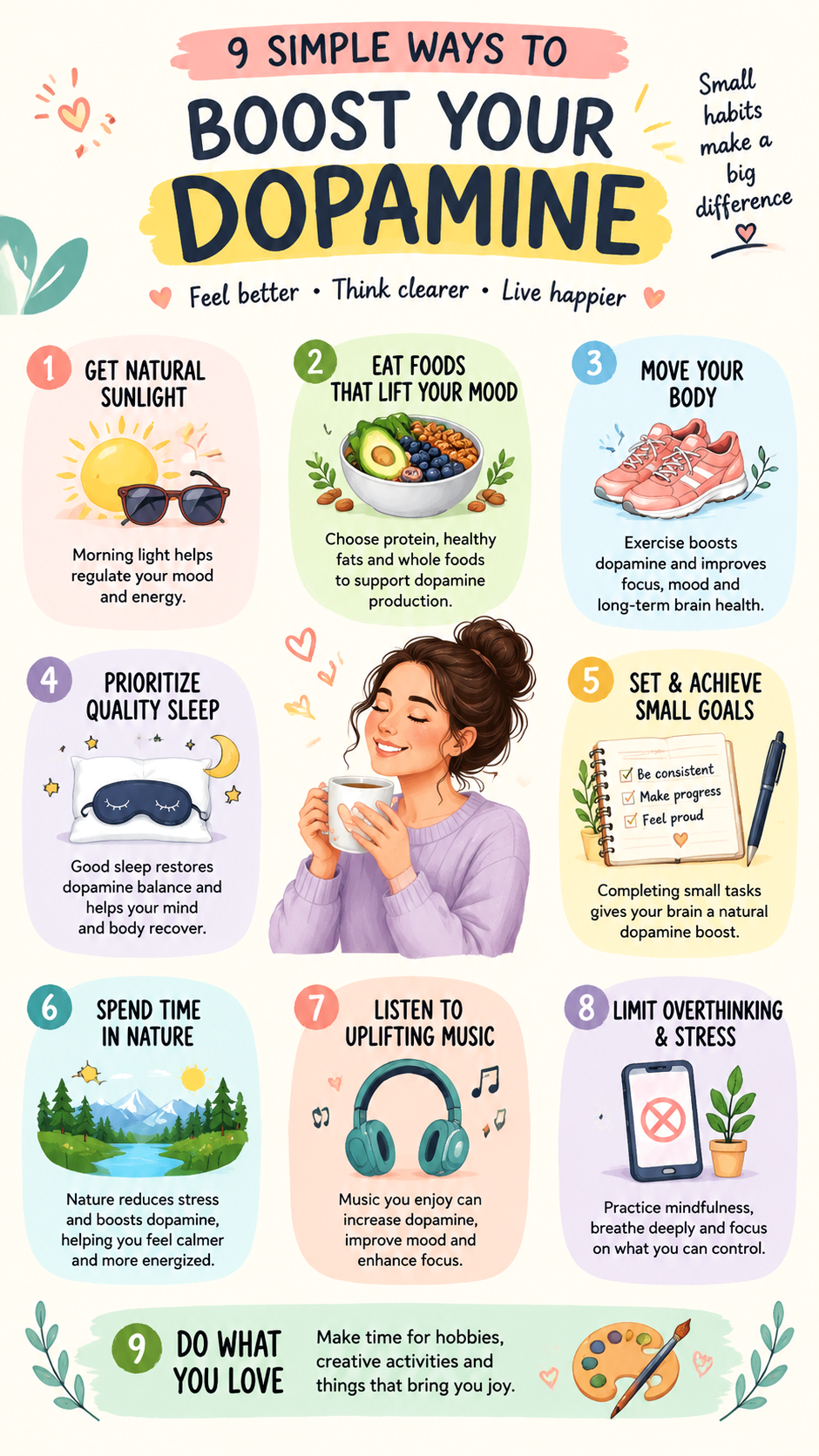
Quick Points: Nine Habits at a Glance
Your Daily Wellness Checklist
- Morning sunlight: Get outdoor daylight when practical.
- Nourishing foods: Choose balanced meals with protein and varied plant foods.
- Movement: Walk, stretch, dance, or exercise regularly.
- Quality sleep: Protect your sleep schedule and nighttime routine.
- Small goals: Break demanding tasks into achievable steps.
- Nature: Spend time outdoors to relax and recharge.
- Music: Use enjoyable sounds to support your mood and routines.
- Fewer distractions: Create boundaries around notifications and automatic scrolling.
- Meaningful hobbies: Make time for creativity, connection, and enjoyment.
Conclusion: Build Healthy Habits for Better Motivation and Focus
Dopamine is an important part of the brain’s systems for motivation, learning, movement, and reward. While no single habit can guarantee higher dopamine levels or instantly transform your concentration, everyday choices can support the broader brain and body functions that help you feel and perform your best.
Start with the basics: get daylight when you can, eat nourishing meals, move regularly, protect your sleep, and break demanding goals into smaller steps. Add activities that make you feel engaged, spend time in nature, enjoy music, and reduce distractions when you need to concentrate.
Most importantly, avoid turning wellness into another source of pressure. You do not have to adopt all nine habits at once. Choose one or two that fit your life, practice them consistently, and build from there. Small actions become more valuable when they are realistic enough to repeat.
Your goal is not to chase a constant state of motivation. It is to create an environment and daily routine that make healthy choices easier, help you recover when life gets stressful, and leave room for both meaningful work and genuine enjoyment. Save this guide as a reminder to take small steps toward better focus, balanced energy, and long-term well-being.
Tags
Dopamine
Brain Health
Natural Motivation
Focus and Productivity
Healthy Habits
Mental Wellness
Sleep and Brain Health
Self-Care