How to Clean a Wooden Cutting Board with Lemon Salt Remove Stains Naturally
A stained wooden cutting board does not always need to be replaced. With a few simple ingredients, you can refresh its appearance, tackle lingering food odors, and keep it looking its best. One popular natural cleaning method combines coarse salt and fresh lemon to create a simple scrub for everyday kitchen maintenance. This easy lemon and salt cutting board cleaning hack is affordable, straightforward, and ideal for anyone who enjoys practical, low-waste cleaning solutions.
Whether your wooden cutting board has dark food marks, a dull surface, or odors from chopping onions and garlic, this method is worth trying on suitable boards. The key is to scrub gently, rinse away all residue, and dry the wood completely. With proper care, you can help maintain your cutting board and make it a more pleasant surface for preparing meals.
Key Takeaways
- Use coarse salt as a gentle abrasive to help loosen surface residue and food stains.
- Rub with half a lemon to help freshen the board and reduce some food odors.
- Let the lemon and salt mixture sit briefly rather than leaving the wood wet for an extended period.
- Rinse thoroughly with clean water and dry the cutting board immediately.
- Avoid soaking wooden boards, using harsh chemicals unnecessarily, or scrubbing damaged wood aggressively.
- Remember that cleaning improves appearance and hygiene, but it does not guarantee that every stain or microorganism has been eliminated.
Why Use Lemon and Salt to Clean a Wooden Cutting Board?
Wooden cutting boards are practical kitchen essentials, but frequent chopping can leave them looking worn. Ingredients such as tomatoes, berries, onions, garlic, and spices may contribute to discoloration or lingering odors. Small scratches can also collect food residue, making routine cleaning especially important.
Fortunately, you do not necessarily need a specialized cleaning product to refresh a board after ordinary food preparation. Coarse salt and lemon offer two simple ingredients that can help with surface cleaning when used correctly.
How Coarse Salt Helps Remove Surface Stains
Coarse salt provides a mild abrasive texture. When rubbed across a damp wooden surface, its crystals can help loosen food residue and lift some superficial discoloration. This makes salt useful for a gentle cleaning session, particularly when the board has visible marks from everyday food preparation.
However, salt is not a magical stain remover. Deep discoloration, permanent pigment marks, and dark areas caused by moisture or damage may remain after cleaning. Use gentle pressure and avoid aggressive scrubbing that could roughen the wood or worsen existing scratches.
How Lemon Freshens the Cutting Board
Fresh lemon juice contains citric acid, which can help loosen certain food residues and contribute a clean citrus scent. Rubbing a cut lemon over the salted surface combines the fruit’s juice with the mild abrasive action of the salt.
The lemon may help reduce lingering odors from ingredients such as garlic and onions, although results vary depending on the type and severity of the odor. It should be viewed as a useful household cleaning aid rather than a disinfectant.
Important: Lemon and salt can help clean and freshen a suitable wooden cutting board, but they do not replace proper washing. For food safety, wash the board with hot water and dish soap after use, especially after preparing raw meat, poultry, seafood, or eggs.
What You Need for This Natural Cutting Board Cleaning Hack
One of the best things about this cleaning method is its simplicity. You can prepare the ingredients in just a few moments without purchasing a separate cleaning solution.
- One fresh lemon: Cut it in half so you can use the exposed flesh to rub the board.
- Coarse salt: Choose a coarse-grained salt that provides enough texture for gentle scrubbing.
- Clean water: Use water to rinse away the lemon juice, salt, and loosened residue.
- A clean cloth or sponge: Use a suitable clean cloth for wiping and drying.
- A dry towel: Absorb excess moisture before allowing the board to air-dry completely.
You do not need to prepare a complicated mixture or measure exact quantities. The amount of salt depends on the size of the cutting board and how much of its surface needs attention. Start with a light, even layer and add a little more if necessary.
How to Clean a Stained Wooden Cutting Board Step by Step
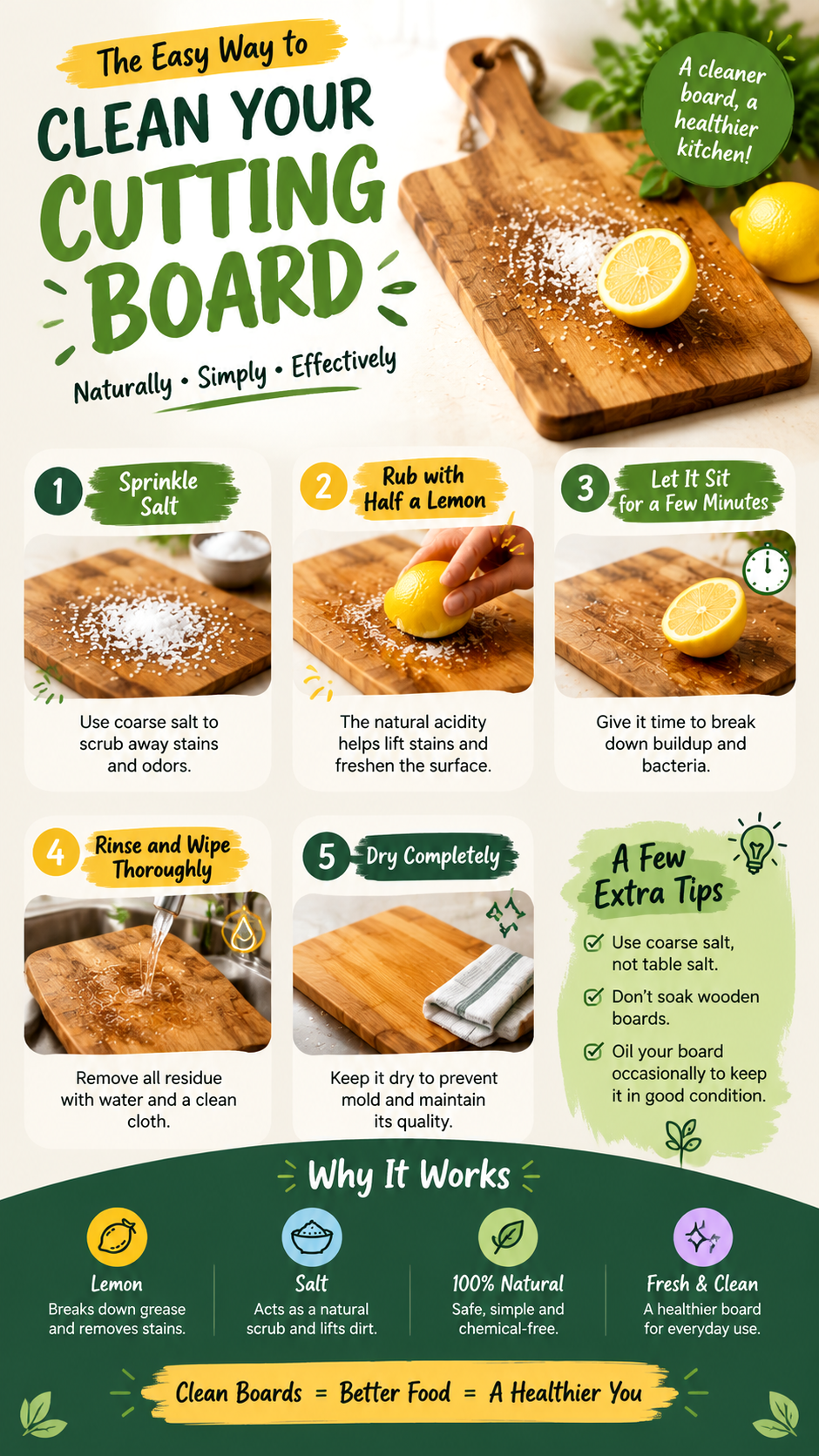
Follow these five simple steps to refresh your wooden cutting board using lemon and coarse salt. Work on a stable surface and keep the board only as wet as necessary.
Step 1: Sprinkle Coarse Salt Over the Board
Begin by removing loose crumbs and food particles from the cutting board. If it has been used to prepare food, wash it with dish soap and hot water first, following appropriate food-safety practices. The lemon and salt treatment can then serve as an additional surface-refreshing step.
Sprinkle a thin, generous layer of coarse salt across the areas that need attention. Focus on visible food marks, discolored patches, and places where odors tend to linger.
There is no need to bury the board under a thick layer of salt. An even coating provides enough material for gentle scrubbing without unnecessary waste.
Step 2: Rub the Surface With Half a Lemon
Take half a fresh lemon and place its cut side against the salted surface. Rub it gently over the board using small circular movements. As the lemon releases its juice, the salt begins to move across the wood and helps loosen superficial residue.
Pay attention to areas with noticeable food stains, but avoid applying excessive pressure. If the board has deep knife grooves, damaged fibers, or a delicate finish, use extra care and check the manufacturer’s cleaning recommendations.
Continue working across the surface until the areas you want to refresh have been treated. Add a small amount of salt if the board becomes too slippery or the original layer has mostly dissolved.
Step 3: Let the Mixture Sit Briefly
After scrubbing, leave the lemon and salt mixture on the board for approximately five to ten minutes if the wood tolerates the treatment. This short waiting period gives the lemon juice time to work on some surface residue.
A longer soaking period is unnecessary and may expose the wood to excess moisture. Wooden boards can absorb water, swell, warp, or develop cracks when they remain wet for too long.
Pro Tip: Treat stubborn marks in short, gentle sessions rather than leaving lemon juice on the board for an extended period. If a stain remains, it may be permanent or deeper than a surface scrub can reach.
Step 4: Rinse or Wipe the Board Thoroughly
Once the brief cleaning period is over, remove the salt, lemon pulp, and loosened residue. Rinse the board with clean water or wipe it thoroughly with a clean, damp cloth, depending on the board’s care instructions.
If you have not already washed the board with dish soap after food preparation, do so now. Use hot water and a small amount of dish soap, then rinse away all remaining soap and cleaning residue. Never rely on lemon and salt alone to make a board safe after contact with raw animal products.
Pay attention to the edges and handle openings, where moisture and food particles can collect. Avoid running water over the board longer than necessary, and never leave it submerged in a sink.
Step 5: Dry the Cutting Board Completely
Use a clean, absorbent towel to remove excess water from the board’s surface, edges, and handle. Then place it upright or on its edge in a well-ventilated area so air can circulate around it as it dries.
Allow the board to dry fully before storing it in a cupboard, drawer, or other enclosed space. Putting away a damp wooden board can trap moisture and encourage unpleasant odors or other moisture-related problems.
A dry board is easier to maintain and less likely to develop problems associated with prolonged dampness. Once it is completely dry, check the surface for remaining stains, rough patches, cracks, or signs of damage.
Why This Natural Cleaning Method Is Worth Trying
The appeal of lemon and salt goes beyond the attractive before-and-after transformation. It offers a practical way to freshen a board using familiar kitchen ingredients while encouraging better cleaning and drying habits.
Why This Matters
A clean-looking cutting board is only part of a well-maintained kitchen. The most useful routine combines appropriate washing, gentle stain removal, complete drying, and regular inspection for damage. Natural ingredients can support that routine, but they should not replace food-safe cleaning practices.
It Uses Simple, Accessible Ingredients
Salt and lemon are common kitchen staples, so this method can be convenient when a board needs extra attention. You can use the ingredients you already have rather than buying a dedicated product for every small cleaning task.
Using household ingredients can also help simplify your cleaning routine. However, natural does not automatically mean harmless to every material. Lemon juice is acidic, and abrasive salt may affect certain finishes. Check the manufacturer’s instructions when caring for treated, coated, or specialty wooden boards.
It Can Help Reduce Lingering Food Odors
Garlic, onions, fish, and other strongly scented ingredients can leave odors behind after food preparation. The lemon’s fresh scent may help make the board smell cleaner, while gentle scrubbing removes some residue that contributes to lingering smells.
If an odor persists after proper washing and drying, inspect the board for deep grooves, cracks, or other damage. A strong or recurring odor may indicate that food residue or moisture remains in areas that ordinary surface cleaning cannot adequately address.
It Encourages Better Wooden Board Care
Wood needs a little more attention than some nonporous kitchen surfaces. Avoiding prolonged soaking, drying the board properly, and maintaining its finish can help extend its useful life.
For many unfinished or food-safe finished wooden boards, occasional conditioning with a suitable food-grade mineral oil or a manufacturer-approved board conditioner can help reduce dryness and improve water resistance. Always apply conditioner to a clean, completely dry board and follow the product instructions.
Extra Tips for Keeping Wooden Cutting Boards Clean
Regular care makes it easier to maintain your board between deeper cleaning sessions. A few simple habits can help reduce stains, odors, and moisture-related damage.
Wash the Board After Every Use
Wash your cutting board promptly after preparing food. Use hot water and dish soap, paying attention to the entire surface, edges, and handle. Clean both sides when appropriate, particularly if food or liquid has reached the underside.
For raw meat, poultry, seafood, and eggs, follow food-safety guidance carefully. Use separate cutting boards for raw animal products and ready-to-eat foods when possible, or thoroughly clean and sanitize the board using a method suitable for its material.
Never Leave a Wooden Board Soaking
Water can penetrate the wood, especially through knife cuts and exposed edges. Extended soaking may lead to swelling, warping, splitting, or persistent dampness.
Instead, wash the board quickly, rinse it thoroughly, wipe it dry, and allow air to circulate around it. Avoid putting wooden cutting boards in a dishwasher unless the manufacturer explicitly states that they are dishwasher-safe.
Use the Right Conditioner
Wooden boards may become dry or rough with repeated washing. A food-safe mineral oil or board conditioner designed for cutting boards can help maintain the wood’s surface, depending on the board’s finish and construction.
Avoid using ordinary cooking oils that can become rancid over time. Follow the care instructions for your particular board, and allow any applied conditioner to absorb or be wiped away as directed before using the board for food preparation.
Inspect for Deep Cracks and Heavy Damage
Surface stains are not necessarily a reason to discard a wooden cutting board. Deep cracks, extensive splits, severe warping, and grooves that are difficult to clean are different concerns.
If damage prevents thorough cleaning or makes the board unstable during food preparation, consider replacing it. Do not assume that lemon, salt, sanding, or oiling will make a seriously damaged board hygienic again.
Common Mistakes to Avoid When Cleaning Wooden Cutting Boards
Even a simple cleaning hack can cause problems if the wood is handled too roughly or exposed to excessive moisture. Keep these common mistakes in mind when trying the lemon and salt method.
- Using too much pressure: Aggressive scrubbing may scratch the surface or damage delicate finishes. Gentle, controlled movements are usually sufficient.
- Leaving the board wet for too long: Avoid extended contact with water or lemon juice. Wood can absorb moisture and become damaged.
- Skipping soap and water: Lemon and salt are not a substitute for washing away food residue and potential pathogens.
- Expecting every stain to disappear: Some marks penetrate the wood or result from permanent discoloration. Cleaning may improve the appearance without restoring the board to a brand-new condition.
- Putting the board away while damp: Moisture trapped in an enclosed space can contribute to odors and damage. Let the board dry completely first.
- Ignoring manufacturer instructions: Some boards have special finishes or construction that require different care. Check the recommended method before using acidic or abrasive ingredients.
Frequently Asked Questions
Can Lemon and Salt Remove All Wooden Cutting Board Stains?
No. This method may help lift superficial food marks and residue, but it cannot guarantee the removal of deep stains, permanent discoloration, or damage. Results depend on the type of wood, the board’s finish, the stain, and how long the mark has been present.
How Long Should Lemon and Salt Stay on the Board?
A brief period of approximately five to ten minutes is enough for this household cleaning technique. Avoid leaving the mixture on the board for a prolonged period, and rinse or wipe away the residue thoroughly afterward.
Does Lemon and Salt Disinfect a Wooden Cutting Board?
No. Although lemon juice and salt may help with surface cleaning, they should not be considered a reliable disinfecting method. Wash the board with hot water and dish soap after use, and follow appropriate sanitizing guidance when needed, especially after handling raw animal products.
Can This Method Be Used on Every Cutting Board?
Not necessarily. It is intended for suitable wooden boards, but finishes and wood types vary. Avoid using lemon and coarse salt on surfaces where the manufacturer advises against acidic ingredients or abrasive cleaning. For plastic, bamboo, composite, or specialty boards, follow the specific care recommendations for that material.
How Often Should I Deep-Clean My Wooden Cutting Board?
Wash your board after every use. Use the lemon and salt treatment occasionally when you notice surface stains or lingering odors, rather than following a rigid schedule. The frequency depends on how often you cook, the ingredients you prepare, and the condition of the board.
Quick Points: The Lemon and Salt Cutting Board Hack
- Sprinkle: Cover stained areas with a light layer of coarse salt.
- Scrub: Rub gently with the cut side of half a lemon.
- Wait: Let the mixture sit briefly, for around five to ten minutes.
- Rinse: Remove all residue and wash with dish soap as needed for food safety.
- Dry: Towel-dry the board and let it air-dry completely before storing.
Conclusion: Give Your Wooden Cutting Board a Simple Refresh
A stained wooden cutting board does not always need to be replaced. The combination of coarse salt and fresh lemon offers a straightforward way to help loosen surface residue, tackle some food odors, and refresh the appearance of a suitable board using familiar kitchen ingredients.
For the best results, sprinkle the board with coarse salt, scrub gently with half a lemon, allow the mixture to sit briefly, and rinse away every trace of residue. Finish by drying the wood thoroughly and letting air circulate around it before putting it away.
Most importantly, make regular washing, careful drying, and periodic inspection part of your kitchen routine. Use proper food-safety practices whenever you prepare meals, and remember that a natural cleaning hack is a helpful extra step rather than a substitute for washing or sanitizing when necessary.
With these simple habits, you can keep your wooden cutting board cleaner, fresher, and ready for your next meal. Save this lemon and salt cleaning hack for the next time your favorite board needs a little extra care.
Tags
Wooden Cutting Board Cleaning
Lemon and Salt Cleaning Hack
Natural Kitchen Cleaning
Cutting Board Stain Removal
Eco-Friendly Cleaning Tips
Kitchen Hygiene
Wooden Cutting Board Care
Natural Cleaning Hacks