
Best Foods for Your Period Menstrual Phase Nutrition for Iron Energy
Your period is a time to slow down, listen to your body, and give yourself a little extra care. During the menstrual phase, which typically begins on the first day of your period and lasts around three to seven days, your body sheds the uterine lining. This process involves bleeding and can sometimes bring fatigue, cramps, bloating, headaches, and changes in appetite. While every menstrual cycle is different, choosing nourishing foods can help you maintain your energy, support healthy iron levels, and feel more comfortable throughout your period.
The good news is that menstrual nutrition does not have to be complicated. Everyday foods such as spinach, lentils, beets, dates, pomegranate, dark chocolate, and iron-rich protein sources can contribute valuable nutrients to a balanced diet. Warm soups, ginger tea, and satisfying meals can also make period self-care feel comforting and manageable.
Key Takeaways
- Include iron-rich foods such as lentils, spinach, and lean beef to help replenish iron lost through menstrual bleeding.
- Pair plant-based iron sources with vitamin C-rich foods to improve iron absorption.
- Choose balanced meals containing protein, carbohydrates, healthy fats, and fiber to support steady energy.
- Enjoy warm soups, ginger tea, and other comforting foods as part of your period self-care routine.
- Use dates, pomegranate, beets, and dark chocolate to add variety and valuable nutrients to your meals.
- Remember that no single food can balance hormones or eliminate period symptoms on its own.
Understanding the Menstrual Phase and Your Nutritional Needs
The menstrual phase is the first phase of the menstrual cycle. It begins when menstrual bleeding starts and continues while the uterine lining is shed. Hormone levels, including estrogen and progesterone, are relatively low at the beginning of this phase. Some people feel tired or experience cramps, while others notice very few symptoms.
Because menstrual bleeding involves the loss of blood, iron is an important nutrient to consider, particularly if your periods are heavy. Iron helps the body produce hemoglobin, a protein in red blood cells that carries oxygen throughout the body. Not getting enough iron can contribute to iron deficiency, which may cause fatigue, weakness, dizziness, or difficulty concentrating.
Other nutrients also contribute to general well-being during menstruation. Protein supports tissue maintenance, carbohydrates provide energy, and healthy fats help meet your body’s overall nutritional needs. Magnesium, calcium, vitamin C, folate, and vitamin B12 are also valuable components of a varied diet.
Important: Food can support your nutritional needs during menstruation, but it cannot replace medical care for heavy bleeding, persistent fatigue, severe cramps, or suspected iron deficiency. If these symptoms affect your daily life, speak with a healthcare professional about appropriate evaluation and treatment.
1. Spinach: A Simple Way to Add Iron and Folate
Spinach is one of the easiest foods to include in a menstrual nutrition plan. This leafy green contains non-heme iron, folate, vitamin K, and other nutrients that support normal body functions. It also provides fiber and antioxidants, making it a useful addition to balanced meals.
Plant-based iron is not absorbed as efficiently as the heme iron found in animal foods, but you can improve its absorption by combining spinach with vitamin C-rich ingredients. Try adding lemon juice, tomatoes, bell peppers, or strawberries to meals containing leafy greens.
Easy Ways to Eat More Spinach During Your Period
- Add fresh spinach to scrambled eggs or an omelet.
- Stir spinach into lentil soup during the final few minutes of cooking.
- Prepare a spinach salad with chickpeas, tomatoes, and lemon dressing.
- Blend a handful into a fruit smoothie for an easy breakfast.
- Sauté spinach with garlic and olive oil as a simple side dish.
You do not need to eat large quantities of spinach to benefit from including it in your diet. Combine it with other iron sources and a variety of colorful vegetables throughout the week.
2. Lentil Soup: Comforting, Filling, and Nutrient-Rich
A warm bowl of lentil soup is a practical meal for days when you want something comforting without spending hours in the kitchen. Lentils provide plant-based protein, non-heme iron, folate, and fiber. They are also affordable, versatile, and easy to prepare in batches.
Protein helps maintain body tissues and contributes to satisfying meals, while fiber supports digestive health. Combining lentils with vegetables, herbs, and a source of vitamin C makes the meal even more varied and nutritious.
How to Make a Period-Friendly Lentil Soup
Start with lentils, onions, garlic, carrots, and vegetable or chicken broth. Add cumin, turmeric, black pepper, or your favorite herbs for extra flavor. Simmer until the lentils are tender, then finish with lemon juice and fresh parsley.
For a more substantial meal, serve the soup with whole-grain bread, brown rice, or a side salad. You can also add spinach near the end of cooking to increase the variety of nutrients.
Preparing a large pot in advance can make busy menstrual days easier. Divide the soup into individual portions and refrigerate or freeze them according to food-safety recommendations.
3. Beets: Colorful Vegetables for a Balanced Diet
Beets bring vibrant color, natural sweetness, and useful nutrients to your menstrual phase meals. They contain folate, fiber, potassium, and plant compounds called betalains, which contribute to their deep red-purple appearance.
Beets are often promoted as a natural way to increase iron or boost blood levels, but they are not particularly rich in iron compared with foods such as lentils, beans, meat, and fortified cereals. Their value comes from contributing to a varied diet rather than acting as a treatment for menstrual blood loss.
Simple Ways to Enjoy Beets
- Roast beets with olive oil, garlic, and herbs.
- Grate raw beets into a salad with carrots and lemon dressing.
- Blend cooked beets into a smoothie with berries and yogurt.
- Serve beetroot alongside lentils, chickpeas, or grilled chicken.
- Enjoy a small glass of beet juice if you like its earthy flavor.
Whole beets provide fiber that may be reduced when the vegetable is juiced. If you prefer beet juice, treat it as one part of your overall diet rather than a replacement for balanced meals.
4. Grass-Fed Beef: A Source of Highly Absorbable Iron
Beef provides heme iron, a form of iron that the body generally absorbs more efficiently than the non-heme iron found in plant foods. It also contains protein, vitamin B12, zinc, and other nutrients involved in normal blood cell production and body functions.
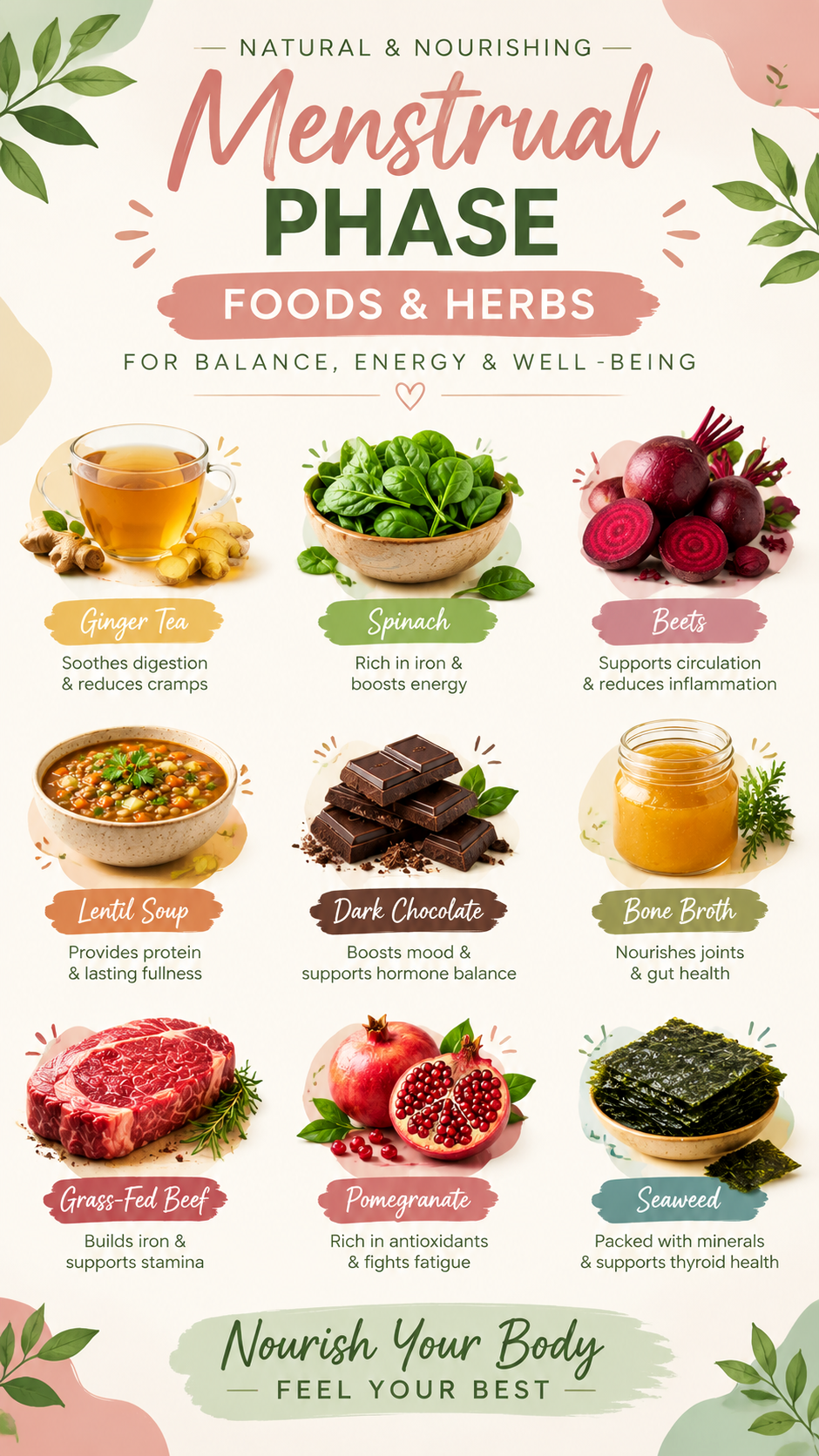
Including a moderate serving of lean beef can be one option for people who eat meat and want to increase their dietary iron intake. Grass-fed beef is shown in the image, but grass-fed status is not a requirement for obtaining iron or supporting menstrual health.
How to Build a Balanced Beef Meal
Pair lean beef with roasted vegetables, leafy greens, and a whole-grain carbohydrate such as brown rice or quinoa. You can also add tomatoes, broccoli, or bell peppers for vitamin C and a broader range of nutrients.
If you prefer not to eat red meat, you can obtain iron from poultry, seafood, beans, lentils, tofu, and iron-fortified foods. A well-planned vegetarian diet can meet iron needs, although food combinations and overall intake deserve attention.
Choose a variety of protein sources over time rather than relying on beef at every meal. Your nutritional needs can be met through many different eating patterns.
5. Dates: A Naturally Sweet Energy Boost
Dates are a convenient snack when you want something sweet and satisfying. They contain carbohydrates that provide energy, along with fiber, potassium, and small amounts of other minerals. Their naturally sweet flavor makes them useful in snacks and simple homemade treats.
Although dates are sometimes recommended for period nutrition, they are not a concentrated source of iron and should not be treated as a way to correct iron deficiency. Their main benefit is that they can contribute energy and variety to an overall balanced diet.
Healthy Ways to Eat Dates
- Pair two or three dates with a small handful of nuts.
- Chop dates into oatmeal with cinnamon and yogurt.
- Blend dates with oats and nut butter to make snack bites.
- Add chopped dates to a salad with spinach and seeds.
- Enjoy dates with plain yogurt for a combination of carbohydrates and protein.
Because dates contain concentrated natural sugars and calories, a small serving is often enough to make a satisfying snack. Adjust the portion to your appetite and nutritional needs.
6. Pomegranate: A Refreshing Source of Antioxidants
Pomegranate seeds, also called arils, add a juicy burst of flavor to meals. They contain fiber, vitamin C, and plant compounds with antioxidant properties. Their bright color also makes salads, yogurt bowls, and breakfast dishes look more appealing.
Pomegranate is not an especially rich source of iron, and there is limited evidence that eating it directly balances reproductive hormones or reduces menstrual symptoms. However, it can be a delicious part of a varied eating pattern that includes fruits, vegetables, protein, and whole grains.
Easy Pomegranate Meal Ideas
- Sprinkle pomegranate seeds over oatmeal or plain yogurt.
- Add them to a spinach salad with walnuts and citrus dressing.
- Combine pomegranate seeds with chickpeas, cucumber, and fresh herbs.
- Use them as a colorful topping for roasted vegetables.
Whenever possible, choose whole pomegranate seeds more often than juice if you want the additional fiber. Both can fit into a balanced diet, depending on your preferences.
7. Dark Chocolate: A Small Treat With Some Nutritional Benefits
Dark chocolate can be a welcome addition to a period self-care routine, especially if you enjoy a little sweetness around menstruation. Cocoa contains plant compounds called flavanols, and dark chocolate provides small amounts of minerals, including magnesium and iron. The exact amounts vary according to the cocoa content and product.
Chocolate is sometimes associated with menstrual cravings, but cravings differ from person to person. Eating chocolate does not mean you lack willpower, and you do not need to eliminate treats to maintain a nutritious diet.
How to Include Dark Chocolate Mindfully
- Enjoy a few squares after lunch or dinner.
- Pair dark chocolate with almonds or walnuts for a satisfying snack.
- Shave a small amount over oatmeal or plain yogurt.
- Combine a square of chocolate with fresh berries for dessert.
Pro Tip: If you choose dark chocolate for its cocoa content, check the label and select a product you enjoy. Higher cocoa content does not automatically make chocolate a treatment for cramps, low iron, or hormonal symptoms.
8. Ginger Tea: A Soothing Period Self-Care Ritual
A warm cup of ginger tea can make your menstrual routine feel more relaxing. Ginger has a long history of culinary use, and some clinical research suggests that ginger supplements may help reduce primary menstrual pain for some people. However, results vary, and the evidence for ginger tea itself is more limited because its strength and preparation differ.
Ginger tea can still be an enjoyable way to stay hydrated and create a comforting pause in your day. It does not need to be viewed as a cure or a replacement for appropriate pain relief.
Simple Homemade Ginger Tea
- Wash and thinly slice a small piece of fresh ginger.
- Add it to a mug or small saucepan of hot water.
- Let it steep for several minutes, adjusting the strength to your taste.
- Add lemon or a little honey if desired.
- Allow the tea to cool to a comfortable temperature before drinking.
Ginger can cause heartburn or stomach discomfort in some people and may interact with certain medications, particularly when consumed in concentrated supplement form. If you take medication or have a relevant medical condition, ask a healthcare professional whether concentrated ginger products are appropriate for you.
9. Warm, Hearty Soup: An Easy Way to Nourish Yourself
Warm soups are a practical choice when your appetite changes or you want a meal that feels gentle and comforting. The image features hearty vegetable soup and lentil soup, both of which can be adapted to suit different preferences and nutritional needs.
A balanced soup can combine vegetables, protein, carbohydrates, and fluid in one convenient bowl. Depending on the recipe, it can also provide fiber, iron, folate, potassium, and other essential nutrients.
What to Add to a Nourishing Period Soup
- Vegetables: Carrots, spinach, tomatoes, celery, and potatoes add color and nutrients.
- Protein: Lentils, beans, chickpeas, chicken, or lean beef help make the meal more satisfying.
- Whole-food carbohydrates: Barley, brown rice, or potatoes contribute energy.
- Flavor: Garlic, ginger, cumin, parsley, and lemon can add depth without requiring complicated ingredients.
- Healthy fats: A small amount of olive oil can improve flavor and help make the meal more satisfying.
Keep portions flexible and eat according to your hunger. If a bowl of soup does not provide enough energy for you, serve it with bread, rice, yogurt, or another side dish.
10. Bone Broth: A Convenient Base for Comforting Meals
Bone broth is made by simmering animal bones and connective tissue in water, sometimes with vegetables and herbs. It can be used as a base for soups, stews, grains, and other dishes. Depending on the preparation, bone broth may provide protein and varying amounts of minerals.
Its nutritional content is not consistent across products, and it should not be assumed to be a rich source of iron or a special treatment for menstrual blood loss. Commercial versions can also contain substantial sodium, so checking the nutrition label is useful if you are monitoring your salt intake.
Ways to Use Bone Broth
- Use it as a base for vegetable or lentil soup.
- Cook rice or other grains in broth for extra flavor.
- Combine it with shredded chicken and vegetables for a simple meal.
- Add herbs, garlic, and lemon to create a flavorful soup base.
If you do not consume animal products, vegetable broth works just as well in many recipes. The overall ingredients in your meal matter more than choosing one particular broth.
11. Seaweed: An Interesting Addition to a Varied Diet
Seaweed offers a distinctive savory flavor and can contribute fiber and minerals to meals. Certain varieties also contain iodine, a nutrient required for normal thyroid function. The amount of iodine varies considerably by species and serving size.
Although seaweed is often included in lists of foods for hormone balance, more is not always better. Excessive iodine intake can disrupt thyroid function in susceptible people, and some seaweed products contain very high levels. Seaweed should not be relied on as a treatment for menstrual irregularities or hormonal conditions.
Simple Ways to Eat Seaweed
- Use small pieces of nori to wrap rice and vegetables.
- Add a modest amount of seaweed to soup or noodle dishes.
- Sprinkle crumbled nori over rice bowls for a savory finish.
- Pair seaweed with tofu, eggs, fish, or vegetables for a balanced meal.
Choose products with clear ingredient labels and follow serving recommendations. If you have a thyroid condition or have been advised to monitor iodine intake, discuss seaweed consumption with your healthcare professional.
Why This Matters
The best menstrual nutrition plan is not built around one superfood. It combines a variety of iron sources, fruits, vegetables, protein, carbohydrates, and healthy fats. Foods can support normal body functions, but claims that individual ingredients detox the body, reset hormones, or stop period pain should be treated cautiously.
How to Build a Balanced Menstrual Phase Meal Plan
You do not need a completely different diet when your period begins. Instead, focus on meals that provide enough energy, include a source of protein, and offer a variety of nutrients. Planning a few simple dishes ahead of time can make it easier to eat well when you are tired or busy.
A Simple One-Day Example
Breakfast
Prepare oatmeal with dates, nuts, and plain yogurt. Add berries or citrus fruit for extra variety and vitamin C.
Lunch
Enjoy lentil soup with spinach, tomatoes, and lemon juice. Add whole-grain bread or brown rice if you need a more substantial meal.
Afternoon Snack
Choose a few squares of dark chocolate with almonds, or have pomegranate seeds with yogurt. Ginger tea can be a comforting drink alongside your snack.
Dinner
Serve lean beef or tofu with roasted vegetables and a whole grain. Alternatively, prepare a hearty vegetable soup with beans or chickpeas for a plant-based option.
Evening
If you are hungry, enjoy a snack that suits your appetite, such as fruit with nut butter or yogurt with dates. Drink water regularly throughout the day.
This is only an example, not a strict meal plan. Adjust portions, ingredients, and meal timing to your preferences, cultural food traditions, appetite, allergies, and individual nutritional needs.
Practical Tips for Better Period Nutrition
Pair Iron With Vitamin C
Vitamin C helps the body absorb non-heme iron from plant foods. Try lentils with tomatoes, spinach with lemon juice, or beans with bell peppers. These simple combinations can make plant-based meals more effective sources of dietary iron.
Eat Enough to Support Your Energy
Skipping meals can leave you feeling hungrier or less energized later. Aim for regular, satisfying meals that include carbohydrates, protein, and fat. If your appetite is lower than usual, smaller meals and snacks may feel more manageable.
Stay Hydrated
Water supports normal body functions and helps replace everyday fluid losses. Keep water nearby, and include other fluids such as unsweetened tea or soup if you enjoy them. There is no need to force excessive amounts of water.
Be Flexible With Cravings
Menstrual cravings can vary from cycle to cycle. A balanced eating pattern can include chocolate, sweet fruit, or your favorite comfort foods. You do not need to follow strict food rules to take care of yourself.
Know When to Seek Medical Advice
Food is only one part of menstrual health. If you regularly soak through menstrual products very quickly, bleed for longer than seven days, feel faint, experience severe pain, or notice unusual fatigue, arrange a medical assessment. Heavy menstrual bleeding can contribute to iron deficiency and anemia, which may require testing and treatment.
Do not begin high-dose iron supplements without appropriate advice. Too much iron can be harmful, and a healthcare professional can help determine whether testing or supplementation is needed.
Quick Points: Menstrual Nutrition at a Glance
- For iron: Include lentils, beans, spinach, lean meat, or iron-fortified foods.
- For iron absorption: Pair plant-based iron sources with vitamin C-rich foods.
- For satisfying meals: Combine protein, carbohydrates, healthy fats, and vegetables.
- For comfort: Try warm soup, ginger tea, or other foods you find soothing.
- For long-term wellness: Focus on variety, adequate nourishment, hydration, and medical support when needed.
Conclusion: Nourish Your Body During Your Menstrual Phase
Your menstrual phase is an opportunity to pay attention to what helps you feel nourished, comfortable, and supported. Iron-rich foods such as lentils, spinach, and lean beef can help meet your body’s iron needs, while dates, pomegranate, beets, and dark chocolate bring flavor and variety to everyday meals. Warm soups, ginger tea, and balanced snacks can also make period self-care feel easier.
There is no single perfect menstrual diet, and you do not need expensive supplements or complicated recipes to nourish yourself. Start with simple meals, eat enough to meet your energy needs, and choose foods you genuinely enjoy. Small, consistent habits can support your overall well-being throughout your cycle.
Most importantly, remember that severe symptoms and heavy bleeding deserve attention rather than being dismissed as a normal part of menstruation. Nourishing food is valuable, but it works best alongside appropriate healthcare and a routine that respects your individual needs.
Save these menstrual phase nutrition ideas for your next period, and use them as inspiration to create comforting, balanced meals that work for you.
Tags
Menstrual Nutrition
Period Foods
Iron-Rich Foods
Menstrual Health
Period Self-Care
Hormone Health
Healthy Period Meals
Women’s Wellness


