Beat Procrastination Study Guide Student Productivity Planner NEET Exam Tips
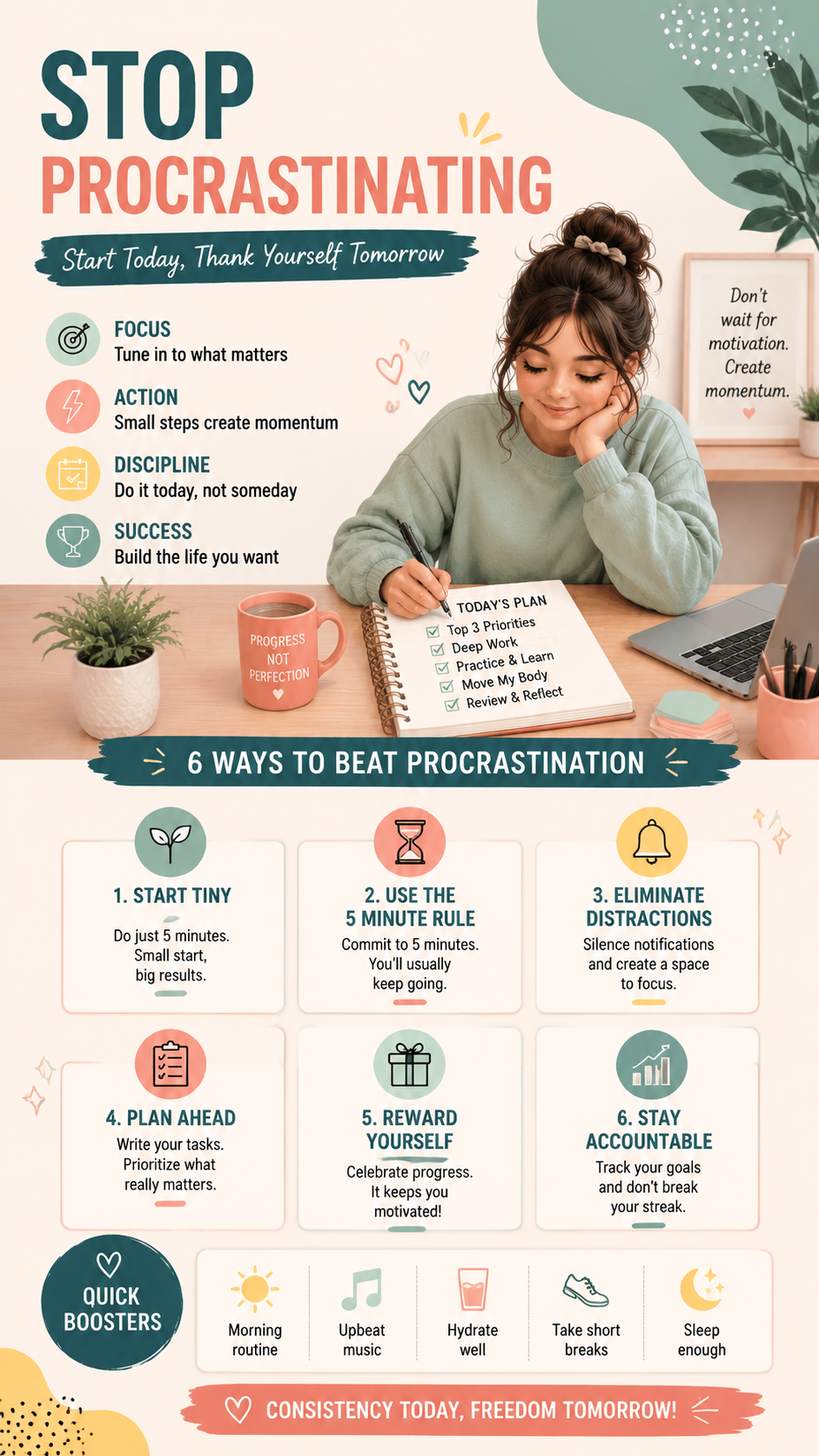
Procrastination is one of the biggest challenges students face when preparing for important exams, completing assignments, or building consistent study habits. Many learners have clear goals but struggle to take the first step because tasks feel overwhelming, distractions are everywhere, or perfectionism creates unnecessary pressure. The good news is that productivity does not require huge changes overnight. Small, intentional actions can create powerful results over time.
This guide explores practical ways to beat procrastination, improve study focus, and create a productive routine that supports academic success. Whether you are preparing for competitive exams like NEET, managing daily schoolwork, or trying to develop better learning habits, these strategies can help you move from delay to action.
Key Takeaways
- Start with small tasks to overcome the fear of beginning.
- Use simple productivity techniques like the 5-minute rule.
- Create a distraction-free study environment for better concentration.
- Plan your day with realistic goals and priorities.
- Build consistency instead of chasing perfection.
Understanding Why Students Procrastinate
Procrastination is not simply a problem of laziness. It is often connected to emotions, habits, and the way we approach difficult tasks. Students may postpone studying because they feel uncertain about where to begin, worry about failure, or believe they need perfect conditions before taking action.
When a large goal feels intimidating, the brain naturally looks for easier activities that provide quick comfort. Checking a phone, watching videos, or organizing notes endlessly can feel productive, but they may delay the actual work that creates progress.
Common Causes of Study Procrastination
- Fear of failure: Students may avoid starting because they worry their effort will not be good enough.
- Overthinking: Spending too much time planning without taking action can create unnecessary delays.
- Feeling overwhelmed: Large chapters or long study schedules can seem impossible without a clear plan.
- Perfectionism: Waiting for the perfect time or perfect strategy often prevents progress.
- Digital distractions: Notifications and entertainment apps can easily break concentration.
Important: The solution to procrastination is not waiting for motivation to appear. Action often creates motivation. Starting with a small step can build the confidence and energy needed to continue.
The Power of Starting Small
One of the most effective ways to overcome procrastination is to reduce the size of the first step. Instead of thinking about completing an entire chapter, focus on reading one page, solving one question, or studying for five minutes.
Small actions remove the mental pressure associated with difficult tasks. Once you begin, continuing often becomes easier because your brain shifts from resistance into focus mode.
Try the 5-Minute Rule
The 5-minute rule is a simple productivity method where you commit to working on a task for only five minutes. The goal is not to finish everything immediately. The goal is to create momentum.
- Open your textbook or study material.
- Set a timer for five minutes.
- Begin with the easiest part of the task.
- Continue if you feel focused after the timer ends.
This approach works especially well for exam preparation because it helps break large study goals into manageable pieces.
Create a Productive Study Environment
Your surroundings can influence your ability to focus. A clean and organized study space reduces distractions and helps your mind recognize that it is time to concentrate.
Simple Ways to Improve Your Study Space
- Keep only necessary books and materials on your desk.
- Place your phone away from your immediate reach.
- Prepare your study tools before starting.
- Use a planner or checklist to organize daily tasks.
- Create a comfortable environment that supports concentration.
A peaceful study area does not need to be complicated. Even small improvements can make it easier to stay focused and complete planned tasks.
Plan Your Day for Better Exam Productivity
Effective students understand that productivity comes from planning. A daily study plan provides direction and reduces the stress of deciding what to do next.
How to Build a Realistic Study Plan
- List all important tasks for the day.
- Select the most important topics first.
- Divide large tasks into smaller sections.
- Add short breaks between study sessions.
- Review completed tasks to track progress.
A good study plan should motivate you, not create additional pressure. Avoid filling every minute with work. Balance focused study sessions with proper rest to maintain energy.
Building Consistency Instead of Chasing Perfection
Many students delay their goals because they believe every study session must be perfect. However, progress comes from repeated effort, not flawless performance.
Studying for thirty focused minutes every day can create better results than studying for many hours once in a while. Consistency strengthens discipline and makes productive habits feel natural.
Important: Your goal is not to become productive for one day. Your goal is to create habits that support your future success. Small improvements repeated daily create meaningful academic growth.
Why This Matters
- Taking action reduces stress and builds confidence.
- A clear plan helps students stay focused during exam preparation.
- Small daily habits create long-term productivity.
Using Accountability and Rewards
Accountability can make it easier to stay committed to your goals. Sharing your study plans with a friend, mentor, or study partner creates a sense of responsibility and encourages consistency.
Rewarding yourself after completing tasks can also strengthen positive habits. Rewards do not need to be large. A short break, favorite activity, or moment of relaxation can help your brain associate progress with satisfaction.
Examples of Simple Rewards
- Taking a relaxing break after finishing a study session.
- Enjoying a favorite snack after completing goals.
- Tracking achievements in a study journal.
- Celebrating weekly progress.
Quick Ways to Beat Procrastination Every Day
Developing better study habits does not require a complete lifestyle change. Focus on simple actions that you can repeat daily.
- Write tomorrow’s tasks before going to sleep.
- Start difficult work early when your energy is higher.
- Remove unnecessary notifications during study time.
- Track your progress instead of comparing yourself with others.
- Remember your reason for studying.
At a Glance
- Begin with small actions.
- Use simple study planning techniques.
- Protect your focus from distractions.
- Stay consistent with daily progress.
Conclusion: Take the First Step Today
Beating procrastination is not about becoming perfect overnight. It is about learning how to take action even when a task feels difficult. Every study session, every completed checklist item, and every small improvement moves you closer to your goals.
Whether you are preparing for NEET, school exams, or personal learning goals, remember that progress begins with a single step. Create a simple plan, focus on consistency, and give yourself the opportunity to improve every day.
Start small today, build productive habits, and create the future you want through focused action.
Tags
Beat Procrastination
Study Productivity
NEET Preparation
Exam Study Tips
Study Planner
Time Management
Student Motivation