How to Clean Blinds Without Removing Them Easy Dust-Free Cleaning Hack
Dusty blinds can make an otherwise clean room feel neglected, but cleaning them does not have to involve taking them down, soaking them in a bathtub, or spending hours wiping every slat. With a simple microfiber sock, a gentle cleaning solution, and a few minutes of effort, you can remove everyday dust and refresh your window coverings right where they hang. This easy method is practical, affordable, and especially helpful for busy households that want cleaner windows without adding another complicated chore to the routine.
Whether you have horizontal blinds in your living room, bedroom, kitchen, or home office, learning how to clean blinds without removing them can save time and make regular dusting much easier. The secret is to work systematically, clean both sides of each slat, and use the right amount of moisture for your blind material.
Key Takeaways
- Use a clean microfiber sock to remove dust from individual blind slats.
- Close the blinds fully before cleaning so the slats line up in one direction.
- Turn the blinds the opposite way to clean the other side.
- Use a gentle, material-appropriate cleaning solution only when necessary.
- Avoid soaking blinds, especially wooden and delicate fabric varieties.
- Dust blinds regularly to prevent stubborn buildup and make cleaning faster.
Why Clean Blinds Without Removing Them?
Blinds collect dust gradually as air circulates throughout your home. Open windows, household fabrics, cooking activities, and everyday movement can all contribute to the particles that settle on horizontal slats. Because blinds contain multiple narrow surfaces, dust can accumulate in places that are easy to overlook during regular cleaning.
Removing blinds for a deep clean can be inconvenient. You may need to release brackets, handle long or delicate pieces, and reinstall everything afterward. In many situations, this extra work is unnecessary. Routine maintenance can remove loose dust and light surface grime while the blinds remain attached to the window.
The Benefits of This Simple Cleaning Hack
- Saves time: You can clean the blinds in place without dismantling the window covering.
- Uses inexpensive supplies: A microfiber sock and a suitable cleaning solution are often all you need.
- Reduces mess: There is no need to carry dusty blinds through the house or fill a bathtub.
- Reaches narrow surfaces: A sock-covered hand can glide along individual slats more easily than a large cloth.
- Supports regular maintenance: A quick dusting session helps prevent heavy buildup.
Another advantage is that this method is easy to adapt. You can dry-dust blinds that only have a light coating of dust or use a slightly damp microfiber sock when the material and manufacturer’s instructions permit it.
What You Need to Clean Blinds Without Removing Them
One of the best things about this blind-cleaning method is that it requires very few supplies. Before starting, gather your materials so you can work from top to bottom without stopping to search for something you need.
1. A Clean Microfiber Sock
A microfiber sock is the main tool in this cleaning hack. Its soft fibers help capture dust rather than simply pushing it across the surface. Slipping the sock over your hand also gives you better control when wiping narrow slats.
Choose a clean sock that has not been treated with fabric softener, which can leave residue on microfiber and reduce its effectiveness. A dry sock is ideal for ordinary dusting, while a slightly damp one may help remove light marks from compatible surfaces.
2. A Spray Bottle
A spray bottle allows you to control the amount of cleaning solution you use. This is important because excess moisture can leave streaks, drip onto the window frame, or damage materials that are sensitive to water.
You do not need to spray the blinds heavily. For most routine cleaning, dry microfiber is a good starting point. If additional cleaning is needed, lightly dampen the sock or use a small amount of an appropriate cleaner.
3. A Gentle Cleaning Solution
For suitable nonporous blinds, a small amount of mild dish soap diluted in water can help remove light surface grime. Follow the manufacturer’s care instructions and test any solution on a discreet area first.
A vinegar-and-water mixture is sometimes used for compatible surfaces, but it is not appropriate for every type of blind. Avoid using vinegar on natural stone surfaces nearby, and keep acidic cleaners away from materials or finishes that may react to them.
Pro Tip: Start with a dry microfiber sock before reaching for a cleaning spray. Removing loose dust first helps prevent it from mixing with moisture and forming streaky residue. Always check the manufacturer’s care instructions before applying liquid to your blinds.
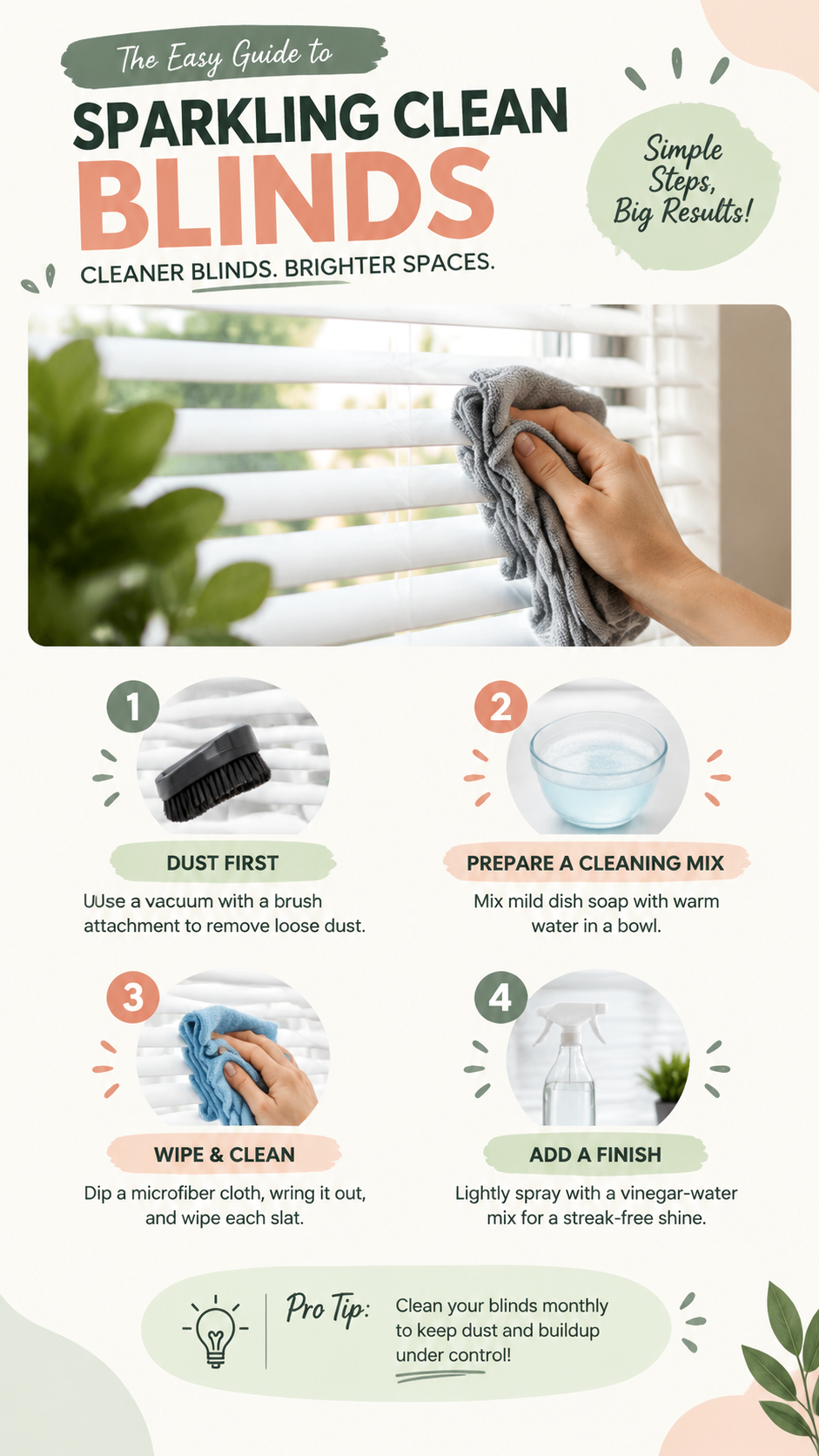
How to Clean Blinds Without Removing Them: 4 Easy Steps
Once your supplies are ready, follow these four simple steps to clean horizontal blinds while they remain attached to the window. Work carefully and avoid pulling on the slats or cords.
Step 1: Close the Blinds Fully
Begin by adjusting the blinds until the slats are closed and facing the same direction. This creates a more consistent surface and makes it easier to wipe across each slat without missing narrow gaps.
If your blinds have a tilt wand or another adjustment mechanism, use it gently. Do not force the slats into position if they appear stuck or misaligned.
Before cleaning, check the window area for loose dust, cobwebs, or debris. You can use a soft brush attachment on a vacuum cleaner to remove dust from the surrounding sill and frame.
Step 2: Slip on the Microfiber Sock and Wipe Each Slat
Place the clean microfiber sock over your hand. Starting near the top of the blinds, gently wipe along each slat, moving from one end to the other. Use steady strokes instead of scrubbing aggressively.
For wider slats, you can carefully hold the slat between your sock-covered fingers and thumb to clean its accessible surfaces. Avoid squeezing too tightly, as thin aluminum and other delicate materials can bend under pressure.
Work downward one slat at a time. This organized approach helps you remember which areas you have already cleaned and prevents dust from being transferred repeatedly between surfaces.
How to Remove Dust More Effectively
- Use a clean section of the sock as dust accumulates.
- Keep your strokes gentle and consistent.
- Support delicate slats rather than pulling on them.
- Pause to shake out or replace the sock if it becomes heavily dusty.
For blinds with thick dust buildup, consider vacuuming first with a soft brush attachment on a low setting, if the blind material permits it. This can reduce the amount of dust that the sock needs to collect.
Step 3: Turn the Blinds and Repeat
After cleaning the first accessible side, rotate the slats in the opposite direction. Repeat the same gentle wiping process to remove dust from the other side.
This step matters because dust can settle on both surfaces, even when the blinds are usually left in one position. Cleaning only the visible side may leave the back covered with particles that become noticeable when sunlight shines through the window.
Pay attention to the edges of each slat, where dust may collect. If the blinds have cords, ladders, or other supporting components, wipe around them carefully without tugging or soaking them.
Why This Matters
Dusting both sides of the slats provides a more thorough clean and helps keep particles from becoming visible again as soon as you adjust the blinds. A top-to-bottom routine also makes regular maintenance easier because you can follow the same sequence every time.
Step 4: Use a Suitable Cleaner for Extra Freshness
If the blinds have light fingerprints or surface marks that dry dusting cannot remove, you may need a little moisture. First, confirm that the blind material can safely tolerate the cleaner you plan to use.
For compatible metal, vinyl, or plastic blinds, lightly dampen the microfiber sock with a mild cleaning solution. Wring it out well so it feels barely damp rather than wet. Wipe the affected areas gently, then follow the product instructions for any rinsing or drying requirements.
It is generally better to apply the solution to the cloth rather than spraying directly onto the blinds. This gives you more control over moisture and helps prevent liquid from reaching cords, mechanisms, window frames, or nearby furnishings.
Allow the slats to dry completely before closing them tightly or adjusting the blinds again. This helps prevent moisture from becoming trapped between surfaces.
How to Clean Different Types of Blinds Safely
Although the microfiber sock method is convenient, not all blinds can be cleaned in exactly the same way. The material determines whether dry dusting, a damp cloth, or a specialized cleaner is most appropriate.
Aluminum Blinds
Aluminum blinds are generally suitable for gentle dusting with a microfiber sock. For light grime, use a barely damp cloth and a mild cleaner approved for the finish. Support the slats while wiping because thin aluminum can bend easily.
Avoid abrasive scrubbers and harsh chemicals that could scratch the surface or damage its coating.
Vinyl and Faux Wood Blinds
Many vinyl and faux wood blinds can tolerate gentle wiping with a slightly damp microfiber cloth. Remove loose dust first, then use a mild solution if needed. Dry the slats afterward to prevent water spots and residue.
Check the care guidance for your particular product, especially if the slats have a textured surface, decorative finish, or special coating.
Real Wood Blinds
Natural wood blinds require more care because excess moisture can cause swelling, warping, or finish damage. Use a dry microfiber sock or a soft dusting cloth for routine cleaning. If the manufacturer allows a wood-safe cleaner, apply it sparingly according to the product directions.
Avoid spraying water or vinegar directly onto real wood slats. Never leave them wet, and do not assume that a cleaner suitable for vinyl will also be safe for wood.
Fabric Blinds and Cellular Shades
Fabric blinds and cellular shades may trap dust in folds or pockets, but they can also be damaged by rubbing or excessive moisture. Use a soft brush attachment or a gentle dry-dusting method approved by the manufacturer.
For stains, follow the care label or seek professional cleaning advice if necessary. Avoid soaking fabric and cellular structures, as moisture can leave marks or affect their shape.
Important: Identify your blind material before using a spray bottle. A dry microfiber sock is the safest starting point for many routine dusting jobs, but the appropriate method depends on the material, finish, and manufacturer’s care instructions.
Common Blind-Cleaning Mistakes to Avoid
Even a simple cleaning method can cause problems if you use too much pressure, the wrong solution, or an unsuitable tool. Avoid these common mistakes to protect your blinds and get better results.
Using Too Much Water
Excess moisture can leave streaks and drip into cords, rails, or window frames. It can also damage wood and certain fabric materials. Use a barely damp cloth only when appropriate, and dry the slats as recommended.
Cleaning with a Dirty Sock
A sock already covered in lint, oils, or cleaning residue may spread grime instead of collecting it. Always start with a clean microfiber sock and change or rinse it when necessary. If you wash microfiber separately, follow the care instructions and avoid fabric softener when possible.
Scrubbing or Bending the Slats
Thin slats can bend out of shape when handled too firmly. Wipe with light pressure and avoid twisting the slats while cleaning. If a section is difficult to reach, use a soft blind-cleaning tool rather than forcing your hand into a narrow space.
Spraying Cleaner Without Testing It
Household cleaners are not interchangeable. Some may discolor painted surfaces, dull protective finishes, or damage natural materials. Test a suitable product on a small, inconspicuous area and allow the area to dry before treating the rest of the blind.
Forgetting the Window Sill and Headrail
Dust on the headrail and windowsill can settle onto freshly cleaned slats. Finish by wiping the sill and accessible frame surfaces with an appropriate cloth. Use a soft brush or vacuum attachment to remove loose debris from areas that are difficult to reach.
How Often Should You Clean Your Blinds?
The ideal cleaning schedule depends on how quickly dust accumulates in your home. Blinds in frequently used rooms may need attention more often than those in guest rooms or less-used spaces.
- Weekly or every two weeks: Lightly dust blinds in areas where dust builds up quickly.
- Monthly: Give regularly used blinds a more thorough cleaning, including both sides of the slats.
- As needed: Spot-clean fingerprints, splashes, or other marks using a suitable method.
- Seasonally: Inspect the headrail, cords, window frames, and surrounding areas for accumulated dust.
These are flexible guidelines rather than strict rules. If your blinds remain relatively clean, a quick dusting may be enough. If they are near a busy road, open window, or kitchen, you may need to clean them more frequently.
Regular maintenance is usually easier than waiting until the slats develop a thick layer of dust. A few minutes spent wiping them can help keep your window coverings looking neat without turning the task into a major cleaning project.
Extra Tips for Faster, Easier Blind Cleaning
Work from Top to Bottom
Always start at the top of the blinds and work downward. This keeps your cleaning routine organized and helps you avoid brushing dust onto slats you have already finished.
Keep a Small Cleaning Kit Ready
Store a clean microfiber sock, a soft brush, and a suitable cleaner together so you can quickly tackle dusty blinds when you notice buildup. Keeping your tools accessible makes it easier to maintain a consistent cleaning routine.
Clean on a Regular Schedule
Add blind dusting to an existing weekly or monthly cleaning routine. You could clean the blinds when you wipe windowsills, vacuum a room, or refresh other surfaces. Pairing related tasks makes the process easier to remember.
Choose a Time with Good Lighting
Natural light can make dust and streaks easier to spot. Open the curtains or work during daylight so you can see which slats need extra attention. Avoid direct sunlight when using a cleaning solution if the product instructions warn against it, because rapid drying can sometimes leave marks.
At a Glance: The Easy Blind-Cleaning Method
Quick Points
- Prepare: Gather a clean microfiber sock and suitable cleaning supplies.
- Close: Align the blinds so the slats face the same direction.
- Wipe: Dust each slat gently from top to bottom.
- Flip: Turn the slats and clean the opposite side.
- Finish: Spot-clean only when needed, then let compatible damp-cleaned surfaces dry fully.
Frequently Asked Questions
Can I Clean Blinds with Just a Microfiber Sock?
Yes. For ordinary dust, a clean, dry microfiber sock is often sufficient. Its fibers help collect loose particles while allowing you to reach each slat with your hand. If grime remains, use a suitable cleaner only after checking the blind material and care instructions.
Should I Spray Vinegar and Water Directly on Blinds?
It is better to avoid spraying a homemade solution directly onto blinds. Vinegar may be unsuitable for certain finishes and materials, including natural wood. For compatible surfaces, follow the manufacturer’s guidance and apply a small amount of an approved solution to a cloth rather than saturating the slats.
How Do I Remove Stubborn Dirt from Blinds?
Start by removing loose dust. Then use a mild cleaner approved for the blind material and gently wipe the affected area with a barely damp microfiber cloth. Test the cleaner first, avoid abrasive tools, and follow any rinsing or drying instructions. For delicate or heavily stained blinds, professional cleaning may be the safest option.
Can I Use This Method on Vertical Blinds?
The microfiber sock technique can be adapted to some vertical blinds, but the approach depends on their material and construction. Support each vane while wiping gently, and avoid pulling on the attachment points. Fabric vanes may require dry cleaning methods, while other materials may tolerate a slightly damp cloth.
How Can I Keep Blinds from Getting Dusty So Quickly?
Dust accumulation cannot be eliminated entirely, but regular light dusting helps keep it manageable. Clean nearby windowsills, vacuum the surrounding area, and address dust on other surfaces as part of your normal routine. Keeping windows closed when outdoor conditions are especially dusty may also help in some homes.
Conclusion: Keep Your Blinds Clean with Less Effort
Learning how to clean blinds without removing them is a simple way to make everyday home maintenance less time-consuming. With a clean microfiber sock, gentle wiping motions, and a suitable cleaning solution when necessary, you can remove everyday dust while leaving your blinds securely in place.
Remember the four essential steps: close the blinds, wipe each slat, turn them to clean the other side, and use an appropriate cleaner only when extra attention is needed. Take care to match your cleaning method to the blind material, particularly when dealing with real wood, fabric, or delicate finishes.
You do not need an elaborate collection of cleaning products or an entire afternoon to keep your window coverings looking fresh. A little regular attention can prevent heavy dust buildup and make each cleaning session easier. Try this practical blind-cleaning hack during your next home refresh, and save the steps so you can use them whenever your windows need a quick tidy-up.
Tags
How to Clean Blinds
Blind Cleaning Tips
Microfiber Sock Cleaning Hack
Dust Removal
Easy Home Cleaning
Window Cleaning Tips
Home Cleaning Hacks
Cleaning Routine