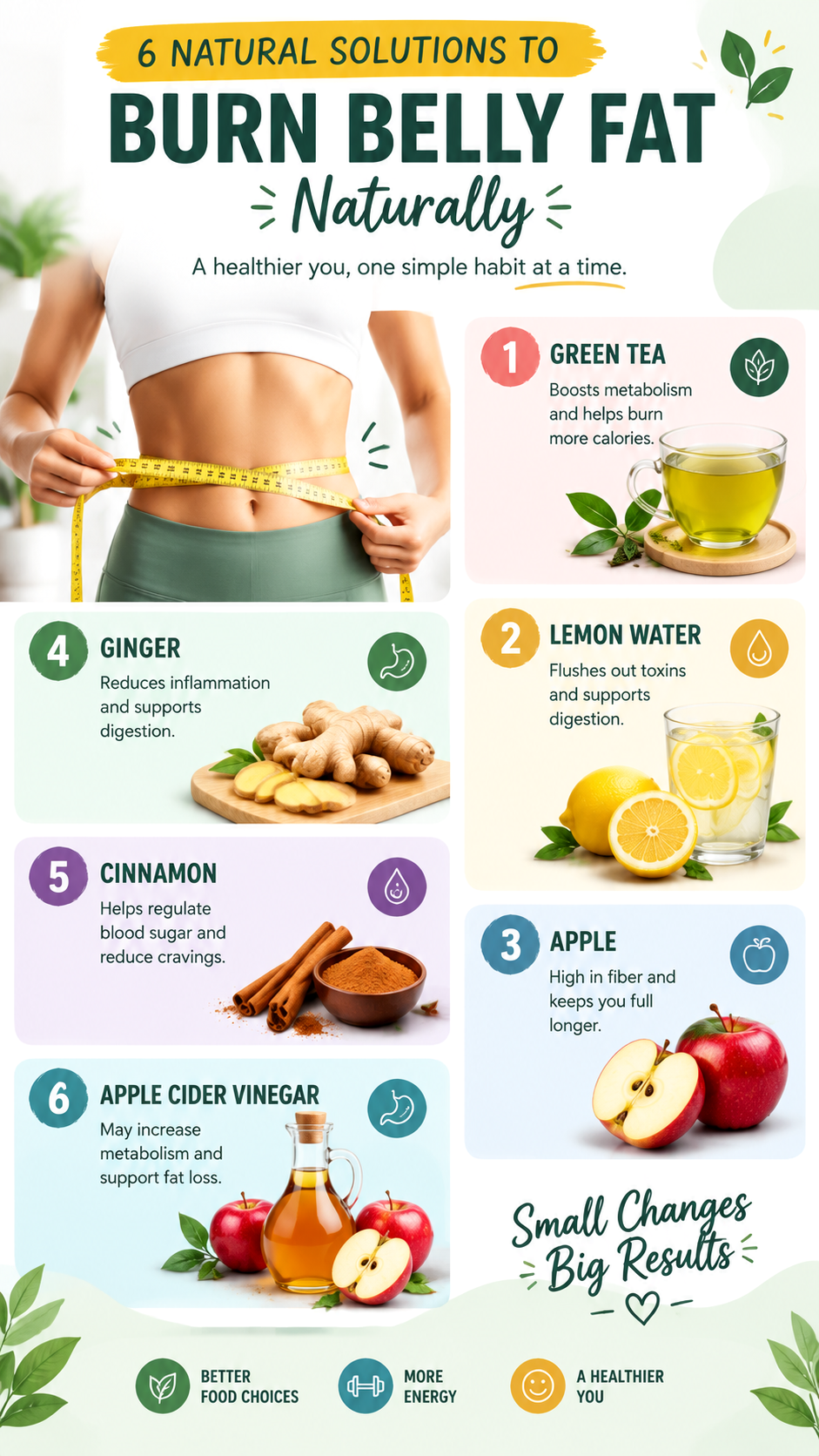
How to Reduce Belly Fat Naturally 5 Healthy Foods and Drinks to Try
Looking for natural ways to support belly fat loss without following complicated diets or restrictive routines? Small, consistent lifestyle changes can make a meaningful difference to your overall health and weight management goals. From refreshing lemon water and soothing ginger tea to antioxidant-rich green tea and fiber-packed apples, simple everyday choices can help you build healthier habits that last.
However, it is important to understand that no single food or drink can specifically burn belly fat. Lasting results come from combining balanced nutrition, regular physical activity, sufficient sleep, stress management, and realistic expectations. The good news is that these habits do not need to feel overwhelming. With a few practical adjustments, you can create a routine that supports digestion, helps manage hunger, and encourages gradual, sustainable progress.
Key Takeaways
- Focus on overall body fat reduction rather than trying to target belly fat alone.
- Choose water, lemon water, unsweetened green tea, or ginger tea as alternatives to sugary drinks.
- Eat fiber-rich foods such as apples to support fullness and regular digestion.
- Combine balanced meals with strength training, walking, and other enjoyable physical activities.
- Understand that bloating and abdominal fat are different issues that require different approaches.
- Build sustainable habits instead of relying on quick fixes or unproven fat-burning claims.
Can You Reduce Belly Fat Naturally?
Yes, you can reduce belly fat naturally by adopting habits that help your body use energy efficiently and maintain a healthy weight. Abdominal fat is influenced by several factors, including genetics, age, hormones, activity levels, dietary patterns, sleep, and stress.
There are two main types of abdominal fat. Subcutaneous fat sits beneath the skin and is the softer layer you can pinch around your waist. Visceral fat is located deeper inside the abdomen, surrounding internal organs. Excess visceral fat is associated with increased risks of conditions such as type 2 diabetes and cardiovascular disease.
Although exercises and foods cannot selectively remove fat from your stomach, losing overall body fat can help reduce waist circumference over time. The process is gradual, and results vary from person to person.
Important: Be cautious of claims that a particular drink melts belly fat overnight. Lemon water, ginger tea, green tea, and apples can fit into a healthy weight management plan, but none can independently eliminate abdominal fat. Your overall eating pattern and daily habits matter much more than any single ingredient.
1. Lemon Water: A Refreshing Start to Your Day
Lemon water is one of the simplest drinks to include in a healthy morning routine. Made by adding fresh lemon juice to plain water, it provides a light citrus flavor that can make staying hydrated more enjoyable.
While lemon water is not a direct fat-burning drink, it can support weight management when it replaces higher-calorie beverages such as sweetened coffee drinks, soft drinks, or packaged juices.
Potential Benefits of Lemon Water
- Supports hydration: Drinking enough water helps maintain normal bodily functions and can support digestion.
- Provides some vitamin C: Fresh lemon juice contains vitamin C, although the amount depends on how much juice you use.
- Offers a low-calorie alternative: Unsweetened lemon water can replace sugary beverages without adding substantial calories.
- Makes drinking water more appealing: A pleasant flavor may help people who struggle to drink plain water consistently.
How to Prepare Lemon Water
- Fill a glass with cool or warm drinking water.
- Squeeze in a small amount of fresh lemon juice.
- Stir gently and add a slice of lemon if desired.
- Drink it alongside breakfast or whenever you want a refreshing beverage.
You do not need to drink lemon water on an empty stomach to receive its hydration benefits. Choose a temperature and time that suit your preferences.
Pro Tip: Skip the added sugar or honey if your goal is to reduce unnecessary calories. Lemon juice is acidic, so frequent exposure may affect tooth enamel. Consider drinking it with a meal, avoiding prolonged sipping, and rinsing your mouth with plain water afterward.
2. Ginger Tea: A Warming Drink for Your Wellness Routine
Ginger tea is a comforting drink made by steeping fresh ginger in hot water. Its distinctive flavor and warming aroma make it a popular choice for people looking to add variety to their daily beverage routine.
Ginger contains naturally occurring compounds, including gingerols, that have been studied for their potential biological effects. Ginger may help relieve certain types of nausea, and some research has explored its relationship with digestion and metabolic health. However, the evidence does not establish ginger tea as a reliable belly fat treatment.
Why Consider Ginger Tea?
- A soothing beverage: A warm cup can be a relaxing part of a morning or evening routine.
- May help with nausea: Ginger has evidence supporting its use for certain forms of nausea, although effects vary by situation.
- May support digestive comfort: Some people find ginger tea soothing, but persistent bloating or abdominal pain needs appropriate evaluation.
- Can replace sugary drinks: Unsweetened ginger tea provides flavor without the added calories of many sweetened beverages.
Easy Homemade Ginger Tea Recipe
Ingredients
- 1 to 2 inches of fresh ginger root
- 2 cups of water
- A small squeeze of lemon, optional
- A little honey, optional
Instructions
- Wash the ginger and slice it thinly.
- Bring the water to a gentle boil.
- Add the ginger and simmer for approximately 5 to 10 minutes.
- Strain into a mug and allow it to cool slightly.
- Add lemon if desired and enjoy.
Start with a mild infusion if you are new to ginger tea. Large amounts of ginger may cause heartburn, stomach discomfort, or irritation in some people. If you take blood-thinning medication or have a condition that affects bleeding, ask a healthcare professional before using concentrated ginger supplements.
3. Green Tea: A Simple Addition to Healthy Weight Management
Green tea is well known for its fresh taste and naturally occurring plant compounds. It contains catechins, a group of antioxidants, and usually contains caffeine unless it is decaffeinated.
Some research suggests that green tea compounds may have modest effects on energy expenditure and fat metabolism. However, these effects are generally small and do not guarantee meaningful weight loss. Green tea should be viewed as an optional part of a healthy routine rather than a treatment for stubborn belly fat.
Potential Advantages of Green Tea
- Contains antioxidants: Green tea provides catechins and other plant compounds.
- Offers a low-calorie drink option: Unsweetened green tea can add flavor and variety without substantial calories.
- Contains caffeine: Caffeine may temporarily increase alertness and energy expenditure in some people.
- Can support healthy routines: Replacing sweetened beverages with plain green tea may help reduce overall calorie intake.
How to Make Green Tea at Home
- Heat a cup of water until hot but not aggressively boiling.
- Add one green tea bag or the recommended amount of loose-leaf tea.
- Steep according to the package directions, usually for a few minutes.
- Remove the tea leaves or bag and allow the drink to cool slightly.
- Enjoy it plain or add a slice of lemon.
Green tea can taste bitter if steeped for too long or prepared with excessively hot water. Follow the instructions on your tea packaging to achieve a smoother flavor.
When Should You Drink Green Tea?
There is no proven best time to drink green tea for belly fat loss. Enjoy it in the morning or early afternoon if you tolerate caffeine well. If caffeine affects your sleep, choose decaffeinated green tea or avoid it later in the day.
Concentrated green tea extracts are different from an ordinary cup of brewed tea. High-dose extracts have been associated with rare cases of liver injury, so they should not be treated as harmless weight loss shortcuts.
Expert Insight: Drinks Work Best as Part of a Bigger Plan
Lemon water, ginger tea, and green tea can make healthy eating feel easier, but their main value often comes from how they fit into your overall routine.
- Choose unsweetened drinks more often than sugar-sweetened beverages.
- Drink water regularly throughout the day, guided by thirst and your individual needs.
- Prioritize balanced meals, movement, and sufficient sleep for more meaningful long-term results.
4. Apples: A Fiber-Rich Snack That Helps You Feel Satisfied
Apples are a practical addition to a balanced eating plan because they provide dietary fiber, water, and naturally occurring carbohydrates. They are easy to carry, require little preparation, and can be enjoyed at breakfast, as a snack, or alongside a meal.
Unlike drinks marketed as fat burners, apples provide solid nutritional value. Their fiber and water content can contribute to fullness, helping you feel satisfied between meals. This may make it easier to manage portions and avoid frequent, unplanned snacking.
How Apples Support Healthy Eating
- Provide dietary fiber: Fiber supports normal digestive function and can help with feelings of fullness.
- Contain water: Their water content contributes to hydration and makes them a satisfying snack.
- Offer natural sweetness: Apples can satisfy a desire for something sweet while providing nutrients.
- Are easy to portion: A whole apple is a convenient snack that requires minimal preparation.
- Contain beneficial plant compounds: Apples provide polyphenols and other naturally occurring compounds.
Healthy Ways to Eat Apples
Apple and Nut Butter
Slice an apple and serve it with a small portion of peanut or almond butter. This combination adds protein and unsaturated fats, making it a more substantial snack.
Apple and Yogurt Bowl
Combine chopped apple with plain yogurt, cinnamon, and a few nuts or seeds. This option provides a mix of fiber, protein, and texture that works well for breakfast or an afternoon snack.
Fresh Apple Salad
Add thin apple slices to a salad with leafy greens, cucumber, beans, and a simple olive oil dressing. The natural sweetness can balance savory ingredients and make vegetables more appealing.
Whenever possible, eat the whole fruit instead of relying on apple juice. Whole apples generally provide more fiber and are often more filling than juice.
5. Understanding Stubborn Belly Fat
Abdominal fat can be frustrating because the body does not lose fat evenly from every area. Even when your overall weight begins to change, your waist may respond more slowly than other parts of your body.
This is normal. Where your body stores fat and where it loses it first are influenced partly by genetics, hormones, age, and other individual factors. Abdominal exercises can strengthen the muscles in your midsection, but they cannot selectively burn the fat covering those muscles.
Healthy Strategies for Reducing Abdominal Fat
- Build balanced meals: Include vegetables, fruit, whole grains, protein sources, and healthy fats.
- Watch liquid calories: Reduce frequent consumption of sugary drinks, sweetened coffees, and high-calorie beverages.
- Increase daily movement: Walking, cycling, dancing, swimming, and other enjoyable activities can help.
- Include strength training: Resistance exercises help maintain or build muscle and support physical function.
- Get sufficient sleep: Consistent, restorative sleep supports appetite regulation and overall health.
- Manage stress: Relaxation, social connection, and realistic schedules may help reduce stress-related eating patterns.
Extreme diets and aggressive calorie restriction are rarely sustainable. A gradual approach that preserves muscle, supports adequate nutrition, and fits your daily life is generally more practical than chasing rapid changes on the scale.
6. Belly Fat vs. Bloating: Know the Difference
A rounded or swollen abdomen does not always mean you have gained body fat. Bloating can make your stomach feel tight, full, or uncomfortable, and its appearance may change throughout the day.
Abdominal fat develops over time, whereas bloating may fluctuate within hours. Common contributors to bloating include gas, constipation, certain foods, eating quickly, food intolerances, and digestive conditions.
Practical Ways to Support Digestive Comfort
- Eat slowly and chew food thoroughly.
- Drink water regularly throughout the day.
- Increase fiber gradually rather than making sudden, large changes.
- Take a gentle walk after meals if comfortable.
- Notice whether specific foods repeatedly trigger symptoms.
- Maintain regular bathroom habits and avoid ignoring the urge to have a bowel movement.
Ginger tea may feel soothing for some people, but persistent bloating should not automatically be treated with herbal drinks or restrictive diets.
Important: Seek medical advice if bloating is persistent, worsening, or accompanied by unexplained weight loss, blood in your stool, ongoing vomiting, or significant abdominal pain. Sudden severe abdominal pain requires urgent medical assessment.
7. Build a Simple Daily Routine for Healthy Weight Management
You do not need to drink every wellness beverage or follow a complicated schedule to make progress. A simple routine built around regular meals, hydration, movement, and rest is easier to maintain over time.
Morning: Start with Hydration and a Balanced Breakfast
Begin your day with a glass of water or unsweetened lemon water. Then enjoy a balanced breakfast that includes protein and fiber, such as eggs with whole-grain toast, oatmeal with fruit and yogurt, or plain yogurt with apples and nuts.
A nutritious breakfast can help you meet your daily nutritional needs. There is no requirement to skip breakfast or consume a special drink to activate fat burning.
Afternoon: Choose Satisfying Meals and Stay Active
Build lunch around vegetables, a protein source such as beans, fish, chicken, eggs, or tofu, and a suitable portion of whole grains or other carbohydrate-rich foods.
If you want a snack, try an apple, a handful of nuts, or yogurt. Take short movement breaks during the day and look for opportunities to walk instead of sitting for long periods without interruption.
Evening: Keep Your Routine Comfortable
Enjoy a balanced dinner that leaves you comfortably satisfied. If you like herbal beverages, a cup of ginger tea may be a pleasant option. Avoid drinking caffeinated green tea close to bedtime if it disrupts your sleep.
Try to keep a consistent sleep schedule and allow enough time to unwind. Small routines, repeated regularly, are more useful than attempting to make every health decision perfectly.
8. A Practical Seven-Day Healthy Habit Plan
If you are unsure where to begin, use the following seven-day plan to introduce a few manageable changes. It is a flexible starting point, not a strict diet or a promise of a specific amount of weight loss.
Day 1: Improve Hydration
Keep water within easy reach and replace one sugary beverage with water or unsweetened lemon water.
Day 2: Add a Fiber-Rich Food
Include an apple, pear, serving of beans, or another fiber-rich food in your meals. Increase fiber gradually and drink enough fluids to support normal digestion.
Day 3: Take a Walk
Schedule a comfortable walk that suits your current fitness level. Even short periods of movement can help you build consistency.
Day 4: Try an Unsweetened Tea
Enjoy green tea or ginger tea if you like it. Focus on flavor and enjoyment rather than expecting the drink to produce immediate fat loss.
Day 5: Review Your Meals
Check whether your meals contain a useful balance of vegetables, protein, fiber-rich carbohydrates, and healthy fats. Make one practical adjustment rather than changing everything at once.
Day 6: Add Strength or Mobility Exercises
Try beginner-friendly bodyweight exercises, gentle stretching, or another suitable activity. If you are new to exercise or have a health condition, adapt the activity to your abilities.
Day 7: Reflect and Plan Ahead
Think about which changes felt easy, which improved your energy or comfort, and what you would like to continue. Choose two or three habits to carry into the next week.
Remember that meaningful changes in body composition take time. The purpose of this plan is to establish repeatable habits, not to force a dramatic transformation in seven days.
9. Common Mistakes to Avoid When Trying to Lose Belly Fat
Many people struggle because they focus on quick fixes rather than habits that support long-term health. Avoiding a few common mistakes can make your approach more realistic and less stressful.
Relying on Fat-Burning Drinks
No tea, juice, or infused water can compensate for an overall eating pattern that consistently provides more energy than your body needs. Enjoy these drinks for hydration and taste, not as substitutes for balanced meals or evidence-based care.
Following Extremely Restrictive Diets
Severely limiting food can leave you hungry, tired, and short of important nutrients. A more flexible approach that includes foods you enjoy is often easier to maintain.
Expecting Spot Reduction
Crunches and abdominal exercises can strengthen your core, improve stability, and support physical function. However, they do not specifically remove fat from the stomach. Combine strength exercises with whole-body movement and balanced nutrition instead.
Ignoring Sleep and Stress
Food choices are only one part of weight management. Inadequate sleep and ongoing stress can influence appetite, energy, and daily routines. Making time for rest and recovery is a worthwhile part of a healthy lifestyle.
Judging Progress by One Measurement
Body weight naturally fluctuates with hydration, digestion, hormonal changes, and other factors. If monitoring your progress is helpful, consider broader indicators such as energy, fitness, sleep quality, clothing comfort, and changes in waist measurement over time. Avoid frequent checking if it creates anxiety or an unhealthy focus on your appearance.
10. Frequently Asked Questions About Natural Belly Fat Loss
Does Lemon Water Burn Belly Fat?
No. Lemon water does not directly burn belly fat. It can support hydration and may help with weight management when it replaces sugary drinks, but its benefits depend on your overall lifestyle.
Can Ginger Tea Reduce Abdominal Fat?
Ginger tea is a flavorful, low-calorie drink that may be soothing for some people. Research has explored ginger and metabolic health, but ginger tea has not been established as an effective treatment for abdominal fat.
Is Green Tea Good for Weight Management?
Green tea contains antioxidants and caffeine, and some studies suggest modest effects on energy expenditure. However, the effects on body weight are limited and inconsistent. Unsweetened green tea can be a useful beverage choice, but it is not a substitute for balanced nutrition and physical activity.
Are Apples Helpful for Weight Loss?
Apples can fit well into a weight management plan because they provide fiber, water, and natural sweetness. They may help you feel satisfied, especially when eaten whole and paired with other nutritious foods. No individual fruit guarantees weight loss.
How Long Does It Take to Lose Belly Fat?
The timeline varies according to starting body composition, genetics, age, activity levels, nutrition, sleep, and other factors. Gradual progress over weeks and months is more realistic than expecting a major change overnight. Some people notice changes in their habits or fitness before seeing visible differences around the waist.
Can I Drink These Beverages Every Day?
Many healthy adults can enjoy moderate amounts of lemon water, ginger tea, or green tea as part of a varied diet. Individual needs differ, especially for people who are sensitive to caffeine, experience acid reflux, take certain medications, or have relevant medical conditions. Water should remain a primary source of hydration.
Quick Points: Natural Ways to Support a Healthy Waistline
- Lemon water: A refreshing way to make hydration more enjoyable.
- Ginger tea: A soothing, low-calorie beverage that may support digestive comfort.
- Green tea: A source of plant compounds that can replace sugary drinks.
- Apples: A convenient source of fiber and water that can help with fullness.
- Daily habits: Balanced meals, regular movement, quality sleep, and consistency matter most.
Conclusion: Small Healthy Habits Can Lead to Lasting Progress
Reducing belly fat naturally is not about discovering one magical ingredient or following a perfect daily routine. It is about building a collection of healthy habits that support your body over time. Lemon water can make hydration more appealing, ginger tea can provide a comforting beverage, green tea offers beneficial plant compounds, and apples deliver fiber and natural sweetness.
These foods and drinks are useful additions to a balanced lifestyle, but they are not shortcuts to targeted fat loss. For more meaningful results, combine nutritious meals with regular physical activity, strength training, adequate sleep, and practical stress management.
Start with one or two changes that feel manageable. Replace a sugary drink with water, add an apple to your afternoon snack, prepare a cup of unsweetened tea, or take a short walk after dinner. As these choices become part of your routine, build on them at a pace that feels sustainable.
The most effective approach is the one you can maintain. Focus on feeling stronger, improving your overall health, and making progress without unrealistic promises. With patience and consistency, small everyday choices can help you move toward healthier long-term habits.
Tags
Natural Weight Management
Belly Fat Reduction
Healthy Eating
Lemon Water Benefits
Ginger Tea
Green Tea Benefits
Fiber-Rich Foods
Healthy Lifestyle Habits