DIY Hand Care Routine 6 Steps to Soft, Smooth Glowing Hands at Home
Soft, smooth, glowing hands do not require an expensive spa appointment or a complicated skincare routine. With a few simple ingredients and consistent care, you can turn everyday hand care into a relaxing self-care ritual at home. From soaking your hands in warm water to gently exfoliating, applying a nourishing mask, moisturizing, and massaging your fingers, each step helps support healthier-looking skin and more comfortable hands.
Our hands work hard every day. Frequent washing, household chores, changing weather, and exposure to dry air can leave the skin feeling rough, tight, or dehydrated. Fortunately, a simple DIY hand care routine can help restore moisture, improve softness, and make your hands feel pampered without requiring a cabinet full of products.
Whether you want to improve your everyday skincare habits or enjoy a relaxing at-home manicure, this step-by-step guide will help you create a practical hand care routine using gentle techniques and easy-to-find ingredients.
Key Takeaways
- Soak your hands briefly in comfortably warm water to soften the skin.
- Exfoliate gently to remove loose, flaky skin without causing irritation.
- Use a mild, moisturizing hand mask to support softer-feeling skin.
- Apply hand cream or a fragrance-free moisturizer after rinsing.
- Massage your hands and cuticles gently as part of your self-care routine.
- Protect your hands from harsh cleaning products, excessive water exposure, and environmental dryness.
Why a DIY Hand Care Routine Matters
Your hands deserve the same attention you give your face. The skin on your hands is exposed to frequent washing, friction, sunlight, and everyday environmental stressors. Without enough moisture, it can become dry, rough, or uncomfortable.
A consistent hand care routine helps support the skin barrier, which plays an important role in keeping moisture in and irritants out. You do not need to follow an elaborate beauty ritual every day. A few thoughtful habits can make a noticeable difference in how your hands feel over time.
Benefits of Regular Hand Care
- Improved softness: Regular moisturizing helps reduce the rough feeling associated with dry skin.
- Better hydration: Creams and ointments help reduce moisture loss and keep the skin comfortable.
- Smoother texture: Gentle exfoliation may help loosen surface flakes when used sparingly.
- Healthier-looking nails and cuticles: Moisturizing the surrounding skin helps prevent excessive dryness.
- Relaxation: A warm soak and gentle hand massage can create a calming break in a busy day.
Important: The most effective hand care routine focuses on protecting the skin barrier and maintaining moisture. Exfoliation is optional, and scrubbing harder will not make your hands healthier. Gentle care and consistent moisturizing are more valuable than aggressive treatments.
What You Need for Your At-Home Hand Spa
Before starting your DIY hand care routine, gather a few simple supplies. Most are easy to find at home, and you can adjust the routine according to your skin type and preferences.
Essential Hand Care Ingredients and Supplies
- Comfortably warm water: For a short, relaxing hand soak.
- A soft towel: To pat your hands dry without unnecessary friction.
- A gentle cleanser: To clean your hands before applying skincare products.
- A mild exfoliating product: Optional, for occasional removal of loose surface flakes.
- A moisturizing hand mask or cream: To help soften dry skin.
- A rich hand cream or ointment: To seal in moisture after rinsing.
- A small amount of cuticle moisturizer: Such as a suitable fragrance-free cream or plain oil if tolerated.
- A clean bowl: To make soaking and masking more comfortable.
You may see homemade recipes featuring sugar, honey, yogurt, turmeric, aloe vera, or almond oil. These ingredients are common in DIY beauty routines, but natural does not automatically mean irritation-free. Fragrances, food ingredients, and plant extracts can trigger reactions in some people.
For sensitive skin, a simple fragrance-free moisturizer is often a better choice than a mixture containing several ingredients. If you try a new product, test a small area first and stop using it if redness, itching, burning, or swelling develops.
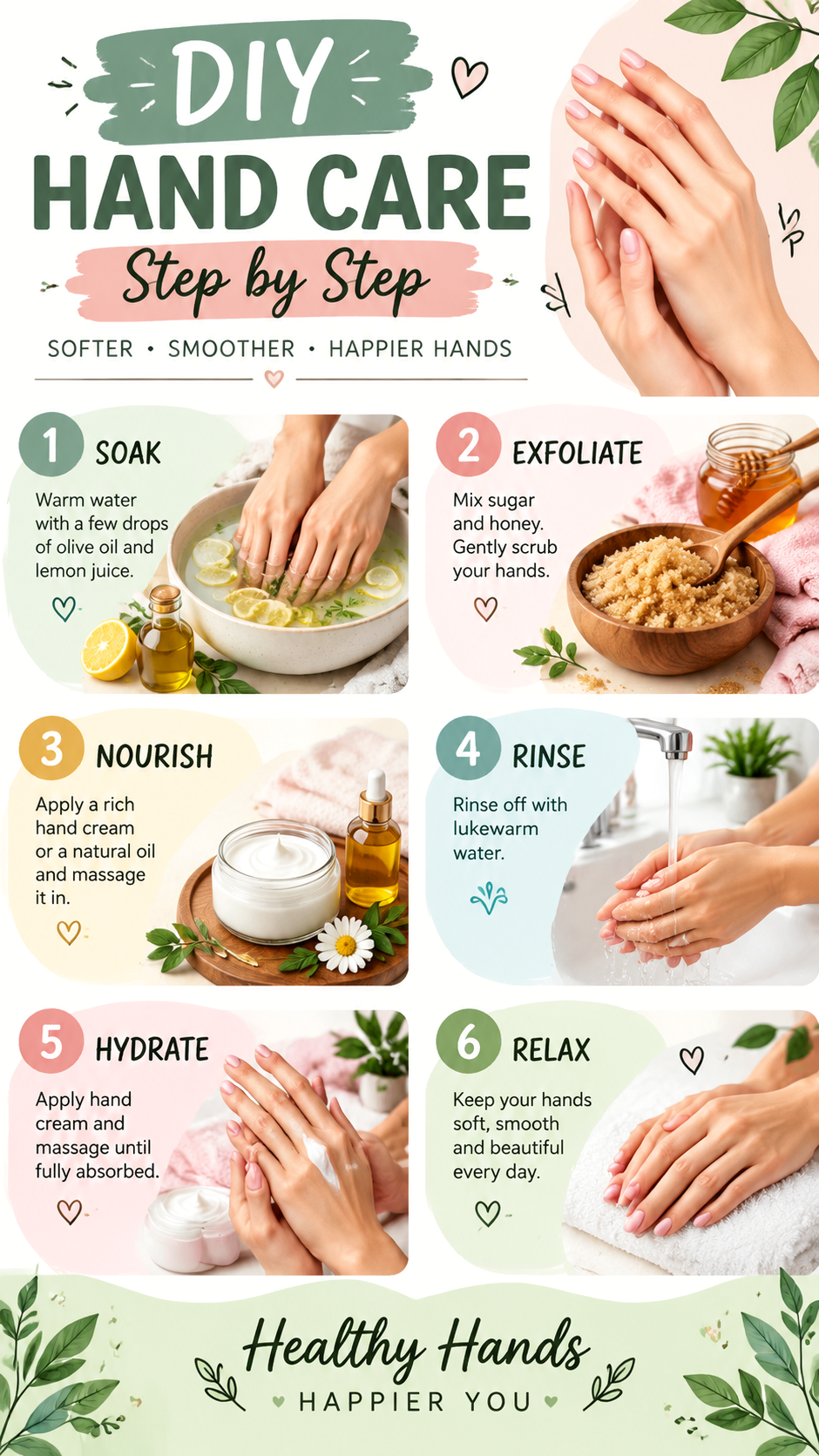
Step 1: Soak Your Hands in Warm Water
The first step in a relaxing hand care routine is a brief soak. Warm water can help soften the surface of the skin and create a comfortable starting point for the rest of your treatment.
How to Soak Your Hands
- Fill a clean bowl with comfortably warm, not hot, water.
- Wash your hands gently if they are visibly dirty.
- Place your hands in the water for approximately five minutes.
- Remove your hands and pat them dry with a soft towel.
- Move to the next step while your skin still feels comfortable and slightly supple.
A short soak is usually sufficient. Leaving your hands underwater for too long can contribute to dryness, particularly if you already have sensitive skin or a weakened skin barrier.
Should You Add Rose Water or Shampoo?
Rose water is sometimes included in homemade hand spa recipes for its pleasant scent. However, fragranced products may irritate sensitive skin, so plain water is a perfectly good option. Shampoo is designed primarily for hair and scalp care, and it may be too harsh for some hands. A mild hand cleanser is a more suitable choice when cleaning is needed.
Skip the soak if your hands are cracked, inflamed, or painfully irritated. In those situations, gentle cleansing and a protective moisturizer are usually more appropriate.
Step 2: Gently Exfoliate Your Hands
Exfoliation is the second step in many DIY hand care routines. It can help loosen dry surface flakes, leaving the skin feeling smoother. The key is to use a gentle approach and avoid treating exfoliation as an everyday requirement.
How to Exfoliate Safely
- Choose a gentle exfoliating product suitable for your skin.
- Apply a small amount to damp hands.
- Massage lightly over the backs of your hands and palms for a short time.
- Avoid vigorous rubbing around the knuckles, nail folds, and any dry cracks.
- Rinse thoroughly with lukewarm water and pat dry.
Some homemade scrubs combine sugar with honey or a small amount of oil. While these mixtures are popular online, sugar crystals can be abrasive, especially when rubbed forcefully over delicate or irritated skin. A formulated gentle exfoliant may be a more predictable option.
Pro Tip: If your hands already feel soft, you can skip exfoliation entirely. For dry or sensitive hands, frequent scrubbing may worsen irritation. Avoid exfoliating broken skin, eczema flare-ups, or areas that sting when washed.
How Often Should You Exfoliate?
There is no need to exfoliate every time you perform hand care. Many people can skip this step or use a gentle product occasionally, depending on their skin’s tolerance. If your hands become red, tight, flaky, or uncomfortable after exfoliating, stop and focus on moisturizing instead.
Step 3: Apply a Nourishing Hand Mask
A hand mask adds a pampering moment to your at-home skincare routine. Its main purpose is to provide conditioning and moisture, helping your hands feel softer and more comfortable after cleansing.
You can use a commercially formulated hand mask or apply a generous layer of a moisturizer designed for dry skin. A simple product with ingredients such as glycerin, petrolatum, ceramides, or dimethicone can help attract moisture, reinforce the skin barrier, or reduce water loss.
A Simple Moisturizing Hand Mask
For an easy at-home treatment, follow these steps:
- Start with clean hands that have been gently patted dry.
- Apply a generous layer of a fragrance-free hand cream or moisturizer.
- Spread the product over the palms, backs of the hands, fingers, and knuckles.
- Leave it on according to the product instructions, or allow the moisturizer to absorb comfortably.
- Remove excess product with a soft tissue if your hands feel too greasy.
If you prefer a homemade beauty treatment, you may encounter recipes that combine yogurt, chickpea flour, or turmeric. These traditional ingredients are not necessary for effective hand care, and evidence for their ability to brighten hands or deliver lasting skincare benefits is limited. Turmeric may stain skin and surfaces, while food-based mixtures can irritate some people.
Choosing Ingredients for Dry Hands
- Glycerin: Helps attract water to the outer layer of the skin.
- Petrolatum: Helps reduce water loss and protect dry areas.
- Ceramides: Support the skin barrier.
- Dimethicone: Helps form a protective layer on the skin.
- Fragrance-free emollients: Help soften rough-feeling skin and improve comfort.
Why This Matters
A hand mask does not need a long ingredient list to be useful. The best choice is one that suits your skin, feels comfortable, and helps maintain moisture without causing irritation. Simple, consistent hydration is often more beneficial than experimenting with several homemade ingredients at once.
Step 4: Rinse and Pat Your Hands Dry
After using a rinse-off mask or scrub, gently rinse your hands with lukewarm water. Make sure no product residue remains between your fingers or around your nails.
Avoid hot water because it can strip away natural oils and leave the skin feeling drier. You also do not need to rub your hands with a rough towel. Instead, pat them dry, leaving the skin comfortable and ready for moisturizer.
A Simple Rule for Rinsing
Follow the instructions for the product you use. A leave-on hand cream does not need to be rinsed off, while a scrub or rinse-off mask should be removed thoroughly. If a homemade mixture causes stinging, itching, or redness, rinse it off immediately and discontinue use.
Once your hands are dry enough to handle products comfortably, move straight to moisturizing. Applying cream soon after washing helps reduce moisture loss and keeps your routine simple.
Step 5: Moisturize for Soft, Smooth Hands
Moisturizing is one of the most important parts of any DIY hand care routine. Even the gentlest soak or exfoliation step will not compensate for a lack of regular hydration. A suitable hand cream helps keep the skin comfortable, reduces roughness, and supports the skin barrier.
How to Moisturize Your Hands Properly
- Choose a moisturizer that matches your skin’s needs.
- Apply it after washing your hands, while the skin is still slightly damp.
- Massage the cream over the palms, backs of your hands, fingers, and knuckles.
- Pay attention to dry areas around the nails without pushing or cutting the cuticles.
- Reapply whenever your hands feel dry, especially after washing or cleaning.
Should You Use Aloe Vera Gel or Almond Oil?
Aloe vera gel and almond oil are common ingredients in DIY beauty routines, but they serve different purposes from a complete hand moisturizer. Aloe vera gel can feel soothing and lightweight, while oils can soften the skin and help reduce moisture loss. Neither necessarily provides all the benefits of a well-formulated cream.
If you enjoy using these ingredients, choose products intended for topical use and check their ingredient lists. Avoid them if you have a known allergy or experience irritation. People with nut allergies should be particularly cautious with almond-derived products and seek a suitable alternative.
For very dry hands, a thick fragrance-free cream or ointment may work better than a lightweight gel alone. Applying a protective layer before bed can also help reduce overnight moisture loss.
Do Not Forget Sun Protection
The backs of your hands receive regular sun exposure during everyday activities. If you want to maintain an even-looking skin tone and protect against premature sun-related changes, apply broad-spectrum sunscreen with SPF 30 or higher to exposed hands. Reapply as directed, especially after washing your hands or spending time outdoors.
Step 6: Massage Your Hands and Cuticles
The final step turns your skincare routine into a relaxing hand spa experience. A gentle massage can help you unwind while spreading moisturizer evenly over your hands and fingers.
How to Give Yourself a Hand Massage
- Apply a small amount of hand cream or a suitable massage oil.
- Use your thumb to make slow, gentle circles across your palm.
- Massage the back of each hand using light, comfortable movements.
- Gently work along each finger from the base toward the fingertip.
- Apply a little moisturizer around the nail folds without cutting or aggressively pushing the cuticles.
- Finish by rubbing your palms together slowly and allowing the product to absorb.
Keep the pressure light and avoid massaging areas that are swollen, painful, injured, or inflamed. You can spend two or three minutes on this step, or simply take as long as feels relaxing.
Why Cuticle Care Is Important
Cuticles help protect the area where the nail grows. Dryness around the nail folds can lead to rough edges and uncomfortable hangnails, so keeping this area moisturized is a useful part of everyday nail care.
Avoid cutting the cuticles or pulling at hangnails. Instead, moisturize the area regularly and carefully trim only loose dead skin when appropriate. If the skin around a nail becomes increasingly red, swollen, warm, or painful, seek medical advice rather than continuing a home treatment.
How to Maintain Soft and Glowing Hands Every Day
A weekly hand spa is a lovely way to relax, but daily habits are what help maintain comfortable, healthy-looking hands. You can keep your routine effective without spending much time or money.
Build These Habits Into Your Day
- Moisturize after washing: Keep a hand cream near your sink, desk, or bedside table.
- Use gentle cleansers: Choose a mild cleanser and avoid unnecessarily hot water.
- Wear protective gloves: Use suitable gloves for dishwashing, cleaning, and prolonged contact with detergents.
- Protect your hands outdoors: Apply sunscreen to exposed skin and use protective clothing when practical.
- Reduce unnecessary exfoliation: Skip scrubs when your hands feel dry, sensitive, or irritated.
- Care for your nails gently: Keep nails clean and avoid picking at the surrounding skin.
- Moisturize before bed: Apply a richer cream or ointment at night if your hands tend to become dry.
Consistency matters more than complexity. A simple routine that you can follow comfortably is likely to be more useful than an elaborate treatment you rarely repeat.
Common DIY Hand Care Mistakes to Avoid
When trying to achieve soft, glowing hands, it is easy to assume that more products or stronger treatments will deliver faster results. In reality, excessive exfoliation and irritating ingredients can make dryness worse.
Scrubbing Too Hard
Rough scrubbing can damage the skin barrier and trigger redness or irritation. Use gentle movements, avoid abrasive mixtures, and skip exfoliation if your hands are already sensitive.
Using Too Many Homemade Ingredients
Mixing several ingredients makes it harder to identify the cause of a reaction. Lemon juice, baking soda, strong fragrances, and other harsh household ingredients are not necessary for hand care and may irritate the skin. Avoid applying acidic or abrasive DIY mixtures in an attempt to lighten dark areas.
Skipping Moisturizer
Water alone does not provide lasting hydration. After washing or soaking your hands, apply a suitable moisturizer to help keep the skin soft and reduce moisture loss.
Expecting Instant Skin Brightening
Moisturized skin may look smoother and more radiant because dryness and surface flaking are reduced. However, a home hand care routine cannot guarantee a dramatic change in skin tone, erase pigmentation, or reverse all signs of aging. Persistent discoloration or irritation deserves appropriate professional assessment.
How Often Should You Follow This Hand Care Routine?
You can moisturize your hands several times throughout the day whenever needed. The other steps do not have to be repeated daily.
- Every day: Cleanse gently, moisturize after washing, and protect your hands from irritants and sunlight.
- As needed: Apply a richer cream or ointment when your hands feel particularly dry.
- Occasionally: Enjoy a warm soak, moisturizing mask, and gentle massage when you want a relaxing self-care moment.
- Only when suitable: Exfoliate gently if your skin tolerates it and has no signs of irritation.
If your hands remain persistently dry, cracked, itchy, or inflamed despite regular moisturizing, consult a healthcare professional. Conditions such as hand eczema may require more than a cosmetic routine.
Quick Points: Your DIY Hand Care Routine at a Glance
Your Six-Step Hand Spa Checklist
- Soak: Use comfortably warm water for about five minutes.
- Scrub: Exfoliate gently only if your skin tolerates it.
- Mask: Apply a suitable moisturizing hand mask or cream.
- Rinse: Remove rinse-off products with lukewarm water.
- Moisturize: Apply hand cream while the skin is slightly damp.
- Massage: Use gentle movements to spread moisturizer and relax your hands.
Conclusion: Make Soft Hands Part of Your Self-Care Routine
Creating a DIY hand care routine at home is a simple way to give your hands the attention they deserve. With a short warm soak, gentle exfoliation when appropriate, a nourishing moisturizer, and a relaxing massage, you can turn ordinary skincare into a soothing self-care ritual.
The secret to soft, smooth, glowing hands is not an expensive product or a complicated homemade recipe. It is choosing gentle products, protecting your skin from everyday irritants, and moisturizing consistently. Small habits, such as applying hand cream after washing and wearing gloves during household chores, can make your routine easier to maintain.
Remember that every skin type is different. Keep the steps that leave your hands feeling comfortable, skip anything that causes irritation, and give your skin time to benefit from regular care. If your hands are persistently cracked or inflamed, seek professional advice instead of relying on DIY treatments.
Ready for a little at-home pampering? Gather your favorite gentle skincare essentials, set aside a few peaceful minutes, and enjoy a hand care routine that helps your hands feel soft, cared for, and refreshed. Save this step-by-step guide so you can revisit it whenever your hands need some extra attention.
Tags
DIY Hand Care
Hand Care Routine
Soft Hands
Glowing Skin
Hand Moisturizer
At-Home Spa
Natural Skincare
Self-Care Tips