Upside Down Scalp Massage Benefits for Hair Growth and Healthy Hair
Looking for a simple way to care for your scalp and support healthier-looking hair? Scalp massage is an easy addition to a daily hair care routine that combines relaxation with gentle stimulation of the scalp. One technique that has attracted attention is the upside-down scalp massage, which involves leaning forward, positioning your head comfortably below your knees or toward the floor, and massaging your scalp with your fingertips. The idea is to use this position alongside massage to encourage circulation while giving yourself a few minutes of calming self-care.
Although scalp massage can help you relax and may temporarily increase blood flow in the skin, it is important to understand that stronger circulation does not automatically mean faster hair growth. Consistent, gentle scalp care can support a comfortable scalp environment, but healthy hair also depends on genetics, nutrition, hormones, overall health, and how you handle your hair.
Key Takeaways
- Scalp massage is a simple way to relax and incorporate gentle stimulation into your hair care routine.
- The upside-down technique involves leaning forward, but the inverted position is optional and not necessary for an effective massage.
- Use your fingertips and small circular movements rather than scratching with your nails.
- A short, comfortable massage may help you unwind, although evidence for increased hair growth remains limited.
- Healthy hair also benefits from gentle styling, balanced nutrition, and appropriate care for the scalp.
- Stop immediately if bending forward makes you dizzy, uncomfortable, or unwell.
What Is an Upside-Down Scalp Massage?
An upside-down scalp massage is a variation of a traditional scalp massage performed while leaning forward. Instead of sitting upright, you bend at the waist or sit with your head comfortably lowered, allowing your hair to fall forward. You then use your fingertips to massage different areas of your scalp in small, gentle circles.
The technique is often featured in natural hair care routines because it is simple, inexpensive, and does not require special equipment. You can perform it at home in just a few minutes, making it an appealing option for people who want to create a more intentional self-care habit.
The main difference between this method and an ordinary scalp massage is the head position. Some people believe that placing the head below the heart increases blood flow toward the scalp. However, there is not enough strong scientific evidence to establish that an inverted position produces meaningful, lasting improvements in hair growth.
The massage itself is the more practical part of the routine. Gentle fingertip movements stimulate the skin and move the scalp slightly, while the quiet, repetitive motion can help you relax.
Why Is Scalp Massage Popular for Hair Care?
Many hair care routines focus on the visible strands, including shampooing, conditioning, detangling, and styling. Yet the scalp also deserves attention because it is the skin from which hair grows.
Scalp massage provides a way to care for this often-overlooked area without adding another complicated step to your routine. It can be performed before washing your hair, during a relaxing evening ritual, or whenever your scalp feels tense.
- Relaxation: Gentle massage may ease the sensation of tension around the scalp and head.
- Scalp stimulation: Fingertip movements gently move the scalp and stimulate its surface.
- Self-care: A few quiet minutes can create a calming break in a busy day.
- Hair awareness: Regular scalp care gives you an opportunity to notice changes in dryness, irritation, or shedding.
Potential Benefits of Scalp Massage for Healthy Hair
Scalp massage is appealing because it is easy to practice and fits into almost any hair care routine. Understanding what it may realistically offer can help you enjoy the experience without expecting overnight transformations.
1. It May Temporarily Increase Local Blood Flow
The scalp contains a network of blood vessels that supply oxygen and nutrients to its tissues. Hair follicles rely on this blood supply as part of their normal function, which is why circulation is often discussed in conversations about healthy hair.
Gentle massage can influence local circulation in the skin. However, the relationship between a brief massage and long-term hair growth is more complicated than it may appear. Healthy follicles depend on many biological processes, and simply increasing blood flow for a short time does not guarantee thicker or faster-growing hair.
The upside-down position is also not essential. Your scalp receives blood while you sit or stand normally, and a comfortable upright massage can still provide relaxation and gentle stimulation.
2. It Can Help You Relax
One of the most accessible benefits of scalp massage is the calming experience it can provide. Slow, repetitive movements may feel soothing, particularly after a long day or when your shoulders, neck, and head feel tense.
Taking a few minutes away from screens, notifications, and daily responsibilities can also help you establish a relaxing routine. You might combine scalp massage with slow breathing, gentle stretching, or a quiet moment before bed.
Relaxation does not directly guarantee hair growth, but a manageable self-care routine can support your general sense of well-being. It is a benefit worth enjoying without turning the practice into another source of pressure.
3. It Encourages Gentle Attention to the Scalp
Regular scalp massage can make you more familiar with the condition of your scalp. As you move your fingertips across different areas, you may notice dryness, tenderness, flaking, or irritation that you had not previously paid attention to.
This awareness can help you adjust your routine. For example, you may discover that a particular styling product leaves your scalp uncomfortable or that tight hairstyles create tenderness around the hairline.
Massage is not a treatment for scalp disorders, but noticing persistent changes can encourage you to seek appropriate care rather than ignoring symptoms.
4. It May Complement a Healthy Hair Care Routine
A scalp massage is most useful when it forms part of a broader approach to hair care. Gentle handling, suitable cleansing, conditioning, and avoiding excessive heat or traction can help reduce preventable damage to the hair shaft.
Massage should not replace these habits or medical care when hair loss has an underlying cause. Instead, consider it an optional addition that makes your routine more enjoyable.
Important: There is limited evidence that scalp massage alone produces meaningful hair regrowth or increases hair density. Treat it as a relaxation and scalp-care practice rather than a proven hair loss treatment. If your hair is thinning, identifying the cause is more important than relying on massage alone.
How to Perform an Upside-Down Scalp Massage
You do not need a salon appointment, an expensive tool, or a collection of hair oils to get started. Your fingertips and a comfortable position are enough. The goal is to move the scalp gently without pulling, scratching, or tangling your hair.
Step 1: Choose a Comfortable Position
Sit securely on a sturdy chair or bench with your feet supported. If you can comfortably lean forward, lower your head gently and allow your hair to fall in front of you. There is no need to force your head between your knees or hold an uncomfortable pose.
If you have difficulty bending forward, experience dizziness, or have a condition that makes inverted positions unsuitable, remain upright. You can still enjoy the main massage technique without lowering your head.
Step 2: Detangle Your Hair Gently
If your hair is long or prone to tangling, gently detangle it before beginning. Work from the ends upward when necessary, using a suitable brush or wide-tooth comb. Avoid pulling through knots, especially if your hair is wet and fragile.
There is no need to apply oil automatically. A dry massage may be sufficient, and skipping oil can be helpful if your scalp is sensitive or if heavy products tend to cause buildup.
Step 3: Place Your Fingertips on Your Scalp
Position the pads of your fingers against your scalp, spreading them comfortably around the crown or the sides of your head. Keep your fingernails away from the skin to avoid scratches and irritation.
Start with light pressure. You should feel gentle movement rather than pain, pulling, or forceful rubbing. If your scalp is tender, reduce the pressure or skip the massage until the tenderness improves.
Step 4: Use Small Circular Movements
Move your fingertips in slow circles, working across the front, sides, crown, and back of your scalp. Instead of sliding your fingers through the hair, gently move the skin beneath them where comfortable.
Spend a little time on each area and keep your movements consistent. Avoid twisting the hair into knots or repeatedly rubbing the same spot with excessive force.
Step 5: Keep the Session Short and Comfortable
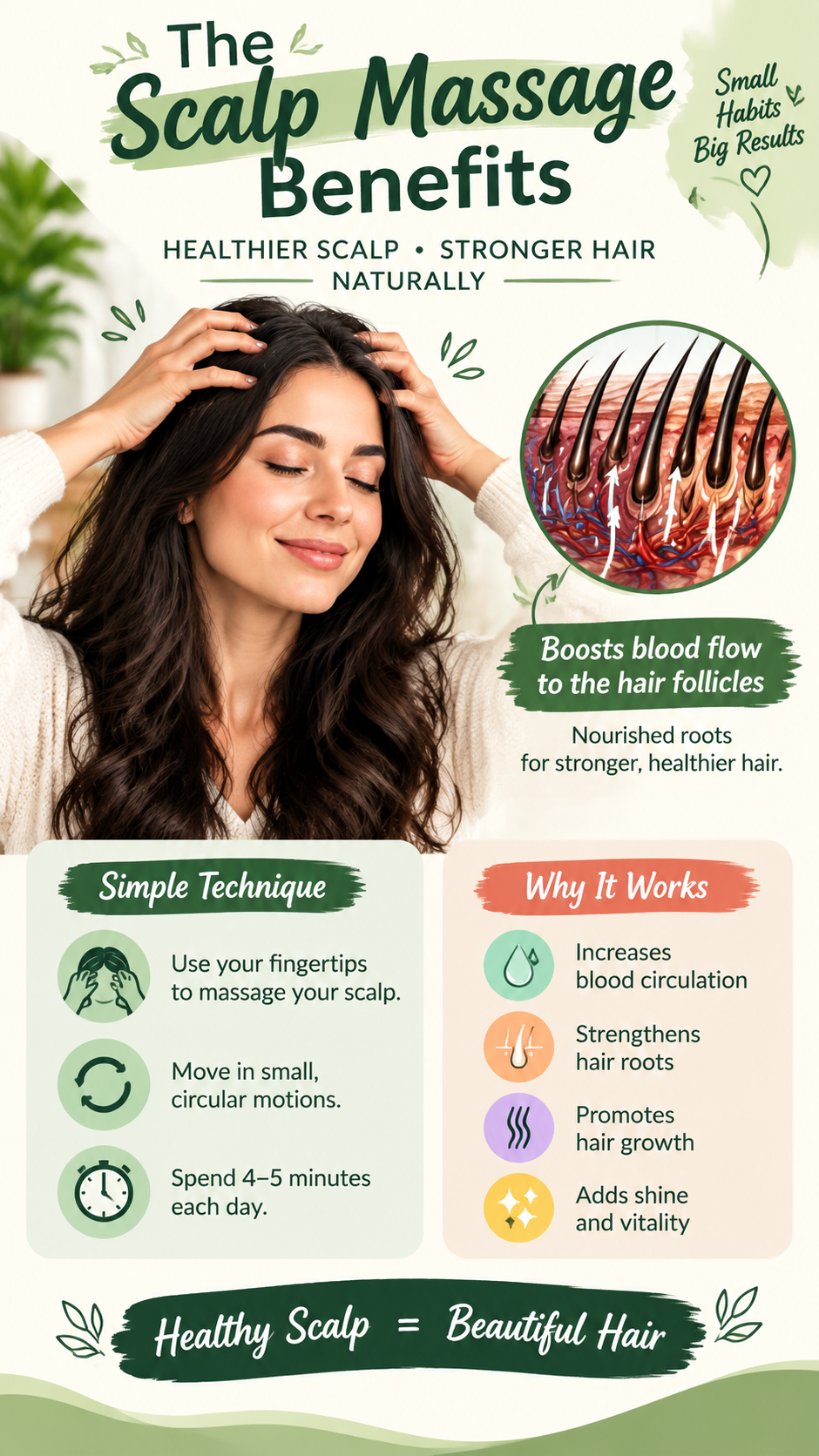
The illustrated routine suggests four minutes daily. You can use that as a simple starting point if it feels comfortable, but four minutes is not an established medical requirement for hair growth. A shorter session is perfectly reasonable, and there is no need to continue if your scalp becomes uncomfortable.
Finish by slowly returning to an upright position. If you have been leaning forward, take your time rather than standing up suddenly.
A Simple Four-Minute Routine
- Minute 1: Gently massage the front and sides of your scalp.
- Minute 2: Move across the crown using small circular movements.
- Minute 3: Massage the back of your scalp and any comfortable areas you missed.
- Minute 4: Repeat gentle movements across the scalp, then stop and sit upright slowly.
Adjust the timing to suit your comfort. Consistency should never come at the expense of scalp health.
Does Upside-Down Scalp Massage Really Help Hair Grow?
The promise of longer, thicker hair makes the upside-down scalp massage appealing, especially for anyone looking for a natural alternative to complicated hair care routines. However, it is important to separate the proposed benefits from what research has actually established.
A small preliminary study published in 2016 examined scalp massage in nine healthy men. Participants received standardized massages for four minutes daily over 24 weeks. Researchers observed changes in hair thickness, but the study was small and did not establish that scalp massage reliably increases hair density or reverses hair loss in the general population.
The findings offer an interesting starting point for further research, not proof that a four-minute daily routine will produce thicker hair for everyone. The study also did not establish that an upside-down position was necessary for the observed changes.
Hair Thickness, Hair Density, and Hair Growth Are Different
These terms are often used interchangeably in hair care content, but they describe different things.
- Hair thickness: The diameter of an individual strand of hair.
- Hair density: The number of hair strands growing within a given area of the scalp.
- Hair growth: The process through which follicles produce new hair and existing strands increase in length.
- Hair retention: Keeping existing strands from breaking or being lost prematurely.
A person may improve the appearance of fuller hair by reducing breakage and using gentle styling methods, even if the number of follicles has not changed. Similarly, a relaxing massage may make the scalp feel better without directly increasing the rate at which hair grows.
Why This Matters
Be cautious of claims that an inverted scalp massage can guarantee rapid hair growth, reverse baldness, or make weak follicles permanently thicker. Current evidence does not support those promises. Enjoy massage for comfort and relaxation while using evidence-based care for persistent thinning or excessive shedding.
How to Build a Healthy Hair Care Routine Around Scalp Massage
Scalp massage works best as one small part of a routine that protects both the scalp and the hair strands. You do not need a long list of products to care for your hair effectively. Focus on habits that suit your hair type, scalp condition, and everyday needs.
Cleanse According to Your Scalp’s Needs
Choose a shampoo appropriate for your scalp and hair type. Some people need frequent washing because of oiliness, sweating, or product buildup, while others can wash less often. The right schedule depends on your individual needs rather than a universal rule.
Massage shampoo into the scalp gently when washing, then rinse thoroughly. Avoid aggressive scrubbing, which can irritate the skin and tangle the hair.
Condition and Handle Hair Carefully
Use conditioner to help soften the strands, improve manageability, and reduce friction during detangling. Apply it as directed for your hair type, concentrating on the lengths and ends when appropriate.
Be especially gentle when hair is wet, as it can be more vulnerable to stretching and breakage. Use a suitable comb or brush, work through knots patiently, and avoid pulling tightly on the roots.
Avoid Excessive Heat and Tight Hairstyles
Frequent high-temperature styling can damage hair fibers, while hairstyles that repeatedly pull on the roots may contribute to traction alopecia. Choose comfortable hairstyles that do not create persistent tension around the hairline, and limit unnecessary heat exposure.
If you notice broken hairs, tenderness, or thinning around areas under tension, change your styling habits. Early attention is important because prolonged traction can lead to lasting hair loss.
Support Hair Health With Balanced Nutrition
Hair growth depends on adequate nutrition, including sufficient protein and essential nutrients. A varied diet that includes protein-rich foods, vegetables, fruit, whole grains, and suitable sources of healthy fats can support general health and normal hair function.
Iron, zinc, and other nutrients also play roles in normal bodily function, but taking supplements without a demonstrated need is not necessarily beneficial. Excessive amounts of certain vitamins and minerals can cause harm and may even contribute to hair loss.
If you are experiencing significant shedding or gradual thinning, a healthcare professional can help determine whether nutritional deficiencies, hormonal changes, medications, or another health issue may be involved.
Should You Use Hair Oil During a Scalp Massage?
Hair oil is optional. Some people enjoy using a small amount of a suitable oil because it makes their hair feel softer or reduces friction during handling. Others prefer a dry massage, particularly if their scalp becomes greasy easily.
If you decide to use oil, start with a small amount and choose a product that suits your scalp. Avoid applying large quantities simply because you expect more oil to produce more growth. Heavy applications can be difficult to remove and may contribute to buildup or irritation in some people.
A Few Precautions When Using Oils
- Patch-test unfamiliar products according to their directions before using them more widely.
- Avoid products that cause itching, burning, redness, or swelling.
- Do not apply essential oils undiluted to the scalp.
- Be cautious with fragranced products if your skin is sensitive.
- Wash away residue when needed to keep your scalp comfortable.
Remember that oils can affect how hair feels and behaves, but they are not interchangeable with treatments for medical hair loss. A product that improves shine or reduces friction does not necessarily stimulate new follicle growth.
Safety Tips for the Upside-Down Technique
The upside-down position is optional, and it is not suitable for everyone. Lowering your head can cause discomfort, lightheadedness, or a feeling of pressure in some people. The potential relaxation benefits of massage do not require an inverted position.
- Keep your balance: Sit securely on a stable chair and avoid positions that make you feel unsteady.
- Move slowly: Return to an upright position gradually after leaning forward.
- Stop if you feel unwell: Dizziness, nausea, unusual headache, or visual disturbances are reasons to stop immediately.
- Avoid painful pressure: Massage should not cause scalp pain, scratching, or significant hair pulling.
- Consider your health: If you have a medical condition that may be affected by bending forward, ask a healthcare professional whether an inverted position is appropriate.
- Skip irritated areas: Do not massage over open wounds, painful inflammation, or an active scalp infection.
There is no need to push through discomfort to complete a four-minute session. A gentle, upright massage is a sensible alternative if the recommended position does not feel right for you.
When Should You Seek Help for Hair Loss?
Hair shedding can fluctuate naturally, but persistent or noticeable changes deserve attention. Scalp massage should not delay an assessment when the cause of hair loss is unclear.
Consider speaking with a dermatologist or another qualified healthcare professional if you notice sudden or substantial shedding, expanding bald patches, a widening part, progressive thinning, scalp pain, persistent itching, scaling, or redness. Hair loss accompanied by scarring or inflammation may require prompt evaluation.
A professional can assess the pattern of hair loss, review possible contributing factors, and recommend suitable treatments. Depending on the cause, options may include specific medications, treatment of a scalp condition, or correction of a confirmed nutritional deficiency.
Early assessment can be especially helpful when hair loss develops quickly or is accompanied by other symptoms. Home massage may remain part of your personal care routine, but it should not be treated as a substitute for appropriate diagnosis and treatment.
Quick Points: Upside-Down Scalp Massage at a Glance
- Technique: Lean forward only if comfortable and massage with your fingertips in small circles.
- Duration: Four minutes is an optional routine, not a proven requirement for hair growth.
- Main benefit: Gentle scalp stimulation and relaxation, with possible temporary changes in local circulation.
- Hair growth evidence: Limited research suggests potential effects worth studying, but reliable regrowth is not guaranteed.
- Best approach: Combine gentle scalp care with healthy hair habits and seek professional advice for persistent thinning.
Conclusion: Make Scalp Massage a Gentle Self-Care Habit
The upside-down scalp massage is an accessible way to add a few relaxing minutes to your hair care routine. With a comfortable position, gentle circular movements, and attention to your scalp’s needs, you can create a simple ritual that encourages relaxation and more mindful hair care.
Although scalp massage may temporarily stimulate local blood flow, current evidence does not establish that the upside-down technique reliably increases hair density or produces significant hair regrowth. You do not need to invert your head or massage for a specific number of minutes to care for your scalp effectively.
For the best results, focus on what you can control: handle your hair gently, cleanse and condition appropriately, avoid excessive tension and heat, eat a balanced diet, and pay attention to changes in your scalp or hair. If you experience ongoing thinning or unusual shedding, seek professional guidance to identify the cause.
Healthy hair care does not have to be complicated. Start with gentle habits, stay consistent with a routine that feels comfortable, and remember that caring for your scalp is about supporting your overall hair health, not chasing instant results.
Your Hair Care Reminder
Keep your scalp massage gentle, choose comfort over complicated techniques, and treat healthy hair as a long-term practice. Small, sustainable habits are more useful than promises of overnight growth.
Tags
Scalp Massage
Healthy Hair
Hair Growth Tips
Scalp Care
Natural Hair Care
Hair Wellness
Hair Thinning
Self-Care Routine